
How to tell if your plant needs a bigger pot
By Rive News / Research desk | Rive News / Published October 24, 2026 at 9:00 AM PKT
Key takeaways
- Roots escaping the drainage holes or circling the root ball are the clearest signs the pot is too small.
- Soil that dries out in a day or two, instead of its usual rhythm, means roots have crowded out the moisture-holding mix.
- Repot when the plant shows real need, not by calendar; slow growers can stay put for years.
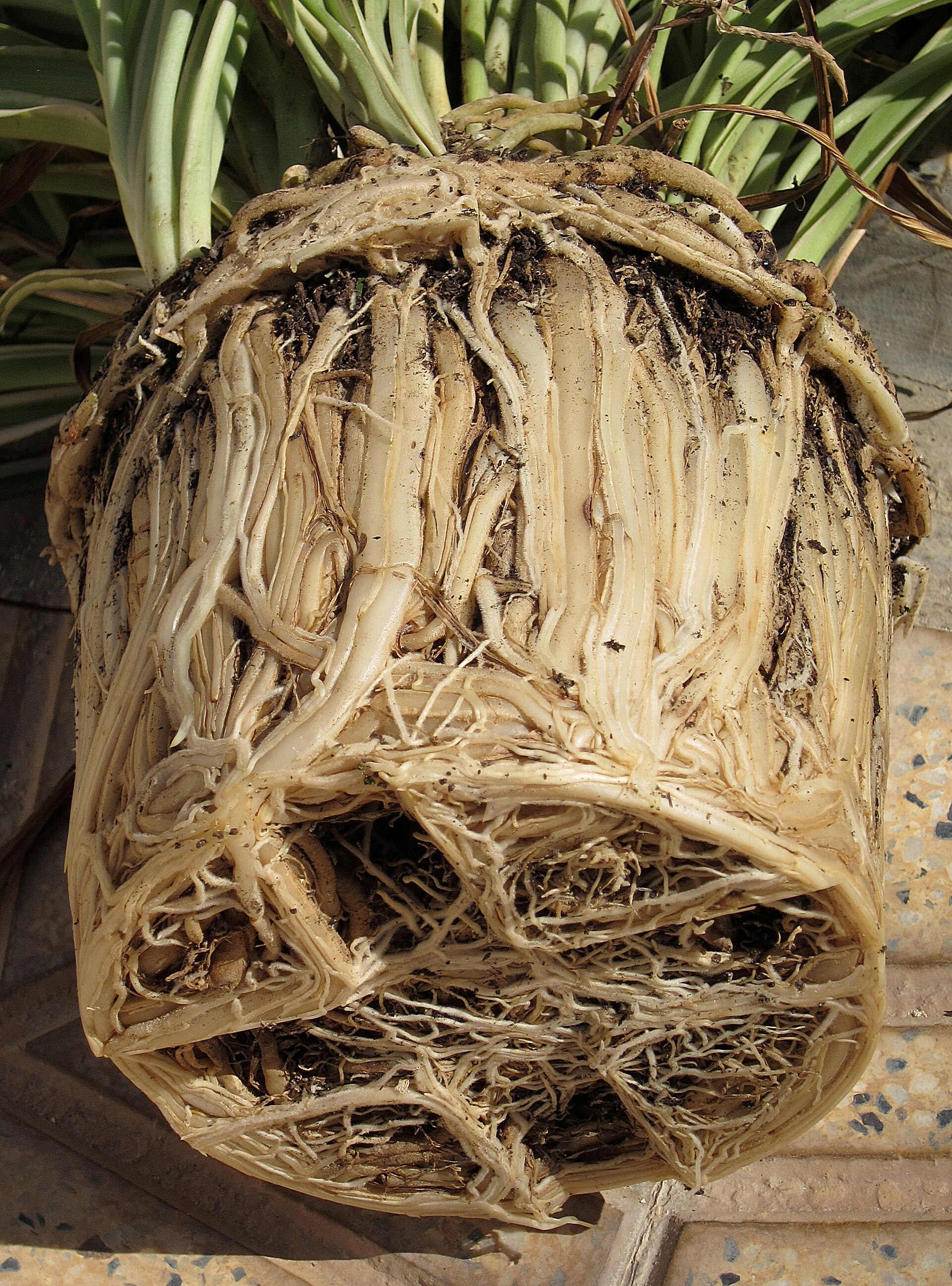
[A spider plant pulled from its pot showing dense circling roots.] Photograph: Wikimedia Commons contributor
Image Credits: Wikimedia Commons
Plants do not need bigger pots simply because they have been in the same container for a certain amount of time. Some plants can stay in the same pot for years, while fast growers may outgrow a container in a single season.
The honest answer is to read the plant, not the calendar. A plant that has filled its container with roots behaves in specific, recognizable ways, and once you know the signs, the decision becomes straightforward.
This article explains how to tell if your plant needs a bigger pot, including the root signs, the watering-rhythm changes, the visible stress signals, and how to confirm with a quick root check.
The root signs
The most direct evidence is underground. Roots growing through the drainage holes are the classic giveaway, and roots appearing at the soil surface or creeping across the top of the mix point to the same problem, according to the Plant Addicts guide. The root system has run out of room and is actively searching for more space, water, and nutrients elsewhere.
The Illinois Extension indicator list, cited by Plant Addicts, names the full set: roots through drainage holes, roots at the soil surface, a root ball that is mostly roots, smaller-than-normal new leaves, and wilting between normal waterings. That list is worth keeping, because it separates pot-size problems from other plant complaints.
A second root sign shows when you slide the plant out of its pot. If the root ball is a tight, dense mass with roots spiraling around it, or if you see mostly roots and very little soil, repotting is overdue, as the Housefolia guide describes.
Mild circling is normal. A solid white mat of roots is a plant asking for real estate.
The watering-rhythm changes
Here is the sign most owners notice first. When roots occupy most of the container, there is less potting mix available to hold moisture, so the soil dries much faster than it used to, per the Plant Addicts guide. You may find yourself watering twice as often with no change in temperature, humidity, or window position.
Water can also start behaving oddly. If watering pours straight through and drains almost immediately, barely pausing to wet the soil, there usually is not much actual soil left in the pot. It is mostly roots.
Housefolia puts it vividly: soil may go bone dry in 1 to 2 days compared with its usual rhythm. As their guide notes, a root-bound plant can demand water every single day, even in cooler months when it should be resting.
One caution: water racing through the pot can also mean a peat-heavy mix has turned hydrophobic and repels water, Housefolia adds. If the soil is visibly shrunken away from the pot's rim and water beads off, try bottom-watering first. If the roots look like a basket, it is the pot.
The visible stress signals
A cramped plant often shows stress above the soil line. Growth may stall during the growing season despite good light and regular feeding, and new leaves can come in smaller than normal, according to the Housefolia guide. Yellowing leaves that do not match your normal watering pattern often follow, a sign of stress and limited nutrient uptake.
The pot itself can look wrong. A plant becomes top-heavy when its canopy outgrows what its root zone can anchor, and it starts tipping over easily, the Plant Addicts guide notes. Southern Living adds that dropped leaves, once you rule out watering and disease, can also point to a root-bound plant unable to take in the nutrients it needs.
Fast growers show these signs first. Pothos, philodendrons, spider plants, peace lilies, and many hoyas become root-bound faster than slow growers like snake plants or ZZ plants, which can sit happily in the same container for two or three years, per Housefolia. Match your suspicion to the species.
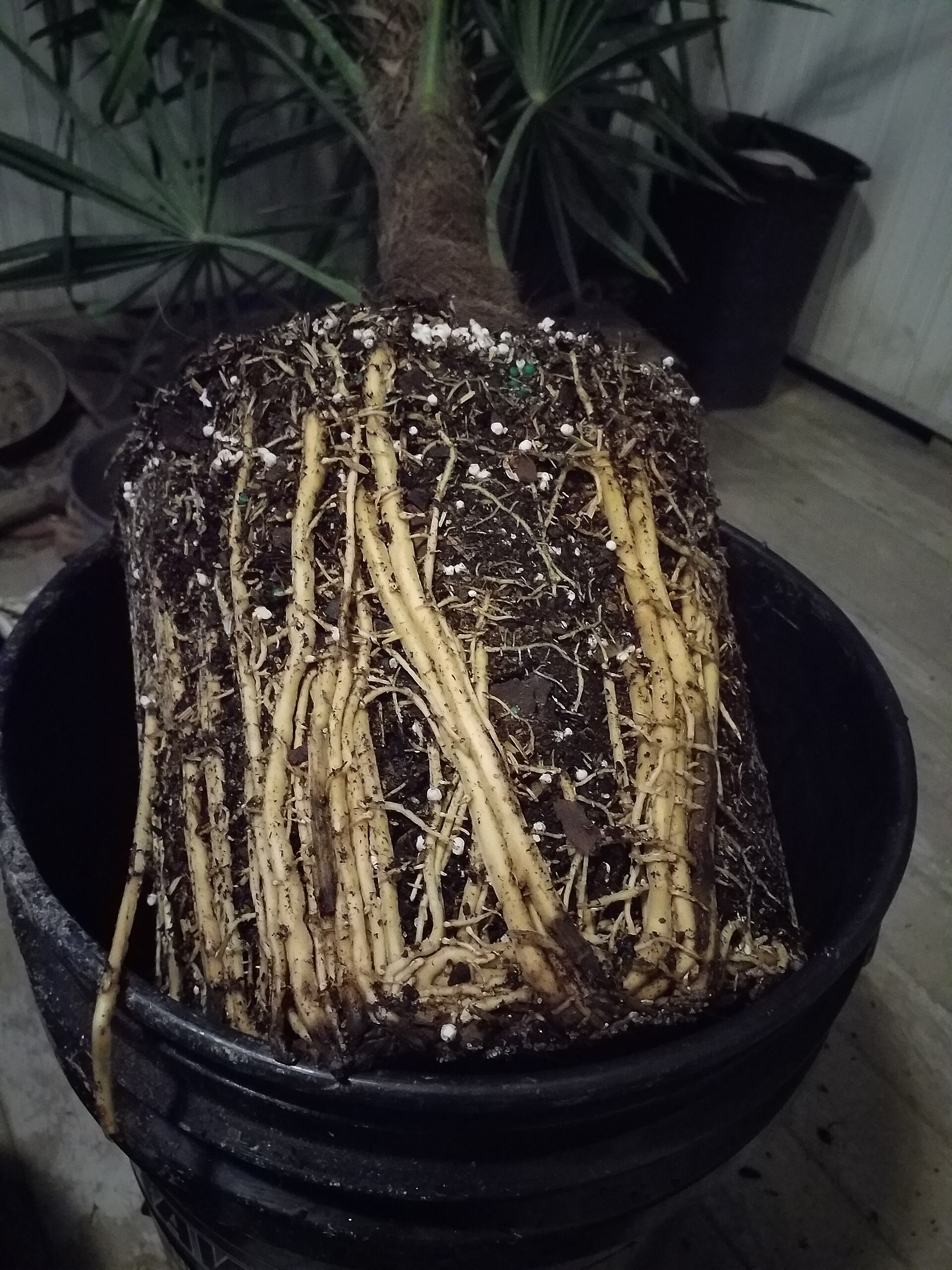
[A potted palm with roots densely packed against the container walls.] Photograph: Wikimedia Commons contributor
Image Credits: Wikimedia Commons
How to confirm with a root check
You do not need to unpot the plant weekly. Wait until you see a pattern of two or more signs, then do one gentle check. Tip the pot on its side, support the base of the plant with one hand, and slide the root ball out.
Look for three things: circling or spiraling roots around the outside, more root than soil by volume, and a dense mat at the bottom. If you find them, choose a new pot one size up, usually 1 to 2 inches wider in diameter, and use fresh well-draining mix. Teasing the circling roots loose before replanting helps them grow outward instead of continuing the spiral.
Spring and early summer are the ideal seasons, since plants are entering active growth and recover faster from repotting stress. But a plant in genuine distress should not wait for the calendar. Need beats timing.
For a fuller picture of a plant's seasonal cycle, pair the root check with knowing what to plant in autumn for spring flowers, since bulbs and container plants share the same rhythm of active growth and rest.
FAQ
Can a plant be too root-bound to save?
Severe cases can be hard to revive, but most root-bound plants recover well once repotted with fresh mix and room to grow. The longer the plant sits in a solid root mat, the more chronic the wilting and nutrient stress become, so earlier is better.
How often should I repot houseplants?
Only when the signs point that way. Fast growers like pothos may need it annually; slow growers like snake plants can go two to three years. The plant's signals matter more than any schedule.
Should I go up one pot size or jump bigger?
One size up, about 1 to 2 inches wider. A vastly oversized pot holds water the roots cannot reach, which invites rot. Gradual upsizing keeps the soil-to-root ratio healthy.
Is it okay to repot in winter?
If the plant is in distress, yes. Spring is ideal because growth is active, but a root-bound plant suffering now benefits more from the fix than from waiting months for the calendar.
The bottom line
A plant needs a bigger pot when its roots say so: escaping drainage holes, circling the root ball, or crowding out the soil until watering becomes a daily chore. Watch the roots, the watering rhythm, and the growth, and repot when at least two signs line up.
The plant has been telling you. Now you know the language.
Tags: repotting, houseplants, gardening, plant care
The Rive News research desk writes practical gardening explainers, drawing on university extension services and horticultural guides.
Related
- Why orchid flowers fall off after bringing them home
- Why do your roses have black spots on the leaves?
- Why Do Zucchini Plants Make Flowers but No Fruit?
Get one practical gardening explainer in your inbox each week. Subscribe to the Rive News newsletter.
Standards: Every factual claim in this article traces to a cited public source. Corrections: contact the Rive News research desk.
Related stories
What Is Companion Planting and Does It Work?
Marigolds work as a nematode cover crop, but the basil flavor claim failed repeated tests. An honest evidence review of what companion
Determinate vs. indeterminate tomatoes: growth, pruning, and harvest differences
Determinate tomatoes grow to a set size and ripen all at once, while indeterminate types vine all season. That one difference shapes
How to improve clay soil for gardening
Gypsum will not fix ordinary clay soil, say extension experts. What actually works: 2 to 3 inches of compost, mulch, better drainage,