
Why your hands go numb when you raise them overhead
By Rive News / Research desk | Rive News / Published October 28, 2026 at 9:00 AM PKT
Key takeaways
- Raising your arms narrows the passage nerves and blood vessels use to reach your hands, so signals can falter and numbness sets in.
- Brief numbness that fades when you lower your arms is often positional, but repeated or one-sided symptoms deserve a closer look.
- Thoracic outlet syndrome, where nerves or vessels are compressed near the collarbone, is one recognised cause of overhead numbness.

[Riders hold their arms overhead on a roller coaster, the position that narrows the passage nerves use to reach the hands.] Photograph: riders with arms raised
Image Credits: Wikimedia Commons
Raising your arms overhead can leave your hands tingling, heavy, or strangely blank, as if the signal between hand and brain has thinned out. The feeling usually starts in the fingers and spreads across the palm, and it often eases within a minute or two of lowering your arms.
This article explains why overhead arm positions cause numbness, including the anatomy of the thoracic outlet, the other conditions that mimic it, and the warning signs that mean the problem needs medical attention rather than a stretch.
What happens when you raise your arms
Your arms get their nerve supply from a bundle called the brachial plexus, a network of nerves that runs from the neck, under the collarbone, through the armpit, and down into the arm. Blood vessels travel the same route. The whole bundle passes through a narrow gap between the collarbone and the top rib, known as the thoracic outlet.
Lifting your arms overhead changes the geometry of that gap. The collarbone shifts, the muscles around the neck and shoulder tighten, and the space the nerves and vessels pass through gets smaller.
In most people the squeeze is mild and temporary. Nerve signals slow for a short while, producing tingling or numbness, and normal feeling returns once the arm comes down and pressure releases.
The same principle explains why your hands go numb when you sleep on them. Pressure on a nerve, whether from body weight or from a narrowed passage, interrupts its signals until the pressure lifts. The difference with overhead numbness is the location of the squeeze: high up, near the neck and collarbone, rather than at the wrist or elbow.
Thoracic outlet syndrome: the main named cause
When compression in that narrow passage becomes a recurring problem, doctors call it thoracic outlet syndrome. According to WebMD, the condition occurs when nerves or blood vessels in the thoracic outlet are compressed, and it can cause numbness and tingling in the arms, especially when you raise them. About 95% of cases involve nerves rather than blood vessels, WebMD reports.
The McGovern Medical School notes that symptoms of the nerve type are frequently worse when the arm is overhead, because that position narrows the outlet further, or when the arm dangles, which stretches the brachial plexus. People whose work or sport involves repeated overhead motion are among those most often affected, including baseball and softball players, weightlifters, gymnasts, landscapers, labourers, and hair stylists.
Several structural and acquired factors can shrink the outlet. An extra rib above the first rib, called a cervical rib, can crowd the space. Poor posture with slumped shoulders can shift the collarbone out of position.
Injuries such as whiplash or a broken collarbone can leave scar tissue that presses on nearby nerves. Repetitive overhead work can bulk up the scalene muscles in the neck until they squeeze the bundle passing between them.
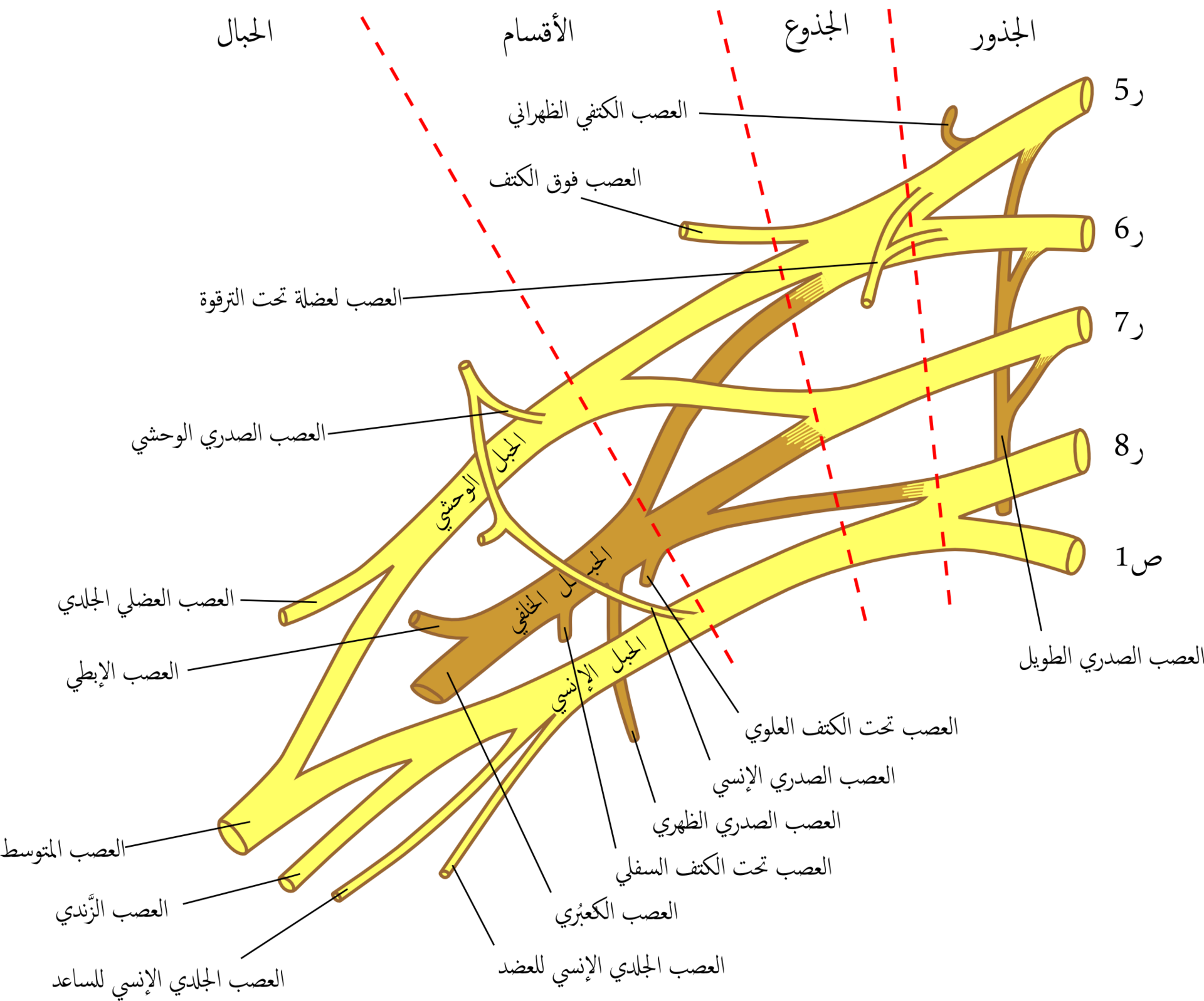
[The brachial plexus, the nerve network that runs from the neck to the arm through the thoracic outlet.] Photograph: brachial plexus diagram
Image Credits: Wikimedia Commons
Other reasons your hands may go numb overhead
Thoracic outlet syndrome is not the only explanation, and assuming it is can miss other problems. A pinched nerve in the neck, often from a worn or bulging spinal disc, can send numbness down the arm, and certain arm positions can make it worse. Pressure on the ulnar nerve at the elbow or the median nerve at the wrist can also produce hand numbness, though those usually follow different patterns, such as numbness in specific fingers rather than the whole hand.
Circulation plays a role too. Raising your arms above heart level works against gravity, so blood flow to the hands drops slightly.
In healthy people this effect alone is small, but combined with a narrowed passage it can tip the hand into tingling. Cold, pale, or bluish fingers point more toward a blood-vessel problem than a nerve problem, and UK HealthCare lists cold pale fingers and a bluish skin colour among the symptoms of the vascular form of the condition.
Some people notice the feeling only during specific activities: painting a ceiling, reaching for a high shelf, or holding a phone overhead. If the pattern is always the same activity, always the same arm, and always resolves quickly, the cause is more likely positional. If it appears without an obvious trigger, affects one side only, or keeps coming back, it deserves a proper assessment.
When numbness is a warning sign
Most brief episodes are harmless, but some patterns should not be waited out. Seek urgent care if numbness arrives with chest pain, shortness of breath, or weakness on one side of the body, since arm symptoms can occasionally accompany cardiac problems. Sudden swelling of the arm, a hand that turns blue or very pale, or a wound on the hand that will not heal are also reasons to be seen promptly.
Book a routine appointment sooner rather than later if the numbness keeps recurring, lasts more than a few minutes after you lower your arms, or comes with weakness, such as dropping objects or struggling to grip. Muscle wasting at the base of the thumb, which doctors call Gilliatt-Sumner hand, is a late sign of nerve compression and needs evaluation. Persistent one-sided symptoms also need checking, because they are less likely to be simple positional pressure.
A clinician will usually start with the history and a physical examination, including tests that reproduce symptoms by positioning the arm. Imaging or nerve studies may follow if the diagnosis is unclear. Treatment for the nerve form often starts with posture work and stretching and strengthening exercises, with surgery reserved for rare cases where compression persists, according to UK HealthCare.
What helps in everyday life
For occasional positional numbness, the simplest fix is also the most reliable: lower your arms and let them rest at your sides. Shaking the hands gently and rolling the shoulders can help feeling return faster. If a task forces your arms overhead, break it into short spells and bring your arms down between them rather than holding one long stretch.
Posture matters over the long term. Sitting with slumped shoulders for hours narrows the same passage that overhead positions compress, so a workstation set up with the screen at eye level and regular breaks from the desk can reduce the background squeeze. Strengthening the muscles between the shoulder blades helps hold the shoulders in a position that keeps the outlet open.
Avoid sleeping with your arms folded above your head if you wake with numb hands, since that combines the overhead position with hours of pressure. If numbness appears during exercise, note which movement triggers it and mention that detail to a clinician, because the trigger narrows the list of possible causes.
Frequently asked questions
Why do both hands go numb when I raise them overhead?
Both hands can be affected because the same narrowing happens on both sides when both arms go up. The thoracic outlet on each side is a tight passage, so a bilateral effect often points to a positional or postural cause rather than a one-sided injury.
How long should overhead numbness last?
Positional numbness usually fades within a minute or two of lowering your arms. Numbness that lingers for more than a few minutes, or that does not fully clear, is worth discussing with a clinician.
Is it dangerous to ignore recurring hand numbness?
Ignoring it risks missing a treatable nerve compression that can worsen over time. Early assessment matters most when weakness, muscle wasting, or colour changes appear alongside the numbness.
Can poor posture alone cause this?
Poor posture can contribute by shifting the collarbone and tightening the neck and shoulder muscles, which narrows the outlet. It rarely acts alone, but correcting it often reduces how often symptoms appear.
The bottom line
Hands go numb overhead because lifting the arms narrows the passage that nerves and vessels use to reach the hands, briefly choking off their signals. Brief episodes that clear when you lower your arms are usually positional.
Recurring, one-sided, or long-lasting numbness, or numbness with weakness or colour change, should be checked by a clinician. Lowering your arms, taking breaks from overhead tasks, and improving posture are sensible first steps while you get answers.
This article is for general information only and is not medical advice; talk to a clinician about any symptoms.
Rive News's research desk covers everyday health questions with cited public sources. No medical training is claimed and no individual advice is given.
Related
- Why your hands go numb when you sleep on them at night
- Why does your foot fall asleep and tingle when it wakes up?
- Why do you get dizzy when standing up too fast?
- Why do your fingers wrinkle in water like prunes?
Subscribe to the Rive News newsletter for one plain-English health explainer each morning.
Rive News publishes general information only. Corrections are welcomed and noted on the article.
Related stories
ADHD linked to fourfold dementia risk in Pitt study of 187,000 adults
Adults with ADHD face four times the risk of dementia, a University of Pittsburgh study of 187,000 adults published in JAMA Psychiatry

Why Do Athletes Get Cramps Despite Drinking Water?
Muscle cramps strike even well-hydrated athletes because sweat drains electrolytes that plain water cannot replace. Here is why water alone

Do bananas actually prevent muscle cramps?
A medium banana has 422 mg of potassium, but the evidence says it cannot stop cramps. Here is what the research shows, and what actually