
Why Do Knuckles Crack and Is It Bad for Joints? What Science Found
This article explains published research and is not medical advice. See a clinician if a joint pops with pain, swelling, or stiffness.
Key takeaways
- The crack comes from a gas-filled cavity forming in joint fluid when bones separate, a process called tribonucleation, captured on real-time MRI in 2015.
- No study has found a link between habitual knuckle cracking and arthritis; a 2011 study found age, sex, and family history were the real risk factors.
- Cracking is generally harmless, but forceful or painful manipulation can injure ligaments, so never crack a joint that hurts.
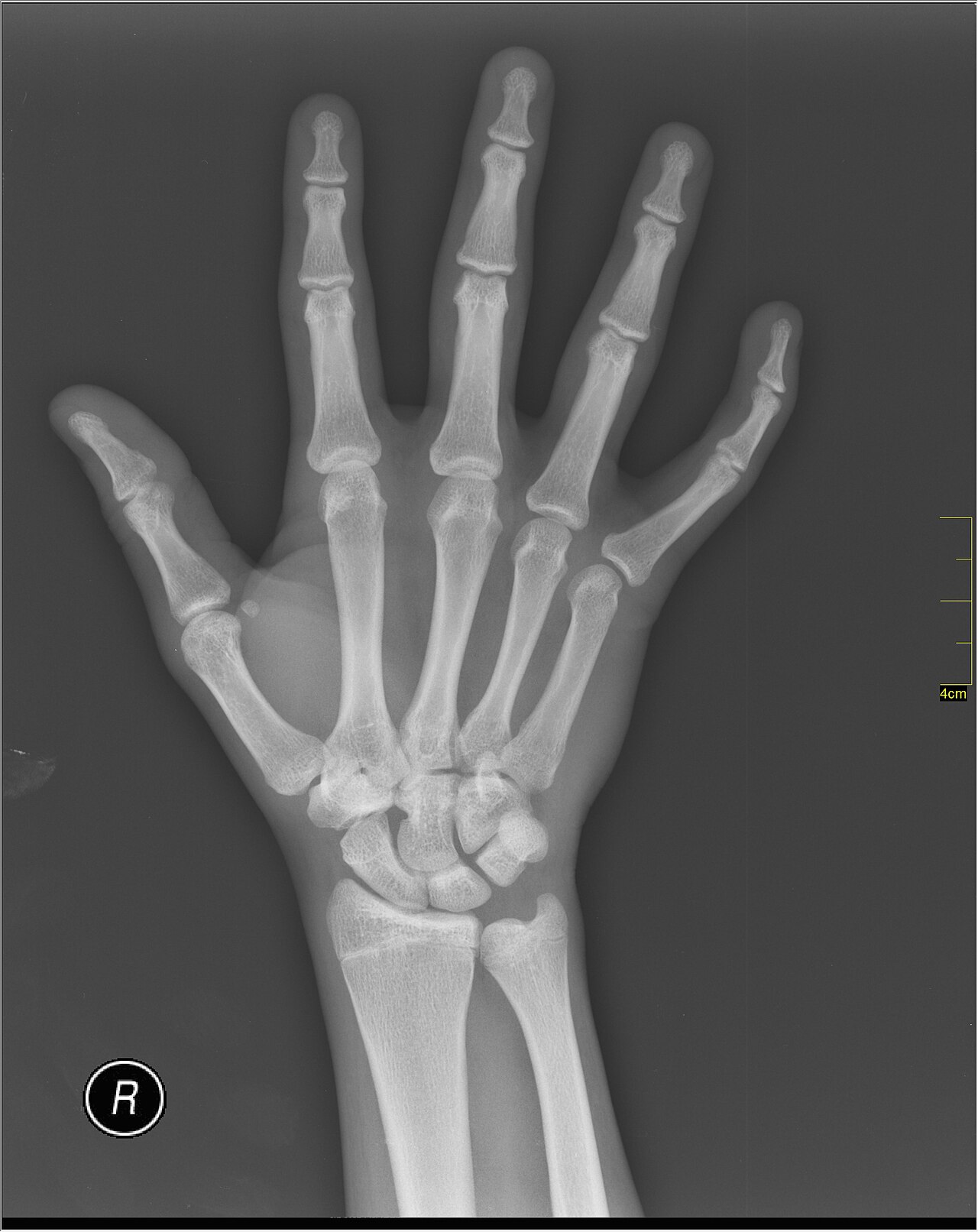
An X-ray of the hand shows the finger joints where the cracking sound is produced. Photograph: Nevit Dilmen
Knuckles crack because of gas, not bone. When you pull or bend a finger joint, the pressure inside the joint space drops suddenly, and dissolved gases in the synovial fluid (the slippery lubricant between bones) rush out of solution to form a small cavity. That rapid cavity formation is what makes the pop.
Decades of research have found no link between the habit and arthritis, even though the warning is nearly universal.
The sound's true cause stayed debated for almost 70 years. A 2015 study finally settled it by filming the inside of a cracking knuckle with real-time MRI. What the researchers saw matched a theory first proposed in 1947 and overturned a popular explanation that had stood since the 1970s.
This article explains the tribonucleation mechanism, traces how the science resolved the debate, reviews what the arthritis studies actually found, and covers the few real cautions worth knowing.
What actually makes the pop: tribonucleation
Inside each knuckle sits a small capsule of synovial fluid between two bone surfaces. When you stretch the joint, the bones separate and the space between them grows faster than the thick fluid can fill it. Pressure in the gap falls, and gas dissolved in the fluid comes out of solution, forming a cavity in a fraction of a second.
The event is called tribonucleation, and its rapid formation is what produces the distinctive popping sound.
Gregory Kawchuk, a professor of rehabilitation medicine at the University of Alberta, put it plainly when describing his team's 2015 study: "It's a little bit like forming a vacuum. As the joint surfaces suddenly separate, there is no more fluid available to fill the increasing joint volume, so a cavity is created and that event is what's associated with the sound."
The study, published in PLOS ONE in 2015, examined 10 metacarpophalangeal joints (the knuckles where fingers meet the hand). The team placed a volunteer's finger in a tube inside an MRI scanner and pulled it slowly while recording at 3.2 frames per second. The scans showed the cavity forming at the exact moment of joint separation and sound production, and the cavity remained visible afterward.
That persistence was the key finding: if the sound came from a bubble collapsing, nothing would be left to see.
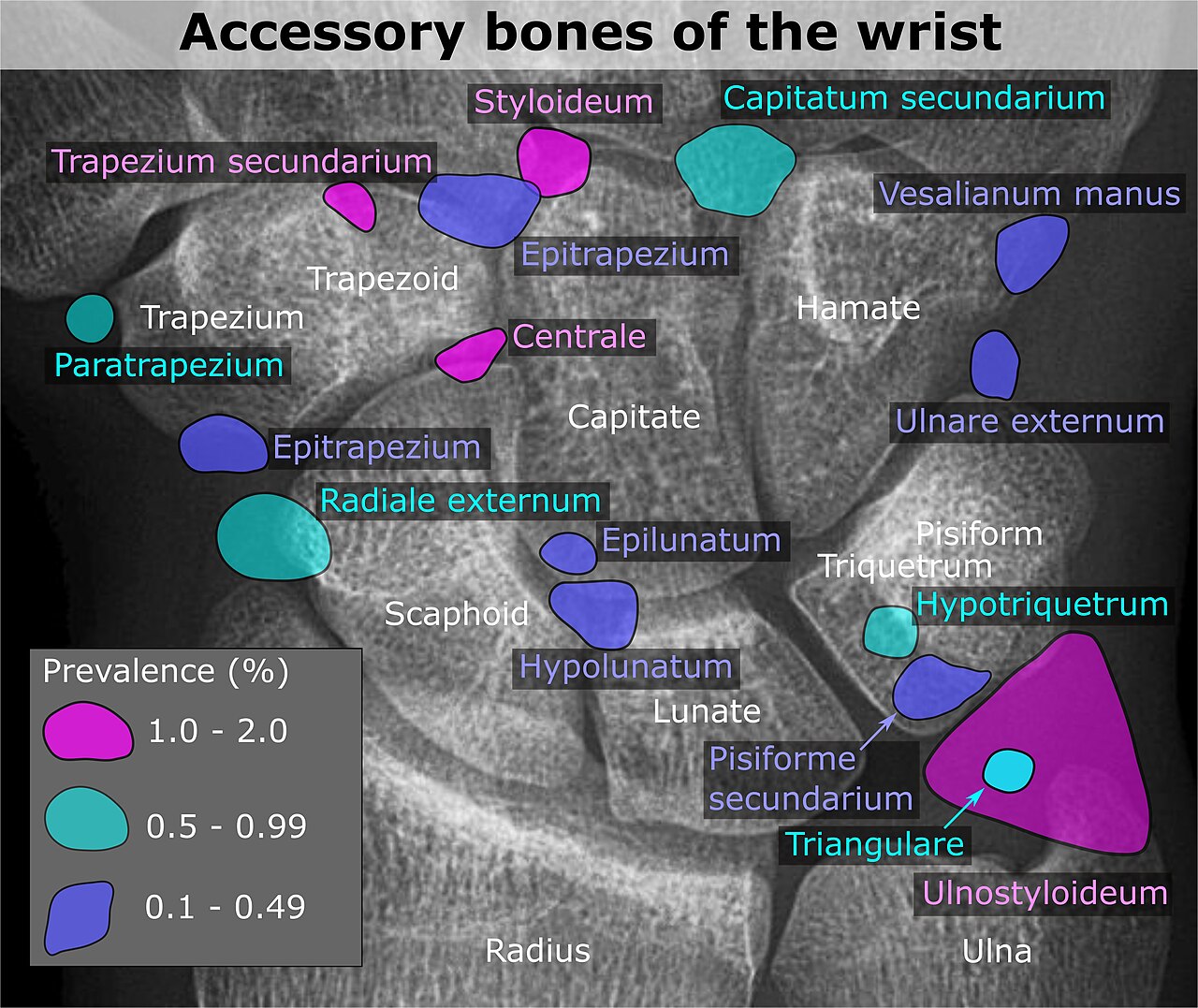
Detailed X-ray views of hand bones show the small joints where synovial fluid cushions the bone surfaces. Photograph: Mikael Haggstrom
How a 70-year debate got settled
The argument over knuckle cracking started in 1947, when two researchers named Roston and Haines used X-rays to show that the sound occurred when bones at a joint rapidly separated and formed a bubble, a process called cavitation. That stood as the working explanation for about 24 years.
In 1971, a second group led by Unsworth challenged it. Their experiments suggested the pop came not from a bubble forming but from one collapsing. That explanation became the popular one, and it dominated textbooks for decades.
Kawchuk's team set out to test both ideas directly. Their volunteer, colleague Jerome Fryer, could crack all 10 of his fingers on demand, which the researchers nicknamed the "Pull My Finger Study. " The real-time MRI supported the original 1947 finding: cavity formation, not collapse.
Kawchuk later told WAMC, "Our jaws hit the floor. This is the exact answer.
The 2015 result was later described as the first in-vivo macroscopic demonstration of tribonucleation, a process previously seen only in lab settings with opposing surfaces. It also explains the well-known refractory period: after cracking, it takes roughly 15 to 20 minutes before the same joint can pop again, because the gases need time to dissolve back into the synovial fluid.
Does cracking knuckles cause arthritis? What the studies found
The arthritis warning has no support in the evidence. One of the strongest studies, published in the Journal of the American Board of Family Medicine in 2011, compared adults with and without hand osteoarthritis and found no association between habitual knuckle cracking and the disease. After accounting for age, sex, family history, and manual labor, the actual risk factors were increasing age, female sex, and a family history of arthritis.
Reviews of decades of research have reached the same conclusion: current evidence does not support a relationship between habitual knuckle cracking and osteoarthritis.
The most famous test of the myth was a personal one. Physician Donald Unger cracked the knuckles of only his left hand twice a day for more than 50 years, leaving his right hand untouched as a control. After 50 years he found no difference between the two hands and no arthritis in the cracked one.
He published the case in the journal Arthritis & Rheumatology in 1998, and the experiment earned him the 2009 Ig Nobel Prize in Medicine.
Harvard Health has echoed the same position: several studies have found no increased risk of arthritis among habitual knuckle crackers. Michael Pham, a rheumatologist at Mayo Clinic in Arizona, told patients the same thing: "I usually tell my patients there's no evidence that it's harmful."
The real cautions: when cracking is not harmless
The honest picture includes two caveats. First, a few studies have reported possible links between frequent cracking and weaker grip strength or temporary hand swelling, though these findings are inconsistent and do not show arthritis. Second, the danger is in the technique, not the pop itself: forceful, aggressive joint manipulation can stretch or injure the ligaments and tendons around a joint.
The risk rises sharply for joints beyond the fingers, such as the neck and back, where rough twisting can damage surrounding structures.
Pain is the line that matters. A painless pop from stretching a knuckle is ordinary joint behavior. A pop that arrives with pain, swelling, stiffness, limited range of motion, or follows an injury is a different signal entirely and deserves a medical evaluation rather than reassurance from an article.
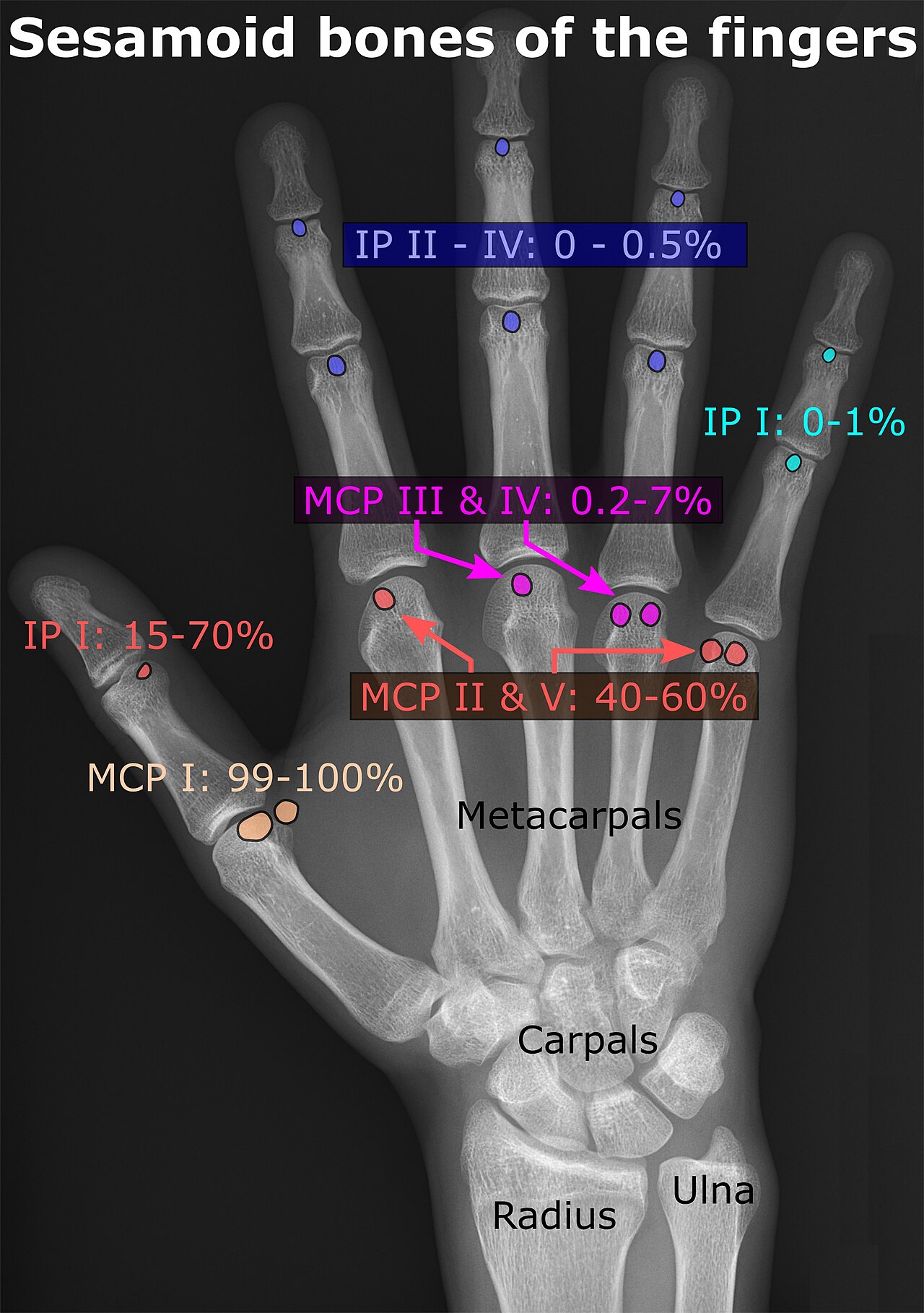
Sesamoid bones sit within the tendons around finger joints, which flex thousands of times per day. Photograph: Mikael Haggstrom
Frequently asked questions
Why can't I crack the same knuckle twice in a row?
The gases that formed the cavity need time to dissolve back into the synovial fluid. Research suggests it takes about 15 to 20 minutes before the joint can be cracked again.
Do knuckles get bigger or damaged from years of cracking?
Studies have found no evidence that habitual cracking enlarges knuckles or damages joint cartilage. The main documented downside is its annoying effect on the listener.
Is cracking my neck or back the same as cracking knuckles?
The mechanism is similar, but the stakes are higher. Neck and back joints sit near the spinal cord and vertebral arteries, so forceful self-manipulation there carries injury risks that finger cracking does not.
Should I see a doctor about joint sounds?
See a clinician if cracking comes with pain, swelling, stiffness, weakness, or a joint that locks or gives way. Painless popping alone is not a reason for a visit.
The bottom line
The pop you hear is a gas cavity forming in joint fluid, filmed in real time in 2015 after a 70-year scientific argument. Every serious study on the question has failed to link the habit to arthritis, including a 2011 study of adults with and without the disease and one physician's 50-year one-handed experiment. Crack gently or not at all, skip joints that hurt, and treat painful pops as a medical question instead.
Latest in Health
- The difference between good and bad cholesterol, in simple terms
- What happens in your body when you hold your breath
- Can stress really give you a headache?
- Why your nose runs when you eat spicy food
Get one evidence-based health explainer in your inbox each week. Subscribe for the weekly health desk letter.
Image Credits: Wikimedia Commons / Nevit Dilmen, Mikael Haggstrom
Related stories
ADHD linked to fourfold dementia risk in Pitt study of 187,000 adults
Adults with ADHD face four times the risk of dementia, a University of Pittsburgh study of 187,000 adults published in JAMA Psychiatry
Why Do Athletes Get Cramps Despite Drinking Water?
Muscle cramps strike even well-hydrated athletes because sweat drains electrolytes that plain water cannot replace. Here is why water alone
Do bananas actually prevent muscle cramps?
A medium banana has 422 mg of potassium, but the evidence says it cannot stop cramps. Here is what the research shows, and what actually