
Why onions make your eyes water: the chemistry behind tears
By Rive News / Research desk | Rive News / Published October 24, 2026 at 9:00 AM PKT
Key takeaways
- Slicing an onion breaks open cells, releasing enzymes that turn sulfur compounds into syn-propanethial-S-oxide, a volatile gas.
- The gas drifts upward and irritates nerve endings in the eyes, so the brain orders the tear glands to flush it out.
- Chilling the onion for about 30 minutes slows the enzyme reaction and measurably cuts down on tears.
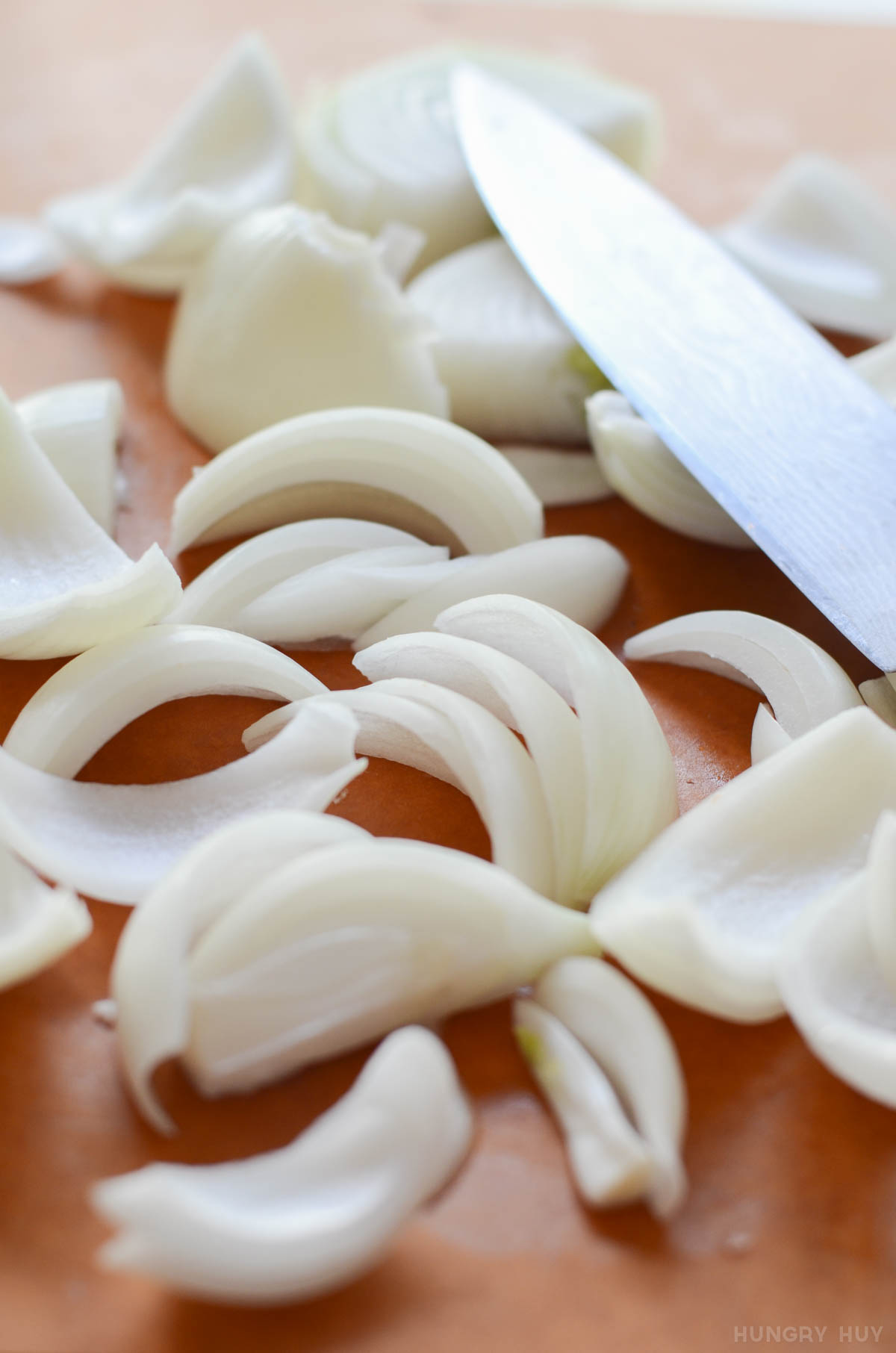
[Chopped onions on a cutting board: the knife work that ruptures cell walls and releases the enzymes behind onion tears.] Photograph: HungryHuy
Image Credits: Wikimedia Commons
The burning, watery-eyed feeling that follows a few strokes of the knife is a plant defense system working exactly as intended. Onions cannot run from anything that wants to eat them, so they fight back with chemistry. This article explains what happens inside the onion when you cut it, why the resulting gas targets your eyes, whether chilling the onion really helps, and which kitchen tricks actually reduce the tears.
The culprit is syn-propanethial-S-oxide, a volatile organosulfur compound with the formula C3H6OS and a molar mass of 90.14 grams per mole. It is released by onions (Allium cepa) as they are sliced and acts as a lachrymatory agent, meaning it triggers tearing and stinging on contact with the eyes, according to Wikipedia's entry on the compound.
Nothing is splashing into your eyes. The whole event happens in the air between the cutting board and your face.
What happens inside the onion when you cut it
An intact onion cell keeps two things strictly separated: enzymes called alliinases, stored in the cell's vacuoles, and amino acid sulfoxides scattered through the cell. Cutting, peeling, or crushing ruptures the cell walls and lets them mix.
Alliinase immediately goes to work on the sulfur compounds. It converts isoalliin (chemically 1-propenyl-L-cysteine sulphoxide, also written PRENCSO) into 1-propenesulfenic acid.
Then a second enzyme, lachrymatory factor synthase (LFS, classified as EC 5.3.99.12), rearranges that product into syn-propanethial-S-oxide. That two-step sequence is documented in the same Wikipedia entry and in a Discover Magazine explainer on the onion's chemistry.
The gas is so volatile that it lifts off the cut surface as you work. Because it is lighter than the air around it, it rises from the cutting board straight toward your face. The onion evolved this reaction as a defense mechanism to deter predators from biting into its flesh, as the Discover piece notes.
Scientists mapped the mechanics of the LFS enzyme only recently. Chemists analyzed the active site of lachrymatory factor synthase and worked out how it combines with sulfur compounds to produce the lachrymatory agent, in a study published in the journal ACS Chemical Biology.
Marcin Golczak, the lead author and a pharmacologist at Case Western Reserve University, told The Register that the enzyme performs a "repositioning of double bonds," converting (E)-1-propenesulfenic acid into the stinging agent. It is a rare reaction, the resulting compound belongs to a class of which only four types exist naturally.
The scale of the shared experience is large. The US National Onion Association estimates that the average American eats roughly 9 kilograms (20 pounds) of onions every year, as reported by The Register. That is a lot of cut onions and a lot of tears.
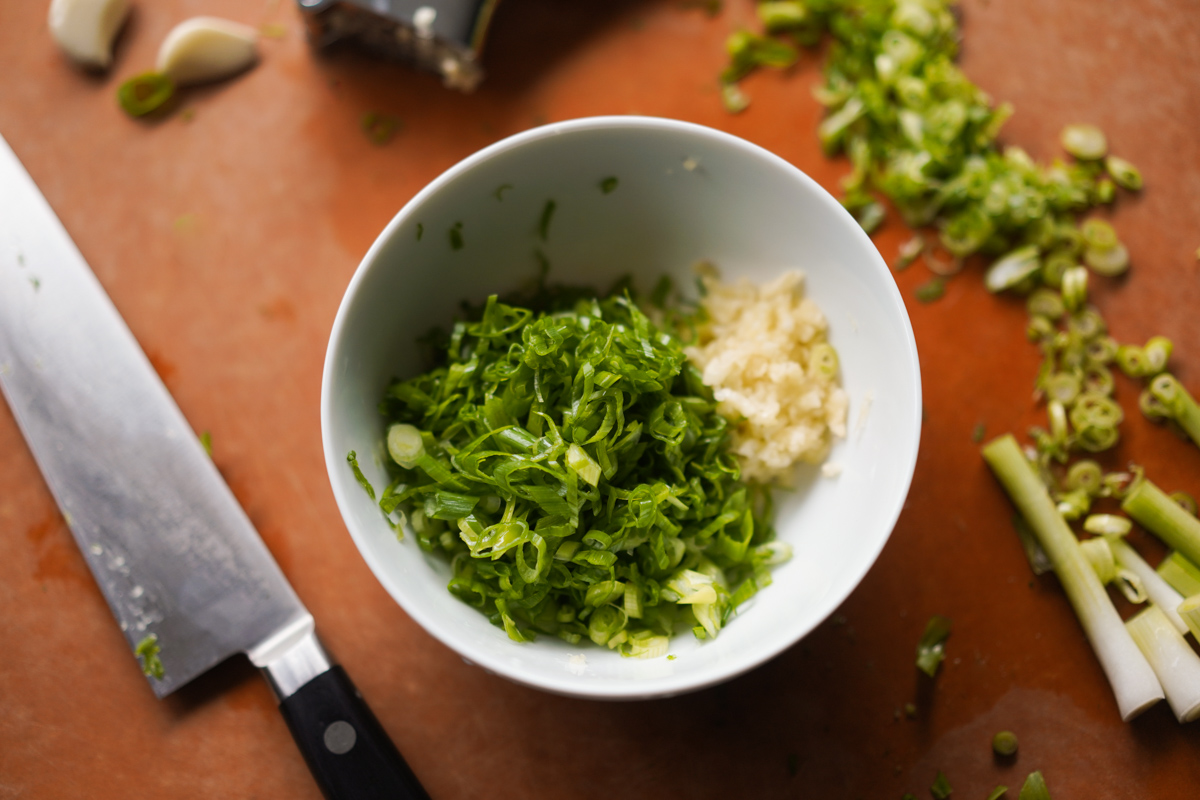
[Alliums like green onions contain the same sulfur compounds; cutting them triggers the identical enzyme reaction.] Photograph: HungryHuy
Image Credits: Wikimedia Commons
Why the gas targets your eyes
Your eyes are not reacting to pain from acid damage. The gas stimulates nerve endings in the cornea and the surrounding area, which send an irritant signal to the brain.
The brain's answer is mechanical: flood the zone. The lachrymal glands, situated just above the eyelids, kick into overdrive and pump out tears to wash the irritant off the eye's surface.
This is a protection response, not an emotional one. The stinging sensation comes from the chemical activating pain-sensing channels: sensors known as TRPA1 receptors register the intrusion as damage, and the brain treats it like any foreign irritant, such as dust or smoke. The system evolved long before onions were ever domesticated.
The waterworks also explain the runny nose. Tears drain from the eyes into the nasal passages through the tear ducts, so the same flush that clears your eyes drips into your nose. That is why a heavy onion session ends with both wet eyes and sniffles.
Heat ends the reaction permanently. Cooking an onion inactivates the enzymes that drive the chemical sequence, so cooked onions cannot generate syn-propanethial-S-oxide. This is why you can chop cooked onions, or eat them, without any stinging at all.
Why chilling the onion really helps
The one trick with a direct chemical mechanism is cold. Alliinase and LFS are enzymes, and enzymes are temperature-sensitive. Refrigerating an onion for at least 30 minutes before cutting, or soaking it in ice water for a few minutes, slows the rate at which the enzymes react with the sulfur compounds, which minimizes the amount of syn-propanethial-S-oxide produced.
This is the SERP gap worth understanding: most advice pages say "chill the onion" without saying why it works. It does not trap the gas or toughen the cell walls. It simply makes the enzymes sluggish, so the first minutes of slicing generate far less of the irritant.
Cold also reduces volatility. Gases evaporate more slowly from cold surfaces, so less of the lachrymatory agent lifts off the board in the first place. The two effects combine, which is why the trick is the most consistently recommended among scientifically grounded kitchen guides.
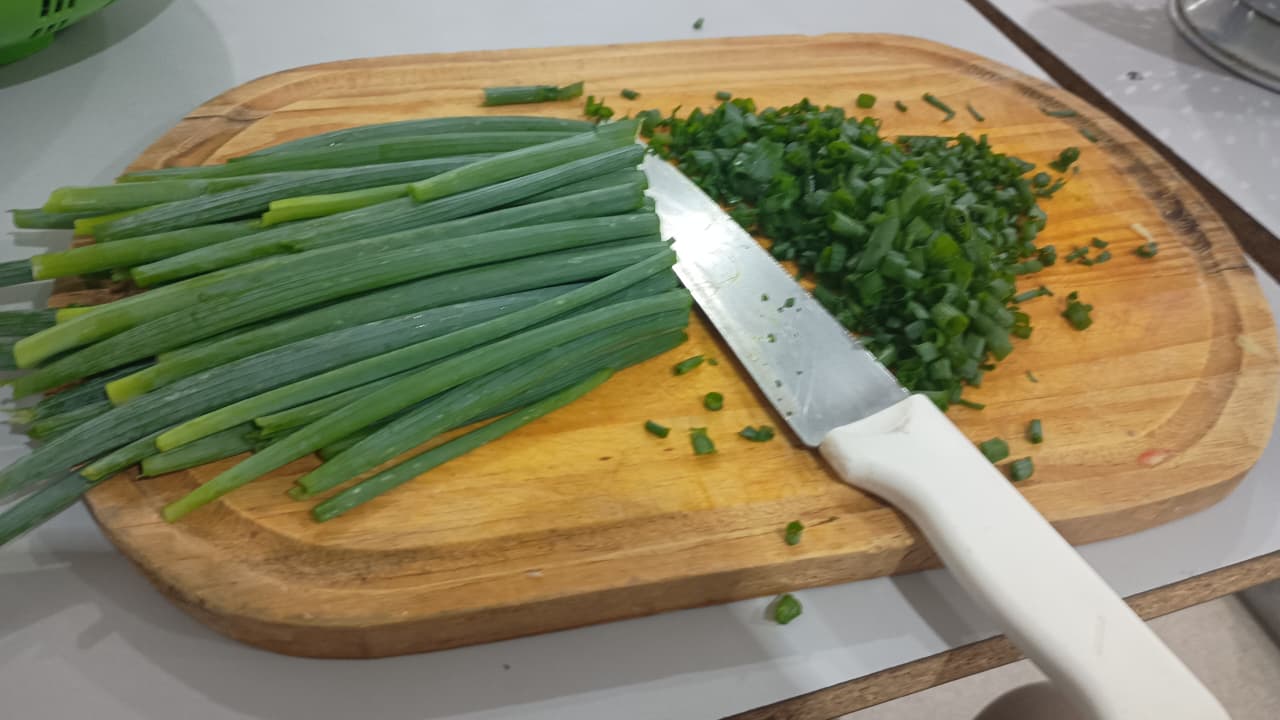
[Chopping any member of the onion family breaks cells and starts the same two-enzyme sequence that produces the tear gas.] Photograph: Sarah5252
Image Credits: Wikimedia Commons
Kitchen tricks that actually reduce tears
Not every folk remedy survives contact with the chemistry. The tricks that work are the ones that either slow the enzyme reaction or remove the gas from the air before it reaches your eyes. Running water over the onion while you cut it helps because syn-propanethial-S-oxide is water-soluble: it washes away before it can become airborne.
A fan aimed across the cutting board, blowing away from you, physically carries the rising gas off to the side. It is crude but effective, and it works on the same principle: the gas has to travel from the board to your face, and a crosswind breaks the route.
Cutting the onion under running water combines both effects: washing plus dilution. The water carries the dissolved compound off the board before it can vaporize.
If your eyes still sting despite all of this, step back from the board for a minute. The gas disperses quickly in ventilated air, and the stinging fades once the supply stops.
Persistent stinging long after you stop cutting is not typical. This article is for general information only and is not medical advice; talk to a clinician about any symptoms.
Does chilling an onion really stop the tears?
It does not eliminate them entirely, but it measurably reduces them. About 30 minutes in the refrigerator, or a few minutes in ice water, slows the enzyme reaction that creates syn-propanethial-S-oxide, so less gas forms during the first critical minutes of slicing.
Why don't cooked onions make you cry?
Heat inactivates the enzymes needed to build the lachrymatory agent. Without working alliinase and lachrymatory factor synthase, the onion cannot produce syn-propanethial-S-oxide, so cooked onions never trigger tears.
What exactly is syn-propanethial-S-oxide?
It is a volatile sulfur compound (C3H6OS) produced when onion cells are damaged. It belongs to a rare class of natural compounds and acts as a lachrymatory agent, meaning it triggers stinging and tearing when it contacts the eyes.
Can cutting an onion underwater help?
Yes, in principle. The compound is water-soluble, so running water washes it off the cut surface before it can vaporize. Fully submerging the onion while cutting makes the knife work awkward, which is why most guides suggest running water over the board instead.
The bottom line
Onions make your eyes water because cutting them mixes enzymes with sulfur compounds, creating a volatile gas called syn-propanethial-S-oxide that rises to your eyes and triggers a protective flood of tears. Chilling the onion beforehand, running water over it, or aiming a fan across the board all reduce tears through real mechanisms, not folklore. If the stinging keeps happening away from the kitchen, it is worth talking to a clinician about your eyes.
Tags: onions, eye health, kitchen chemistry
The Rive News research desk writes science explainers from primary sources and public records. No anecdotes, no invented quotes, every mechanism traced to a named source.
Related
- Why Do Onions Make You Cry? The Kitchen Chemistry Explained
- Why Your Stomach Growls When You Are Hungry: The Science
- Why knuckles crack and what makes the sound
- Why does milk curdle when heated or mixed with acid: the science
Get a new research explainer in your inbox each morning, subscribe to the Rive News newsletter.
Accuracy is a process, not a claim: every factual statement here traces to a cited public source, and corrections are published openly.
Related stories
ADHD linked to fourfold dementia risk in Pitt study of 187,000 adults
Adults with ADHD face four times the risk of dementia, a University of Pittsburgh study of 187,000 adults published in JAMA Psychiatry

Why Do Athletes Get Cramps Despite Drinking Water?
Muscle cramps strike even well-hydrated athletes because sweat drains electrolytes that plain water cannot replace. Here is why water alone

Do bananas actually prevent muscle cramps?
A medium banana has 422 mg of potassium, but the evidence says it cannot stop cramps. Here is what the research shows, and what actually