
Why Do Driveways Crack Even With Control Joints: The Slab Science
Key takeaways
- Control joints are planned weak lines that decide where concrete cracks, not whether it cracks at all.
- Late or shallow saw cuts, wide panel spacing, soil settlement, freeze-thaw cycles, and overloads all defeat joints.
- Sealing joints against water and fixing drainage do more for a driveway's life than the joints alone.
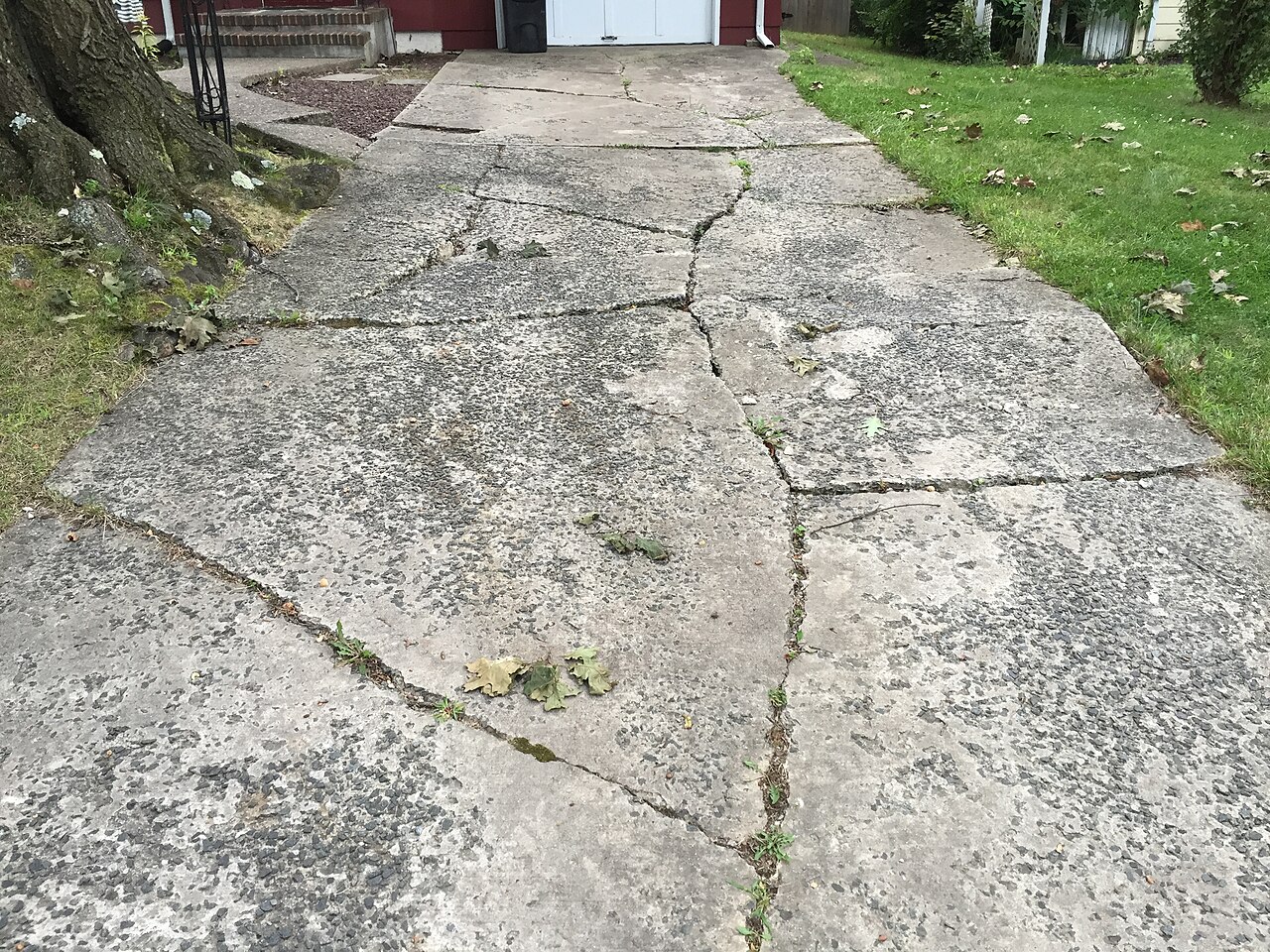
You paid for control joints. The contractor saw-cut neat lines every few feet. Then a crack wandered diagonally across a panel anyway.
It feels like a broken promise, but the joints never promised what you think they did.
This article explains why driveways crack even with control joints, including what joints actually do, the six forces that break a slab despite them, why joint timing and depth matter so much, and what genuinely extends a driveway's life.
What control joints actually promise
Control joints are deliberate weak points. Fresh concrete shrinks as it cures, and shrinking concrete cracks. The joint gives that crack a tidy, pre-planned path to follow instead of wandering across the slab.
As TrustDale's guide explains, contractors usually saw-cut these lines to about one-fourth of the slab depth, keeping panels close to square and under about 15 feet across.
That is the whole job: manage where the crack goes. According to the American Concrete Institute guidance cited by TrustDale, joints help manage cracking but cannot guarantee a crack-free slab. The concrete industry even has a saying, quoted by EcoLift Concrete Leveling: there are two kinds of concrete, concrete that has cracked and concrete that will crack.
Expansion joints are the related but different feature: wider, compressible gaps (fiberboard or foam) that let slabs grow in summer heat without crushing each other. Confusing the two is common, and it matters, because each one only handles its own kind of movement.
The six forces that crack a jointed slab anyway
A slab with perfect joints can still crack, because joints answer only one question: where does shrinkage stress release? Everything below is a different question.
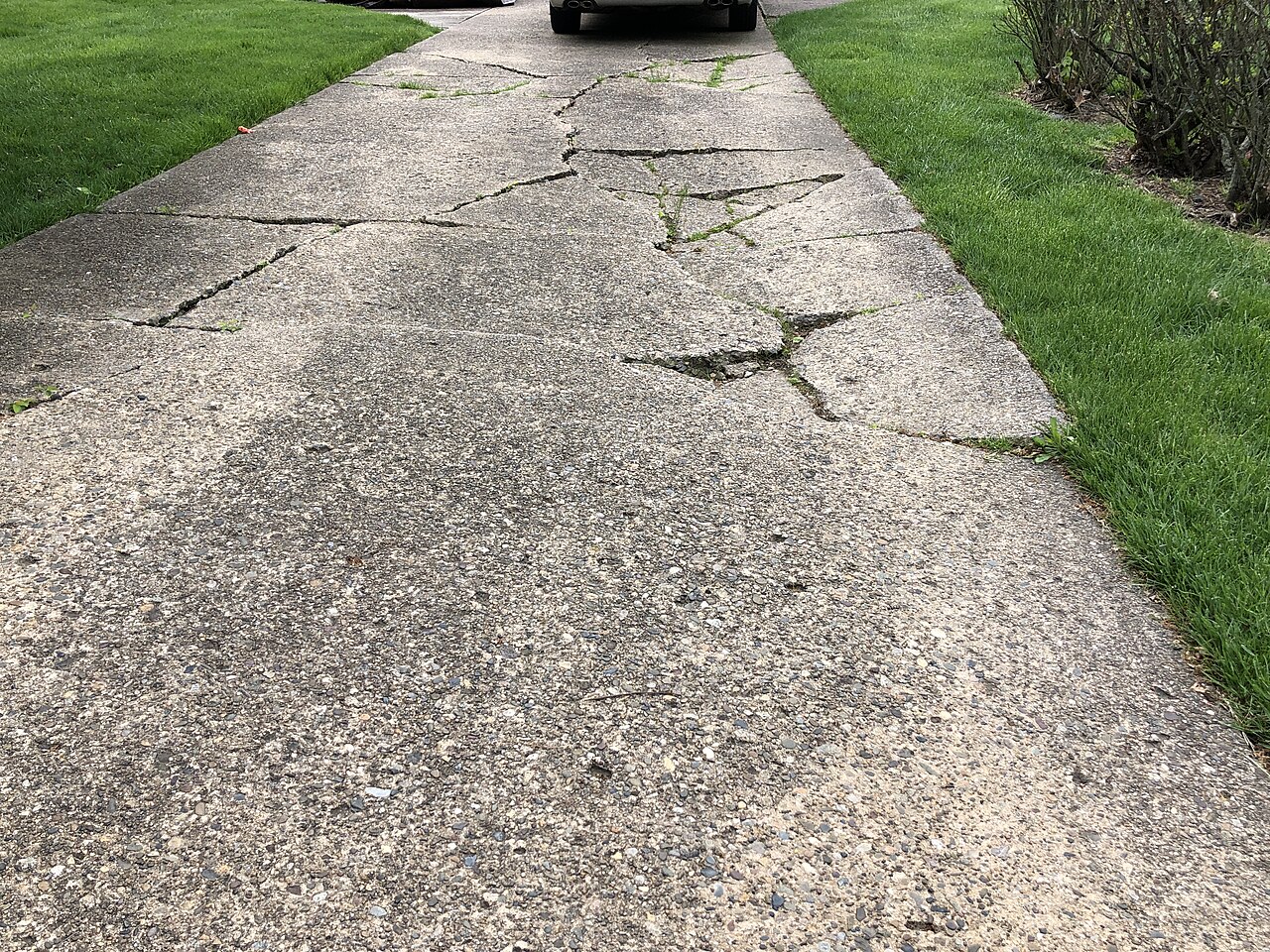
Late or shallow joints. The American Concrete Institute advises cutting joints as soon as the slab can take a saw without raveling, often within hours of placement. If the crew cuts a day late, shrinkage has already picked its own path, and the joint is decoration. Too shallow, and the crack ignores the groove entirely.
Panels too large. Stress rises with panel size. Guidelines suggest keeping panels roughly square and around 15 feet maximum. Stretch the spacing to save time and the concrete will invent its own joints at random.
Thermal movement. According to the American Concrete Institute figures cited by DiffSense, concrete can move about 0.66 inches per 100 feet for every 100-degree Fahrenheit temperature change. A 50-foot driveway cycling through seasons is a slow-motion tug of war, and joints sized only for shrinkage cannot absorb all of it. In extreme heat, trapped slabs can even blow up, arching and shattering.
Freeze-thaw cycles. Water that seeps into a hairline crack expands up to 9 percent in volume when it freezes, per Slab Jack Kings. Each winter cycle pries the crack a little wider. De-icing salts make surface damage worse when moisture and cold combine.
Soil settlement and water. A slab is only as stable as what sits under it. Poor compaction, erosion, tree roots, or expansive clay let sections of the slab sink unevenly. Concrete is strong in compression but weak when bent or pulled, so a settled corner cracks the panel regardless of how neatly the joints were cut. Basement Fix notes that water seeping through unsealed joints softens and washes out the soil beneath, which is why sealing joints matters as much as cutting them.
Overloads. A driveway designed for family cars can crack under a loaded moving truck or parked construction equipment. The pressure bends the slab past its capacity, usually at the thinnest or weakest point.
Street creep: the force nobody warns you about
One of the strangest driveway killers has nothing to do with your slab. Basement Fix describes "street creep," a slow pressure from the road itself.
Street slabs contract in cold weather, opening their joints. Grit and pebbles wash into those gaps.
In summer the slabs expand again, but the grit-filled joints cannot close, so the whole street inches outward and pushes against your driveway. Your driveway then pushes against your garage foundation. Control joints in your driveway never had a vote in any of this.
What actually keeps a driveway intact longer
If joints are only half the system, the other half is water management and support. Seal the control joints so water cannot seep beneath the slab and undermine the soil.
Keep gutters and grading moving water away from the driveway edges, not toward them. Avoid parking heavy equipment on residential-grade slabs.
And when cracks do appear, seal them early: a hairline crack is a maintenance item, but a crack with one side higher than the other signals settlement that needs leveling first, not just caulk. The same "seal the weak point" logic applies indoors too, whether you are deciding how long paint needs to cure or finding what a stud finder actually detects before you hang anything heavy.
How deep should control joints be cut?
About one-fourth of the slab depth is the standard guideline, and the cut needs to happen early, often within hours of placement. A shallow decorative groove will not control anything.
How far apart should the joints be?
Panels work best kept close to square, with roughly 15 feet cited as a practical maximum. Larger panels build up more shrinkage stress than one joint line can release.
Are driveway cracks normal?
Yes, mostly. The Portland Cement Association, American Concrete Institute, and National Ready Mixed Concrete Association all recognize that cracks are common in concrete flatwork, TrustDale reports. A crack alone does not prove poor workmanship.
When should a crack worry me?
Worry when one side of the crack sits higher than the other, when the crack keeps widening year over year, or when water visibly flows through it. Those point to settlement or support failure, not ordinary shrinkage.
The bottom line
Control joints never promised a crack-free driveway. They promised to choose where the inevitable shrinkage crack goes, and they only keep that promise when cut early, cut deep enough, and spaced tightly.
Heat, frost, soil, water, overloads, and street creep all operate outside the joint's jurisdiction. Seal the joints, drain the water, respect the load rating, and the slab will age on your terms instead of its own.
Image Credits: Wikimedia Commons / Famartin
Latest in Home & DIY
- Why laminate flooring buckles in summer heat
- Why paint feels dry in hours but needs weeks to cure
- What a stud finder actually detects
Subscribe to Rive News for one clear explainer like this every day.
Related stories
Why Your Faucet Keeps Dripping After You Turn It Off
A dripping faucet is usually a worn washer, O-ring, or cartridge that can no longer seal. One drip per second wastes over 3,000 gallons
How to fix a running toilet without a plumber in 30 minutes
A running toilet can waste 200 gallons of water a day. Diagnose the flapper, float, or fill valve in two minutes, then fix it yourself
How to hang heavy shelves on drywall safely
Studs first, toggle bolts second, plastic anchors never for heavy loads. Weight ratings, installation steps, and mistakes that bring