
Why Does Laminate Flooring Buckle in Summer Heat? Expansion Fix
Key takeaways
- Laminate buckles in summer because its HDF wood-fiber core absorbs humidity and swells, with nowhere to go.
- A missing or too-small 1/4-inch expansion gap at walls is the most common cause of seasonal buckling.
- Buckling from expansion is reversible by restoring the gap; buckling from water damage usually means replacing planks.
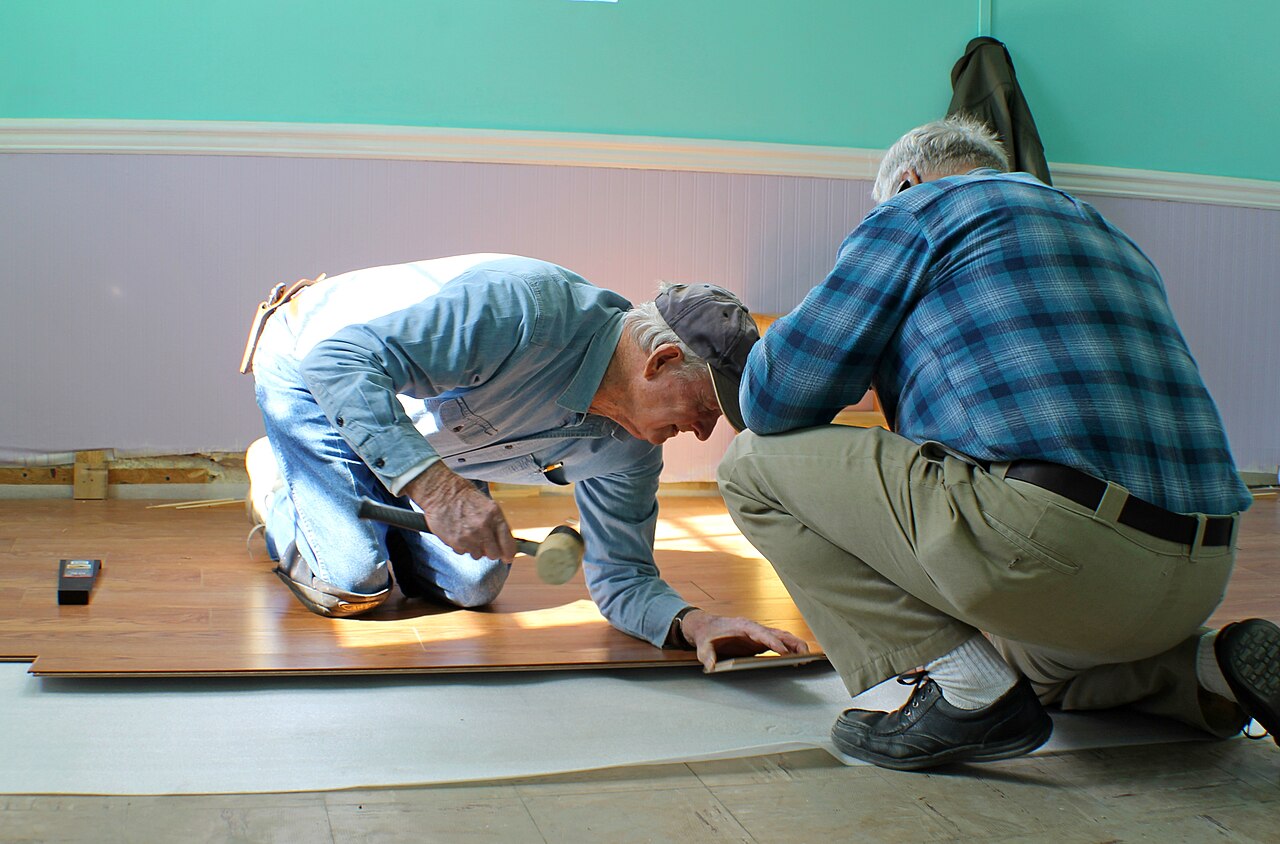
Image Credits: Wikimedia Commons / Wasrts
Every summer, the same complaint lands on flooring forums: the laminate floor that sat perfectly flat all winter is now tenting up in the middle of the room. The planks have not rotted and nobody spilled anything. The floor simply grew.
This article explains why laminate flooring buckles in summer heat, including how the wood-fiber core swells with humidity, why the expansion gap matters so much, and how to fix a buckled floor and prevent the next one.
What laminate flooring actually is
Laminate planks look like wood but are engineered sandwiches. The core is HDF, high-density fiberboard, a compressed wood-fiber product that makes up roughly 80 to 90 percent of the plank by mass. Above it sits a photographic wear layer printed to look like oak or walnut, and below it a stabilizing backing.
The HDF core is the part that matters for buckling. Like all wood-based materials, it absorbs moisture from the air and releases it again.
When indoor humidity rises, the fibers swell and each plank grows slightly wider and longer. When humidity falls, the planks shrink back.
Flooring guides describe laminate as designed for 30 to 60 percent indoor relative humidity. Above 60 percent the planks gain moisture and push outward; below 30 percent, common when winter heating dries the air, they contract and can open gaps at the seams.
Heat plays a smaller but real role. Temperature-driven movement is additive to humidity-driven movement.
Most manufacturers specify installation between 64 and 81°F (18 to 27°C) and warn that the floor surface should never exceed 95°F (35°C). That is why overheated radiant floors and unshaded sunrooms can cause expansion even when humidity stays in range.
Why summer makes it worse
Summer is the season when all the expansion forces peak at once. Warm air holds more moisture, so indoor relative humidity climbs. Air conditioning cycles on and off, swinging conditions back and forth.
The floor absorbs moisture through the summer months and each plank presses a little harder against its neighbors.
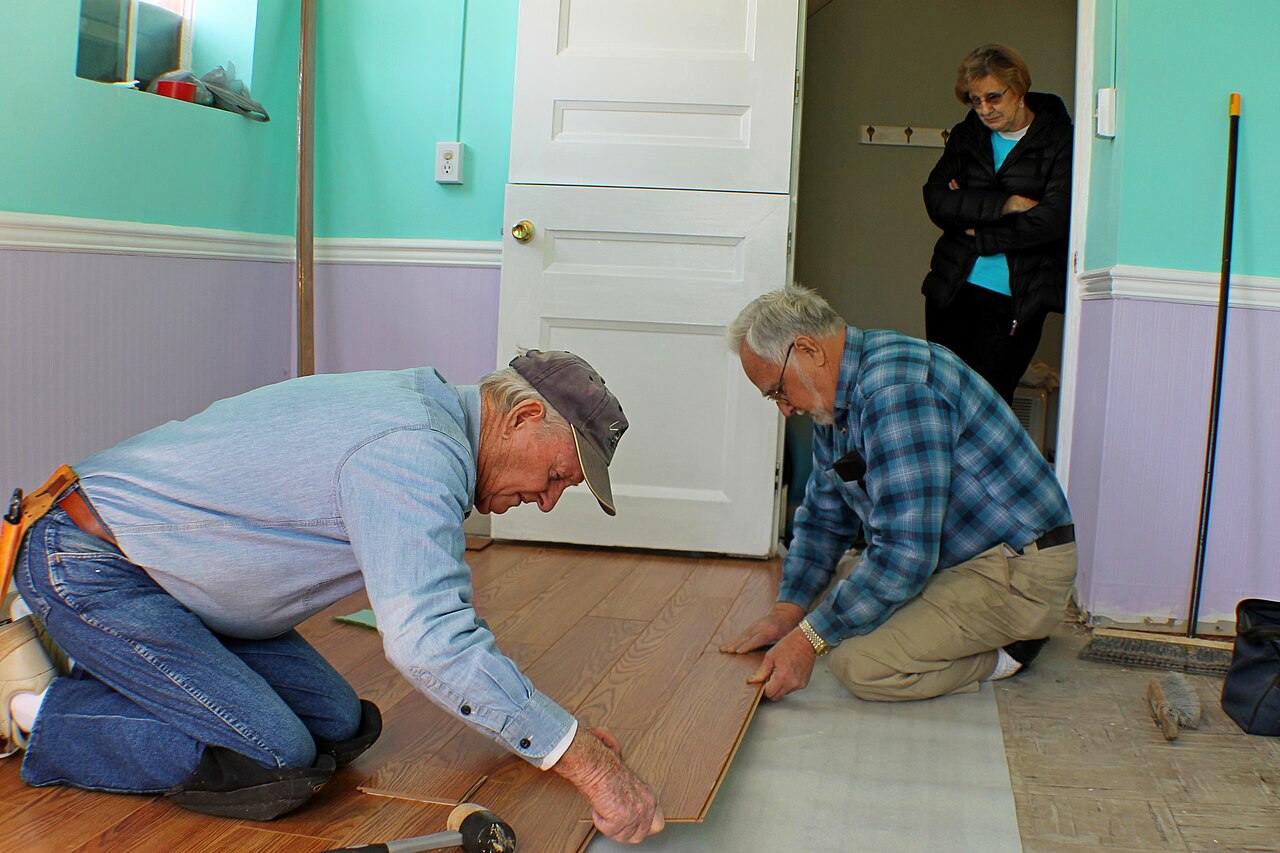
Laminate is a floating floor, meaning it is not glued or nailed to the subfloor. It is supposed to drift as a single sheet, expanding toward the walls and contracting back.
Installers leave a perimeter expansion gap, typically 1/4 inch (about 8 to 12 millimeters), at every wall and fixed object so the sheet has somewhere to grow. On runs longer than about 25 to 30 feet, many manufacturers call for a wider gap or a mid-floor expansion joint hidden under a T-molding.
When that gap is missing or too small, the expanding floor has nowhere to go but up. The planks push against the walls, pressure builds through the whole sheet, and joints lift into visible ridges. Flooring specialists call this peaking when it happens at the joints and tenting or crowning when whole sections lift off the subfloor.
The pattern is often cyclical. A floor may flatten out during dry, cold months when the planks contract, only to crown again in the hotter, more humid months. If your floor humps up every July and lies flat every January, restricted expansion is almost certainly the cause.
The expansion gap: the detail that decides everything
The most frequent immediate cause of summer buckling is a failure to provide an adequate perimeter gap. Common ways the gap disappears:
- Baseboards or quarter-round installed tight over the flooring, pinning the edge.
- Door jambs, built-in cabinets, kitchen islands, and fireplace hearths where the floor was cut too tight.
- Heavy furniture that effectively pins a floating floor in place (a grand piano can do it).
- Rooms longer than 40 feet installed as one unbroken run, where manufacturers specify up to 3/8 inch (10 millimeters) of gap instead of 1/4 inch.
Skipping acclimation makes the problem worse. Manufacturers recommend letting unopened boxes sit flat in the installation room for at least 48 hours, sometimes up to 72 hours in extreme climates, at 65 to 85°F and 35 to 65 percent relative humidity. Installing contracted, cold-stored planks means the first humid spell will expand them past the gap that looked generous on installation day.
Buckling from expansion vs. buckling from water
Not every buckled floor is an expansion problem, and the fix differs completely. Expansion buckling from a missing gap is usually reversible: restore the gap and the floor settles back. Water damage is usually permanent.
Water that seeps through the seams, from a large spill, a pet accident, or a slow plumbing leak, is absorbed directly by the HDF core. The affected planks swell in size and density, and the joints fail. This damage is irreversible.
The planks cannot simply be pushed back down; the floor needs to be pulled up and the damaged boards replaced.
Moisture can also migrate up from the subfloor. Concrete slabs naturally release moisture vapor, and a poorly ventilated crawl space does the same.
If no proper vapor barrier was laid beneath the underlayment, the underside of the HDF core absorbs moisture unevenly, which can deform planks and cause severe buckling even when the perimeter gap was correct. Industry standards call for the subfloor to be flat within 3/16 inch over a 10-foot span, and a 6-mil vapor barrier over concrete is standard practice.
A bulge that remains after the expansion gap is confirmed or restored points to moisture damage rather than simple expansion. That is the signal to stop adjusting gaps and start looking for the water source.
How to fix a buckled laminate floor
If the cause is restricted expansion, the repair is to restore the gap. Remove the baseboards along the buckled area and check whether the flooring runs tight against the wall. Trim the plank edges back to re-establish a uniform 1/4-inch space between the laminate edge and the wall or fixed object, then reinstall the baseboards to cover the gap.
While the trim is off, inspect the usual trap points: door jambs, heating vents, plumbing pipes, and transitions to other flooring. Any spot where the floor was cut tight needs the same treatment. Check whether heavy furniture is pinning the floor; sometimes simply shifting a bookcase frees the sheet to move.
Run a dehumidifier while you work. Bringing indoor humidity back into the 35 to 55 percent range that manufacturers recommend lets the swollen planks begin contracting, which can make the floor lie flatter before you even cut the gap. For long-term stability, use a dehumidifier during humid summer months and a humidifier in dry, heated winter environments to keep the HDF core's moisture content steady year-round.
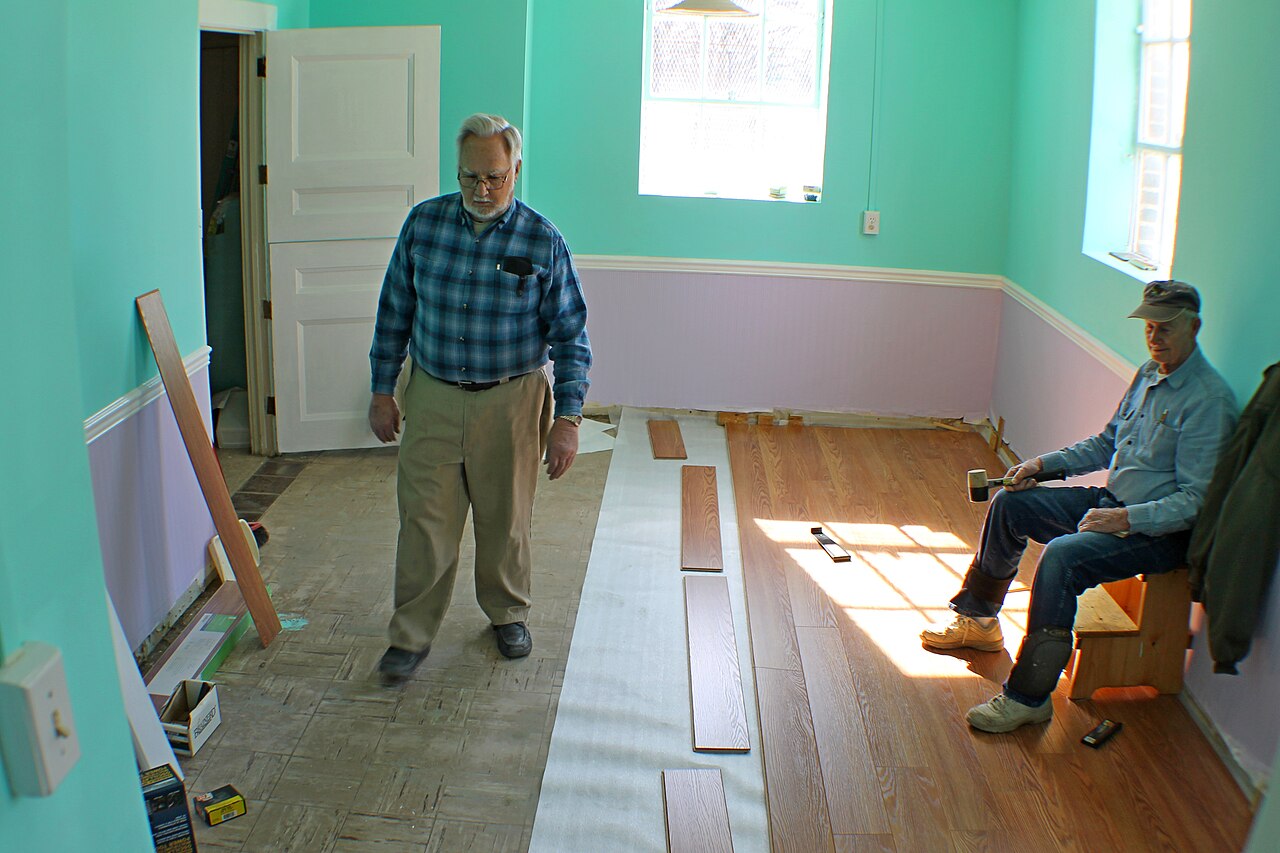
If the damage is water-related, replacement is the honest answer. Pull up the affected section, fix the moisture source, verify the vapor barrier, and install new planks with the correct gap. Trying to flatten swollen, delaminated boards wastes a weekend.
Frequently asked questions
Will a buckled laminate floor go back down on its own?
Sometimes. If the buckling comes from seasonal humidity and the expansion gap is adequate, the floor often flattens as indoor humidity drops in cooler months. But a floor that was installed tight will buckle again next summer, so restoring the gap is the real fix.
How big should the expansion gap be?
Most manufacturers specify a minimum of 1/4 inch (about 6 to 8 millimeters) at every wall and fixed object. For rooms wider than about 8 meters, or runs longer than 40 feet, the requirement rises to 10 to 15 millimeters, sometimes with a mid-floor expansion joint under a T-molding.
Can I install laminate in a sunroom or over radiant heat?
Only laminate rated for radiant heat, and only if you keep the floor surface within the maker's stated temperature limit, generally under 95°F (35°C). Stabilize the heating system for two to three days before installing and raise the temperature gradually afterward. Unshaded sunrooms with big temperature swings are among the hardest rooms for laminate.
Why does my floor buckle in the same spot every summer?
A recurring bulge in one location usually means something is pinning the floor nearby: a tight cut around a door jamb or pipe, a heavy piece of furniture, or a transition strip screwed through the flooring. The pressure builds across the whole sheet and releases at the weakest joint, which is why the visible hump can sit far from the actual pinch point.
The bottom line
Laminate flooring buckles in summer heat because its HDF core swells as humidity rises, and the expanding sheet has nowhere to go when the perimeter gap is too small or missing. Restore a uniform 1/4-inch gap, keep indoor humidity between 35 and 55 percent, and acclimate new flooring for 48 hours before installing. If the floor stays humped after the gap is fixed, suspect water damage and replace the swollen planks.
Latest in Home & DIY
- Why driveways crack even with control joints
- Why paint feels dry in hours but needs weeks to cure
- Why wood splits when you nail close to the edge
- Why a faucet drips after you turn it off
Subscribe to the Rive News newsletter for one practical home explainer every morning.
Image Credits: Wikimedia Commons / Wasrts
Related stories
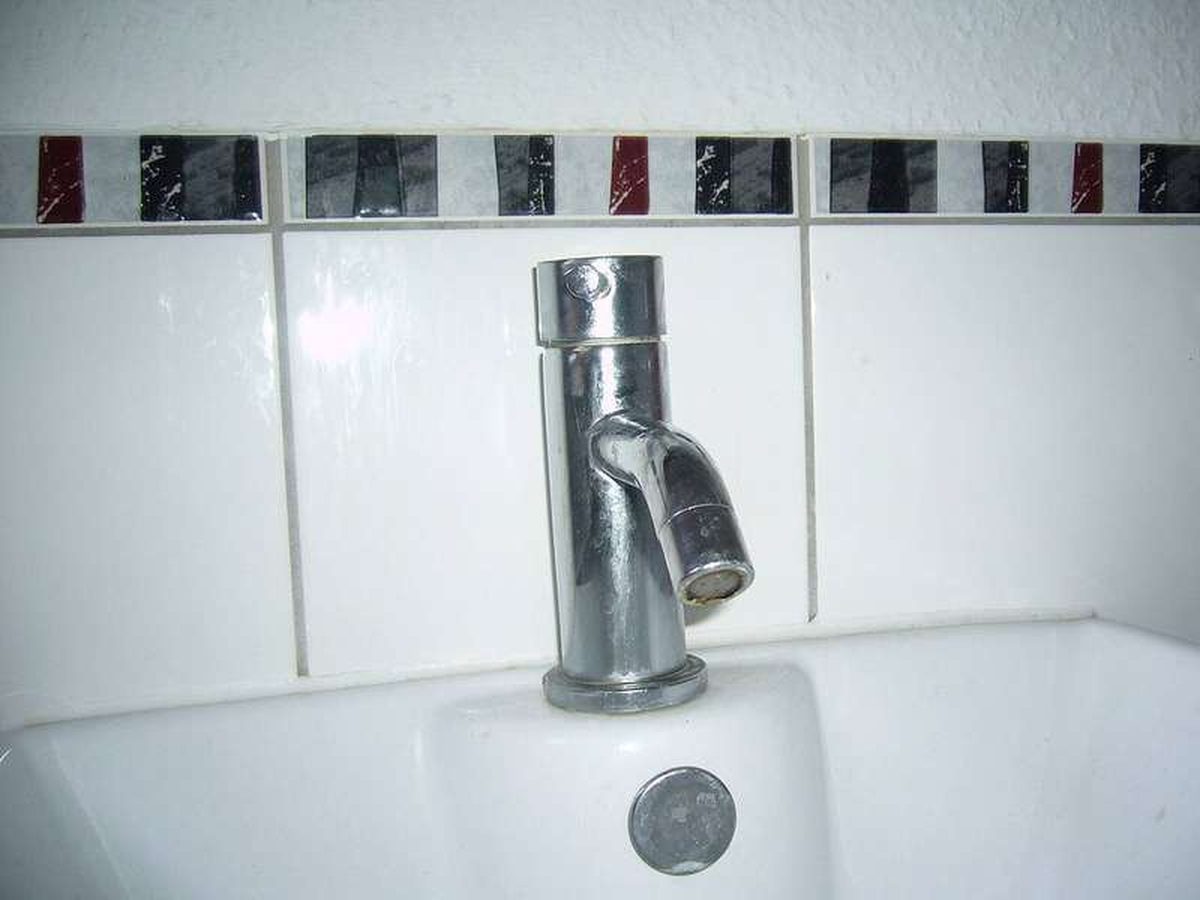
Why Your Faucet Keeps Dripping After You Turn It Off
A dripping faucet is usually a worn washer, O-ring, or cartridge that can no longer seal. One drip per second wastes over 3,000 gallons
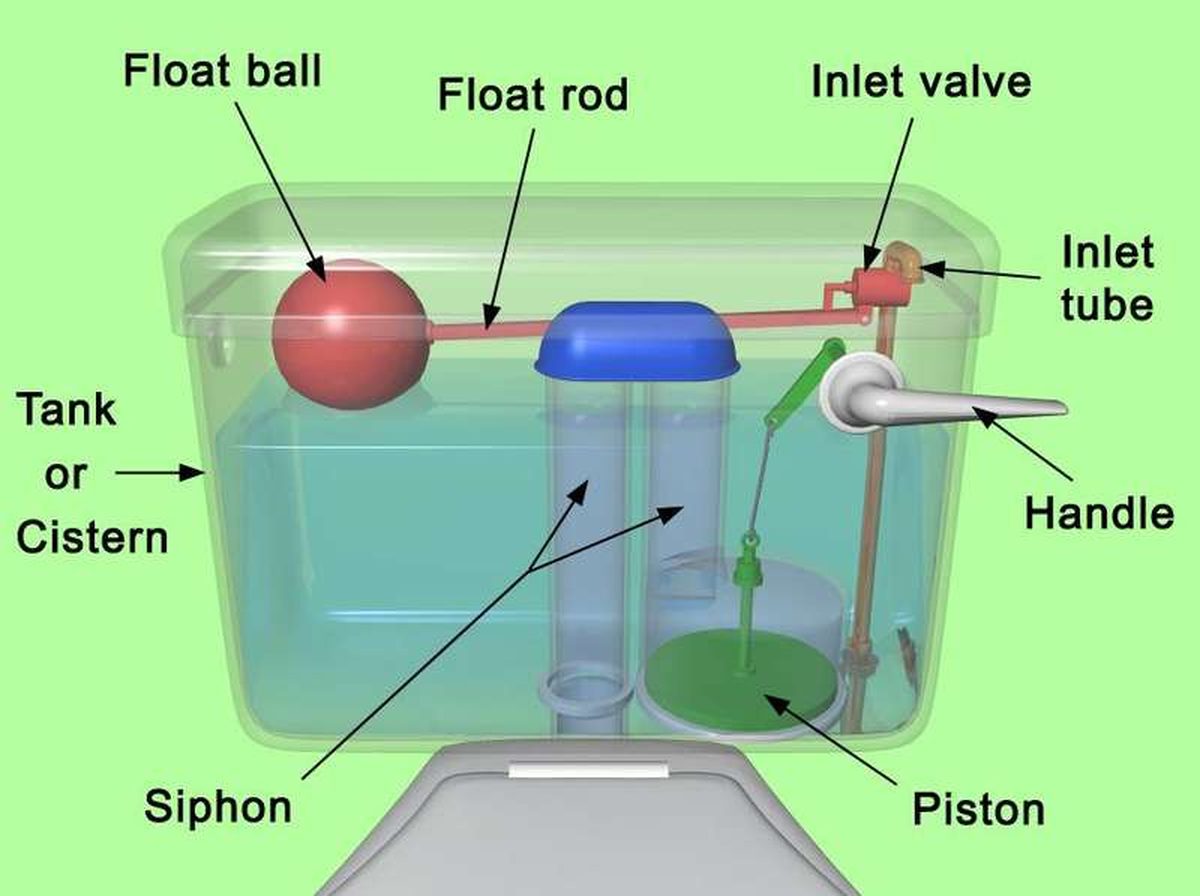
How to fix a running toilet without a plumber in 30 minutes
A running toilet can waste 200 gallons of water a day. Diagnose the flapper, float, or fill valve in two minutes, then fix it yourself
How to hang heavy shelves on drywall safely
Studs first, toggle bolts second, plastic anchors never for heavy loads. Weight ratings, installation steps, and mistakes that bring