
Why your garbage disposal hums but will not spin
Key takeaways
- The hum means power is reaching the motor but the flywheel (the spinning plate inside) cannot turn, almost always because something hard is jammed in the grinding chamber.
- Free the flywheel with a 1/4-inch hex wrench in the bottom socket, remove the debris, then press the red reset button on the unit.
- Never put a hand inside the disposal. If the reset button keeps popping out, the motor is likely done and a plumber should take over.
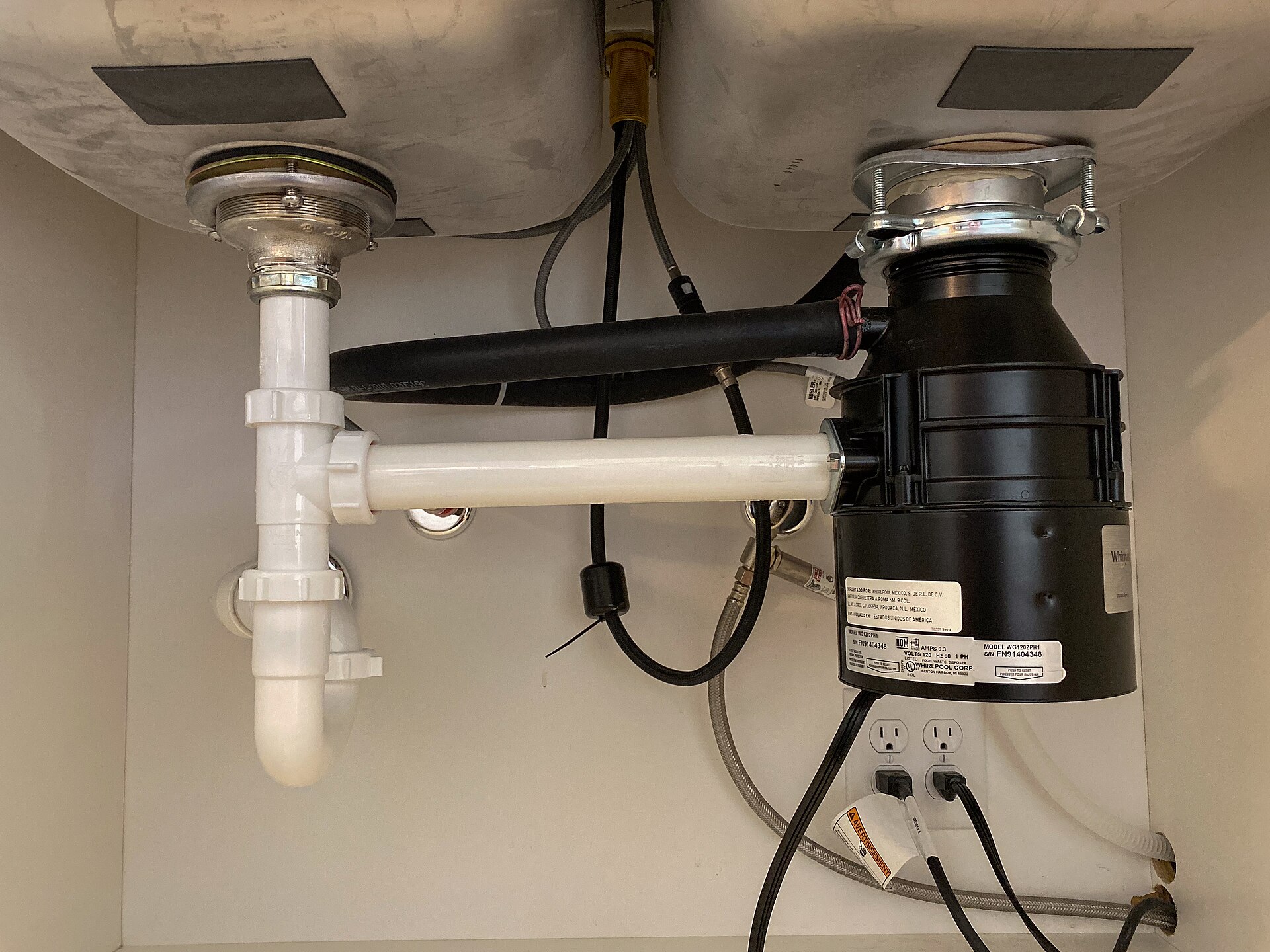
A humming garbage disposal is a stalled motor. Electricity is reaching the unit, which is why you hear it, but the spinning plate inside, called the flywheel, cannot turn. In nearly every case, the reason is a jam: something hard has wedged between the flywheel's impellers (the spinning blades) and the shredder ring, and the motor is straining against it.
This article explains what the hum means, how to safely unjam the unit step by step, why the reset button exists, and the signs that the problem is beyond a DIY fix. Safety first: cut power before touching anything, and never put your hand inside the disposal, even with the power off.
What the hum actually is
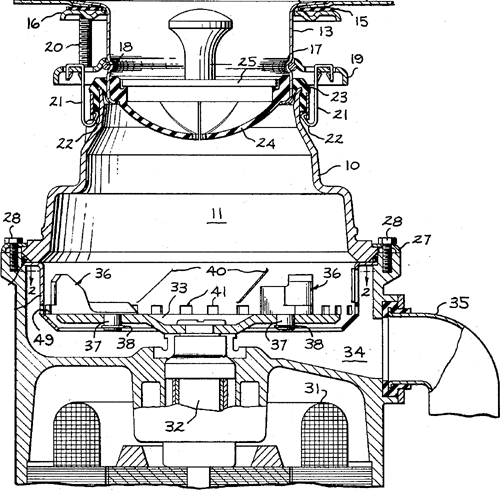
Inside the disposal, the motor drives a flywheel, a spinning plate fitted with impellers that fling food waste against a stationary shredder ring. When a bone, fruit pit, bottle cap, or piece of cutlery lodges in that gap, the flywheel locks up while the motor keeps trying to spin it. The humming you hear is the motor straining against a load it cannot move.
A stalled motor draws excessive current, which builds heat fast in the copper windings. To prevent the motor from burning itself out, disposals carry a thermal overload protector: a small red or black reset button on the bottom or side of the housing. It trips and cuts power when it detects overheating, which is why a disposal that hummed for a while may fall silent and then refuse to start until it cools.
Step 1: cut the power
Turn the disposal off at the wall switch. Then go further: unplug the unit or switch off its circuit breaker.
Do not rely on the wall switch alone, and do not start the next steps while power could reach the motor. This is the non-negotiable step that every repair guide, from FixDisposal.com to the plumbers at Bienvenu Brothers, puts first.
Step 2: free the flywheel with a hex wrench
Look at the very bottom of the unit, under the sink. In the center you will find a hexagonal socket, about a quarter inch across, built into the housing. This is the manual override for the flywheel shaft, and most disposals ship with a matching wrench; a standard 1/4-inch Allen key works if yours is lost.
Push the wrench into the socket until it engages, then work it back and forth, clockwise and counter-clockwise. You will feel resistance where the obstruction is wedged.
Keep working it like loosening a stubborn jar lid, gradually increasing your range of motion, until the flywheel rotates freely a full 360 degrees in both directions. That free rotation is your confirmation that the mechanical jam is cleared.
If the flywheel still will not budge, something may be wedged too tightly for the wrench, and the chamber needs direct attention first.
Step 3: clear the chamber
With power still off, shine a flashlight down into the disposal from above and look for whatever caused the jam. Use long-handled tongs or pliers to pull out the object. Common culprits are bones, fruit pits, silverware, glass shards, and bottle caps.
Never use your fingers, even though the power is off. The impellers are sharp and the chamber is not a place for hands.
Step 4: press the reset button
Find the small red reset button on the bottom or side of the unit. During the jam, the overheating motor likely tripped it, so press it firmly until you hear or feel it click back into place.
If it will not stay in, wait about ten minutes for the motor to cool and try again; the button is a bimetallic thermal switch (a heat-sensitive switch) that only resets once the heat has dissipated. Pressing it too soon just pops it back out.
Step 5: restore power and test
Restore power at the breaker or plug, run cold water into the sink, and flip the wall switch. Cold water matters: it keeps fats solid so they get ground and flushed instead of coating the chamber. If the disposal spins up and grinds normally, the jam is cleared.
When the fix does not work
Sometimes the hum persists after all five steps, which changes the diagnosis. If the flywheel turns freely but the unit still hums, or if the reset button pops out immediately every time, the motor or its capacitor (an electrical part that helps start the motor) may be damaged. A stalled motor that ran hot for too long can burn out its windings, and no amount of resetting will revive it.
Other signs to stop DIY and call a plumber: the disposal is silent with no hum at all after unjamming, which points to complete motor failure or an electrical fault; visible damage, cracked housing, or water leaking from the bottom of the unit; a burning smell; or a unit over 10 years old that keeps jamming. AppliancePartsPros notes that disposals typically last around 10 to 15 years, and past that point replacement is usually more practical than another repair. Bienvenu Brothers adds a clear rule of thumb: if the disposal jams again straight away or the reset button will not stay in, stop resetting and get a professional, since repeated resets risk permanent motor damage.
Preventing the next jam
Most jams are avoidable. Keep hard items out of the disposal: bones, fruit pits, shells, and obviously anything metal.
Avoid fibrous foods like celery stalks, corn husks, and onion skins, which wrap around the impellers instead of grinding. Run cold water before, during, and after grinding, and feed waste in gradually rather than dumping a full load at once.
For other kitchen plumbing that misbehaves, the dishwasher leaving spots on glasses guide covers a common companion problem.
FAQ
Where is the reset button on a garbage disposal?
It is a small red (sometimes black) button on the bottom or side of the disposal housing, under the sink. Press it firmly after clearing a jam; if it pops back out, wait about ten minutes for the motor to cool.
Can I use a regular Allen wrench instead of the disposal wrench?
Yes. The socket is a standard 1/4-inch hex fitting, so any 1/4-inch Allen key works. The wrench that ships with the unit is just an offset version for easier turning in tight space under the sink.
Why does my disposal keep tripping the reset button?
Repeated tripping means the motor is overheating, either from a partial jam that remains or from a failing motor drawing too much current. Stop resetting it and call a plumber; continuing can burn out the motor permanently.
Is it safe to put my hand in the disposal if the power is off?
No. Never put a hand inside the grinding chamber, even with the power off. Use tongs or pliers to remove objects.
The impellers are sharp and residual spring tension can still cause injury.
How long should a garbage disposal last?
Around 10 to 15 years with normal use, according to appliance repair guidance. Frequent jams, persistent humming, or leaks from the bottom of an older unit are signs it is time for replacement rather than repair.
The bottom line
A disposal that hums but will not spin is a motor trying to turn a jammed flywheel. Cut the power, work the hex socket until the flywheel spins freely, pull out the debris with tongs, press the reset button once the motor cools, and test with cold water running.
That sequence resolves the vast majority of jams. When the reset button will not stay in or the hum never becomes a spin, the motor itself is the problem, and a plumber's visit beats another round of resets.
---
Topics: garbage disposal, plumbing, home repair, DIY
Rive News is a research desk publishing evidence-checked explainers on everyday questions.
Latest in Home
- Why your washing machine shakes violently in the spin cycle
- Why your dishwasher leaves spots on glasses
- How to fix a running toilet without a plumber
- How to unclog a drain without chemicals
Get one evidence-checked explainer like this in your inbox each week. Subscribe for the weekly roundup.
Rive News applies a standards desk: claims carry sources, corrections are published with timestamps, and no story is invented. Copyright 2026.
Related stories

Why Your Faucet Keeps Dripping After You Turn It Off
A dripping faucet is usually a worn washer, O-ring, or cartridge that can no longer seal. One drip per second wastes over 3,000 gallons a ye

How to fix a running toilet without a plumber in 30 minutes
A running toilet can waste 200 gallons of water a day. Diagnose the flapper, float, or fill valve in two minutes, then fix it yourself with

How to hang heavy shelves on drywall safely
Studs first, toggle bolts second, plastic anchors never for heavy loads. Weight ratings, installation steps, and mistakes that bring shelves