
Why Your Dishwasher Leaves Spots on Glasses: Causes and Fixes
By Rive News | Research desk | Rive News | Published October 12, 2026 at 09:00 AM PKT
Key takeaways
- Spots on glasses come from one of five causes: hard water minerals, too much detergent, an empty rinse aid dispenser, bad loading, or low water temperature.
- Hard water is the most common culprit: calcium and magnesium dry onto glass as limescale, leaving spots, streaks, or a chalky haze.
- Permanent cloudiness that will not wash off is etching, not spots. Etching cannot be fixed, but real spots respond to rinse aid, correct detergent dose, and a vinegar descale.
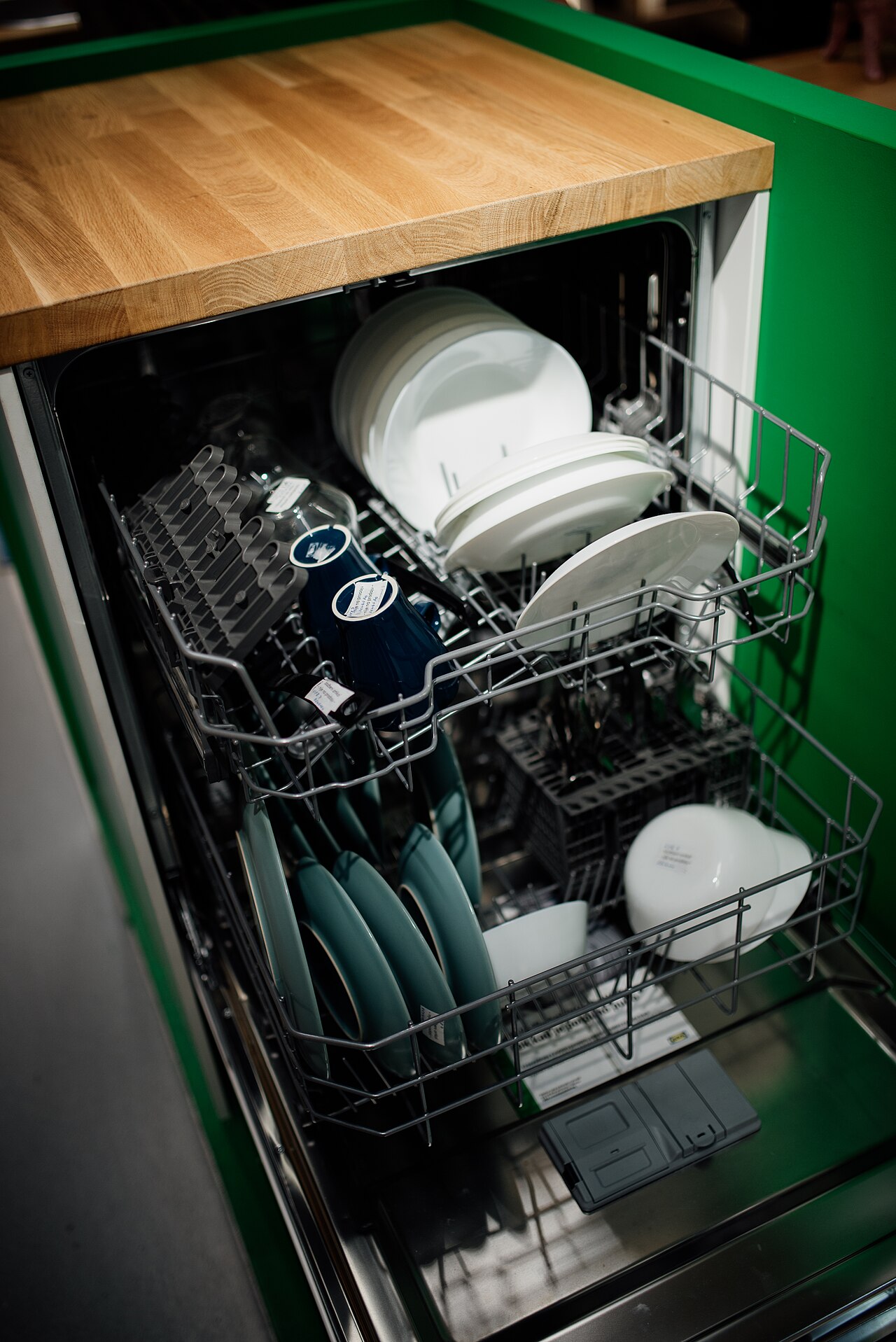
A dishwasher loaded with dishes. How the load is arranged, and what goes into the cycle, decides whether glasses come out spotted. Photograph: Shixart1985/Wikimedia Commons
Image Credits: Wikimedia Commons
Cloudy, spotted glasses are one of the most common dishwasher complaints. The glasses go in clear and come out dotted with white spots, streaked with a milky film, or hazed with a chalky coating that ruins the sparkle.
Five things cause this, and they need different fixes. Hard water deposits are the most common, but too much detergent, a missing rinse aid, careless loading, and cold water all leave their own marks. Working through them in order usually finds the answer.
This article explains why your dishwasher leaves spots on glasses, including each of the five causes, how to tell removable spots from permanent etching, and the fixes that bring back the sparkle.
What the spots actually are
Before fixing anything, it helps to know what you are looking at. White spots on glassware are usually one of two things: mineral deposits or detergent residue. They look similar, but they form differently.
Mineral deposits, known as limescale, are calcium and magnesium left behind when hard water evaporates. Southern Living quotes cleaning experts explaining that these minerals dry onto the glass and leave spots, streaks, or a chalky haze, which is extremely common in hard-water homes.
Detergent residue is unrinsed soap film. It happens when too much detergent goes in, or the rinse cycle cannot wash it all away. Tom's Guide notes that the minerals in hard water also bind with detergent, reducing its cleaning power, so the two causes often gang up together.
There is a third possibility that looks like spots but is not: etching. Etching is permanent micro-damage to the glass surface from harsh detergents, soft water, and high heat over time. It looks like a milky haze inside the glass that no cleaning removes. Knowing which one you have matters, because spots can be fixed and etching cannot.
Cause 1: hard water (the usual suspect)
If your home has hard water, this is the first place to look. (Hard water is tap water with lots of dissolved minerals.) During the hot cycle, the water evaporates off the glassware and the minerals stay behind as limescale, the white, chalky residue on your glasses.
A quick check for hard water: look at your faucets and showerhead. If they have white, crusty buildup, your dishwasher is fighting the same mineral battle. Roughly 80 to 90 percent of US homes have hard water to some degree, which explains why this cause tops every list.
What to do about it:
- Adjust the dishwasher's water hardness setting. Most modern dishwashers have a hardness setting that adapts detergent dosing and distribution to the water. Southern Living cites Alex Varela, general manager of Dallas Maids, on this: changing the setting lets the machine compensate for mineral-heavy water automatically.
- Use dishwasher salt if your machine has a built-in softener. Tom's Guide recommends this for machines with the feature; the salt regenerates the softening system.
- Run a vinegar descale monthly. A cup of distilled white vinegar in an otherwise empty hot cycle dissolves mineral buildup. The acetic acid (the acid in vinegar) reacts with carbonate minerals and makes them soluble (dissolvable) again, so the rinse carries them away.
- Consider a whole-home softener for severe cases. Sean Busch, CEO of cleaner company Puracy, told CultCrunch that a whole-home water softener is the true permanent fix, since it protects every appliance, not just the dishwasher.
Cause 2: too much detergent
It feels logical that more soap means cleaner glasses. In a dishwasher, the opposite happens. Excess detergent cannot fully rinse away, and the leftover soap dries into a white, streaky film.
This is a particular problem with powdered detergents, which need plenty of heat and water to dissolve completely. Undissolved powder leaves a gritty white residue that looks exactly like hard water spots.
The fix is simple: use less. A common guideline is about 2 tablespoons of detergent per load in moderately hard water, far less than most people pour. If your detergent comes in pods, switch to them: pre-measured pods remove the temptation to overfill, a point CultCrunch's appliance sources make in favor of pods.
Also check the water temperature. Appliance experts on JustAnswer recommend 120°F for proper detergent activation and rinsing. Water cooler than that leaves detergent half-dissolved on your glassware.
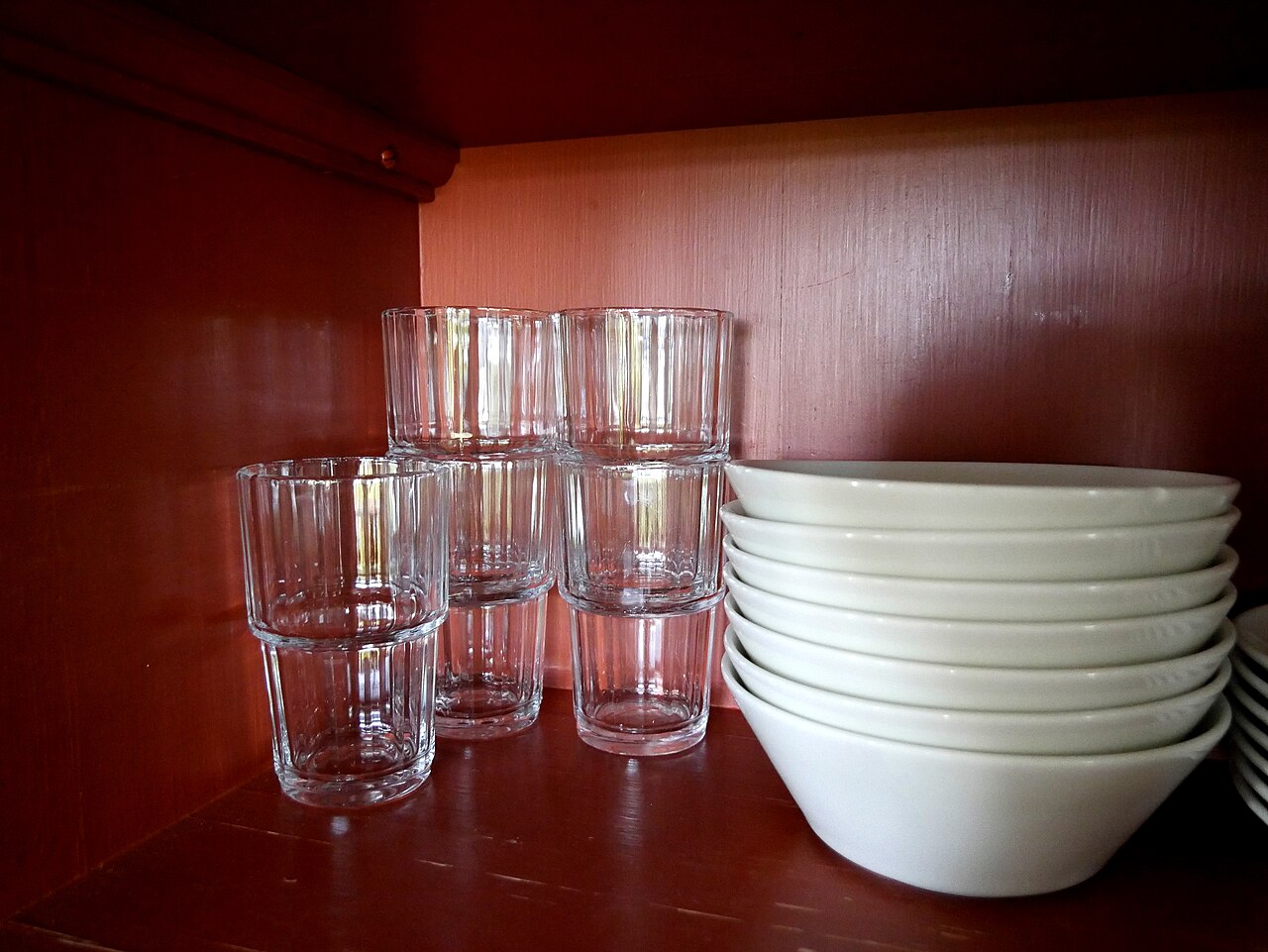
Clean, spot-free drinking glasses in a kitchen cupboard. Achieving this finish comes down to matching detergent dose and rinse aid to the water. Photograph: Santeri Viinamäki/Wikimedia Commons
Image Credits: Wikimedia Commons
Cause 3: the rinse aid dispenser is empty
Rinse aid is not a marketing gimmick. It is a surfactant (a substance that lowers water's surface tension) that makes rinse water sheet off the dishes in an even layer instead of beading into droplets. Droplets sit, dry, and leave their dissolved minerals behind as spots. Sheeting water carries the minerals off and leaves the glass clean.
Without rinse aid, mineral-heavy rinse water essentially bakes onto the glassware during the drying cycle. Check the dispenser: if it is empty, fill it. Most modern machines let you adjust how much rinse aid releases per cycle, so if spots persist with a full dispenser, try increasing the dose setting.
Appliance experts quoted on JustAnswer also suggest setting the rinse aid dispenser to medium or high when white film appears on glassware and plastics.
Cause 4: how you load the dishwasher
Loading decides whether water and detergent actually reach every surface. Glasses that nest together, face the wrong way, or sit in a crowded rack come out with spots simply because the spray never reached them properly.
Tom's Guide lays out the loading rules that matter:
- Face glasses downward so water drains off instead of pooling inside and drying into a mineral ring.
- Angle items toward the spray arms, not away from them, so the jets hit every surface.
- Leave space between items. Overlapping glasses block water flow, and tightly packed loads prevent proper circulation.
- Keep the detergent dispenser clear. If a large item blocks the dispenser door from opening fully during the cycle, detergent releases late or not at all, and the whole load suffers.
Overloading is the loading mistake people make most. A dishwasher that is too full cannot rinse anything properly, and no amount of rinse aid fixes that.
Cause 5: the water is not hot enough
Detergent needs heat to activate and dissolve, and the rinse needs heat to evaporate cleanly. Water below about 120°F leaves detergent under-dissolved and the final rinse under-evaporated, both of which deposit residue.
Run the hot water at the kitchen tap for a minute before starting the dishwasher. This fills the machine's first fill with hot water instead of the cold water sitting in the pipes, which matters most for the first wash phase.
If you are dealing with other appliance mysteries, our home section covers related puzzles like why a refrigerator runs constantly, why a circuit breaker keeps tripping after a reset, why a washing machine shakes violently in the spin cycle, and why a dryer takes multiple cycles to dry clothes.
Spots vs etching: how to tell
This distinction saves people a lot of wasted effort. Try the vinegar test: soak a cloudy glass in white vinegar for 15 minutes, then wipe. If the haze clears, it was mineral spots, and the fixes above will handle it. If the milkiness stays exactly the same, it is etching, and no cleaner will reverse it.
Etching happens when harsh detergents, very soft water, and high heat etch microscopic pits into the glass over many cycles. Katie Sadler, brand manager and kitchen expert for Whirlpool, told HuffPost via CultCrunch that delicate glassware, handblown or painted glass, milk glass, and crystal should be hand-washed to avoid breakage, yellowing, or etching.
If your everyday glasses are etched, the prevention going forward is gentler detergent, correct dosing for your water hardness, and keeping the heat reasonable. The etched glasses themselves are done; they make good everyday tumblers, not display pieces.
A monthly maintenance routine
Spots come back when the machine itself is coated in limescale and old detergent. A monthly routine keeps the inside of the dishwasher from redepositing minerals onto clean glasses:
- Empty cycle with vinegar or a citric-acid cleaner. One cup of distilled white vinegar on the top rack, or a commercial descaler, run on the hottest empty cycle.
- Clean the filter. Pull out the bottom filter, rinse it, and scrub off trapped food and mineral scale. A dirty filter redeposits debris onto dishes, as JustAnswer's appliance experts note.
- Check the spray arms. Pop them out if your model allows, and clear blocked holes with a toothpick. Blocked arms mean weak spray, which means weak rinsing.
- Refill the rinse aid. Do it on the same schedule so it never runs dry unnoticed.
Frequently asked questions
Will vinegar damage my dishwasher?
A cup of distilled white vinegar in an occasional empty cycle is safe for most dishwashers and is a standard descaling recommendation. Do not pour vinegar directly on rubber seals repeatedly, and avoid mixing vinegar with bleach-based products.
Why are only some glasses spotted?
Glasses in dead zones of the spray pattern, nested glasses, or ones facing the wrong direction get weak rinsing while the rest of the load rinses fine. Check loading first when the problem is patchy.
Do expensive detergents prevent spots?
Dose matters more than brand. A correct dose of a mid-range detergent with a full rinse aid dispenser beats an expensive detergent poured in too generously. In hard water areas, a detergent with built-in water softeners or added citric acid helps.
Can I just hand-wash my glasses instead?
For everyday glasses, fixing the dishwasher is less work than hand-washing forever. Reserve hand-washing for delicate pieces: crystal, handblown, painted, or milk glass, which the dishwasher can etch or yellow over time.
The bottom line
Spotted glasses are a diagnosis problem with a short list of suspects. Start with the easy ones: fill the rinse aid dispenser, cut the detergent dose, and load glasses face-down with space between them. If spots persist, test for hard water and run a vinegar descale, and adjust the machine's hardness setting. When the haze will not budge even after a vinegar soak, it is etching, and the fix is prevention for the next set of glasses.
---
Topics: dishwasher, hard water, limescale, rinse aid, home maintenance, glassware
Author bio: Rive News's research desk compiles science explainers from peer-reviewed studies and primary sources. It covers fitness, health, food, and everyday science for curious readers.
Latest in home
- Why Your Refrigerator Runs Constantly and Never Stops
- Why Your Circuit Breaker Keeps Tripping After a Reset
- Why Your Dryer Takes Multiple Cycles to Dry Clothes
Subscribe to the Rive News newsletter for one science-backed explainer in your inbox each morning.
Copyright 2026 Rive News. Articles are written from public sources with named attribution. Report errors via the contact page.
Related stories

Why Your Faucet Keeps Dripping After You Turn It Off
A dripping faucet is usually a worn washer, O-ring, or cartridge that can no longer seal. One drip per second wastes over 3,000 gallons a ye

How to fix a running toilet without a plumber in 30 minutes
A running toilet can waste 200 gallons of water a day. Diagnose the flapper, float, or fill valve in two minutes, then fix it yourself with

How to hang heavy shelves on drywall safely
Studs first, toggle bolts second, plastic anchors never for heavy loads. Weight ratings, installation steps, and mistakes that bring shelves