
Why grout crumbles between tiles and how to fix it
By Rive News / Research desk | Rive News / Published October 27, 2026 at 9:00 AM PKT
Key takeaways
- Powdery grout usually means a bad mix, while straight cracks usually mean the floor or wall moved.
- Too much water in the mix can cut grout strength by up to half, according to Engineer Fix.
- Matching the repair to the cause matters more than the brand of grout you buy.
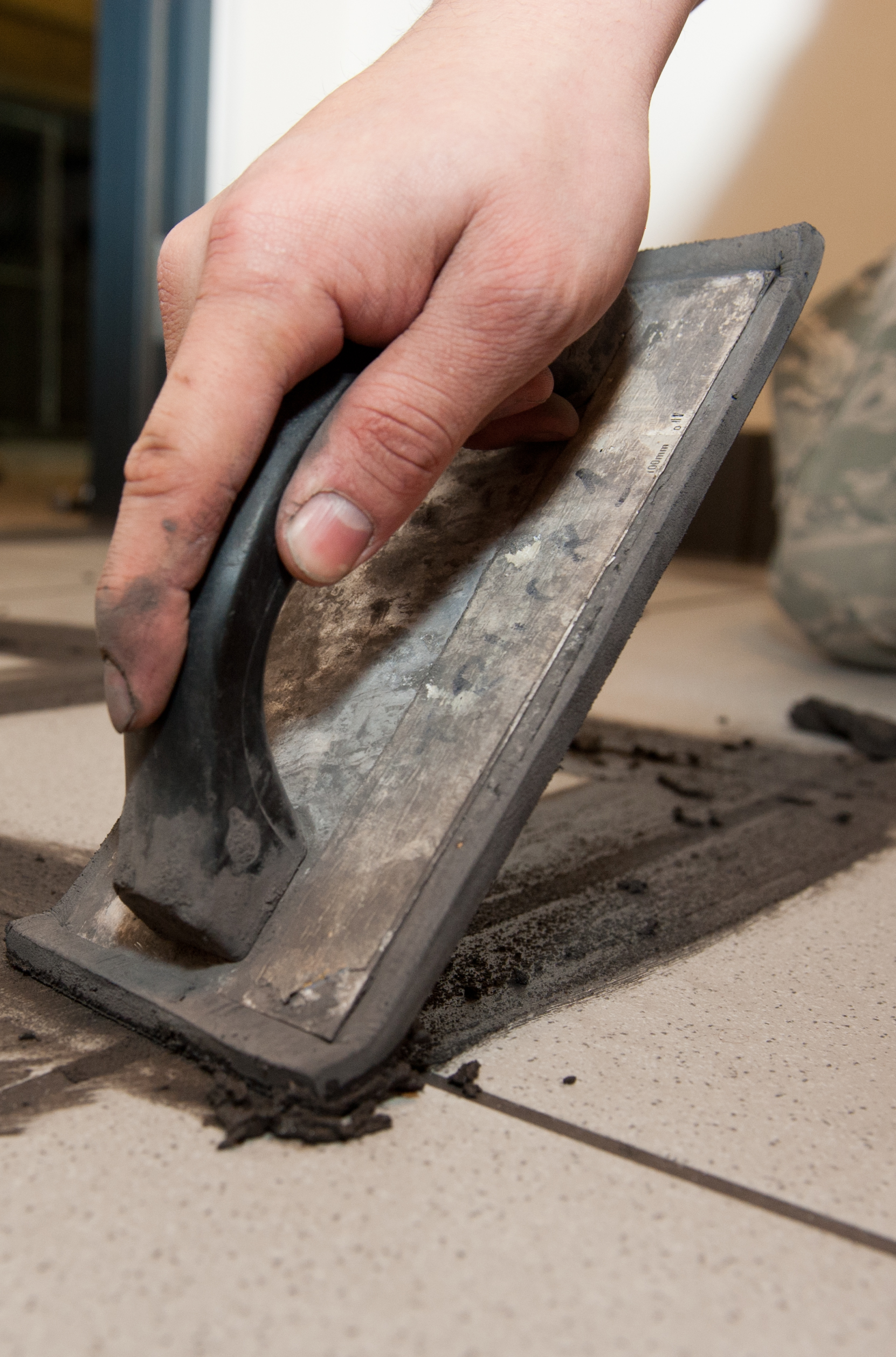
Grout being applied between tiles, a step where the water ratio decides much of its final strength. Photograph: Wikimedia Commons contributor
Image Credits: Wikimedia Commons
Grout is the cement-based filler that sits between tiles, locking them in place and sealing the joints against water. It looks like a minor detail, but it carries real loads and real moisture exposure every day. When it starts crumbling, the tiles lose support, water reaches the layers beneath, and a small cosmetic problem can turn into loose tiles and mould.
This article explains why grout crumbles between tiles, including bad mixing, movement, water damage, and chemical attack, and how to repair it so the fix lasts.
What grout is and why it is brittle
Standard grout is a cementitious material: cement powder, fine aggregate, and water, mixed into a paste that hardens as the cement hydrates. Once cured, it is strong in compression but rigid. It cannot stretch, bend, or absorb movement the way a flexible sealant can.
That rigidity is the key to almost every failure. Engineer Fix notes that grout failure typically comes from three main factors: poor initial installation, excessive physical movement, or chemical erosion. Each factor leaves a different signature in the damage, and reading that signature is the fastest way to a lasting repair.
A joint that was never filled properly is a fourth factor worth naming. Grout that only bridges the surface, without depth, has little strength to resist foot traffic or moisture. Grout Atlas warns that thinset squeezed up into joints can leave a grout skin as thin as 1/16 inch (1.5 mm), which breaks out under traffic and looks exactly like crumbling grout.
Joints should be clean to at least two-thirds of the tile thickness before grouting.
Too much water in the mix
The most common installation error is simple: too much water. The water-to-powder ratio decides the final strength of cement grout, and extra water weakens it twice over. First, it dilutes the cement paste.
Second, as the surplus water evaporates during curing, the grout shrinks and leaves a weaker, more porous structure.
Engineer Fix reports that adding too much water to cementitious grout significantly compromises its final strength, reducing durability by up to 50 percent. Powdery, soft grout that crumbles under a fingernail or a brush is the classic sign of this failure. The grout was weak from the day it cured, and years of foot traffic and cleaning finished the job.
Related mixing errors compound the problem. A bag of grout stored open in a damp room may already contain partially hydrated cement, which will not bind well. Mixed grout also has a limited pot life: Grout Atlas puts it at 45 minutes to 2 hours at about 70 degrees Fahrenheit on current data sheets, shorter for rapid-setting types and in heat.
Adding water to revive a batch that is already setting, a practice called retempering, breaks early crystal growth and dilutes what remains. Most manufacturers allow remixing without added water but forbid retempering with water.
Using the wrong grout type matters too. Unsanded grout, which lacks aggregate, belongs in narrow joints only. Used in wide joints, it shrinks and cracks because it has no aggregate skeleton for strength.
Sanded grout exists for exactly that reason.
Movement the grout cannot follow
If the grout is hard but shows clean, straight-line cracks across several joints, the cause is usually structural. Engineer Fix explains that rigid grout cannot tolerate subfloor deflection, where the floor framing flexes under load, and it cracks at the weakest point, which is the bond line between tile and grout.
Movement comes from several sources. Houses settle over time, and even small foundation shifts stress a rigid tile assembly. Seasonal expansion and contraction move tiles and substrates at different rates.
Undersized floor joists let a floor bounce underfoot. In showers, the 90-degree angles where walls meet floors are high-movement areas, and grout placed there will almost always crack eventually, because those joints need a flexible sealant instead.
Missing movement joints are a frequent culprit in larger installations. Tile assemblies need flexible joints at intervals and at every change of plane, such as where a floor meets a wall. Without them, thermal and structural movement has nowhere to go, so it goes through the grout.
The Tile and Stone Journal, in ARDEX guidance, lists lack of adequate movement joints and deflection in the substrate among the main causes of grout cracking along tile edges.
Cracks that follow a single line across many tiles, or that reopen soon after repair, are the tell-tale sign of movement. Regrouting those joints without addressing the movement, or without switching the joint to flexible sealant, only buys a short pause before the same crack returns.
Water and chemical damage over time
Even well-mixed grout can fail if it stays wet or meets the wrong chemicals. Grout is porous, and if it was never sealed, or the sealer has worn off, moisture soaks in. Engineer Fix describes how prolonged water exposure breaks down the cementitious binder, leaving grout soft and crumbly, a pattern common in showers, laundry rooms, and around pools.
Freeze-thaw cycles add damage outdoors and in unheated spaces. Water trapped in grout expands when it freezes, prying the material apart a little more with each cycle. That is why outdoor grout failures often appear after winter, even when the installation looked fine in autumn.
Chemical attack is the quieter destroyer. Standard cementitious grout is alkaline, which makes it vulnerable to acids. Engineer Fix notes that acidic substances dissolve the cement binder over time, and that cleaners such as vinegar or certain bleach-based products slowly etch grout, causing it to weaken, soften, and erode.
The damage often shows as a general lowering or pitting of the grout line surface, rather than as cracks. Abrasive scrubbers add physical wear on top of the chemical damage, opening pores that then absorb more water and stains.
The practical rule is simple: clean grout with a pH-neutral cleaner made for tile, and avoid vinegar, acidic descalers, and harsh bleach products on cement grout. Sealing the grout after repair slows water uptake and buys years of life, though sealer is not a cure for a bad mix or a moving floor.
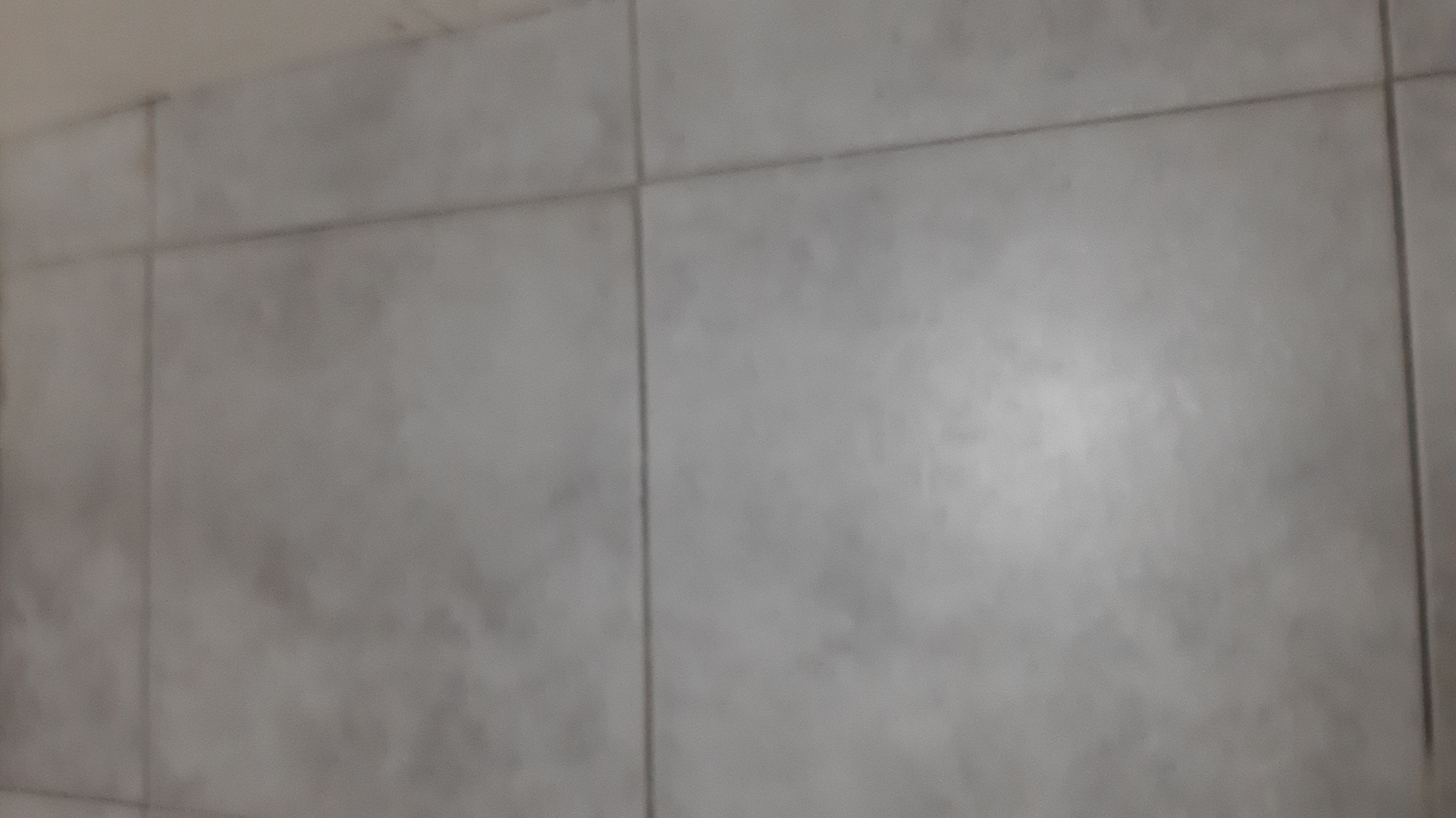
A bathroom floor with tiled joints, where constant moisture tests grout more than any other room. Photograph: Wikimedia Commons contributor
Image Credits: Wikimedia Commons
How to tell which cause you have
Reading the damage pattern saves wasted repairs. Powdery, sandy grout that brushes away easily points to a weak mix, shallow joints, or acid erosion. Hard grout with straight cracks across joints points to movement.
Evenly lowered, pitted grout lines across a whole floor point to chemical attack or long water exposure. Cracks that return in the same place after repair point to movement that was never addressed.
A few quick tests help. Press a fingernail or a stiff brush into the grout: soft, sandy material confirms weakness rather than movement. Look at where the damage sits: wall-to-floor corners and long straight runs suggest movement joints are missing.
Check whether the damage is worst where cleaning products pool, such as around a shower drain, which suggests chemical erosion.
Also check the tiles themselves. If tiles sound hollow when tapped, or rock underfoot, the adhesive bed or substrate may be failing too, and regrouting alone will not hold. In that case the repair scope is bigger than the grout lines, and a tile professional is the sensible call.
Repair that lasts
A lasting repair starts with removal, not patching. Scrape out the failed grout to at least two-thirds of the tile depth, using a grout saw or an oscillating tool, and vacuum the dust. Patching new grout over crumbling old grout bonds to a weak base and fails quickly.
Mix the new grout exactly to the manufacturer's water ratio, and never add water to revive a stiffening batch. Pack it fully into the joints with a rubber float, pressing diagonally across the joints so the material fills the full depth. Let it cure for the time on the data sheet before exposing it to water, since early water exposure stops hydration before the grout reaches full strength.
Use flexible sealant, not grout, at every change of plane: wall-to-wall corners, wall-to-floor joints, and around baths and shower trays. After curing, seal cement grout with a penetrating sealer, and switch to pH-neutral cleaners for routine maintenance. Where movement is the cause, add or restore movement joints, and have a professional check subfloor deflection if cracks keep returning.
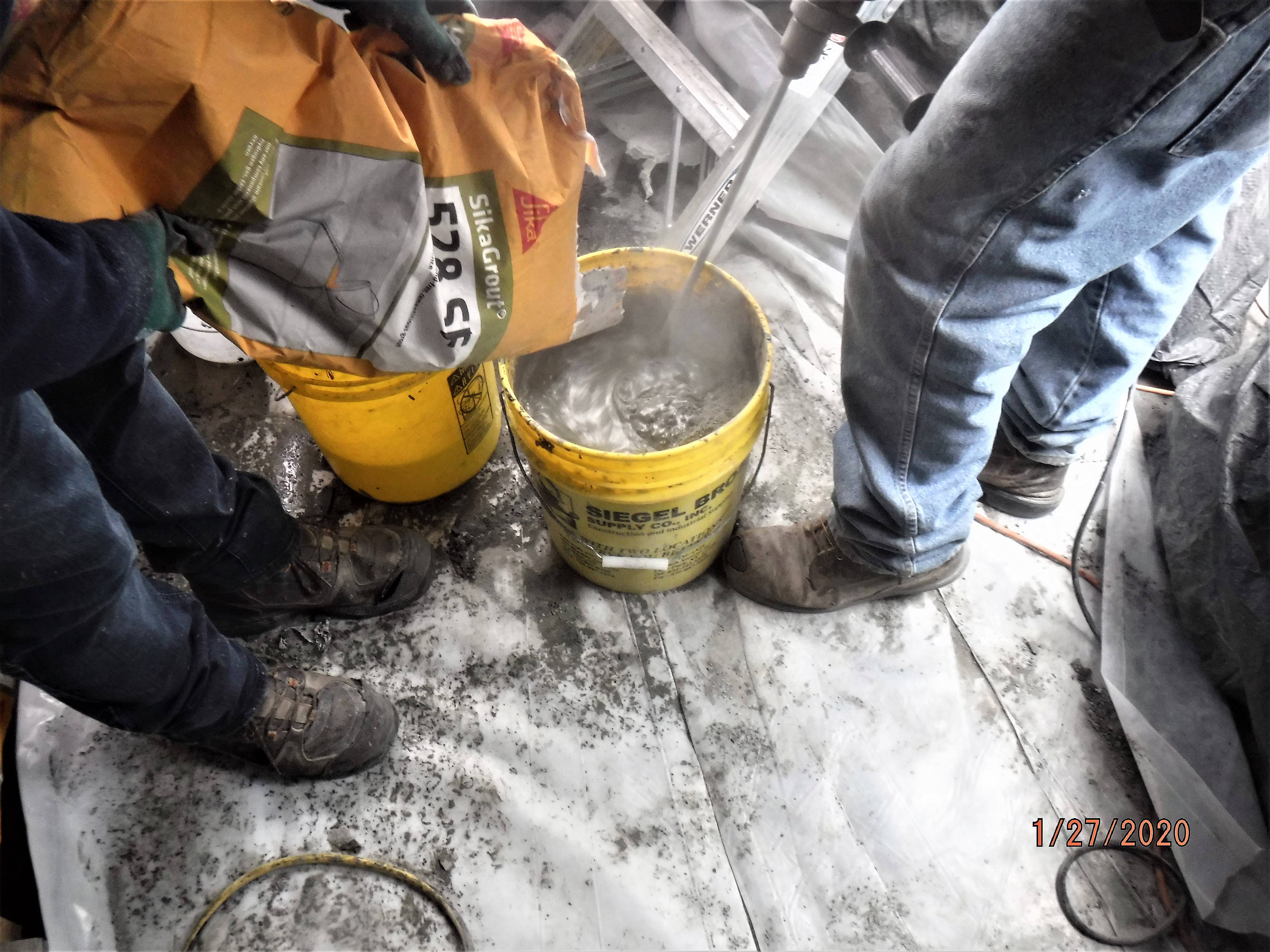
Grout being mixed for use, where adding extra water to a setting batch weakens the result. Photograph: Wikimedia Commons contributor
Image Credits: Wikimedia Commons
FAQ
Can I just grout over crumbling grout?
No. New grout bonds to whatever sits beneath it, so patching over weak, powdery grout gives the repair a weak base. Remove the failed grout to most of the joint depth first, then regrout.
Why does grout crack again in the same place after repair?
Repeat cracking in one spot almost always means movement, not a bad batch. Check for missing movement joints, subfloor deflection, or grout used in a corner joint that needs flexible sealant instead.
Does vinegar really damage grout?
Yes, over time. Cement grout is alkaline, and acids such as vinegar dissolve its binder, leaving the surface pitted and sandy. A pH-neutral tile cleaner is the safer routine choice.
How long should grout cure before a shower is used?
Follow the product data sheet, but most cement grouts need at least 24 to 72 hours before water exposure, and longer before sealing. Early water contact interrupts hydration and leaves the grout weaker than specified.
The bottom line
Crumbling grout is a symptom with a readable cause. Powder says the mix or the chemicals failed it. Cracks say the building moved and the rigid grout could not follow.
Pitting says acids or water wore it down over years. Match the repair to the pattern, mix to the ratio, fill the full joint depth, and put flexible sealant where movement lives. Done that way, a regrout is a repair that lasts, not a chore that repeats every year.
Tags: grout, tiles, bathroom repair, DIY
The Rive News research desk writes plain-English explainers from public sources, with every key claim traceable to a named source.
Related
- How to clean grout that turned black (without harsh fumes)
- How to Clean Grout Between Tiles Without Harsh Chemicals
- Caulk vs sealant: the differences and when to use each
- What causes water stains on your ceiling: finding the leak
Subscribe for one practical home repair explainer each week.
Rive News standards: no invented sources, no fake first-hand experience, corrections noted on the article.
Related stories
Why Your Faucet Keeps Dripping After You Turn It Off
A dripping faucet is usually a worn washer, O-ring, or cartridge that can no longer seal. One drip per second wastes over 3,000 gallons
How to fix a running toilet without a plumber in 30 minutes
A running toilet can waste 200 gallons of water a day. Diagnose the flapper, float, or fill valve in two minutes, then fix it yourself

How to hang heavy shelves on drywall safely
Studs first, toggle bolts second, plastic anchors never for heavy loads. Weight ratings, installation steps, and mistakes that bring