
How Does a Smoke Alarm Tell Smoke from Steam? Detector Types
Key takeaways
- A basic smoke alarm cannot truly tell smoke from steam; it reacts to airborne particles, and steam droplets look like particles.
- Ionization alarms trip on tiny particles, so shower steam and burnt toast set them off more easily.
- Photoelectric alarms need larger particles to scatter light, making them the better pick near kitchens and bathrooms.
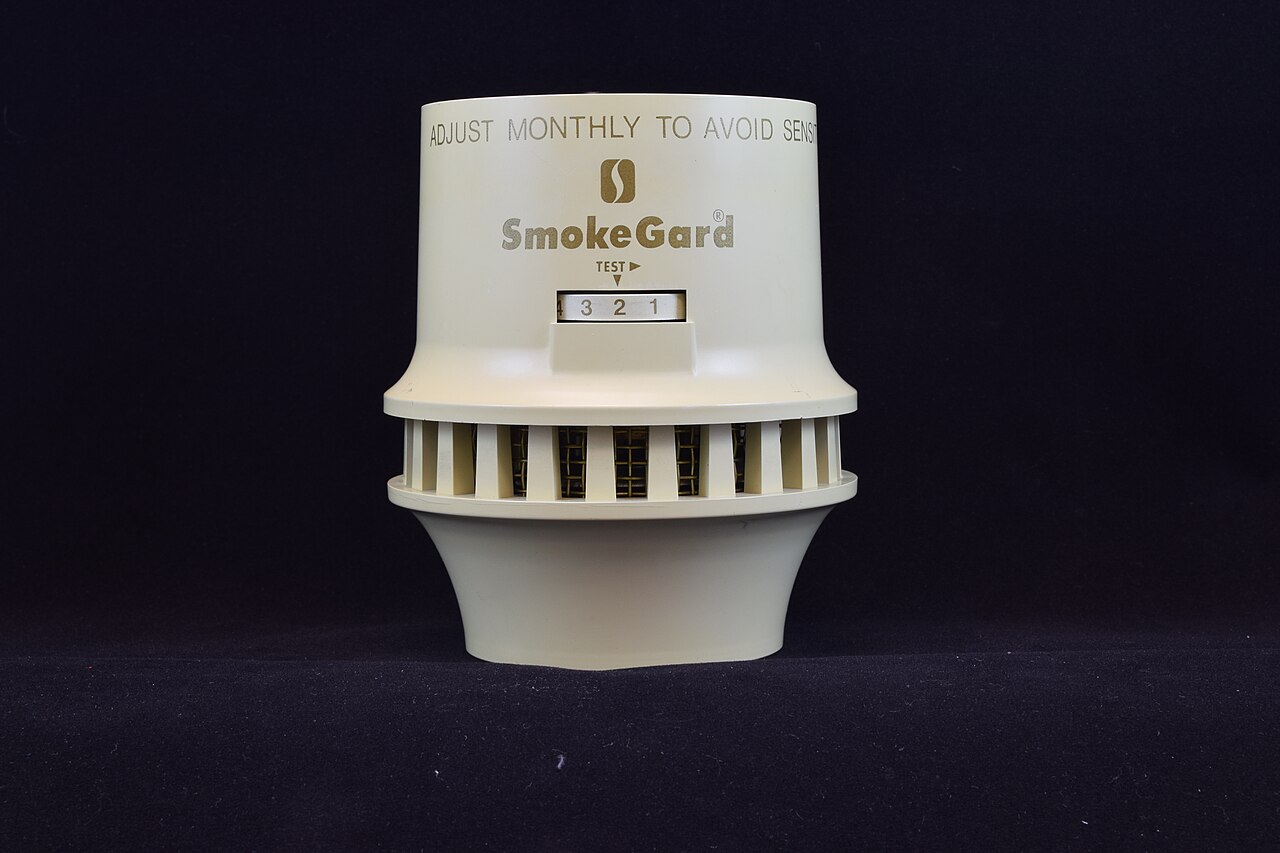
A vintage home smoke detector. Photograph: WPI Archives and Special Collections
Here is the honest answer first: a basic smoke alarm does not really know the difference between smoke and steam. It is not a chemist. It is a particle detector, and a cloud of fine steam droplets can look enough like a cloud of smoke particles to trip it.
This article explains how a smoke alarm tells smoke from steam, or fails to, including the two detector technologies inside most alarms, why one false-alarms on steam far more than the other, and where to put each type so your shower stops setting them off.
The two technologies inside smoke alarms
Residential smoke alarms use one of two sensing mechanisms, and they work on completely different physics, as an EngineerFix comparison explains.
An ionization alarm has a small chamber with two electrically charged plates and a tiny source of Americium-241, a radioactive element. The radiation ionizes air molecules passing through the chamber, creating a small, steady electrical current between the plates.
When smoke particles enter, they attach to the ionized molecules and disrupt the current. The alarm watches that current, and a significant drop triggers the siren.
A photoelectric alarm works on light scattering. Its chamber holds an infrared LED and a light sensor set at an angle. Normally the beam shines across the chamber and misses the sensor entirely.
When particles enter, they scatter the light in many directions, and some of the scattered light lands on the sensor. Once the light on the sensor crosses a threshold, the alarm sounds.
The distinction that matters: ionization reacts to very small particles, while photoelectric reacts best to larger particles big enough to deflect the light beam. That single difference decides how each type handles steam.
Why steam fools ionization alarms more
Shower steam is a cloud of tiny water droplets. Burnt toast throws off tiny combustion particles.
Searing meat fills the air with small, hot particles. All of these are exactly the size class that ionization detectors are tuned to catch.
The Fact Relay's detector guide states the consequence plainly: ionization alarms are notorious for false alarms caused by burnt toast or heavy shower steam, which leads frustrated homeowners to remove the batteries and leave themselves unprotected. EngineerFix's comparison agrees, noting that ionization detectors' sensitivity to small particles leads to false alarms near kitchens, while photoelectric alarms are less sensitive to smaller non-threatening particles and less prone to nuisance alarms from cooking fumes or shower steam.
Impact Fire Services, a commercial fire-protection firm, adds that ionization detectors in high-dust, high-humidity, or high-steam environments are more prone to nuisance alarms, and notes that NFPA 72, the fire alarm code, explicitly restricts ionization detector placement near cooking appliances.
There is some disagreement among sources about edge cases. One home-safety article argues ionization alarms are not affected by normal cooking fumes or shower steam. The weight of detector literature, however, runs the other way: steam droplets disrupt ionization chambers far more readily than they scatter enough light to trip a photoelectric sensor.
Where each type belongs
Because photoelectric alarms shrug off steam and cooking fumes better, detector guides consistently recommend them for nuisance-prone spots. EngineerFix advises placing a photoelectric unit outside a bathroom, since its reduced sensitivity to steam minimizes false alarms. Hallways outside kitchens get the same recommendation.
Ionization alarms belong where fast-flaming fires are the main risk and steam is not: attached garages, hallways serving as escape routes, areas away from bathrooms and kitchens. They respond faster to open flames, which is their genuine strength.
The best practice, repeated across nearly every detector comparison, is to use both technologies. Dual-sensor alarms pack ionization and photoelectric sensors into one unit. The Fact Relay cites dual-sensor models as the straightforward way to cover both fire types without doubling the devices on your ceiling.
What does not help (and what does)
Moving the alarm is the most effective fix for steam false alarms. Every detector guide agrees on siting: keep alarms out of the direct path of bathroom steam, do not install them in the bathroom itself, and give kitchens their distance.
What does not help is disabling the alarm. The Fact Relay notes the grim pattern: nuisance alarms frustrate people into removing batteries, which leaves the home completely unprotected. A hush button, the silence feature on most modern alarms, pauses the siren for a few minutes without disabling detection, and it exists precisely for burnt-toast moments.
Regular cleaning matters for both types. Dust and debris accumulate in sensing chambers and can either deaden sensitivity or cause false alarms. A vacuum with a soft brush attachment, applied gently a few times a year, keeps both ionization and photoelectric chambers honest.
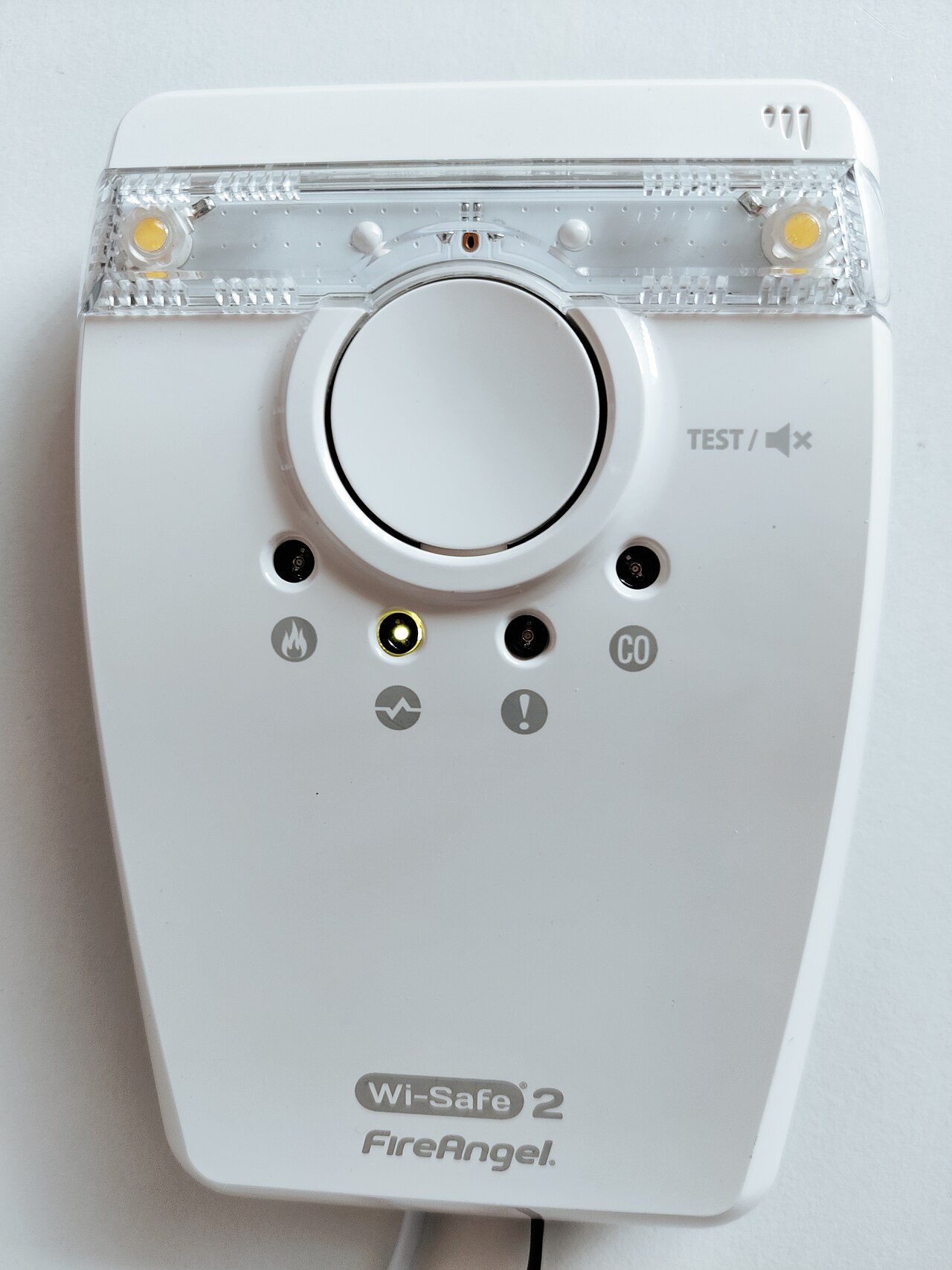
A modern FireAngel smoke detector. Photograph: Andy Mabbett
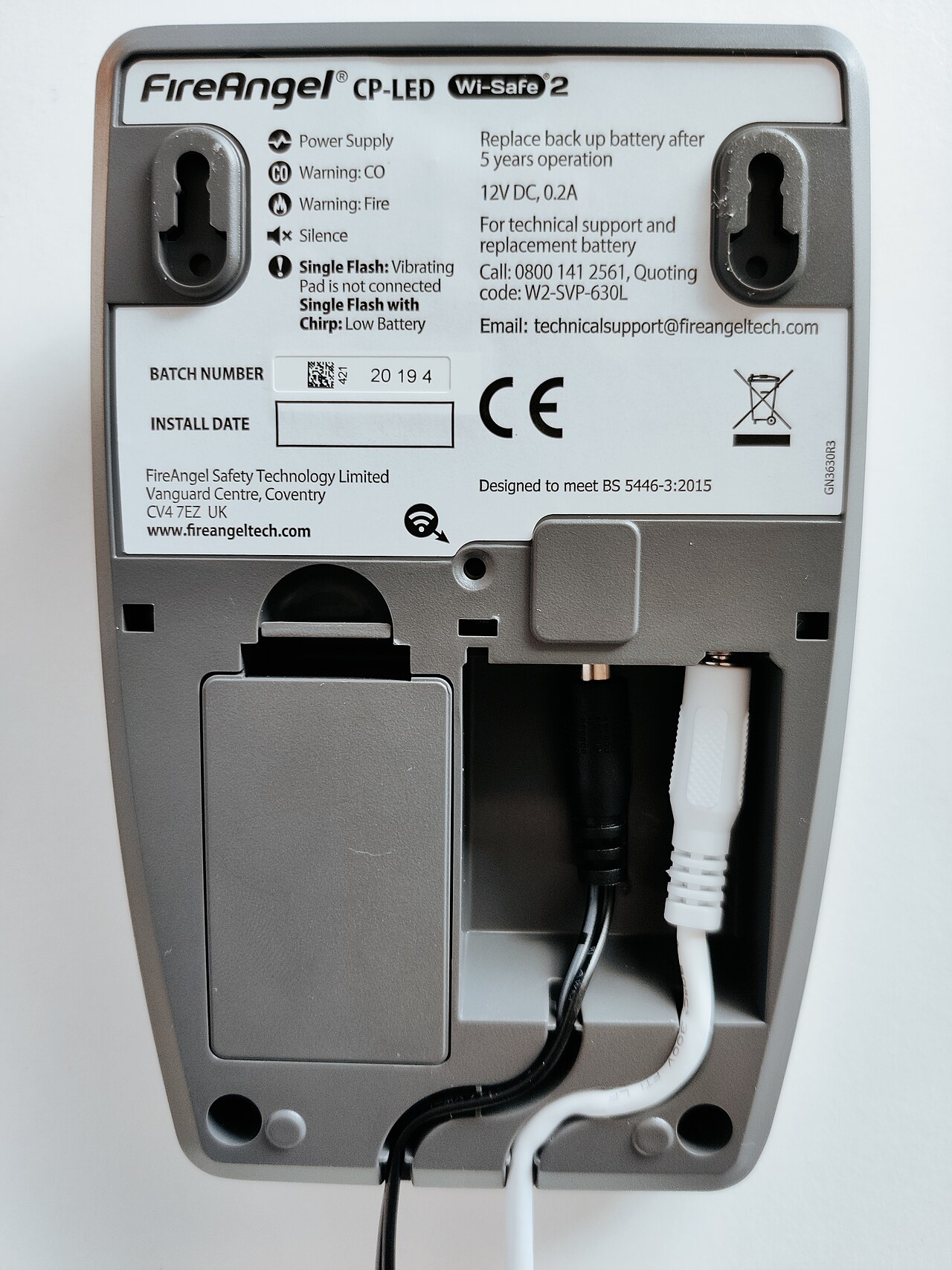
The same detector from a different angle, showing its test button and sensor grille. Photograph: Andy Mabbett
Frequently asked questions
Why does my smoke alarm go off when I shower?
Steam droplets from the shower drift into the sensing chamber. If the alarm is an ionization type, the tiny droplets disrupt the electrical current the same way small smoke particles would, triggering a false alarm.
Which smoke detector is best for near a bathroom?
Photoelectric. Its light-scattering sensor needs larger particles to trigger, so fine steam droplets are far less likely to set it off than they are to trip an ionization alarm.
Do I need ionization or photoelectric smoke alarms?
Ideally both, or a dual-sensor alarm. Ionization responds faster to fast-flaming fires; photoelectric responds faster to smoldering fires. Safety organizations' tests show photoelectric alarms can beat ionization by 15 to 50 minutes on smoldering fires.
How far should a smoke alarm be from a shower or kitchen?
Keep alarms out of bathrooms and at least several meters from cooking appliances and shower steam paths. Hallways outside these rooms are the standard placement.
Is it safe to use the hush button?
Yes. The hush feature silences the siren for a few minutes while the sensor keeps watching. It is designed for nuisance alarms like burnt toast, and it is far safer than removing the battery.
The bottom line
A smoke alarm tells smoke from steam badly, because it was never designed to identify particles, only to count them. Ionization alarms trip on the tiny droplets steam is made of; photoelectric alarms need chunkier particles and mostly ignore it. The fix is not a smarter alarm so much as a better-placed one: photoelectric near bathrooms and kitchens, ionization where open flames are the risk, and dual sensors where you want both.
Latest in Home & DIY
- Why do doors stick more in summer?
- Why do outdoor lights attract spiders at night?
- Is that new-fridge plastic smell safe?
- Fairbanks winter storm warning: snow incoming
Get one home-science explainer in your inbox every morning. Subscribe for the daily rundown.
Image Credits: Wikimedia Commons / WPI Archives and Special Collections, Andy Mabbett
Related stories
Why Your Faucet Keeps Dripping After You Turn It Off
A dripping faucet is usually a worn washer, O-ring, or cartridge that can no longer seal. One drip per second wastes over 3,000 gallons
How to fix a running toilet without a plumber in 30 minutes
A running toilet can waste 200 gallons of water a day. Diagnose the flapper, float, or fill valve in two minutes, then fix it yourself
How to hang heavy shelves on drywall safely
Studs first, toggle bolts second, plastic anchors never for heavy loads. Weight ratings, installation steps, and mistakes that bring