
How Does a Thermostatic Radiator Valve Actually Work? The Wax Capsule
Key takeaways
- A TRV is a self-regulating valve with two parts: a brass valve body and a dial head containing a wax, liquid, or gas capsule.
- As room air warms, the capsule expands and pushes a pin down, throttling hot water flow into the radiator.
- It senses room air temperature, not the radiator itself, and needs no batteries, wiring, or connection to the boiler.
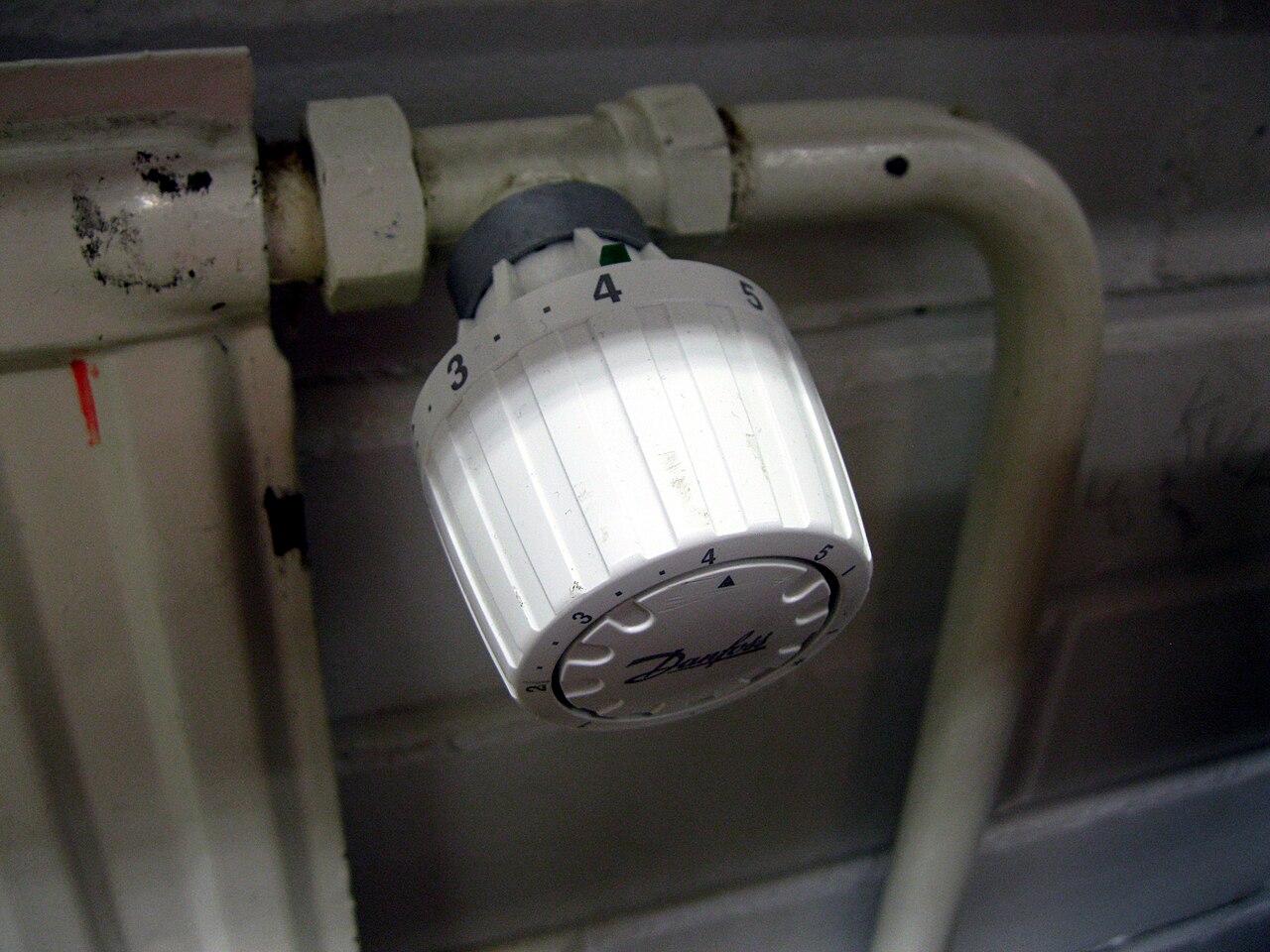
A Danfoss thermostatic radiator valve fitted to a radiator. Photograph: Santeri Viinamäki
A thermostatic radiator valve, almost always shortened to TRV, is the numbered dial on the end of a radiator. Turn it, and the room holds its temperature by itself.
There is no motor inside, no battery, and no wire back to the boiler. It is a thermometer that happens to be able to turn a tap.
This article explains how a thermostatic radiator valve actually works, including the wax or liquid capsule inside the head, how it throttles hot water through a spring-loaded pin, what the numbers mean, and why placement makes or breaks the whole trick.
Two parts, one job
A TRV consists of two components. The valve body is the brass fitting plumbed into the pipework at the radiator's inlet, and it contains a spring-loaded pin.
The head is the plastic dial that screws onto the body. Inside the head sits a sealed capsule filled with wax, liquid, or gas.
The capsule is the sensor. It responds to the temperature of the air around the valve head, and that is a detail worth stressing: a TRV senses the room air, not the heat in the radiator.
PlumbingHub's explainer puts it plainly: the valve "senses the air in the room, not the heat in the radiator, and it works on its own without any wiring, batteries or connection to the boiler."
The cycle: expand, push, throttle, repeat
The operating principle is thermal expansion, the same physics that makes railroad tracks longer in summer. Inside the capsule is a material chosen to change volume dramatically with small temperature shifts.
When the room is cold, the capsule's contents contract. The internal spring pushes the pin upward, the valve opens, and hot water flows freely into the radiator. The room warms.
When the room approaches the temperature set on the dial, the capsule's contents expand. That expansion generates mechanical force, which pushes the pin downward against the spring, gradually closing the valve and restricting hot water flow. As EngineerFix describes it, the expanding force is transferred to the spring-loaded pin, and when the set temperature is reached, the pin restricts the flow of hot water into the radiator.
The cycle never stops. The valve is constantly hunting: open a little when the room cools, close a little when it warms. Stelrad, a radiator manufacturer, summarizes the loop as continuous self-regulation, contracting substance opens the valve, expanding substance closes it, until the room holds steady.
What the numbers on the dial mean
The dial's numbered settings, usually 1 to 5, correspond to target room temperatures. EngineerFix gives a typical mapping: setting 3 holds the room at roughly 20°C (68°F). The numbers are targets for the air around the head, not radiator temperatures.
This explains a common confusion. A TRV on 5 does not make the radiator hotter than the boiler water allows.
As PlumbingHub notes, a TRV cannot make a radiator hotter than the boiler is sending. All the valve can do is throttle down the flow; the maximum heat always comes from the boiler.
Why liquid and gas beat wax
Not all capsules are equal. The cheapest TRVs use wax capsules.
More expensive heads use liquid or gas, and the difference is response speed. PlumbingHub states the key trade-off directly: liquid and gas-filled capsules react faster than wax ones, and wax lags, so the room overshoots before the valve reacts and undershoots before it opens again.
Think of wax as having thermal inertia. The room reaches the set temperature, but the wax takes a few minutes to catch up, so the valve closes late and the room gets a degree or two too warm.
Then the reverse: the room cools, the wax shrinks slowly, the valve opens late, and the room dips too cool.
The oscillation is small, but a liquid-filled capsule tracks the room far more tightly. That is the entire argument for spending more than the bottom of the range.
Placement is half the device
Because the TRV senses air around its head, where it sits decides what it senses. Fitting guidance from Heat and Plumb recommends mounting TRVs horizontally, pointing out into the room, so the head reads genuine room air.
Hide the valve behind a sofa, tuck it under a long curtain, or cover the radiator with a decorative cover, and the head reads the warm pocket of air trapped around itself rather than the room, as PlumbingHub warns. The valve then thinks the room is toasty and shuts off early, leaving the rest of the room cold.
Bathrooms are the classic problem case. A TRV head next to a shower reads steam, not room temperature, and misbehaves. PlumbingHub suggests the fix: a remote-sensor head, where the capsule sits on a capillary tube away from the steam, or simply a manual valve turned down.
Frequently asked questions
Do thermostatic radiator valves save energy?
Yes, in the right setup. By throttling radiators in rooms that are already warm or rarely used, a TRV stops the boiler heating space you do not need, cutting gas or oil use without touching the boiler settings.
What do the numbers 1 to 5 on a TRV mean?
They are target room temperatures, not radiator heat levels. Setting 3 is typically about 20°C (68°F). Higher numbers allow warmer rooms; lower numbers keep the room cooler.
Should every radiator have a TRV?
Nearly every radiator benefits from one, except the radiator in the same room as the main wall thermostat. That radiator should stay fully open so the thermostat can read the house temperature accurately.
Why does my TRV click or stick?
The spring-loaded pin can seize after a summer of inactivity, especially on older valves. Removing the head and gently pressing the pin free usually restores movement. A pin that stays stuck means the valve cannot regulate.
Are smart TRVs worth it over mechanical ones?
Mechanical TRVs regulate temperature with no power at all. Smart versions add scheduling and app control but need batteries and cost far more. For most rooms, the mechanical capsule does the core job.
The bottom line
A thermostatic radiator valve works because a sealed capsule of wax, liquid, or gas expands and contracts with the room's air temperature, driving a spring-loaded pin that throttles hot water into the radiator. No electronics, no batteries, no boiler connection, just a thermometer with a tap attached. Set the dial, mount the head in open room air, and let thermal physics do the regulating.
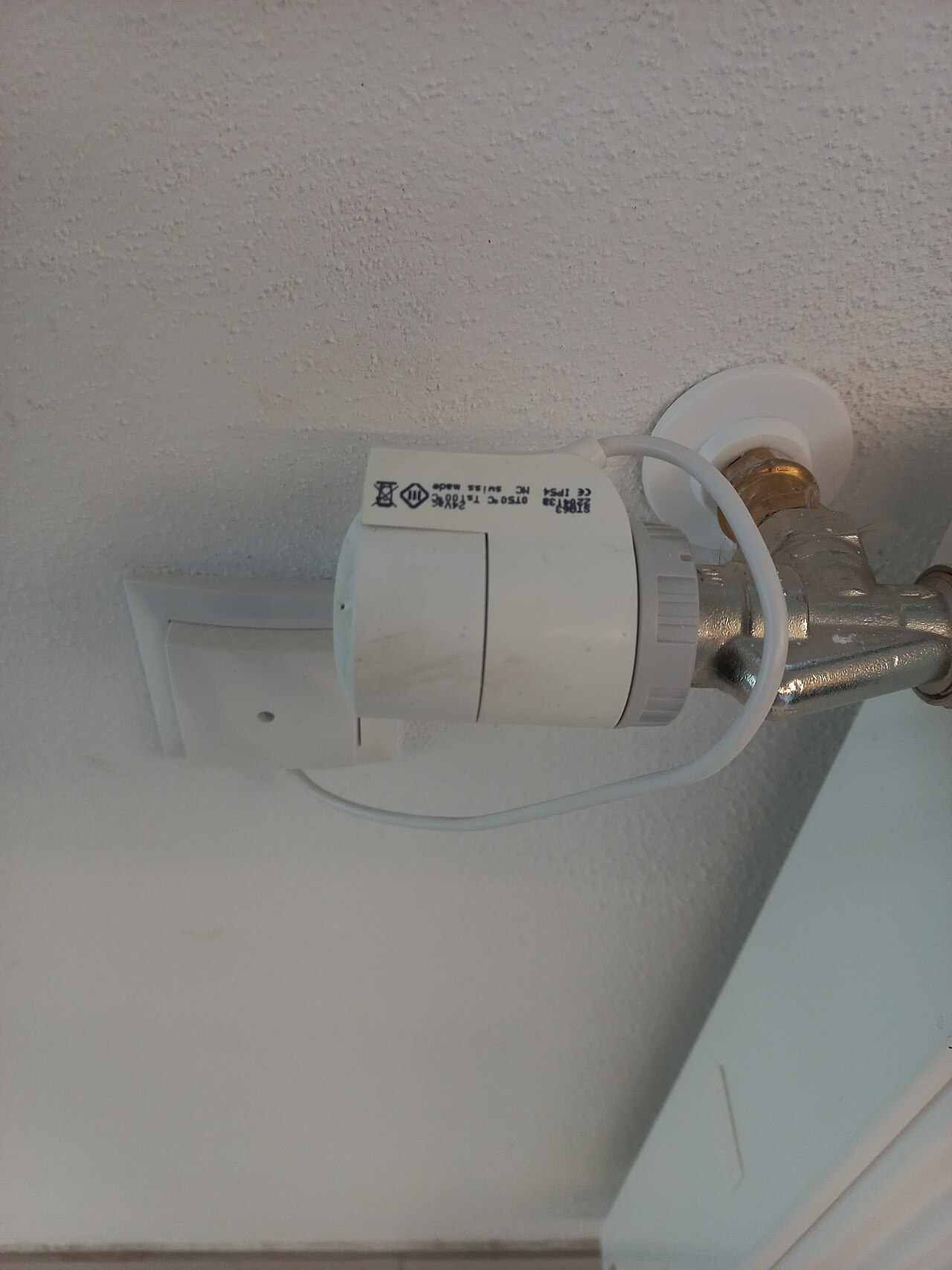
Thermostatic radiator valves installed in a bank building in Dornbirn, Austria. Photograph: Asurnipal
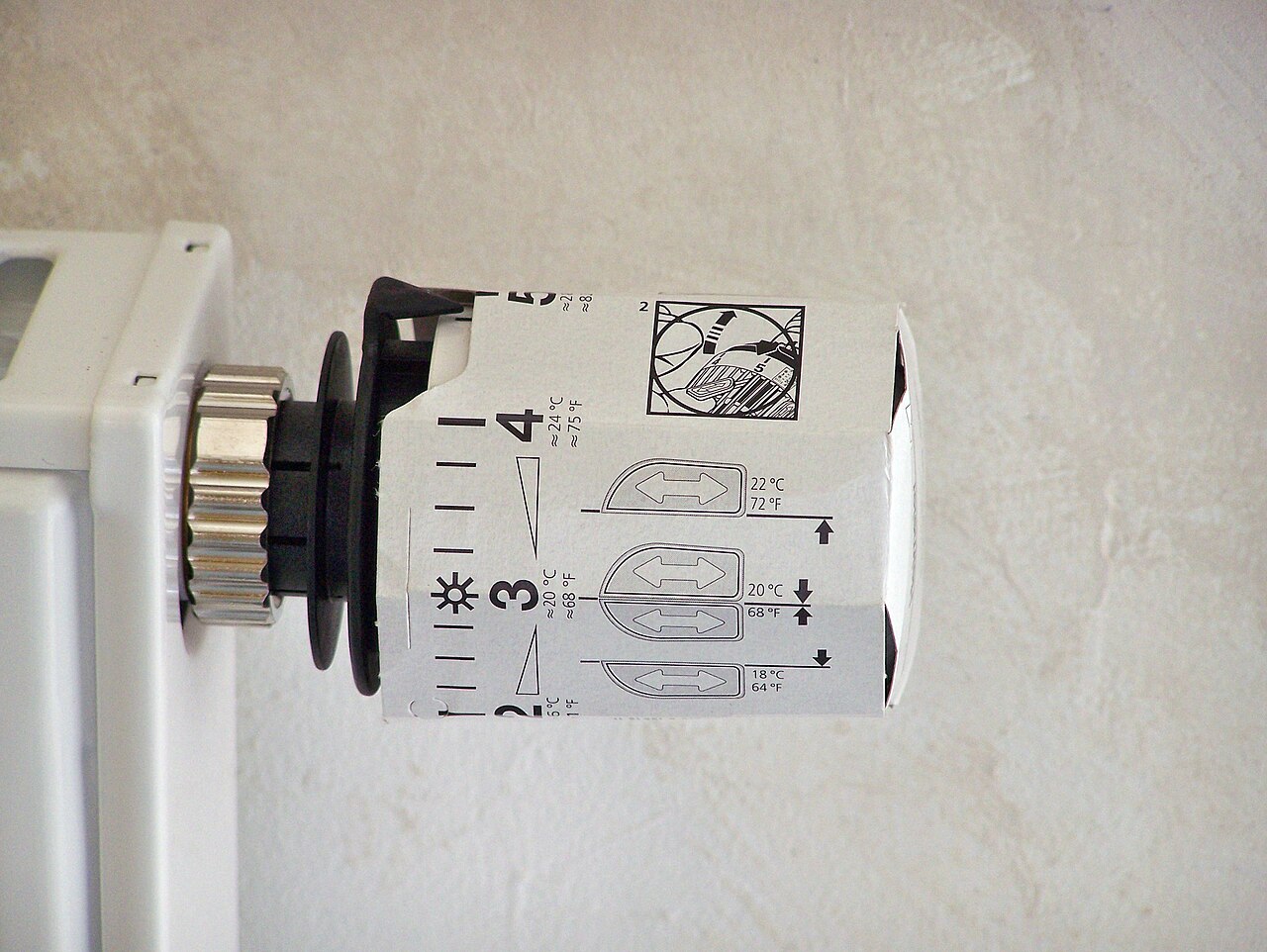
A close view of a thermostatic radiator valve head with its numbered dial. Photograph: T.Voekler
Latest in Home & DIY
- Why do doors stick more in summer?
- Why do outdoor lights attract spiders at night?
- Why do tiled floors sound hollow in spots?
- Is that new-fridge plastic smell safe?
Get one home-science explainer in your inbox every morning. Subscribe for the daily rundown.
Image Credits: Wikimedia Commons / Santeri Viinamäki, Asurnipal, T.Voekler
Related stories
Why Your Faucet Keeps Dripping After You Turn It Off
A dripping faucet is usually a worn washer, O-ring, or cartridge that can no longer seal. One drip per second wastes over 3,000 gallons
How to fix a running toilet without a plumber in 30 minutes
A running toilet can waste 200 gallons of water a day. Diagnose the flapper, float, or fill valve in two minutes, then fix it yourself
How to hang heavy shelves on drywall safely
Studs first, toggle bolts second, plastic anchors never for heavy loads. Weight ratings, installation steps, and mistakes that bring