
What primer actually does that paint does not: the chemistry
By Rive News / Research desk | Rive News / Published October 24, 2026 at 9:00 AM PKT
Key takeaways
- Primer carries a higher resin-to-pigment ratio than paint, so it grips surfaces instead of decorating them.
- It seals the pores in bare wood, drywall, and masonry, preventing the blotchy, uneven finish painters call flashing.
- Specialist primers lock in stains, tannins, smoke, and odors that ordinary paint cannot block on its own.
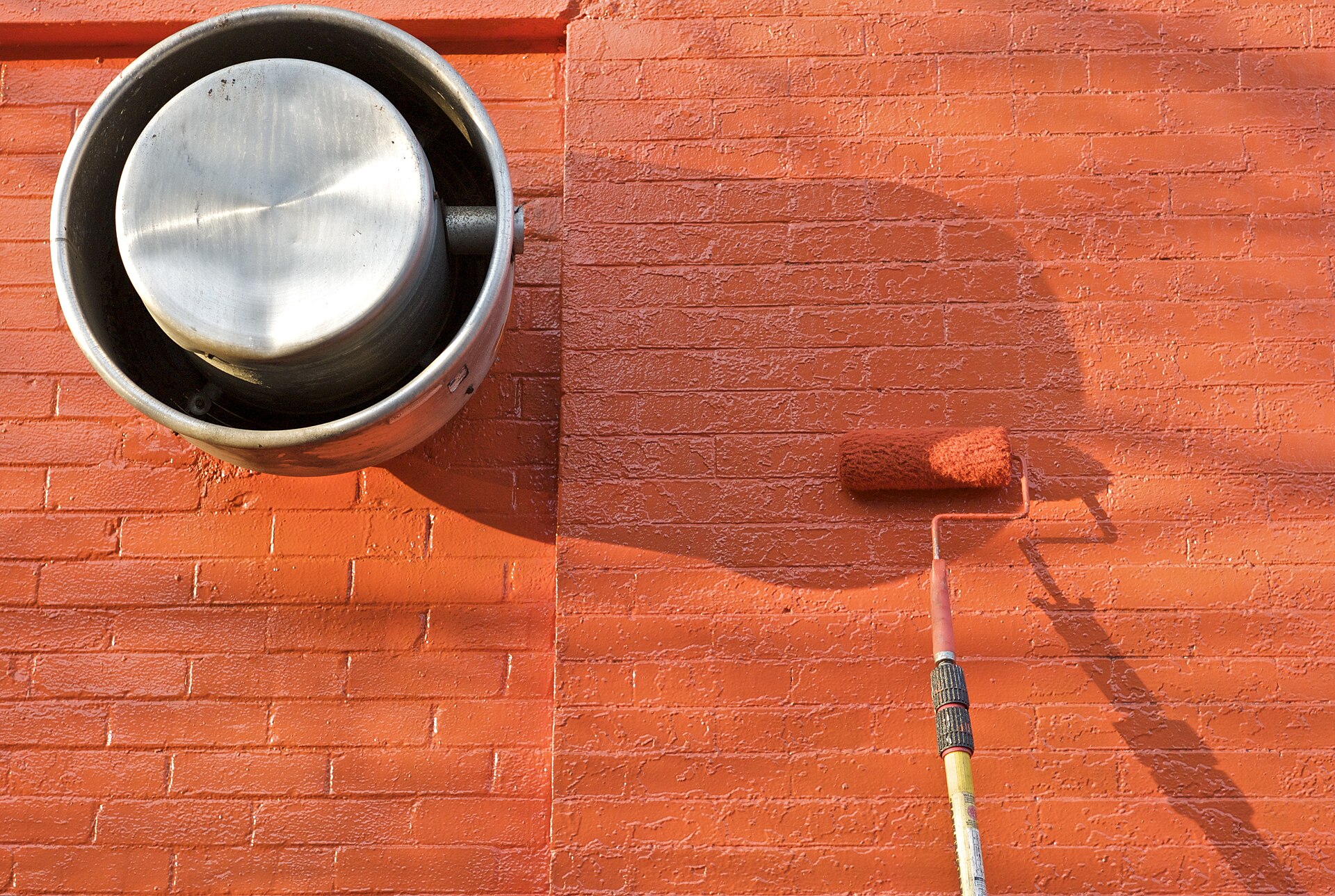
[A paint roller laying fresh red paint onto a brick wall. Photograph: paint roller on brickwork]
Image Credits: Wikimedia Commons
Primer is a preparatory coating applied to a bare or problem surface before paint. It is not an extra coat of paint.
Paint is engineered to face outward, with color, UV resistance, and weather protection. Primer is engineered to face inward, into the surface itself.
That one distinction explains almost everything about why the two products exist separately. Primer's job is to bond with the wall, seal its pores, and trap whatever is hiding underneath. Paint's job is to look good and survive the weather on top of that foundation.
This article explains what primer does that paint does not, including how it grips surfaces, how it seals porous material, the three primer types and what each solves, and when you can safely skip priming.
Primer grips the surface so paint does not have to
Paint bonds poorly to raw or glossy surfaces. On bare wood, fresh drywall, or slick metal, a topcoat has little to hold onto, and it eventually lets go.
Primer solves this because its chemistry is resin-heavy. Resins are the sticky binders that glue a coating to a surface, and primer carries a higher resin-to-pigment ratio than paint, which lets it penetrate and grip rather than sit on the surface, according to Crash of Rhinos Painting's primer guide.
Paint works the other way around. It is loaded with pigment for color and opacity, with comparatively less adhesion-promoting resin. That trade-off is deliberate.
Pigment is what gives a finish its hiding power and sheen. A resin-heavy paint would grip well and look dull. So the coating system splits the work: primer grips inward, paint performs outward.
Angi's primer-versus-paint guide sums it up in one line: "Primer adheres, and paint appeals to the eye." The matte, slightly rough finish primer leaves behind is not a flaw. It is designed that way to give the topcoat more to bite into.
This matters most on difficult surfaces. Glossy old paint, fiberglass, vinyl, and bare metal are smooth and non-porous, which makes them hostile to adhesion.
Bonding primers are formulated specifically for these slick surfaces. Skip the primer there, and the new paint can release in sheets.
Primer seals porous surfaces to stop uneven absorption
Bare drywall, unfinished wood, fresh plaster, and stucco are thirsty. Their pores drink the liquid out of the first coat of paint unevenly, pulling solvent and binder down into the surface instead of letting it form an even film on top.
The result is a patchy, dull finish with visible sheen differences. Painters call that condition flashing.
Primer regulates the porosity of the substrate. It fills the tiny gaps and pores and dries into a uniform layer, so the finish coat lays down at a consistent sheen and film thickness. Engineer Fix describes the mechanism plainly: without sealing, the substrate absorbs the topcoat unevenly, leading to blotching and requiring extra coats of the more expensive finish paint.
Sealing also saves money. An unprimed porous wall can drink two or three coats of finish paint and still look uneven.
One coat of primer plus one or two finish coats costs less in materials and labor. The primer coat is cheaper per liter than most finish paints, and it does the absorbing so the paint does not have to.
There is a chemical version of sealing too. Fresh stucco, concrete, and masonry are highly alkaline, and that high pH chemically attacks an ordinary topcoat, a condition called burn-through.
An alkali-resistant primer neutralizes the problem, according to Crash of Rhinos Painting. This is why masonry primers exist as their own category rather than a marketing label.
Primer blocks stains that paint would let through
Water stains, rust, smoke residue, nicotine, and wood tannins do not sit still under a coat of paint. They migrate upward through the film over weeks and months and reappear as yellow or brown ghosts in the finish.
Ordinary paint has no defense against this. It is formulated for color and weather, not containment.
Stain-blocking primers are formulated for exactly this. Their resins physically lock contaminants under the film so they never surface.
Shellac-based primer is the specialist here. It sticks to almost anything and blocks smoke, water stains, nicotine, odor, and knot bleed, and it dries in under an hour, per Crash of Rhinos Painting's comparison.
Oil-based (alkyd) primers are the traditional choice for tannin bleed on bare wood such as cedar or redwood. The oil penetrates the wood fibers and produces a bond a water-based product cannot match on that substrate. The trade-offs are real: eight to twenty-four hours of dry time, high VOCs, and solvent cleanup.
Water-based primers stay flexible, dry fast (often recoatable within one to four hours), and carry low or zero VOCs. Their limitation is stain blocking.
For heavy water stains, rust bleed, or tannin, a water-based primer often is not enough on its own. Each of the three primer types solves a different problem, and none is universally better.
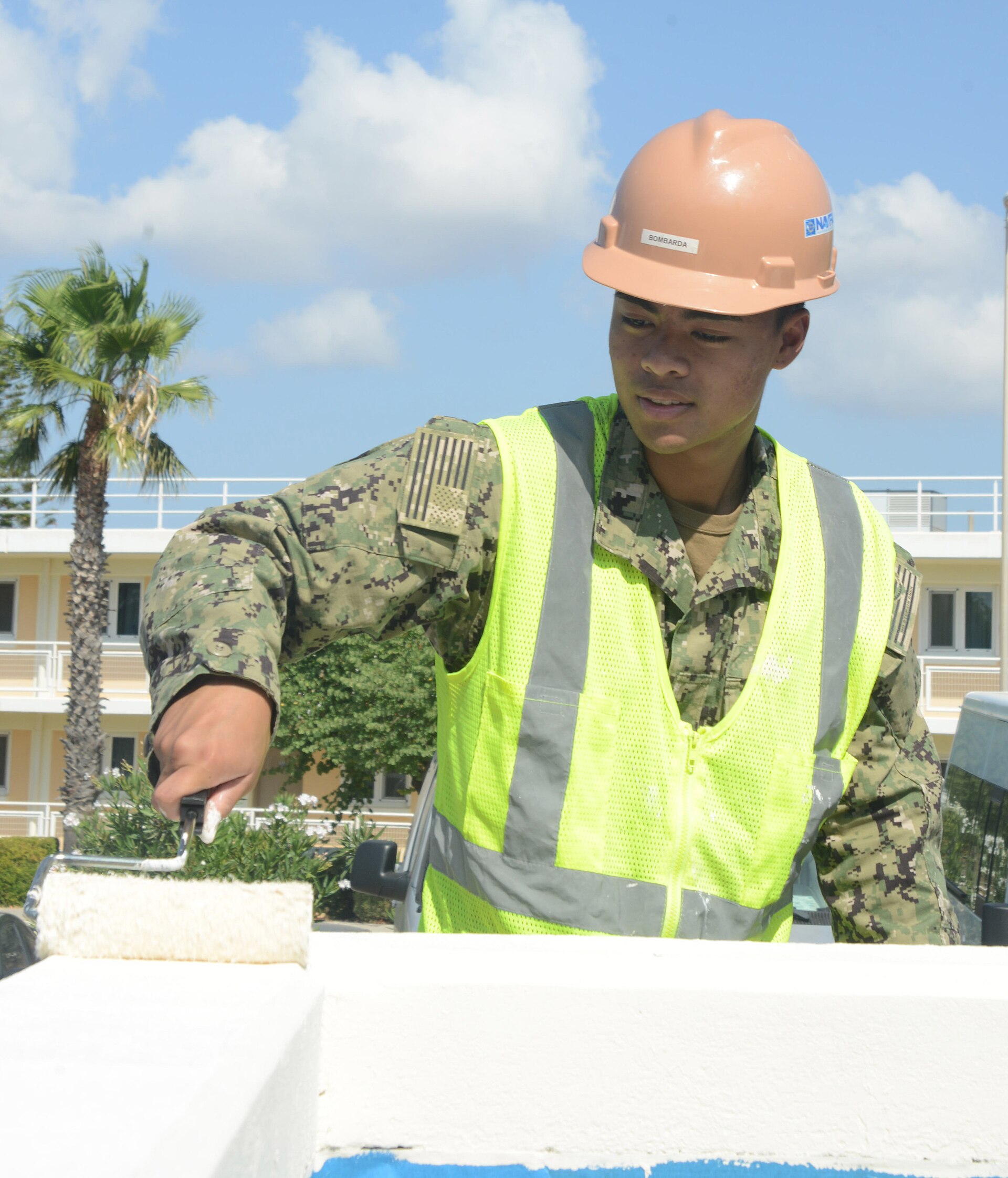
[A sailor rolls a second coat of paint onto a wall during a community project. Photograph: painter applying topcoat]
Image Credits: Wikimedia Commons
Paint's job is the part you actually see
It helps to state paint's side of the bargain clearly. Topcoat paint is engineered for aesthetics and environmental resistance.
Its pigments provide the color saturation and opacity of the finished wall. Its binder cures into a durable film that resists abrasion, moisture, and UV degradation.
That film is also what provides the sheen, from flat matte to high gloss, which in turn affects washability and longevity. Crash of Rhinos Painting puts the division of labor this way: on a Phoenix exterior, where wall surfaces pass 150°F in direct sun, the primer is often the difference between a paint job that lasts seven years and one that peels in two. But the primer does not stop UV damage.
That is the topcoat's job. The primer keeps the topcoat attached long enough to do that job for its full rated life.
Paint is also better at sealing the surface from the elements once the system is complete. Angi notes that paint protects the exterior from weather, while primer's sealant effect works between the layers, preventing moisture from seeping between them. The two seal in different directions.
When you can skip primer, and when you cannot
Not every surface needs a full prime coat. A sound, previously painted wall that has been cleaned usually does not. Applying primer everywhere regardless of condition adds cost without adding life, as the Crash of Rhinos guide notes.
The surfaces that genuinely need it are the ones that are bare, patched, chalky, stained, glossy, or fresh. Bare or new stucco needs an alkali-resistant masonry primer.
Stucco patches need priming because the patch is a different material at a different pH with a different absorption rate than the surrounding wall. Unprimed, a patch flashes to a visibly different sheen and can burn through the topcoat within the first year.
Bare wood needs primer, and tannin-prone species need an oil-based one. Bare or rusted metal needs a rust-inhibitive primer, and only after the existing rust, grease, or mill scale comes off. A primer applied over active rust seals the corrosion in to keep working under the film.
Heavy stains need a dedicated stain-blocking primer. Drastic color changes, such as dark to light, benefit from a tinted primer that reduces the number of finish coats.
The shortcut worth remembering: if the surface is bare, patched, chalky, stained, glossy, or fresh, prime it. If it is sound, clean, previously painted, and in the same general color family, you likely do not need to.
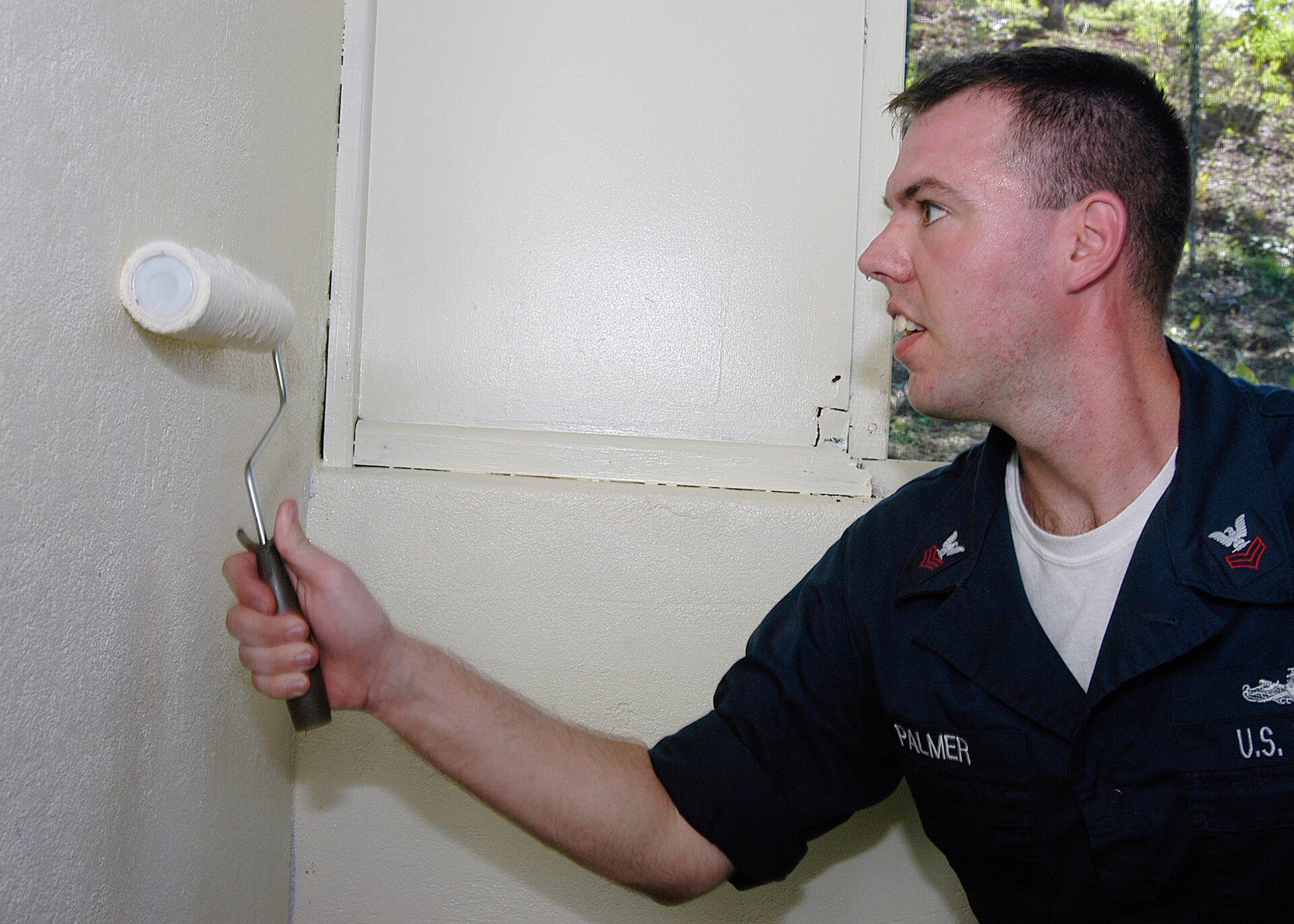
[Two workers painting an exterior wall at a naval support facility. Photograph: painters at work]
Image Credits: Wikimedia Commons
One more practical note: respect the recoat window on the product data sheet, not how the primer feels to your hand. Heat can flash-dry the surface of a primer in minutes while the film beneath is still curing. Painting over it traps solvent and moisture under the topcoat.
Do I need primer if the wall was already painted?
Usually not, if the old paint is sound, clean, and you are staying in the same color family. Scuff-sand glossy areas and spot-prime any patches or stains, then paint.
Can paint-and-primer-in-one replace a separate primer?
On previously painted walls in good condition, these products work well. On bare, patched, stained, or glossy surfaces, they do not match a dedicated primer's resin load or blocking chemistry.
What happens if I skip primer on bare wood?
The wood absorbs the finish unevenly, tannins can bleed through within months, and adhesion is weak. Expect flashing, dull spots, and a shorter-lived paint job.
How long do I wait before painting over primer?
Follow the product data sheet. Water-based primers are typically recoatable in one to four hours, oil-based in eight to twenty-four hours, and shellac-based in under one hour.
Is primer supposed to look flat and dull?
Yes. The matte finish is intentional. It gives the topcoat a textured surface to grip, which is the whole point of the coat.
The bottom line
Primer does the invisible work: it grips the surface, seals its pores, and locks down stains and tannins. Paint does the visible work: color, sheen, and weather defense.
If your surface is bare, patched, stained, glossy, or fresh, prime it with the right type for that surface. Your next step is simple: identify the substrate before you buy the can, because the surface picks the primer, not the price tag.
Tags: primer, paint, home improvement, DIY painting, wall prep
Rive News's research desk writes plain-English explainers from primary sources and trade guides. Every fact in this article traces to a cited source.
Related
- Why your dryer takes two cycles to dry clothes
- Why floorboards swell in winter, and how to fix them
- How to winterize outdoor faucets in 7 steps
- Why your tap water tastes strange sometimes
Subscribe to the Rive News newsletter for one practical home explainer each week.
Rive News publishes research-backed explainers. Corrections: reply with the article URL and the correction.
Related stories
Why Your Faucet Keeps Dripping After You Turn It Off
A dripping faucet is usually a worn washer, O-ring, or cartridge that can no longer seal. One drip per second wastes over 3,000 gallons
How to fix a running toilet without a plumber in 30 minutes
A running toilet can waste 200 gallons of water a day. Diagnose the flapper, float, or fill valve in two minutes, then fix it yourself
How to hang heavy shelves on drywall safely
Studs first, toggle bolts second, plastic anchors never for heavy loads. Weight ratings, installation steps, and mistakes that bring