
Why Does a Smoke Detector Chirp More Often at Night?
Key takeaways
- The chirp is a programmed low-battery warning: one short chirp every 30 to 60 seconds, not a malfunction.
- Night air is colder, and cold slows the battery's chemistry, dipping voltage below the alarm's threshold.
- A battery that chirps once at night will do it again, so replace the battery now rather than waiting.
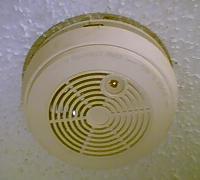
The chirp almost always starts between 2 and 6 in the morning. A single, sharp beep, once every 30 to 60 seconds, loud enough to wake you but too short to place. By sunrise it is often gone, which makes the whole thing feel personal, as if the alarm is choosing its moment.
It is not choosing. The timing is chemistry.
The low-battery chirp is a deliberate signal, and the reason it fires at night is that your house is coldest then. This article explains the mechanism, how to tell the chirp apart from other warnings, and how to stop it permanently.
What the chirp means
A single chirp every 30 to 60 seconds is the standardized low-battery warning in most residential smoke alarms. It is not a malfunction and not a false alarm. It is a deliberate, programmed signal designed to compel you to replace the power source.
The alarm watches its own supply voltage. When it drops below the operating threshold, the warning circuit fires the chirp on a fixed cycle. For a standard 9-volt battery, units typically trigger the warning when voltage falls to around 7.6 to 7.7 volts, according to First Alert's battery troubleshooting guidance.
A true emergency sounds completely different: a continuous loud tone or a set of three rapid beeps. If you hear the single intermittent chirp, the alarm is telling you about power, not smoke.
Why a smoke detector chirps more at night: the chemistry
The reason the chirp appears in the middle of the night comes down to basic battery chemistry. Most homes reach their lowest temperature between 2 a. m.
and 6 a. m. , when the heating system cycles less and bedrooms sit cool through the night.
Cold slows the chemical reactions inside the battery. Ions move more slowly through the electrolyte, the component that carries electrical current inside the cell.
That slowdown raises the battery's internal resistance, and higher resistance means a dip in the voltage at the terminals. First Alert explains that when the temperature drops, chemical reactions inside a battery slow down and ions move more slowly through the electrolyte, increasing internal resistance and causing a voltage drop inside the cell.
For a fresh battery, that dip is harmless. The voltage stays well above the alarm's threshold. But for a battery already near the end of its charge, hovering just above that 7.6 to 7.7 volt danger zone, a few cold degrees push it over the edge at 3 a.
m. It chirps. When the room warms again toward morning, the chemistry recovers, the voltage climbs back above threshold, and the chirping stops.
The battery was never healthy. It just looked fine while it was warm.
This is also why the chirp is worse in winter and why alarms in cold rooms, like unheated hallways or garages, chirp first.
The battery is not the only cause
Most nighttime chirping is a dying battery, but two other conditions make the same sound. Knowing the difference saves you from replacing a battery that is fine.
End-of-life warning. Smoke alarms do not last forever. The National Fire Protection Association recommends replacing all smoke alarms every 10 years from the date of manufacture, and the NFPA 72 standard backs that replacement cycle.
When the sensing components degrade, many units emit an end-of-life signal that can sound like a chirp every 30 seconds. If the alarm is a decade old, no new battery will fix it. Check the manufacture date printed on the back of the unit.
Environmental interference. Dust, insect debris, or humidity inside the sensing chamber can cause persistent chirping even with a fresh battery.
Steam from a nearby bathroom or extreme temperature swings can trigger temporary chirps too. A vacuum with a soft brush attachment on the outside vents handles most dust buildup.
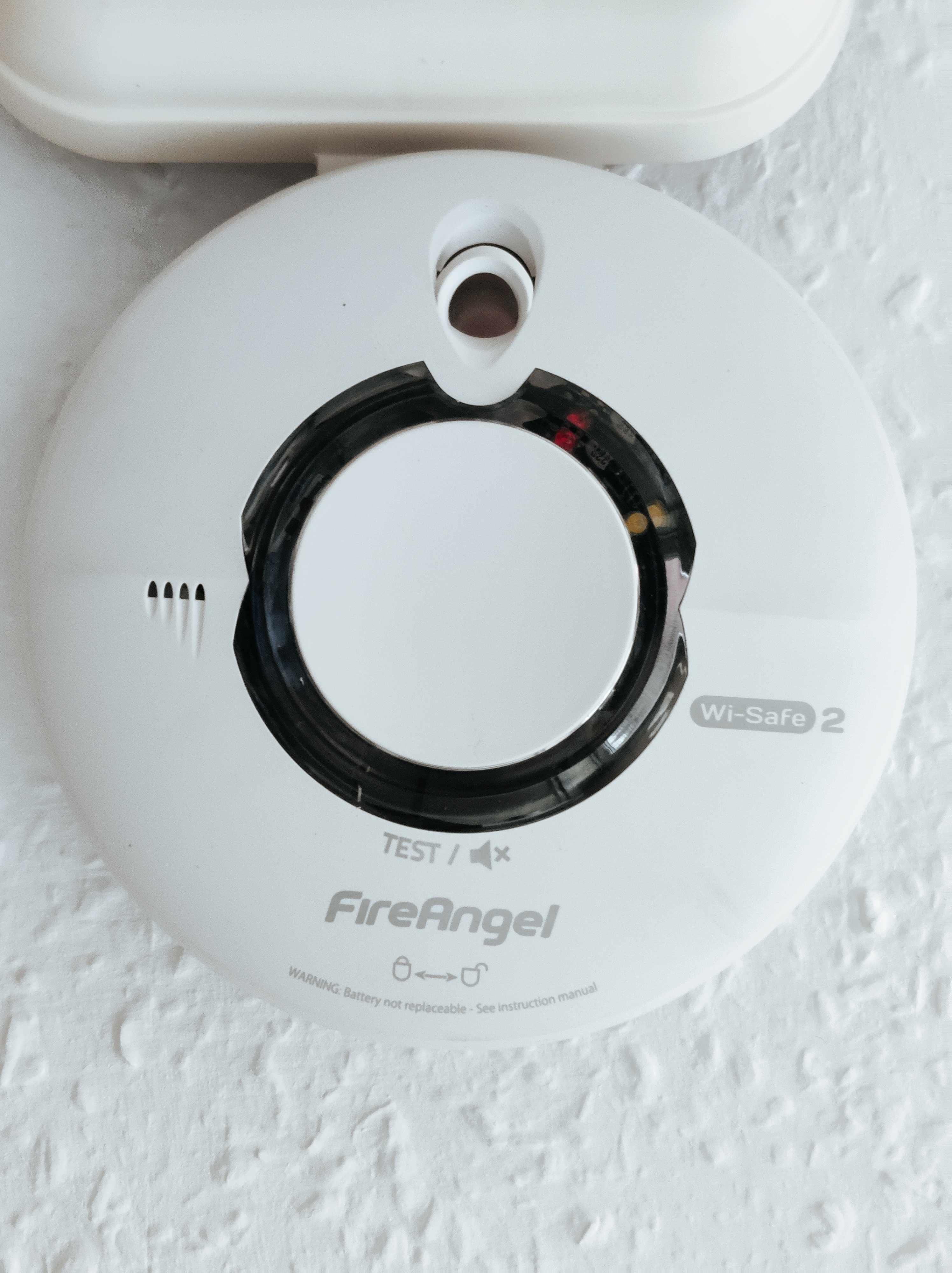
Hardwired alarms have their own wrinkle. These units run on house current and use the battery only as backup.
A brief power interruption, a surge, or a loose connection can switch the alarm to battery for a moment. If that backup battery is weak, the transition itself triggers a chirp as the microprocessor registers the power change.
How to stop it for good
Replace the battery, and do it during the day, not at 3 a. m.
Most units take a 9-volt alkaline, two or three AA batteries, or a sealed lithium cell. First Alert recommends name-brand alkalines like Duracell MN1604 or Energizer 522 for its 9-volt units, noting that well-designed lithium cells are less affected by temperature swings because their electrolytes and internal layouts minimize the resistance change.
If you replace the battery and the chirping continues, the unit probably has residual charge trapped in its capacitors, making it "remember" the dead battery. Fix it with a hard reset: remove the unit from its base, take out the battery, and hold the Test or Hush button for 15 to 30 seconds.
This drains the remaining power from the circuit board. Then install the fresh battery and remount the unit.
For the 3 a. m. emergency itself, most modern alarms have a Hush or Silence feature.
Pressing the Test button briefly typically silences the chirp for 7 to 12 hours, buying quiet until you can buy a battery in the morning. The alarm resumes chirping after the silence window expires, which is the point: it does not want you to forget.

The honest rule is simple. A battery that dipped below voltage once will do it again, and eventually it fails completely. Replace smoke detector batteries every 6 to 12 months, and replace the whole unit at the 10-year mark.
Why does my smoke detector chirp only sometimes?
Temperature. A weak battery dips below the voltage threshold when the house is cold and recovers when it warms. The chirp will become constant as the battery dies further.
Is the chirp pattern different for end-of-life?
Sometimes. End-of-life often presents as a chirp every 30 seconds, which is easy to confuse with a low battery. The tell is the manufacture date: past 10 years means replace the unit, not the battery.
Can I disable the chirp by removing the battery?
Never. A silenced alarm is a dead alarm. Use the Hush feature for temporary quiet and replace the battery the same day. For more on odd beeping patterns, see our guide on why smoke detectors beep randomly without smoke.
The bottom line
A smoke detector chirps at night because cold slows battery chemistry, dipping a nearly-dead battery below the voltage threshold while the house sleeps. The fix is a fresh battery, a proper capacitor-draining reset if the chirp persists, and a whole-unit replacement at 10 years.
Do not wait for the beep to come back. It will.
Latest in Home
- Why smoke detectors beep randomly without smoke
- How to stop condensation on bedroom windows
- How to silence a squeaky floorboard
- Why pipes bang when you turn off the faucet
Subscribe for one practical home fix in your inbox each week.
Image Credits: Wikimedia Commons / Saperaud, Andy Mabbett, Georg Pik
Related stories
Why Your Faucet Keeps Dripping After You Turn It Off
A dripping faucet is usually a worn washer, O-ring, or cartridge that can no longer seal. One drip per second wastes over 3,000 gallons
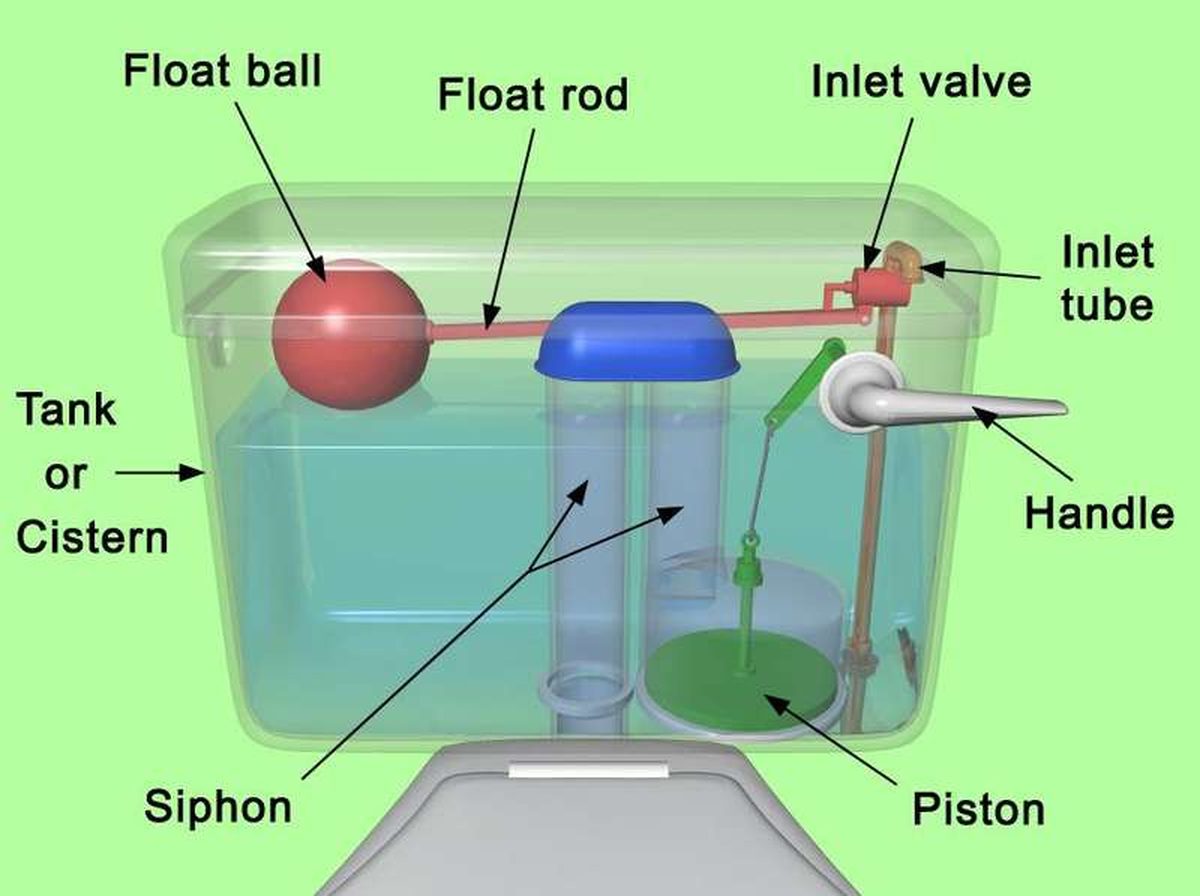
How to fix a running toilet without a plumber in 30 minutes
A running toilet can waste 200 gallons of water a day. Diagnose the flapper, float, or fill valve in two minutes, then fix it yourself

How to hang heavy shelves on drywall safely
Studs first, toggle bolts second, plastic anchors never for heavy loads. Weight ratings, installation steps, and mistakes that bring