
How to stop condensation inside windows each morning
By Rive News / Research desk | Rive News / Published October 27, 2026 at 9:00 AM PKT
Key takeaways
- Condensation forms when warm, moist indoor air cools to its dew point on cold glass overnight.
- Open windows wide for five to ten minutes each morning to flush humid air out without chilling the house.
- Cut moisture at its source with extractor fans, lids on pans and no indoor clothes drying, then wipe panes dry.

Condensation droplets covering the inside of a window pane. Photograph: the subject
Image Credits: Wikimedia Commons
Condensation on the inside of windows is water from indoor air turning back into liquid on cold glass. Warm air holds more water vapour than cold air, so when it touches a cold pane overnight it cools, reaches saturation and sheds droplets.
Mornings are worst because the temperature gap is widest then. Bedrooms collect moisture all night from breathing alone, behind closed doors and curtains, while the glass stays cold from outside air.
This article explains how to stop condensation inside windows each morning, including why mornings are worst, cutting moisture at its source, ventilating in short bursts, keeping the glass warmer, and when condensation means a fault.
Why mornings are worst
The key idea is the dew point. The dew point is the temperature at which air becomes fully saturated with water vapour, at 100 percent humidity, and can hold no more.
Once air cools to its dew point, excess vapour condenses onto the coldest nearby surface. In a bedroom overnight, that surface is usually the window glass.
Bedrooms are especially vulnerable because people breathe out moisture for hours with the door shut. Cooking, showering and drying clothes add more moisture to the house during the evening, and that moist air drifts into cold rooms.
Unheated spare bedrooms are classic condensation traps. Moist air from the rest of the house drifts in, meets cold glass and cold walls, and condenses there even if nobody slept in the room.
Condensation on the inside of the glass is usually a ventilation and humidity problem, not a broken window.
Traders from the consumer site Which describe the cause plainly: "It means there's too much moisture in the room and not enough ventilation. Moisture needs somewhere to escape. The more you let fresh air circulate, the less water ends up on your windows.
"
Cut the moisture at its source
Ventilation works best when there is less moisture to remove. Run kitchen and bathroom extractor fans during cooking and showering, and leave them running for 15 to 20 minutes afterward to clear the damp air.
Put lids on pans while cooking. An uncovered pot sends a steady stream of steam into the room, and a lid cuts that flow sharply without changing the meal.
Dry washing outdoors whenever possible. A load of wet clothes drying on radiators releases a large amount of water into the air, and it is one of the biggest single contributors to indoor damp.
If drying indoors is unavoidable, confine it to one room with the door closed and a window slightly open, or run a dehumidifier in that room. A dehumidifier treats the symptom rather than the source, but it works well where ventilation is hard, such as a basement flat.
Keep internal doors open during the day where practical, so moisture spreads and dilutes instead of pooling in one cold room. The exception is wet rooms: keep bathroom doors closed while showering so steam does not flood colder rooms, as our guide to car windows fogging shows for a similar moisture problem.
Ventilate in short bursts
The morning purge is the single most effective habit. Open bedroom windows wide for five to ten minutes right after getting up, which flushes out the humid air built up overnight.
Short bursts work better than leaving a window cracked all day. A wide-open window swaps the air fast, while walls and furniture keep their stored heat, so the room does not feel cold for long.
Repeat the burst after cooking and showering. Opening windows for a few minutes several times a day swaps moist air for drier outside air without losing much heat from the building fabric.
Keep trickle vents open day and night, even in winter. These small grilles at the top of window frames give a steady background flow of fresh air, and closing them traps humid air inside.
Pull curtains and blinds back during the day. Curtains trap a pocket of still, moist air against the glass, which cools faster and condenses more readily than air that can circulate.
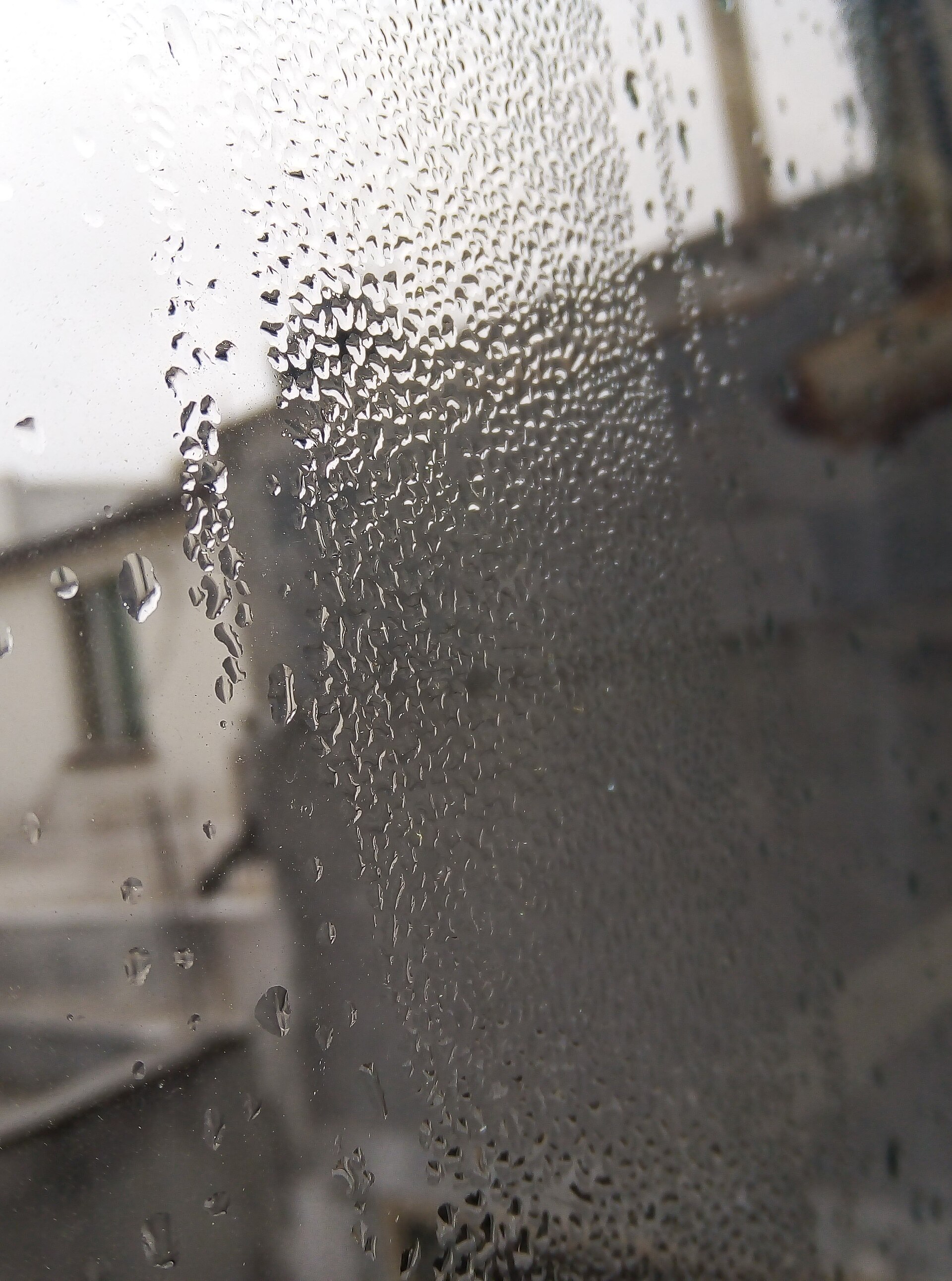
Water droplets condensed on a window pane in the morning. Photograph: the subject
Image Credits: Wikimedia Commons
Keep the glass warmer
Steady, low background heat beats short blasts. Cold rooms and cold surfaces attract condensation, so keeping the heating on low and steady holds glass and walls above the dew point more of the time.
Short, intense heating with the house cold in between does the opposite. Surfaces cool right down between blasts, then meet a rush of warm, moist air when the heating comes back on.
Better glazing raises the inside temperature of the glass, so condensation forms less readily. But new windows are the most expensive fix, and they can move the problem rather than solve it.
A modern, well-sealed window cuts the accidental ventilation an old leaky window provided. The moisture then condenses on the next coldest surface, often a wall corner or window reveal, where it feeds black mould.
If you replace windows, make sure the new frames have trickle vents and that kitchen and bathroom extraction works. Sealing a house tighter without ventilation makes condensation worse, not better.
Wipe the panes and sills dry each morning while you fix the cause. Wiping stops water soaking into timber frames, sills and plaster, which is where rot and mould start, and a window vacuum makes the job quicker.
When condensation means a fault
Condensation between the glass panes is different from condensation on the inside surface. Moisture trapped between panes means the sealed unit has failed, and the seal cannot be repaired, so the unit needs replacing.
Persistent damp patches, mould on walls or a musty smell also deserve investigation. Those signs point to a leak or a larger damp problem rather than ordinary morning condensation, as explained in our guide to water stains on ceilings.
Black mould deserves prompt action because it damages plaster and frames and can aggravate breathing problems. Remove it safely, fix the moisture source, and do not just paint over it.
If condensation appears on every window despite ventilation and steady heat, consider a whole-home system such as positive input ventilation. It gently pushes fresh, filtered air into the property and lowers moisture throughout the house.
Frequently asked questions
Why do I only get condensation in the morning?
Temperature differences between indoors and outdoors are most dramatic overnight, and bedrooms collect moisture from breathing for hours behind closed doors. The glass is coldest and the air moistest at dawn.
Should I wipe condensation off the windows?
Yes. Wiping each morning stops water soaking into frames, sills and plaster, where rot and mould start. Wring the cloth into the sink rather than drying it on a radiator, which puts the water back into the air.
Do dehumidifiers stop window condensation?
They help, especially where ventilation is difficult, but they treat the symptom rather than the source. Pair a dehumidifier with extractor fans, short ventilation bursts and no indoor clothes drying for lasting results.
Is condensation on new double glazing normal?
Inside condensation can still occur on new glazing if the room is humid and poorly ventilated, because sealed windows cut accidental draughts. Condensation between the panes is different and means the sealed unit has failed.
The bottom line
Morning condensation is a moisture and ventilation problem with a simple daily fix. Purge humid air for five to ten minutes each morning, cut moisture at its source, and keep a low, steady background heat.
Wipe the panes dry while those habits take effect. If condensation sits between the panes or damp patches persist, that is a fault to fix, not a routine to live with.
Tags: Condensation, Windows, Ventilation, Damp
Rive News is a research desk covering home, health, money and everyday science topics, writing explainers from public sources rather than personal experience.
Related
- What Causes Doors to Stick in Summer and How to Fix Them
- What Causes Water Stains on Your Ceiling: Finding the Leak
- How to Stop Your Car Windows From Fogging Up
Subscribe for one practical home and garden explainer each week.
Rive News publishes general information only. Corrections are welcome through the research desk.
Related stories
Why Your Faucet Keeps Dripping After You Turn It Off
A dripping faucet is usually a worn washer, O-ring, or cartridge that can no longer seal. One drip per second wastes over 3,000 gallons
How to fix a running toilet without a plumber in 30 minutes
A running toilet can waste 200 gallons of water a day. Diagnose the flapper, float, or fill valve in two minutes, then fix it yourself

How to hang heavy shelves on drywall safely
Studs first, toggle bolts second, plastic anchors never for heavy loads. Weight ratings, installation steps, and mistakes that bring