
How to store paint so it stays usable for years
Key takeaways
- Air is the enemy: a clean rim, plastic wrap, and a tight lid keep paint fresh.
- Store cans in a cool, dry, dark spot between about 50 and 70 degrees Fahrenheit.
- Sealed water-based paint can last up to 10 years, and oil-based paint up to 15.
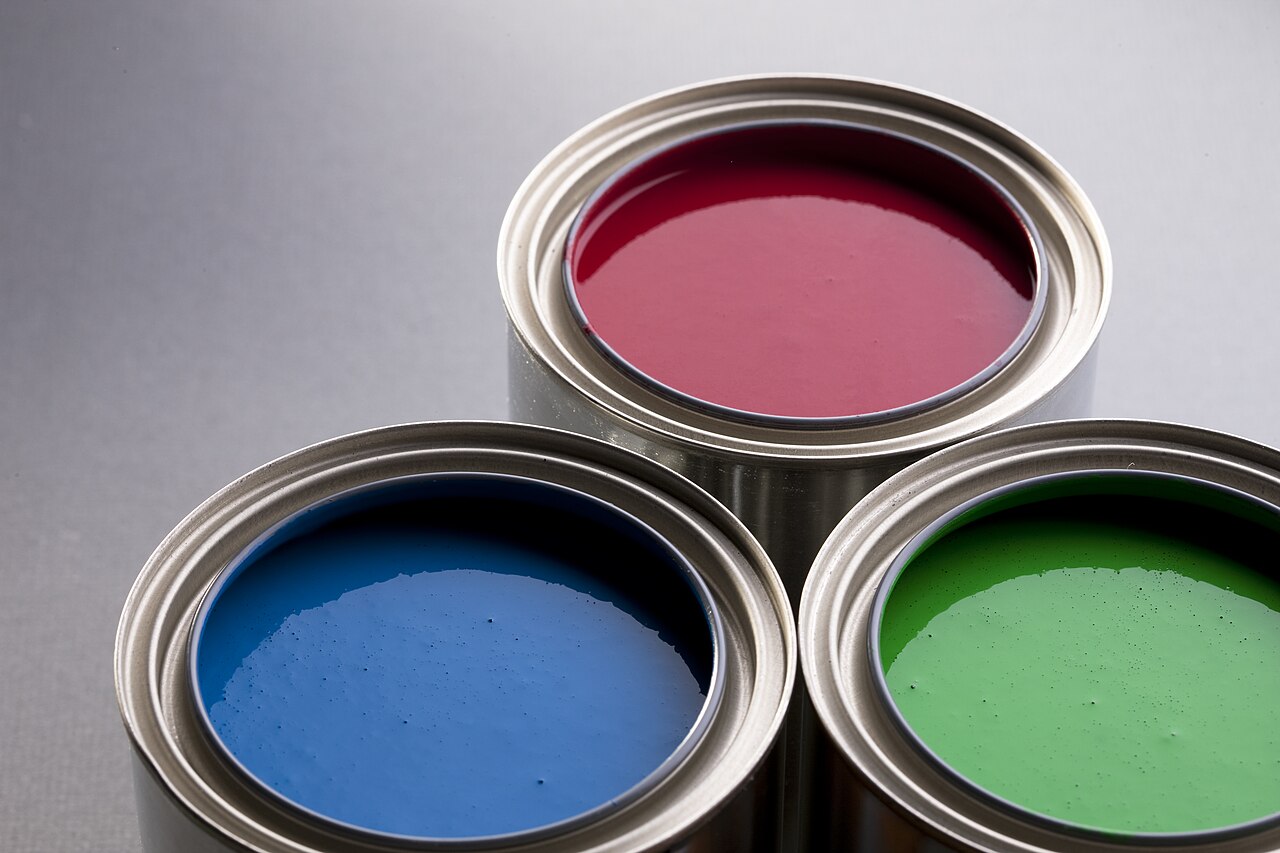
Leftover paint is worth keeping. A half can of the exact colour saves a touch-up job, and it saves the cost and guesswork of matching a shade.
Paint goes bad when air, heat, cold, or dirt gets to it. Each of those has a simple defence, and the whole routine takes about five minutes per can.
This article explains how to store paint so it stays usable for years, including how to seal a can, where to keep it, how long each type lasts, and how to tell whether old paint is still good.
Why paint goes bad in the can
Paint is a mix of pigments, binders, and a liquid carrier. Left alone, the pigments sink and the liquid rises, which is normal settling. Air turns that settling into damage: a skin forms within hours, and over weeks the paint underneath can dry out.
Heat speeds every bad reaction inside the can. Kompozit notes that heat makes paint thicken, skin over, or separate faster. Cold is worse for water-based paint, since freezing can split the ingredients for good.
Dirt ruins paint from the inside. Dipping a used brush or roller back into the storage can drops dried flecks into the whole batch. Kompozit warns that contaminated paint can also grow mould or bacteria, above all in water-based formulas.
A rusty can is a quiet killer. Moisture on the outside rusts the metal, and rust flakes can fall into the paint when the lid is opened.
Seal the can properly
Clean the rim first. B&Q advises wiping damp paint away with a wet cloth and scraping dried paint from the groove with something metal, such as a straightened wire hanger.
Take care not to let dry paint fall into the can.
Lay plastic wrap over the opening before replacing the lid. Kraudelt Painting describes the sheet as an extra lining that improves the airtight seal. B&Q adds: stretch cling film tight, and replace it if it tears.
Seat the lid evenly. Press it down by hand, then set a block of wood across the top and tap it with a hammer or mallet. B&Q warns against hitting the lid directly, since a dented lid will not seal.
Kraudelt adds the same caution: use a rubber mallet or your hand, never a metal hammer, because a warped lid lets air in.
Pour paint into a smaller container when less than half a can is left. B&Q recommends a clean glass jar or plastic container with an airtight lid. Less trapped air above the paint means slower skinning and longer life.
Never pour paint back into a food container. A drink bottle invites a dangerous mix-up, and most food containers do not seal well enough for paint.
Label every can before you shelve it
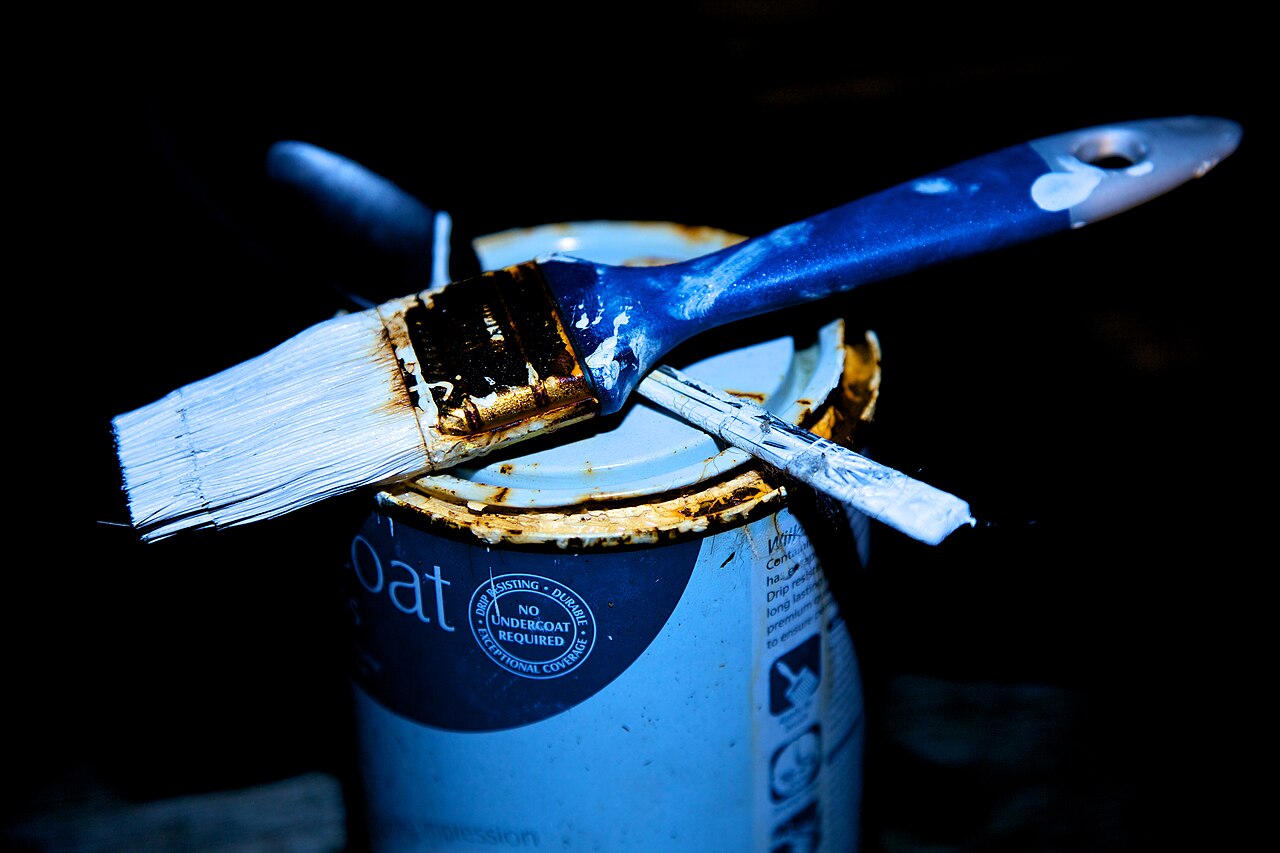
Memory fades faster than paint. B&Q suggests writing the room, the colour, where you bought it, and the date on the lid with a permanent marker. A dab of paint on the tin shows the exact colour.
Add the brand, the colour code, and the sheen. Kompozit advises labelling each can with the room, the date, and the colour code or formula number, which is the detail a shop needs to remix the shade.
Mark the level too. A line around the outside of the tin shows how much is left without opening the can.
Where to store paint
Pick a cool, dry, dark spot with a steady temperature. Kompozit recommends a spot that stays between roughly 50 and 70 degrees Fahrenheit (10 to 21 degrees Celsius) year-round. A basement utility room, a climate-controlled closet, or a heated storage room all work well.
Keep cans on a shelf, not on the floor. B&Q advises placing the can on a shelf to keep it from getting wet and away from damp concrete that rusts metal fastest.
Keep paint out of direct sunlight. Sunlight brings heat and UV exposure, and Kompozit notes that heat accelerates drying and separation inside the can.
Skip the garage, attic, and shed when you can. B&Q warns that paint does not last when exposed to extreme temperatures. Kraudelt adds that heat dries paint out, and cold can turn latex paint into a curdled paste.
Keep paint away from furnaces, water heaters, and open flames. Kompozit adds that fumes from oil-based paints can build up in poorly ventilated spaces. Keep cans out of reach of children and pets.
The upside-down question
Some guides say store cans upside down, and some say keep them upright. Both sides agree on the real point: the seal matters, not the position.
Kraudelt recommends storing the tin upside down, arguing that the paint itself seals the lid and keeps air out longer. The idea is sound when the seal is perfect.
Kompozit warns about the other side. A can stored upside down without a proper seal lets air creep in, and the paint can leak or dry out.
The safe default is upright with a great seal. Clean the rim, add plastic wrap, seat the lid evenly, and store the can upright on a shelf. If you do store a can upside down, check the seal first and keep it on a tray.
How long stored paint lasts
Unopened paint lasts longest. Kompozit reports that an unopened can, stored properly, can often last 5 to 10 years for latex paints and even longer for oil-based formulas.
Opened paint lasts less long, but still for years. Kompozit puts properly resealed latex paint at 2 to 5 years, and oil-based formulas at up to 10 years. B&Q gives longer headline figures: up to 10 years for water-based paint, and up to 15 for oil-based.
The spread reflects different starting points. A can opened once and resealed at once lasts far longer than a can opened ten times and left loosely closed. Treat the numbers as ranges, not promises.
Check stored cans about once a year. A quick look for rust, a loose lid, or a bulging can takes seconds. A can that smells sour through a closed lid has already failed.
How to tell whether old paint is still good
Open the can and look before you stir. A thin skin on the surface is normal after long storage, and Kraudelt advises lifting it off rather than stirring it in. Do not shake the tin first, since shaking breaks the skin into lumps through the paint.
Stir slowly and thoroughly. Mild separation blends back with a good stir, while pigment clumped hard to the bottom may not. Kompozit notes that after years of temperature swings, pigment can bind to the bottom so firmly that stirring no longer restores an even colour.
Smell the paint. A strong, sour, or rancid smell different from normal paint odour means the paint has spoiled, according to Kompozit. Trust your nose: bad paint smells sour or rotten.
Test a patch. Kraudelt suggests painting a small test area and checking four things: the colour looks right, the smell is normal, the consistency resembles single cream, and the paint dries on schedule. If all four pass, the paint is good to go.
Strain the paint if it holds small bits. A paint strainer or fine mesh catches skin fragments and dried flecks, and saves a finish full of specks.
When to throw paint out
Throw paint out when it fails the tests. Kompozit lists four signs of expired paint: a sour smell, a thick or clumpy texture that will not stir smooth, visible mould spots, and a stringy texture on the stir stick.
Do not pour paint onto the ground or into a drain. Kompozit warns that paint can contaminate soil and waterways and may break local rules. Latex paint can sometimes be dried out and tossed with regular trash, while oil-based paints usually need a hazardous waste drop-off.
Small amounts are easy to dry out. Kraudelt notes that about 4 cm or less of paint in a tin can be left to dry with the lid off, away from children and pets. Larger amounts need a recycling centre or a hazardous waste facility.
Keep the empty can for the label. Photograph it before disposal, since the colour code is what you need to buy the same shade again.
Frequently asked questions
How long does leftover paint last once opened?
Properly resealed latex paint lasts about 2 to 5 years, and oil-based paint up to 10 years, according to Kompozit. B&Q gives longer headline figures: up to 10 years for water-based and up to 15 for oil-based paint.
Should I store paint cans upside down?
Only with a perfect seal. Kraudelt recommends upside-down storage, since the paint itself seals the lid. Kompozit warns that an upside-down can with a weak seal leaks or lets air in.
Upright storage with a clean rim, plastic wrap, and an evenly seated lid is the safer default.
What temperature is best for storing paint?
Kompozit recommends roughly 50 to 70 degrees Fahrenheit (10 to 21 degrees Celsius) year-round. Avoid freezing for latex paint, since freezing can split the ingredients for good. Stable conditions matter more than hitting an exact number.
Can I use paint that has a skin on top?
Yes, if the paint underneath is sound. Lift the skin off without stirring it in, then stir the paint well and test a patch. If the stirred paint is smooth, smells normal, and dries on schedule, it is usable.
A thick, clumpy, or sour batch should be thrown out.
How do I dispose of old paint safely?
Let small amounts dry out in the tin with the lid off, away from children and pets, then recycle or bin the tin per local rules. Larger amounts and oil-based paints need a recycling centre or hazardous waste drop-off.
When a wall needs a fresh start, the same care applies to stripping the old finish first, as in how to remove old wallpaper without a steamer.
The bottom line
Storing paint well is a five-minute job with a payoff measured in years. Clean the rim, add plastic wrap, seat the lid evenly, label the can, and shelve it upright in a cool, dry, dark spot. Test old paint before trusting it, and dispose of failed cans through the right channel.
The next scuff on the wall will meet a can that is ready to go.
Tags: home improvement, paint, storage, DIY
Latest in Home
- How to stop condensation on windows in winter
- How to choose the right drill bit for wood, metal, and tile
- How to clean grout on tiles without harsh chemicals
- How to remove old wallpaper without a steamer
Subscribe to the Rive News newsletter for one practical home DIY explainer each week.
Related stories

Why Your Faucet Keeps Dripping After You Turn It Off
A dripping faucet is usually a worn washer, O-ring, or cartridge that can no longer seal. One drip per second wastes over 3,000 gallons

How to fix a running toilet without a plumber in 30 minutes
A running toilet can waste 200 gallons of water a day. Diagnose the flapper, float, or fill valve in two minutes, then fix it yourself

How to hang heavy shelves on drywall safely
Studs first, toggle bolts second, plastic anchors never for heavy loads. Weight ratings, installation steps, and mistakes that bring