
Why Do Windows Fog Up Between the Panes? The Failed Seal Explained
Key takeaways
- Fog between the panes means the hermetic seal on the insulated glass unit has failed and moist outside air is getting inside.
- The desiccant in the spacer bar absorbs small amounts of moisture for years, but once it saturates, condensation becomes permanent.
- No wipe, dehumidifier, or defogging hack fixes it; replacing the glass unit is the only real repair.
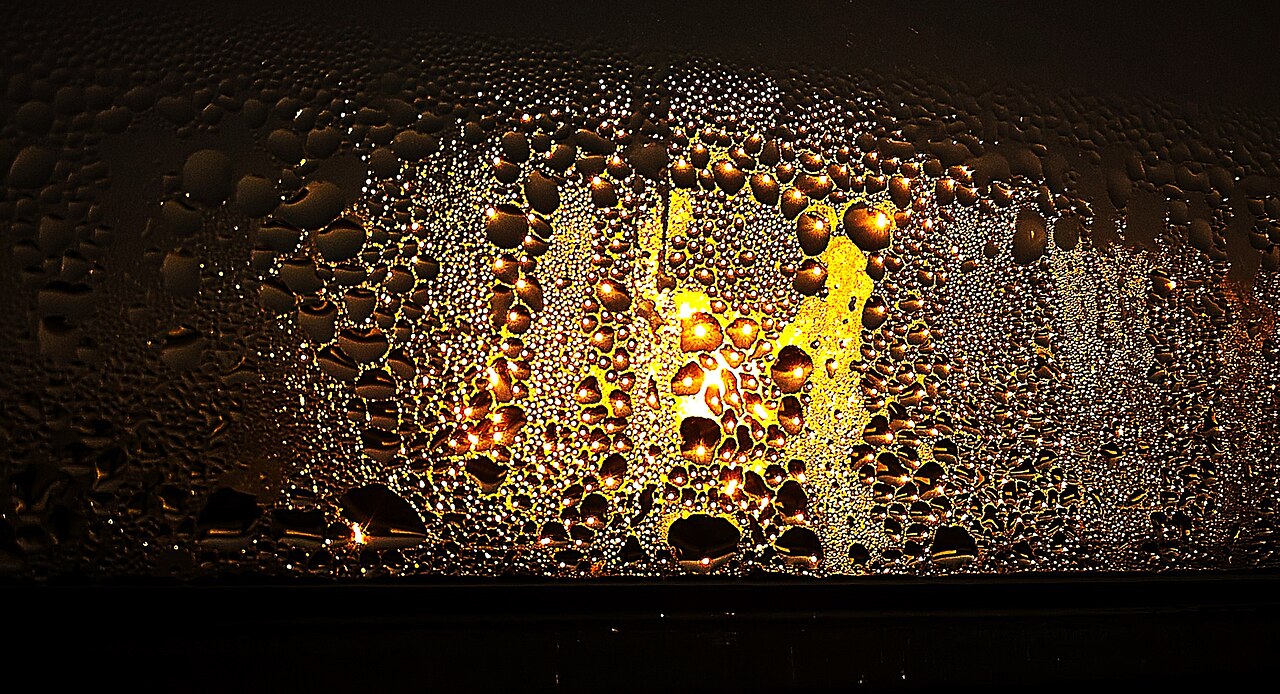
Condensation forms when moist air meets a cold glass surface. Between panes, it signals a broken seal. Photograph: Tarasna0922
A modern double-pane window is a sealed thermos. Two sheets of glass are held apart by a spacer bar around the edge, and the space between them is sealed shut, often filled with argon or another insulating gas. When fog appears inside that space, where no cloth or squeegee can reach, the seal has broken.
Moist outside air is now drifting in and out of a cavity that was supposed to stay bone dry.
This is different from condensation on the room-side or outside surface of the glass, which is a humidity and temperature story you can fix with ventilation. Fog trapped between panes is a structural failure. Once you understand the three parts that keep the cavity dry, the fix becomes obvious, and so does why every cheap trick fails.
This article explains how the sealed unit works, what breaks it down, why the fog cannot be wiped away, and what actually fixes the problem.
How a sealed glass unit keeps moisture out
The core of an energy-efficient window is the insulated glass unit, or IGU: two or three panes of glass separated by a spacer bar that creates a sealed cavity. The spacer, often made of a low-conductivity material to limit heat transfer, typically contains a desiccant such as silica gel, a drying agent that soaks up moisture.
The edge is closed by a dual sealing system. A primary seal, usually butyl rubber, provides the airtight barrier that keeps water vapor out and the insulating gas in. A secondary seal, such as polysulfide or silicone, gives the unit structural strength and holds the panes together against movement.
Together they form a hermetic edge.
When the unit leaves the factory, the cavity holds dry air or an inert gas like argon or krypton. These gases conduct heat poorly, which is part of what makes the window insulate. The desiccant's job is modest: absorb the tiny amount of moisture trapped during manufacturing and the slow vapor permeation that gets past the seals over the years.
What breaks the seal: heat, sun, and time
Seal failure is driven by environment, not by anything the homeowner did wrong. The biggest culprit is thermal cycling, the daily expansion and contraction of glass and sealant as temperatures swing. Glass and polymer sealants expand at different rates, so every hot day and cold night works the seal's adhesive bond a little, in a process sometimes called thermal pumping.
Over years, microscopic cracks open in the primary moisture barrier.
Ultraviolet radiation is the second attacker. Prolonged UV exposure breaks down the synthetic polymers in the sealant, making them brittle and reducing their adhesion to the glass. Dynamic wind loading adds mechanical stress on top.
Engineers note that once the outer secondary seal degrades, tiny pathways open for ambient, moisture-laden air to infiltrate the cavity.
Argon-filled units leak slowly even before visible failure. Industry estimates put argon loss through an aging seal at roughly 1 percent per year, so a 20-year-old window may hold far less of its original fill. The moisture entry that follows is what the homeowner eventually sees as fog.
The desiccant's last stand, then permanent fog
When the seal first breaches, the desiccant is the unit's last line of defense. It absorbs the incoming moisture and keeps the cavity air dry, which is why a failing window can look fine for months or even years after the seal starts leaking. But the desiccant's capacity is finite.
Once the desiccant saturates, it cannot absorb any more, and the cavity's humidity climbs until it reaches the dew point. Water vapor then condenses on the cooler inner surface of the glass panes, and the fog appears. Because the moisture is sealed inside the unit, no amount of room dehumidification or ventilation touches it.
The fog may come and go with the weather, but it cannot be dried out for good.
Worse, the condensation cycle leaves permanent marks. Each round of condensing and evaporating deposits minerals and airborne contaminants on the inside glass surfaces, creating a cloudy, hazy, or milky film that persists even when the window looks dry. It can also damage low-E coatings, the thin layers that reflect heat back into the room.
That is why an old failed unit looks stained rather than simply wet.
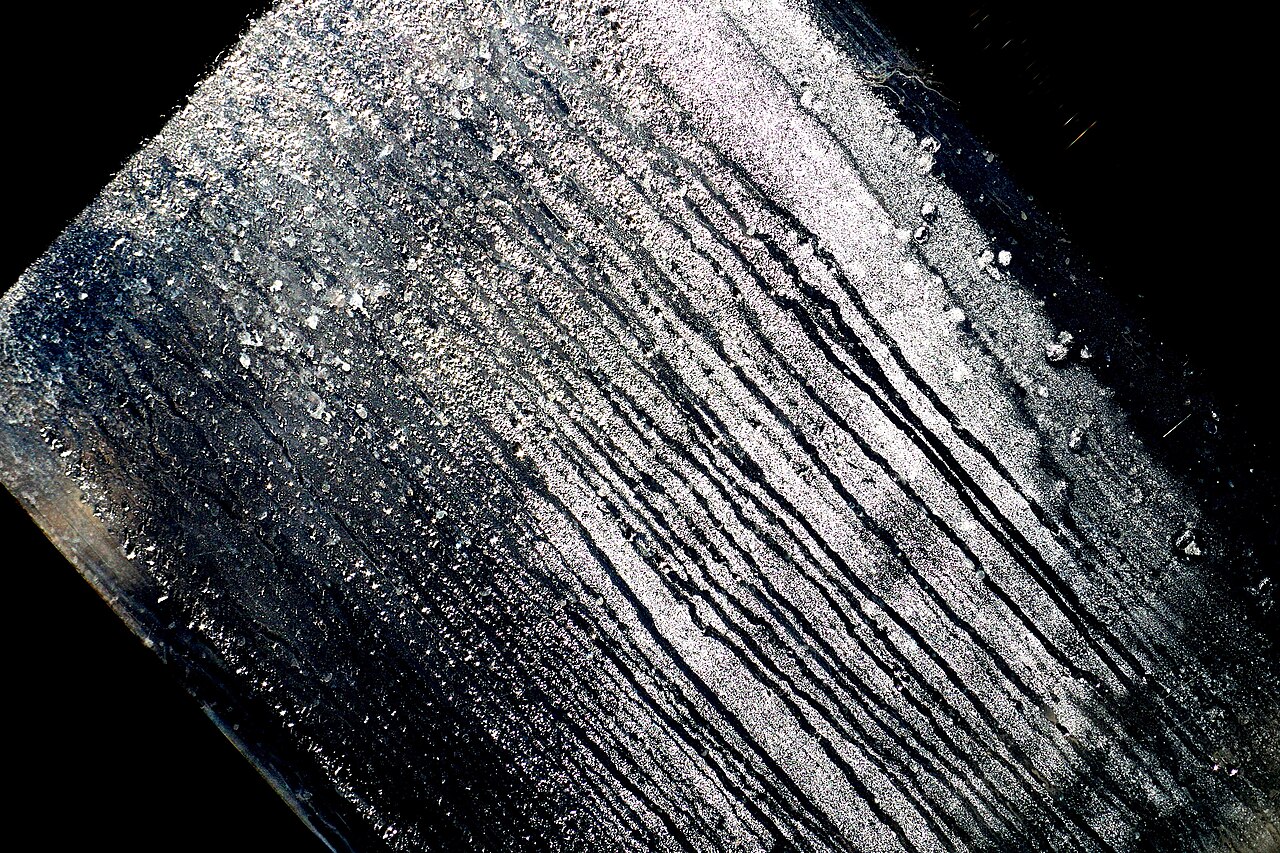
Droplets beading on glass show how moisture condenses when warm humid air meets a cold surface. Photograph: Vladstefan
Why the DIY defogging tricks do not work
Faced with replacement costs, homeowners try workarounds, and every one of them fails on the same physics. Drilling small holes in the spacer lets some moisture escape, but the holes immediately destroy whatever is left of the argon fill and the dry environment, permanently cutting the window's insulating value. Cleaning agents pumped through the holes leave new, more visible residue, and the condensation cycle typically restarts within weeks or months.
Ventilation and dehumidifiers help with surface condensation but do nothing for moisture sealed between panes. Defogging services that claim to restore the unit cannot recharge the desiccant or reseal the edge to factory condition. Seal failure is permanent by nature: the desiccant is saturated and the hermetic barrier is gone.
The actual fix is to replace the insulated glass unit while keeping the existing frame. The frame, hinges, and hardware are rarely part of the problem, so a glazier can swap in a new sealed unit at a fraction of full window replacement cost. If the frames themselves are old or damaged, replacing the whole window may be the better long-term choice.
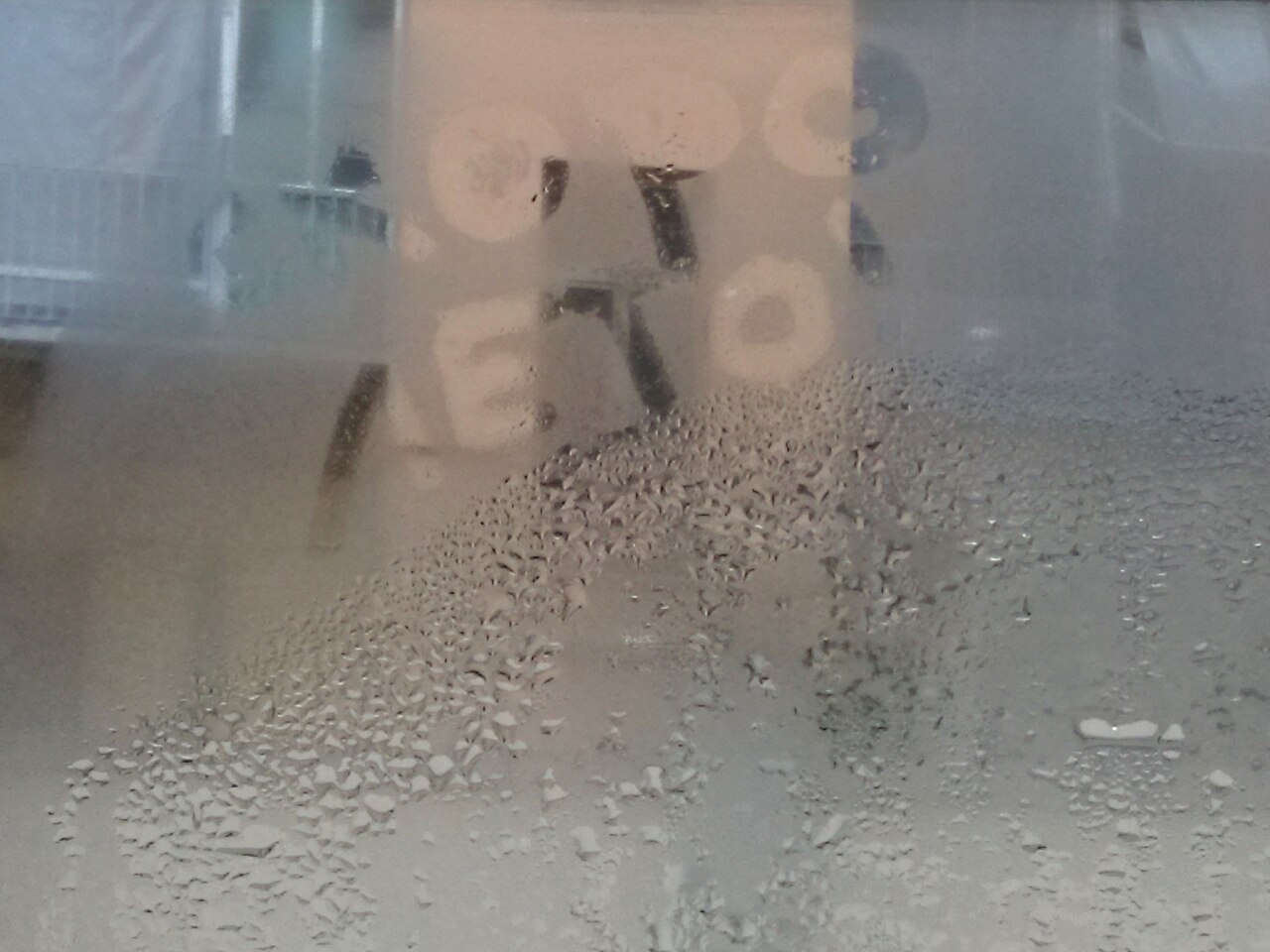
When the desiccant inside the spacer is saturated, condensation cycles leave a permanent cloudy film. Photograph: Mia Primavera
Frequently asked questions
Can I tell if the fog is between the panes or on the surface?
Try wiping the glass from inside and outside. If the fog does not move or clear, it is between the panes. Fog that wipes away from one side is surface condensation, a ventilation issue.
Does fog between panes mean my windows are low quality?
Not necessarily. Seal failure is largely a function of age and climate exposure. Thermal cycling and UV stress attack every brand's sealants; units in harsh sun or wide temperature swings simply fail sooner.
Will the fog go away on its own in summer?
It may fade in warm dry weather and return in cold damp months, but the underlying failure does not heal. The desiccant stays saturated and the seal stays breached.
How much does replacing the glass unit cost relative to a new window?
A glass-unit-only replacement typically costs much less than a full frame-and-window replacement because the existing frame, trim, and hardware stay in place. Get quotes for both from a local glazier before deciding.
The bottom line
Fog trapped between panes is the signature of a failed hermetic seal: the dual-seal edge cracked, moist air entered, the desiccant absorbed moisture until it saturated, and condensation became permanent. No wipe or hack can reach inside the unit or recharge the desiccant. The honest fix is to have the insulated glass unit replaced in the existing frame, which restores both the view and the window's insulating performance.
Latest in Home & DIY
- How to clean grout that turned black
- How touchscreens detect your finger
- Unknown tracker alerts: how Bluetooth tracking warnings work
- Fixing eSIM issues when traveling abroad
Get one practical home science explainer in your inbox each week. Subscribe for the weekly home lab letter.
Image Credits: Wikimedia Commons / Tarasna0922, Vladstefan, Mia Primavera
Related stories
Why Your Faucet Keeps Dripping After You Turn It Off
A dripping faucet is usually a worn washer, O-ring, or cartridge that can no longer seal. One drip per second wastes over 3,000 gallons
How to fix a running toilet without a plumber in 30 minutes
A running toilet can waste 200 gallons of water a day. Diagnose the flapper, float, or fill valve in two minutes, then fix it yourself
How to hang heavy shelves on drywall safely
Studs first, toggle bolts second, plastic anchors never for heavy loads. Weight ratings, installation steps, and mistakes that bring