
Why wooden floors develop gaps in cold winter months
By Rive News / Research desk | Rive News / Published October 28, 2026 at 9:00 AM PKT
Key takeaways
- Winter gaps usually mean boards have lost moisture and shrunk, not that the floor is failing.
- The National Wood Flooring Association recommends 30 to 50 percent indoor relative humidity for wood floors.
- Gaps that open in winter and close in summer are normal, while gaps that keep growing need a closer look.
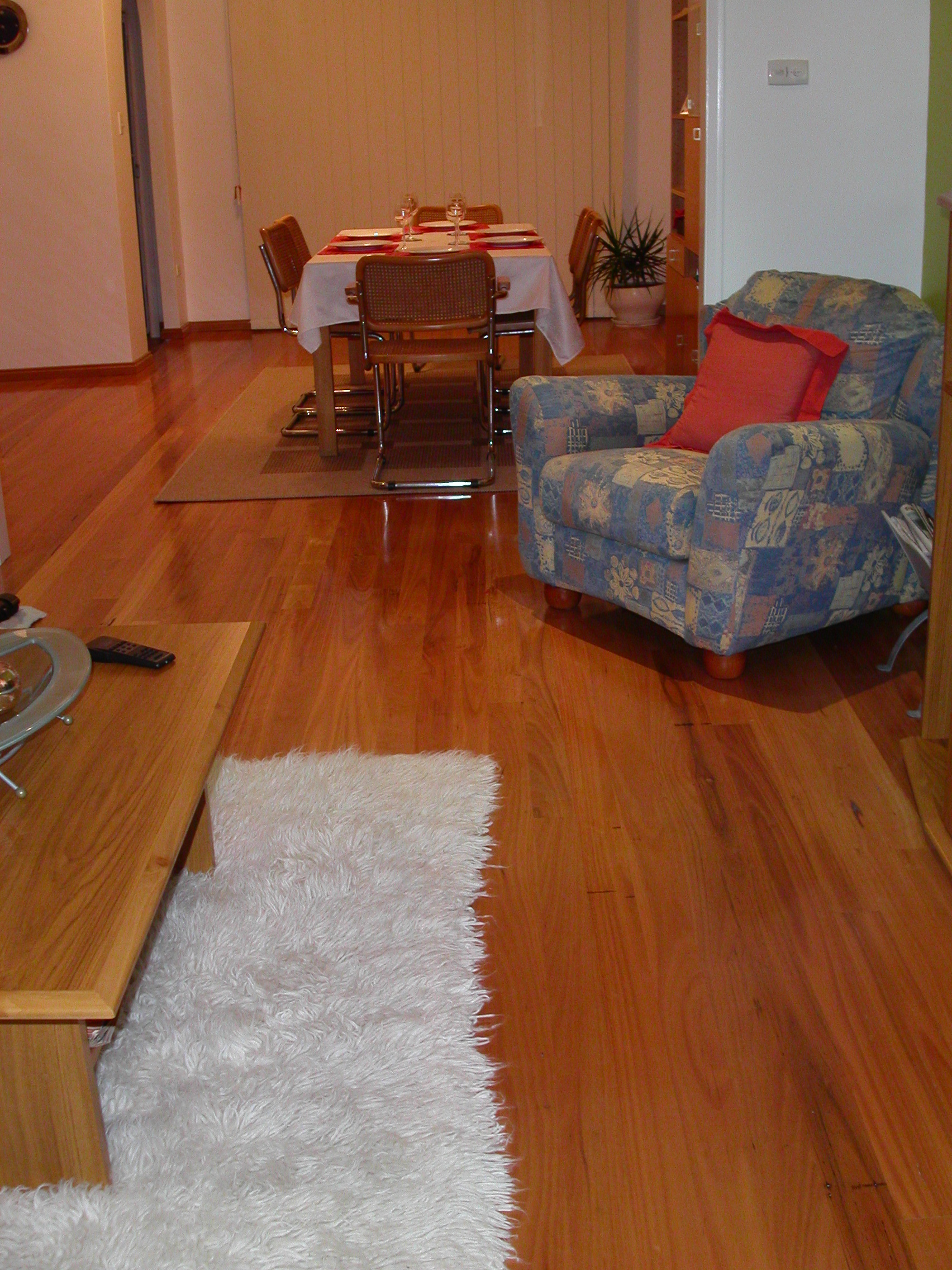
[Hardwood floor boards fitted across a room.] Photograph: Timber Floors Pty Ltd
Image Credits: Wikimedia Commons
Wooden floors develop gaps in winter because the boards themselves get narrower. Wood keeps exchanging moisture with the air around it long after it is cut, dried, and nailed down. When winter heating dries indoor air, each board gives up moisture and shrinks across its width, and hundreds of slightly narrower boards add up to visible seams.
This article explains why wooden floors gap in winter, including what moisture does inside a board, why board width and species matter, how to tell normal seasonal gaps from real damage, and what to do about them.
What is happening to the wood
Wood is hygroscopic, which means it absorbs moisture from humid air and releases it into dry air. Hardwood Floors Magazine describes this plainly: when heated indoor air drops in relative humidity, wood loses moisture as it adjusts to the drier conditions, boards begin to shrink, and gaps appear between them. The magazine calls this a normal phenomenon tied directly to the reduction of moisture in the surrounding air.
The key point is that the floor is not pulling apart at its joints. Each individual board is changing size. A gap that looks like a failure of the installation is usually just the sum of many small shrinkages, board by board, across the room.
Shrinkage also runs mainly across the width of a board, not along its length. That is why winter gaps show up as long thin lines between the long edges of planks, rather than as short breaks at the ends. Movement across the grain is far larger than movement along it, so the seams between boards are where the change becomes visible.
Why winter air dries a floor out
Cold outdoor air holds little moisture even before it enters a house. Heating that air raises its temperature without adding water, and warmer air can hold more moisture, so its relative humidity falls sharply. A living room that sat near 60 percent relative humidity in autumn can sit near 30 percent in January once the furnace runs all day.
That swing is exactly what the floor feels. The Journal of Light Construction notes that in much of the eastern United States, with humid summers and drier winters, it is normal to have gaps in wood floors in winter. Each board gets smaller over the winter and larger in summer, in a twice-yearly cycle.
Homes do not all follow the same calendar. A house with a whole-house humidifier may show almost no gaps, while a house heated by a wood stove may show wide ones near the stove. The pattern matters more than the date: gaps that track dry indoor air are seasonal, whatever month they appear in.
The numbers behind the movement
The National Wood Flooring Association (NWFA) recommends keeping indoor relative humidity between 30 and 50 percent, at temperatures of 60 to 80 degrees Fahrenheit, for wood flooring. That band is the range most manufacturers write into their guidance, and it matches the conditions in which kiln-dried flooring is produced.
At 30 percent relative humidity, wood settles at an equilibrium moisture content of about 6 percent. At 60 percent relative humidity, the same wood settles near 11 percent. That 5-point swing in moisture content is what drives a floor from tight summer seams to open winter gaps and back again.
Installers typically aim for floorboards at 6 to 9 percent moisture content. The NWFA also recommends that flooring moisture sit within 2 to 4 percent of the subfloor moisture, depending on board width. When a floor starts far from its surroundings, the first winter can produce larger gaps than later winters do.
Why wide planks show bigger gaps
Board movement is proportional to width. Hardwood Floors Magazine gives a concrete comparison: in identical conditions, an 8-inch-wide plainsawn plank of white oak will shrink twice as much as a 4-inch plank of the same cut and species. A wide-plank floor therefore shows bolder seasonal gaps than a narrow-strip floor in the same house.
Species matters as well. Some woods move more across their width than others, and the way a board is cut from the log changes the result too. Plainsawn boards, cut across the growth rings, generally move more than quartersawn boards, which are cut at a steeper angle to the rings.
None of this makes a floor defective; it only changes how visible the seasonal cycle will be.
Finish does not stop the process either. A sealed surface slows moisture exchange but does not seal wood completely. Moisture still moves through the finish and through the underside of the board, just more slowly than it would through bare wood.
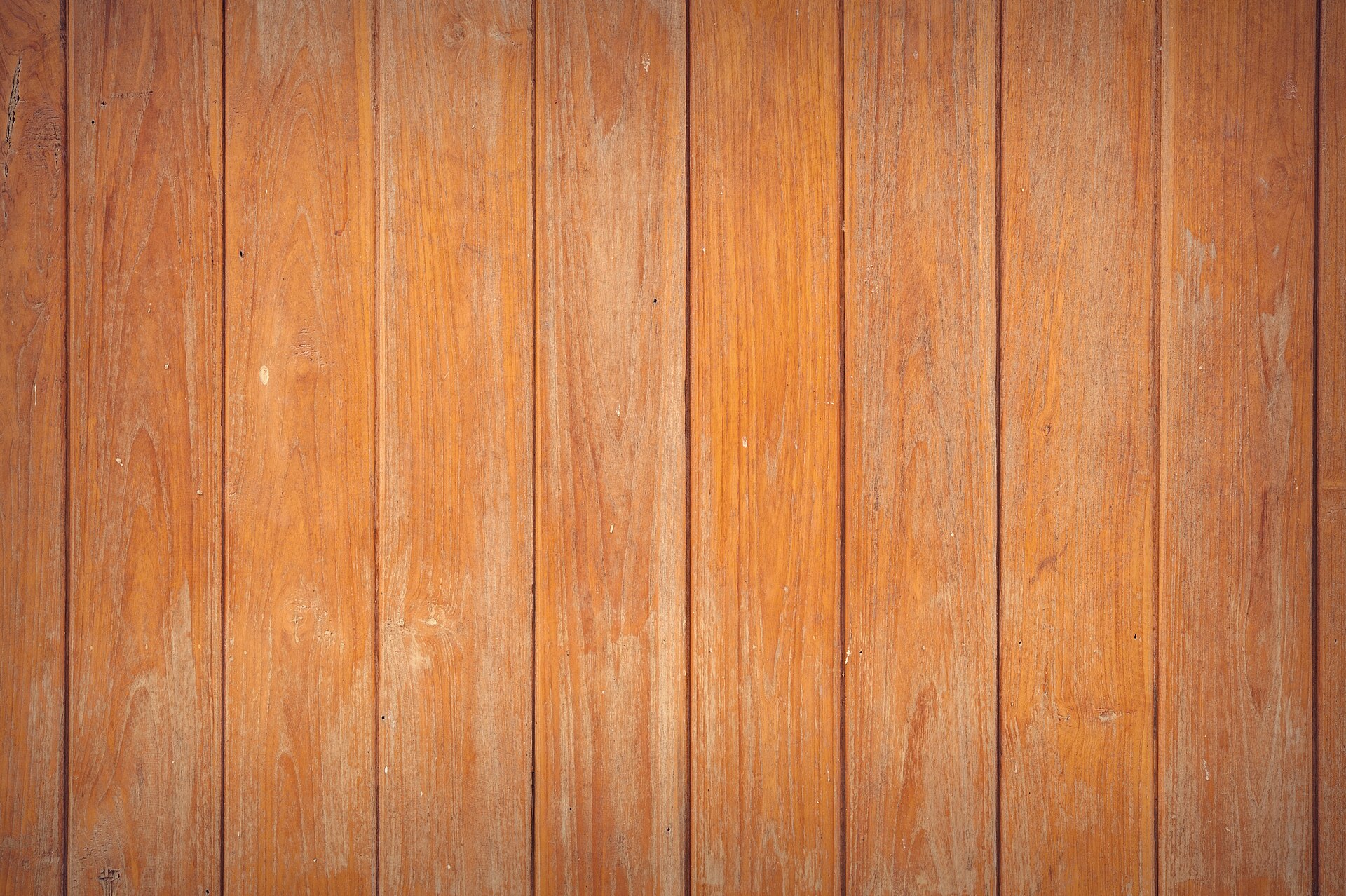
[Parquet flooring made of small wood blocks with visible joints.] Photograph: Wikimedia Commons contributor
Image Credits: Wikimedia Commons
Normal gaps versus worrying gaps
Seasonal gaps share a recognizable pattern. They are broadly distributed across the floor rather than confined to one tight spot. They look fairly uniform, they tighten when indoor humidity rises, and they do not keep escalating year after year.
Gaps that stay open through a humid summer deserve attention. So do gaps that grow wider every winter, boards that cup or crown, and floors with a persistent damp smell or visible water staining. Those signs point beyond seasonal movement, toward a leak, a damp subfloor, or a floor installed far from equilibrium moisture.
A single wide gap beside a radiator or a fireplace is also worth checking. Heat sources dry the air locally, so some local movement is expected, but a gap that keeps widening in one place while the rest of the floor stays stable may mean a board has come loose or a subfloor problem is developing underneath it.
What to do about winter gaps
The most effective step is to steady indoor humidity rather than to fill the gaps. Union Church Millworks recommends keeping indoor humidity in a steady range of roughly 35 to 55 percent through winter, and using a hygrometer to know where the room actually sits. A portable humidifier helps a single room, while a whole-house unit on the heating system covers the whole floor.
Filling seasonal gaps while the air is still dry usually fails. A filler placed into a shrunken gap gets squeezed out or cracked when the board swells again in summer, and repeated filling can leave a messy ridge along every seam. Flooring professionals generally advise waiting until humid weather returns to judge which gaps, if any, remain.
Consistent heating helps too. Large thermostat setbacks swing indoor humidity along with temperature, and those swings show up in the floor. Keeping the temperature reasonably steady through the heating season keeps the moisture swing smaller, and the gaps narrower.
For related reading on how wood behaves around the house, see why doors swell and stick in humid weather and what the ideal indoor humidity level is for a home. If the boards also make noise, the guide to why hardwood floors creak covers the usual causes, and the companion piece on why floorboards swell in winter looks at the damp side of the same cycle.
When to call a professional
Call a flooring professional if gaps remain wide in summer, if boards are cupping, crowning, or buckling, or if you suspect a leak under the floor. A pro can measure board and subfloor moisture with a meter set for the species, and compare the readings against the equilibrium moisture content for the room. That measurement separates a seasonal gap from a moisture problem far better than eyesight alone.
Also seek advice before sanding or refinishing a gappy floor. Sanding a floor while its boards are shrunken can leave uneven edges once the boards swell again. Most refinishers prefer to work when the floor is near its normal moisture level, or at least to warn the homeowner about what the seasonal swing will do to the result.
Frequently asked questions
Do wooden floor gaps close on their own in summer?
Yes, in most cases. When heating stops and indoor humidity rises, boards take moisture back and expand, so seasonal seams tighten and often disappear. Gaps that stay open through a humid summer are the ones worth investigating.
Should I fill gaps in my wooden floor in winter?
Usually not. Filler put into a dry-season gap tends to crack or squeeze out when the board swells in summer. It is better to steady indoor humidity first and reassess the floor once humid weather returns.
What humidity should I keep for a wooden floor?
The NWFA recommends 30 to 50 percent relative humidity at 60 to 80 degrees Fahrenheit. Staying inside that band keeps board moisture near the 6 to 9 percent range the flooring was made for.
Why are gaps worse near radiators and fireplaces?
Heat sources dry the air around them more than the rest of the room. Boards near a radiator, a floor vent, or a fireplace therefore lose more moisture and shrink more, so their gaps open first and widest.
The bottom line
Winter gaps in wooden floors are, in most homes, the visible sign of a normal process. Dry heated air lowers indoor humidity, boards lose moisture and shrink across their width, and seams open until humid weather returns.
Keeping indoor humidity steady inside the NWFA band of 30 to 50 percent narrows the swing and keeps the gaps small. Watch for the exceptions: gaps that never close, boards that cup or buckle, and floors that keep getting worse each year. Those are the cases where a moisture reading, not a tube of filler, is the right next step.
Tags: wooden floors, hardwood floors, winter home care, humidity
Rive News's research desk covers everyday science and home topics from published sources, with no invented experts or first-hand claims.
Related
- Why doors swell and stick in humid weather
- What is the ideal indoor humidity level
- Why hardwood floors creak and how to quiet them
- Why floorboards swell in winter
Subscribe to the Rive News newsletter for one practical explainer each week.
Rive News publishes general information only; figures are cited from the sources listed above.
Related stories
Why Your Faucet Keeps Dripping After You Turn It Off
A dripping faucet is usually a worn washer, O-ring, or cartridge that can no longer seal. One drip per second wastes over 3,000 gallons

How to fix a running toilet without a plumber in 30 minutes
A running toilet can waste 200 gallons of water a day. Diagnose the flapper, float, or fill valve in two minutes, then fix it yourself
How to hang heavy shelves on drywall safely
Studs first, toggle bolts second, plastic anchors never for heavy loads. Weight ratings, installation steps, and mistakes that bring