
Why cats prefer drinking from a tap over a bowl
By Rive News / Research desk | Rive News / Published October 28, 2026 at 9:00 AM PKT
Key takeaways
- Running water looks safer to a cat than still water, an instinct inherited from wild ancestors.
- Narrow bowls can press on sensitive whiskers, while a tap stream lets a cat drink without contact.
- A wide bowl, fresh water away from food, or a fountain often satisfies the same preference.
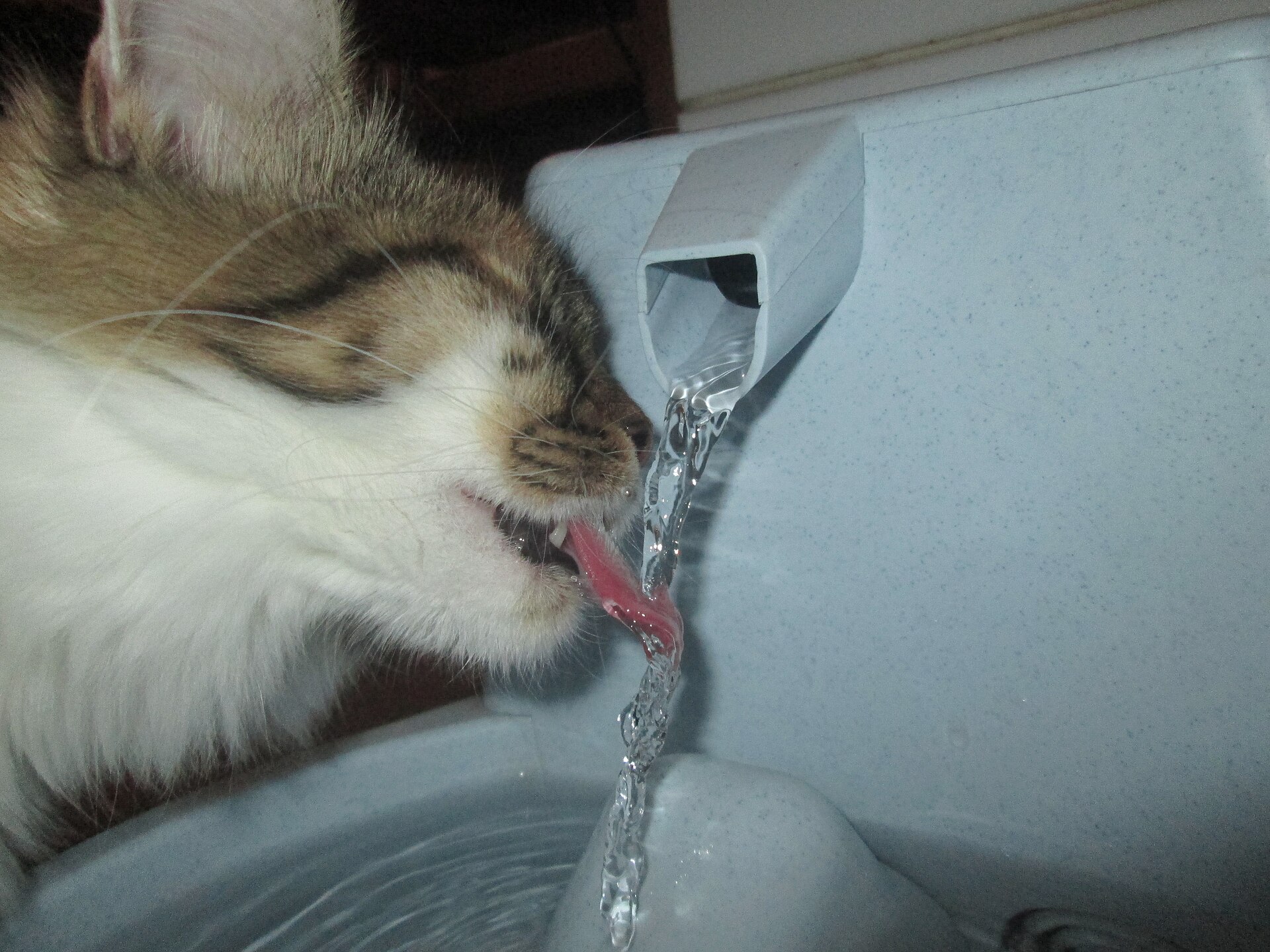
[A cat drinks water from a fountain.] Photograph: TrainSimFan
Image Credits: Wikimedia Commons
A cat that ignores a freshly filled bowl and then drinks eagerly from a dripping tap is a familiar sight. The bowl is not broken, and the cat is not being awkward for its own sake. Several separate reasons stack up in favour of the tap, and each one points to a different fix.
This article explains why cats prefer drinking from a tap over a bowl, including the safety instinct, whisker comfort, sound and movement, and freshness, and it covers practical ways to make a bowl more appealing.
The safety instinct behind running water
Domestic cats descend from the African wildcat, Felis lybica, a desert-dwelling ancestor with limited access to large, still water sources. PetCareShed notes that this ancestry left a lasting preference: in the wild, still water is more likely to carry bacteria, parasites, or contamination, while moving water is filtered by its flow and tends to be safer.
The Cornell Feline Health Center makes a related point about freshness. Its hydration guidance notes that cats prefer fresh water and that water should not be left standing for days. A tap delivers water that is newly drawn, cool, and oxygenated, which matches that preference far better than a bowl that has sat out since morning.
None of this means bowl water is dangerous in a clean home. It means the cat's instincts rate moving water as the safer bet, and that rating was shaped long before indoor plumbing existed.
Whiskers and bowl design
A cat's whiskers are highly sensitive touch organs, and they report on the space around the face in fine detail. When a cat drinks from a deep or narrow bowl, its whiskers brush the sides with every lap. Some cats find that contact uncomfortable, a problem often called whisker fatigue.
A tap stream avoids the problem entirely. The cat can stand back, keep its whiskers clear, and lap from a thin stream without pressing its face into a container. That alone can explain why a cat that refuses one bowl will drink happily from a tap in the same room.
Bowl design can close much of that gap. A wide, shallow bowl made of ceramic, glass, or stainless steel lets the cat drink without whisker contact. Plastic bowls can also carry odours that put cats off, so material matters as well as shape.
Sound and movement catch attention
Running water advertises itself. A tap produces a faint trickling sound and a moving surface, and cats are well equipped to notice both. Their hearing and low-light vision pick up small changes that a human might miss, and movement itself triggers curiosity in a predator's brain.
A still bowl offers none of that. It is silent, flat, and easy to overlook, especially in a busy room. Some cats even paw at a bowl to create ripples, which looks like play but may be an attempt to make the water move and therefore register as drinkable.
This is also why pet water fountains work for many cats. A fountain provides the same sound and movement as a tap, without the need to leave a tap running. It is the most direct substitute for owners whose cats have a strong tap habit.
Freshness, temperature, and taste
Water left in a bowl changes over hours. It warms to room temperature, loses dissolved oxygen, and can develop a slimy film known as biofilm. Cats, with their keen sense of smell and taste, often detect that change and reject water that a human would still call fresh.
Tap water arrives cool and aerated, and the flow helps dissipate smells such as chlorine that some cats dislike. That freshness advantage grows in warm weather, when bowl water warms faster and biofilm forms sooner.
Placement adds another factor. Cats are naturally reluctant to drink water placed next to their food, since in the wild a water source near a kill could be contaminated. Moving the bowl a few feet from the food bowl, and away from the litter tray, removes a quiet deterrent that many owners never notice.
How much water cats actually need
Preference matters because hydration matters. Cornell's hydration guidance states that cats need about 4 ounces of water per 5 pounds of lean body weight per day, so an average 10-pound cat should take in about one cup of water daily. Cats eating wet food, which can contain up to 80% water, may drink less from a bowl, while cats on dry food usually need to drink more.
A cat that drinks little from a bowl is not necessarily dehydrated, especially on a wet-food diet. The concern arises when total intake drops, or when a cat that used to drink well stops drinking. Signs of dehydration listed by Cornell include lethargy, weakness, poor appetite, and dry mouth membranes.
If a cat suddenly drinks far more than usual, or stops drinking altogether, that change deserves a vet visit. Sudden thirst changes can accompany illness, and this article is general information only, not a substitute for veterinary advice.
Making a bowl work for a tap-loving cat
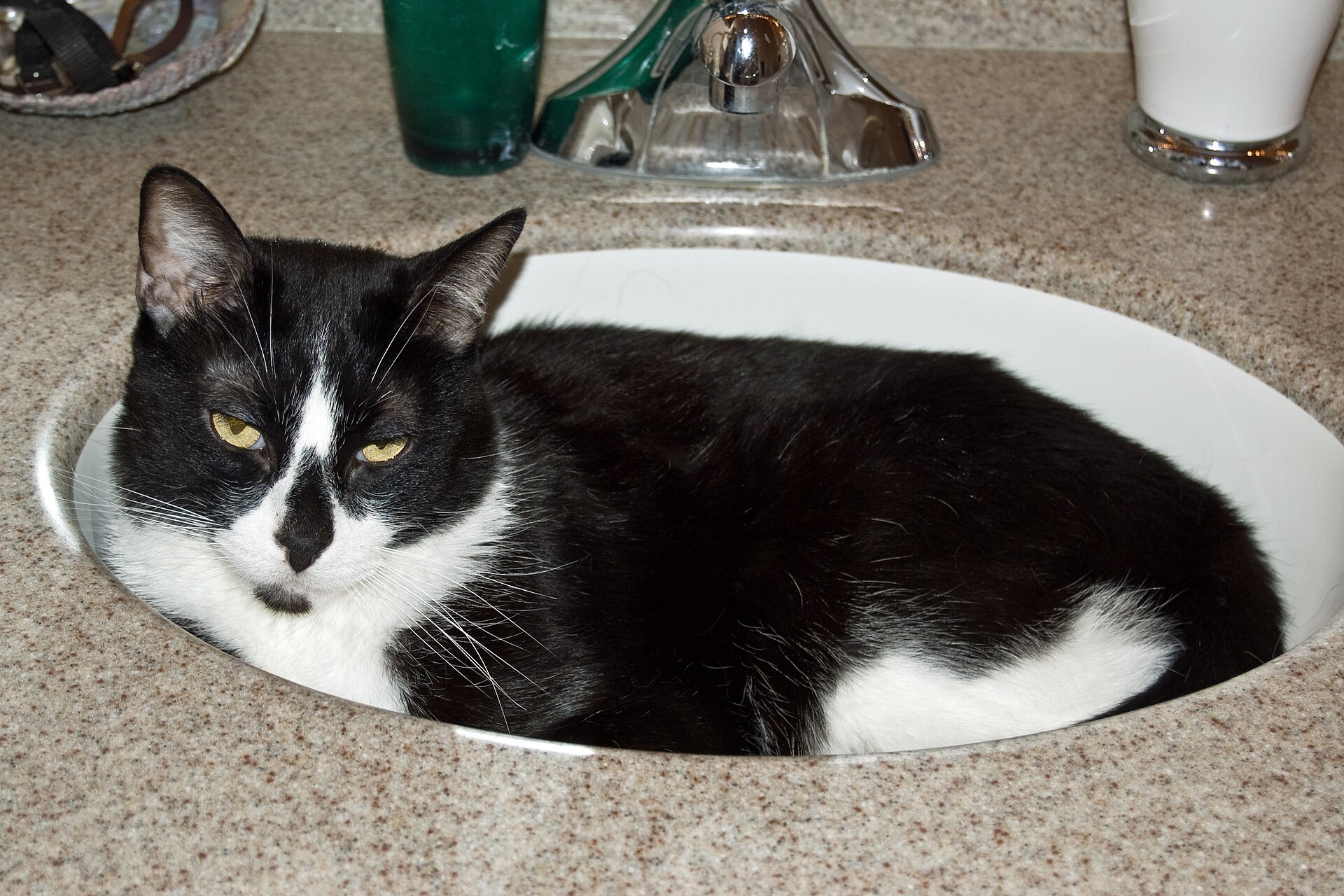
[A cat sits in a bathroom sink, a favourite spot for tap-seeking cats.] Photograph: Kenneth Bosma
Image Credits: Wikimedia Commons
The simplest fix is a wider, shallower bowl, filled with fresh water daily and washed regularly to prevent biofilm. Place it away from food and litter, in a calm spot the cat already visits. Some cats prefer a glass or ceramic bowl to a metal one, since collars can clink against metal rims.
A pet fountain is the next step if bowl changes fail. Choose one with a gentle, steady flow rather than a strong jet, and clean it on the maker's schedule, since a dirty fountain loses the freshness advantage it was bought for. Keep the tap option available at first, so the cat is not forced to switch overnight.
For cats that also play with water, a fountain with a contained reservoir beats an open bowl that gets tipped over. The goal is to match what the tap offers: movement, freshness, and whisker clearance, in a form that does not waste water.
When the tap habit is a warning sign
A tap habit on its own is normal. It becomes worth checking when it appears suddenly in an older cat, or when it comes with a large increase in total drinking, weight loss, or changes in urination. Those patterns can accompany conditions that a vet should assess.
The same applies in reverse. A cat that stops drinking from every source, tap included, needs prompt attention. Dehydration can develop quickly in cats, and Cornell notes that it can lead to circulation problems and organ dysfunction if it progresses.
Frequently asked questions
Is it safe for cats to drink tap water?
In areas where tap water is safe for humans, it is generally considered safe for cats as well. If local water has quality warnings, filtered or bottled water is the safer choice for pets too. A vet can advise on local concerns.
Do cats need a water fountain?
No cat strictly needs a fountain, but many tap-loving cats drink more readily from one. A wide, shallow bowl with fresh water suits other cats just as well. The right choice is the one the individual cat actually uses.
What is whisker fatigue?
Whisker fatigue describes discomfort when a cat's sensitive whiskers repeatedly press against the sides of a narrow or deep bowl. It is not a medical diagnosis, but bowl shape can genuinely deter some cats from drinking. A wide, shallow bowl usually removes the problem.
Why does my cat paw at its water bowl?
Pawing may create movement on the water's surface, making it more noticeable and appealing. It can also be play, or a way to test depth before drinking. If pawing is constant and the cat drinks little, try a fountain or a wider bowl.
The bottom line
Cats prefer taps for reasons that make sense on their terms: moving water reads as fresher and safer, it sounds and looks alive, and it lets them drink without squashing their whiskers. None of that makes a bowl a bad option.
A wide, clean bowl placed away from food, or a fountain for stronger tap fans, usually gives a cat the same benefits without a running tap. If drinking changes suddenly, in either direction, a vet visit is the right next step.
Tags: cats, cat drinking, cat behaviour, pet hydration
The Rive News research desk covers everyday science and pet behaviour from published veterinary and institutional sources, without first-hand testing claims.
Related
- Why cats groom themselves for hours each day
- Why cats hate water but some breeds swim
- Why do cats purr? What the science says
- How to keep a cat entertained when you are at work
Subscribe to the Rive News newsletter for one clear explainer each morning.
Rive News publishes general information from named public sources. Corrections are welcomed and checked against those sources.
Related stories
Why Does My Dog Eat Grass and Vomit?
A UC Davis study of 1,571 owners found grass eating is normal dog behavior, not self-medication: only 10% were ill first. What the science
Why Does My Dog Stare at Me While I Eat?
Dogs stare at you while you eat because it has worked before, and mutual gaze raises bonding hormones. Learn the reinforcement science
Foods toxic to dogs: the list, with reasons
Chocolate, xylitol, grapes, onions: common foods can harm dogs. Learn what makes each one toxic, the warning signs, and what to do if your