
Why dogs spin in circles before lying down
By Rive News / Research desk | Rive News / Published October 27, 2026 at 9:00 AM PKT
Key takeaways
- Dogs circle before lying down largely because wild ancestors pressed grass and snow into a safer, flatter nest.
- The same spin can adjust comfort and temperature, and it often works as a calming bedtime routine.
- A sudden change, nonstop circling, or signs of pain is worth a veterinary check rather than a wait-and-see approach.
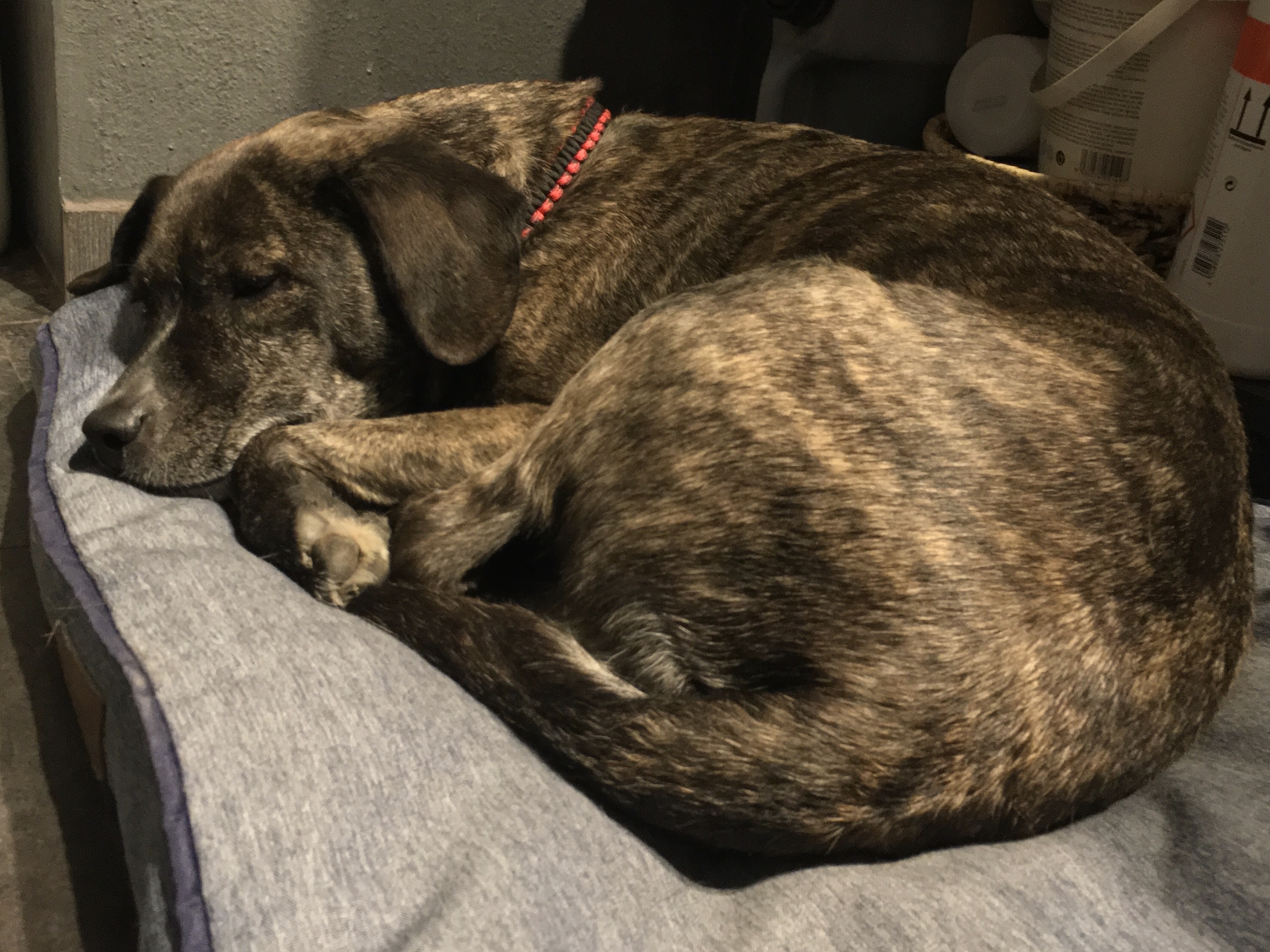
[A dog sleeps curled up on a blanket after settling in for a rest.] Photograph: the subject
Image Credits: Wikimedia Commons
Circling before lying down is a spin, usually two or three turns, that a dog makes on a bed, a rug, or a patch of grass just before settling. The dog then drops into place, often curling up or sighing as it rests its head. It looks fussy to a human observer, and it can look pointless on a flat modern dog bed.
The behaviour is old, and it is normal in most dogs. Domestic dogs inherited it from wild canids that had no manufactured beds and had to make a sleeping spot from whatever ground they found. That history explains why the spin survives on sofas and padded beds, where no grass needs flattening at all.
This article explains what the circling looks like, why wild ancestors circled, how comfort and temperature shape the habit, when circling is worth a vet visit, and how to help your dog settle.
What the circling looks like
Most dogs circle slowly, nose roughly following tail, for a few seconds before lying down. Some paw at the bedding as they turn, and some pause between turns to sniff or shift position. The spin usually ends the same way each time, with the dog dropping into a favoured curl or stretch.
Puppies do it, old dogs do it, and small breeds do it just as large breeds do. The routine can vary by surface, and a dog may spin more on a lumpy blanket than on a firm flat mat. That variation is a useful clue, because it suggests the dog is responding to the surface rather than following a fixed script.
A short, calm spin followed by sleep is the classic picture of normal circling. The dog looks relaxed through the turns, its body stays loose, and it settles promptly once it stops. If the spin never ends, or the dog looks distressed while turning, that picture has changed.
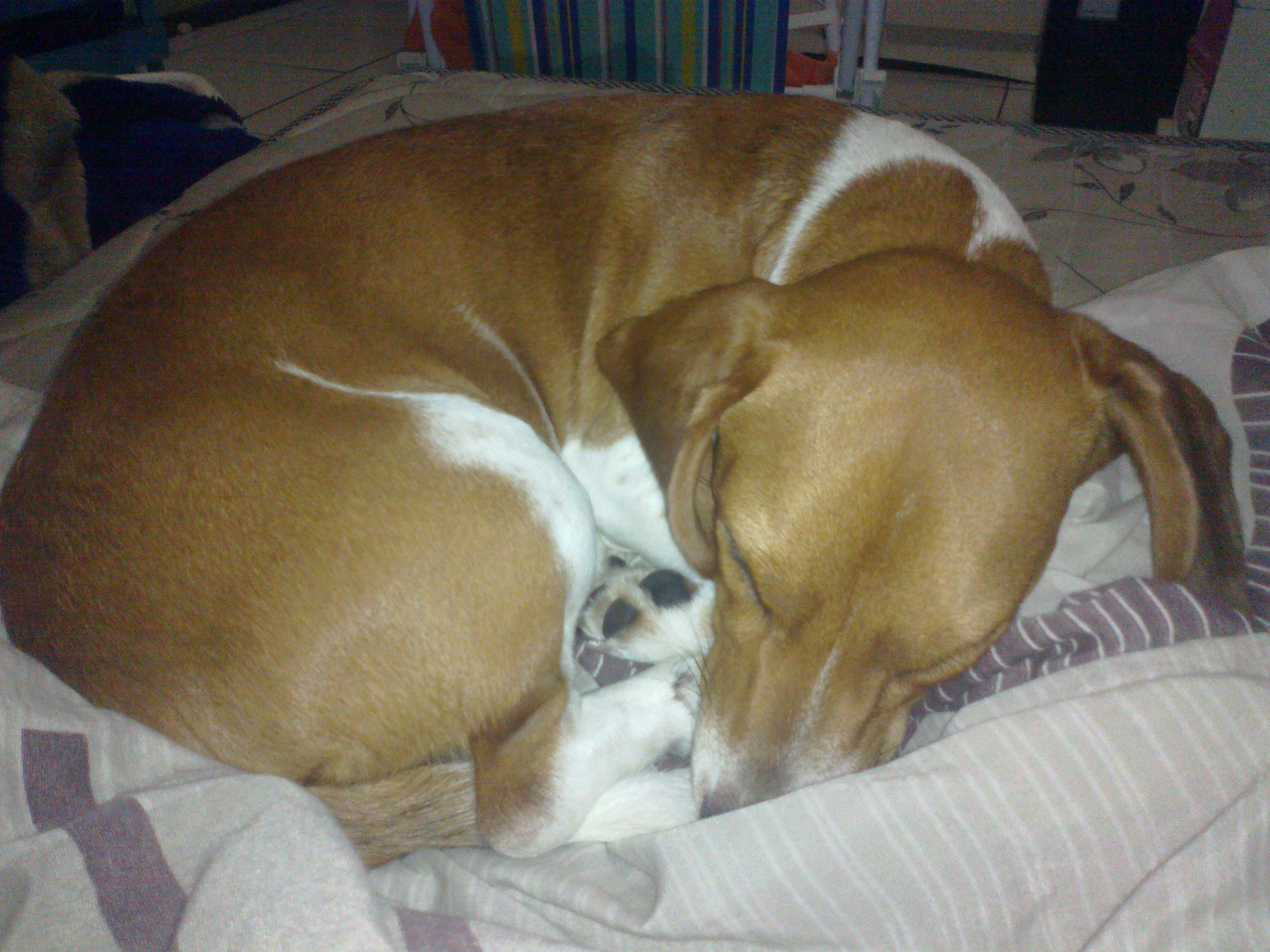
[A dog sleeps stretched out on a bed indoors.] Photograph: the subject
Image Credits: Wikimedia Commons
Why wild ancestors circled
Wild canids, including wolves, foxes, and coyotes, slept outdoors without shelter or bedding. Turning in a circle pressed tall grass, leaves, and snow into a flatter, more even nest. The same motion could drive out snakes and large insects hiding in the vegetation, and it left a visible flattened patch that marked the spot as taken.
Leslie Irvine, a sociologist at the University of Colorado Boulder who studies animals in society, told Live Science: "This behavior was hard-wired into the dog's ancestors as a way to build a safe 'nest.'"
The spin may also have served as a last look around before sleep. Lying down is a vulnerable position, and a full turn gives a dog a final sweep of its surroundings before it rests. VCA Hospitals notes a related pack idea, that turning helped group members check on one another and survey the area before settling for the night.
None of this means a modern dog is thinking about wolves or predators while it spins on a living room rug. Instincts do not switch off just because the original setting has gone, and a behaviour can persist long after its first purpose has faded. The spin on a soft bed is the same old programme running in a new place.
Comfort and temperature
Comfort is the simplest explanation, and it may be the one that matters most indoors. A dog that circles on a bed is arranging the surface, much as a person fluffs a pillow before sleep. The turns can smooth a bunched blanket, find a cooler patch, or take pressure off a stiff hip.
Temperature plays a part in the same routine. Digging and circling in soil can expose cooler ground on a hot day, while circling in snow can pack down an insulating hollow that holds body heat. Reader's Digest reports a behaviourist's account of a Siberian husky that turned two or three times in snow before curling into a ball outdoors, even though it was welcome inside.
Curling up after the spin helps conserve heat around the core of the body. Stretching out after the spin does the opposite, letting heat escape on a warm night. A dog that circles and then changes shape with the seasons is probably using the routine to manage warmth, not just to follow a habit.
Surface experiments point the same way. Behaviour write-ups often cite an observation by Stanley Coren at the University of British Columbia, in which 62 dogs were watched on different surfaces.
In that observation, 55 percent circled at least once on an uneven shag surface, compared with 19 percent on a smooth, dense surface. The gap suggests that uneven ground prompts more circling, which fits a comfort explanation better than a purely automatic one.
When circling is worth a vet visit
Normal circling is brief, calm, and consistent from night to night. It becomes worth attention when the pattern changes suddenly, when the dog cannot seem to settle at all, or when circling comes with other changes. Those changes can include limping, whimpering, restlessness through the night, or trouble getting up after rest.
Pain and stiffness are common suspects in older dogs. Arthritis can make lying down and standing up uncomfortable, and a dog in discomfort may circle longer while searching for a position that hurts less. Neurological problems and compulsive behaviour are less common, but they belong on the same list when circling becomes repetitive and hard to interrupt.
A vet visit makes sense when circling is new, intense, or paired with any sign of pain. A short video of the behaviour, plus notes on when it started and what else changed, gives the vet something concrete to work from. Owners should not try to diagnose the cause from the spin alone, because several different problems can look similar from the outside.
This article is for general information only and is not medical advice; talk to a clinician about any symptoms.
How to help your dog settle
Start with the bed itself, since that is the surface the dog is trying to arrange. A bed that fits the dog's full stretched length, with a washable cover and firm but forgiving padding, removes most of the reasons to keep rearranging. Older or stiff dogs often settle faster on an orthopaedic-style bed that supports joints without sinking.
Keep the sleeping spot in a quiet, draft-free corner with a steady temperature. A blanket the dog can paw and arrange gives the nesting instinct something to work with, which can shorten the spin rather than fight it. A consistent bedtime routine, with a last toilet trip and a calm wind-down, helps the spin stay a brief ritual instead of a restless one.
Do not scold a dog for normal circling, and do not try to train the spin away entirely. The behaviour is harmless in its normal form, and blocking it can add stress to the exact moment when a dog is trying to relax. The better goal is a comfortable bed, a calm routine, and a clear sense of what normal looks like for that particular dog.
Watch for change rather than counting turns. A dog that has always spun three times and still does so is telling a different story from a dog that suddenly spins for minutes without settling. Knowing the baseline is what turns a familiar quirk into useful information.
The bottom line
Circling before lying down is a leftover from wild ancestors that made nests from grass, leaves, and snow, and it still helps modern dogs get comfortable and manage temperature. A brief, calm spin on a good bed is normal, and it needs no correction. A sudden change, endless circling, or signs of pain should prompt a vet visit, because the spin itself cannot say which problem, if any, sits behind it.
Tags: dogs, dog behaviour, pet care
Rive News is a research desk that writes plain-English explainers from public sources. It does not replace veterinary advice for an individual animal.
Related
- Why dogs circle before lying down: instinct and warning signs
- Why your dog spins in circles before pooping
- Why dogs sigh deeply when lying down
- How to help an older dog with stiff joints at home
Subscribe for one plain-English explainer each morning.
Rive News follows a simple standard: named sources, no invented quotes, and corrections noted openly.
Related stories
Why Does My Dog Eat Grass and Vomit?
A UC Davis study of 1,571 owners found grass eating is normal dog behavior, not self-medication: only 10% were ill first. What the science
Why Does My Dog Stare at Me While I Eat?
Dogs stare at you while you eat because it has worked before, and mutual gaze raises bonding hormones. Learn the reinforcement science
Foods toxic to dogs: the list, with reasons
Chocolate, xylitol, grapes, onions: common foods can harm dogs. Learn what makes each one toxic, the warning signs, and what to do if your