
Why dogs bark at the doorbell specifically, explained
By Rive News / Research desk | Rive News / Published October 28, 2026 at 9:00 AM PKT
Key takeaways
- The doorbell combines a sudden sound, a territory boundary, and a predictable arrival, which is why it triggers barking so reliably.
- Barking is often rewarded by accident, because the visitor leaves or is let in right after the dog reacts.
- Training works better when it replaces the barking with a calm alternative, rather than only punishing the noise.
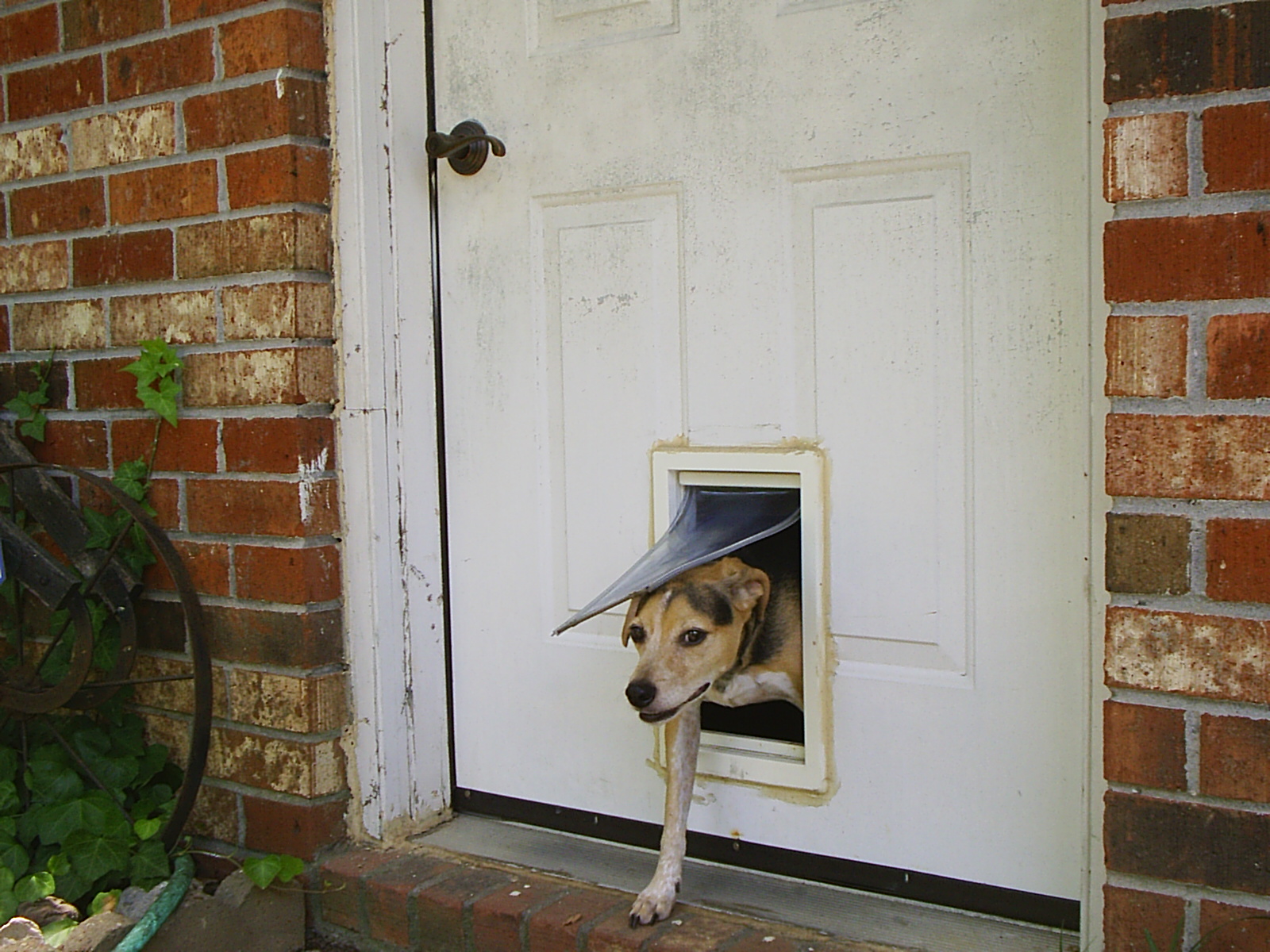
[A dog exits through a dog flap in a door.] Photograph: Unbiassed
Image Credits: Wikimedia Commons
Many dogs ignore the television, the washing machine, and the neighbours, yet erupt the moment the doorbell rings. The bell is not louder than every other household sound, and it is not the only sudden noise in the house. It is, however, the sound most tightly linked to territory, arrivals, and reward.
This article explains why dogs bark at the doorbell specifically, including territory, alarm instinct, excitement, startle, and learned behaviour, and it covers training approaches that address each driver.
A sound aimed at the territory boundary
Dogs treat the home as territory, and the American Kennel Club notes that a dog may count its yard, block, car, and walk routes as territory too. The doorbell announces someone at the very edge of that space, which is exactly where a guarding instinct is strongest.
Barking at that moment does two jobs at once. It warns the visitor that they have been noticed, and it alerts the household that someone is there. AnimalWised describes this as a two-way announcement, and notes that territorial defence behaviour developed from dogs living in groups that protected homes and food.
Other household sounds do not carry that message. A kettle or a phone says nothing about an outsider at the boundary, so a territorial dog has no reason to answer them. The doorbell is different because of what it predicts, not just how it sounds.
Suddenness makes it an alarm trigger
The doorbell is also sudden. It arrives without warning, breaks a quiet moment, and demands attention in a way that a continuous sound does not. Behaviour specialists call this alarm barking: a fast vocal response to something that suddenly grabs the dog's attention.
Sensitive hearing adds to the effect. Dogs hear frequencies up to 65,000 Hz, far beyond the human range, according to guidance cited by pet behaviour sources. A high-pitched chime can therefore startle a dog even when it sounds mild to the owner.
Startle alone does not explain why the barking continues after the first second. Once the dog is aroused, the next drivers take over: territory, excitement, and the expectation of what happens next.
The bell predicts something interesting
Every doorbell ring is followed by something worth a dog's attention. A visitor arrives, a delivery is left, or the owner hurries to the door. Over months and years, the dog learns that the sound predicts social excitement, and the brain wires the chime straight to the rush to the door.
The American Kennel Club's window-barking guidance, from certified behaviour consultant Rachel Lane, makes a related point: dogs may bark because they are bored, scared, defending territory, excited, or startled, and the reasons can vary at different times. The doorbell can trigger several of those at once, which is why it is so hard to ignore.
Excitement deserves its own mention. Some dogs are not warning anyone off at all. They love visitors, and the bell is the starting gun for a greeting they enjoy.
Those dogs bark with loose, wiggly body language rather than stiff postures, and they often quiet down once the visitor is inside and the greeting is over.
Barking pays off, by accident
The strongest reason doorbell barking persists is that it appears to work. When a dog barks and the delivery driver leaves, the dog's brain can read that as success: the barking drove the intruder away. When a dog barks and the owner opens the door, the barking is followed by the exciting event it predicted.
Partners Dogs, a professional training provider, describes this reinforcement plainly: the visitor leaves or is let in right after the reaction, which reads to the dog as the barking having worked. That payoff repeats dozens of times a year, which is enough to fix the habit firmly.
This also explains why shouting over the barking rarely helps. To the dog, a shouting owner can sound like joining in, and the door still opens afterwards. The sequence that matters is the one the dog experiences, not the one the owner intends.
Why some dogs react more than others
Breed history plays a part. Dogs bred as watchdogs, such as German Shepherds and many terrier breeds, were selected for alertness to intruders, and they often react more strongly to boundary sounds. Guarding breeds developed to defend livestock or property carry the same tendency in stronger form.
Past experience matters too. A dog that had a frightening encounter near the front door, or that was repeatedly rewarded for rushing the door as a puppy, will react more strongly than a dog without that history. Dogs that are already anxious, under-exercised, or left alone for long periods may also bark more, since arousal is already high when the bell rings.
None of this means a doorbell-barking dog is aggressive. Most doorbell barking is communication, not a threat display. The concern arises when barking comes with growling, snapping, bared teeth, or a bite history around arrivals, in which case professional help is the safer route.
What training actually changes
Effective training does not try to make the dog silent on command alone. It changes what the bell means, and what the dog does instead of barking. The standard approach is desensitisation: playing the doorbell sound at a low volume, rewarding calm behaviour, and raising the volume gradually as the dog stays relaxed.
The second half is teaching a replacement behaviour. The dog learns that the bell is a cue to go to a mat, sit, or move away from the door, and that calm behaviour earns the reward. Over time, the bell stops predicting chaos and starts predicting a calm routine.
Consistency matters more than intensity. Short practice sessions most days, with the same routine every time, beat occasional long sessions. Everyone in the household needs to follow the same plan, since one person rushing the door while shouting undoes the work of the others.
Management helps while training takes hold. Limiting the dog's view of the front door, using a baby gate, or keeping the dog in another room when deliveries are expected can reduce rehearsal of the barking. Fewer repetitions mean the habit weakens instead of strengthening daily.
When to get professional help

[A puppy guards the place where it stays, alert to arrivals.] Photograph: Xymon31
Image Credits: Wikimedia Commons
Most doorbell barking responds to patient training, but some cases need a professional. Partners Dogs lists warning signs that include growling or snapping at the door, a bite history connected to arrivals, guests being avoided altogether, and no meaningful change after several weeks of consistent practice.
A sudden change also deserves attention. If a dog that used to ignore the doorbell starts reacting strongly, a vet check is sensible, since pain, hearing changes, or anxiety can alter behaviour. A trainer who can watch the actual entryway dynamic will usually build a working plan faster than another round of guessing at home.
Frequently asked questions
Is doorbell barking a sign of aggression?
Not usually. Most doorbell barking is alarm, territorial, or excitement barking, which is communication rather than aggression. It becomes a concern when it comes with growling, snapping, or biting, or when it does not stop once the visitor is welcomed in.
Why does my dog bark at the doorbell but not the phone?
The phone does not signal an outsider at the territory boundary, and it is not reliably followed by an arrival. The doorbell is both a boundary signal and a predictor of visitors, which makes it a much stronger trigger than most household sounds.
Can an older dog learn to stop barking at the doorbell?
Yes, though a habit rehearsed for years takes longer to change than a new one. The same methods apply: low-volume desensitisation, a calm replacement behaviour, and consistent household routines. Progress is usually gradual rather than instant.
Should I punish my dog for barking at the doorbell?
Punishment alone rarely solves it, because the motivation to guard territory stays strong even if the barking is suppressed. Worse, a punished dog may skip the warning bark and go straight to more serious behaviour. Rewarding a calm alternative is the safer and more durable approach.
The bottom line
Dogs bark at the doorbell specifically because it is the one household sound that combines suddenness, territory, and a guaranteed arrival. Each ring also rewards the barking, since the visitor leaves or the door opens right afterwards.
That loop, repeated for years, is what makes the habit so stubborn. Training that breaks the loop, by teaching a calm response to the sound and rewarding it consistently, addresses the cause rather than just the noise. If barking comes with aggression or escalates despite steady training, professional help is the right next step.
Tags: dogs, dog barking, doorbell, dog training
The Rive News research desk covers everyday science and pet behaviour from published veterinary and institutional sources, without first-hand testing claims.
Related
- Why does your dog bark at every visitor?
- Why dogs bark at the mail carrier specifically
- How to stop a dog from barking at every passerby
- Why your dog follows you everywhere
Subscribe to the Rive News newsletter for one clear explainer each morning.
Rive News publishes general information from named public sources. Corrections are welcomed and checked against those sources.
Related stories

Why Does My Dog Eat Grass and Vomit?
A UC Davis study of 1,571 owners found grass eating is normal dog behavior, not self-medication: only 10% were ill first. What the science
Why Does My Dog Stare at Me While I Eat?
Dogs stare at you while you eat because it has worked before, and mutual gaze raises bonding hormones. Learn the reinforcement science

Foods toxic to dogs: the list, with reasons
Chocolate, xylitol, grapes, onions: common foods can harm dogs. Learn what makes each one toxic, the warning signs, and what to do if your