
Why do dogs bury bones and toys at home
By Rive News / Research desk | Rive News / Published October 24, 2026 at 9:00 AM PKT
Key takeaways
- Dogs bury bones and toys because of caching, an inherited instinct for saving valuable resources for later.
- Wild canids like wolves, coyotes, and red foxes do the same thing, burying food to hide it from scavengers.
- Occasional hiding is normal, but obsessive burying or guarding with growling deserves a closer look and possibly professional help.
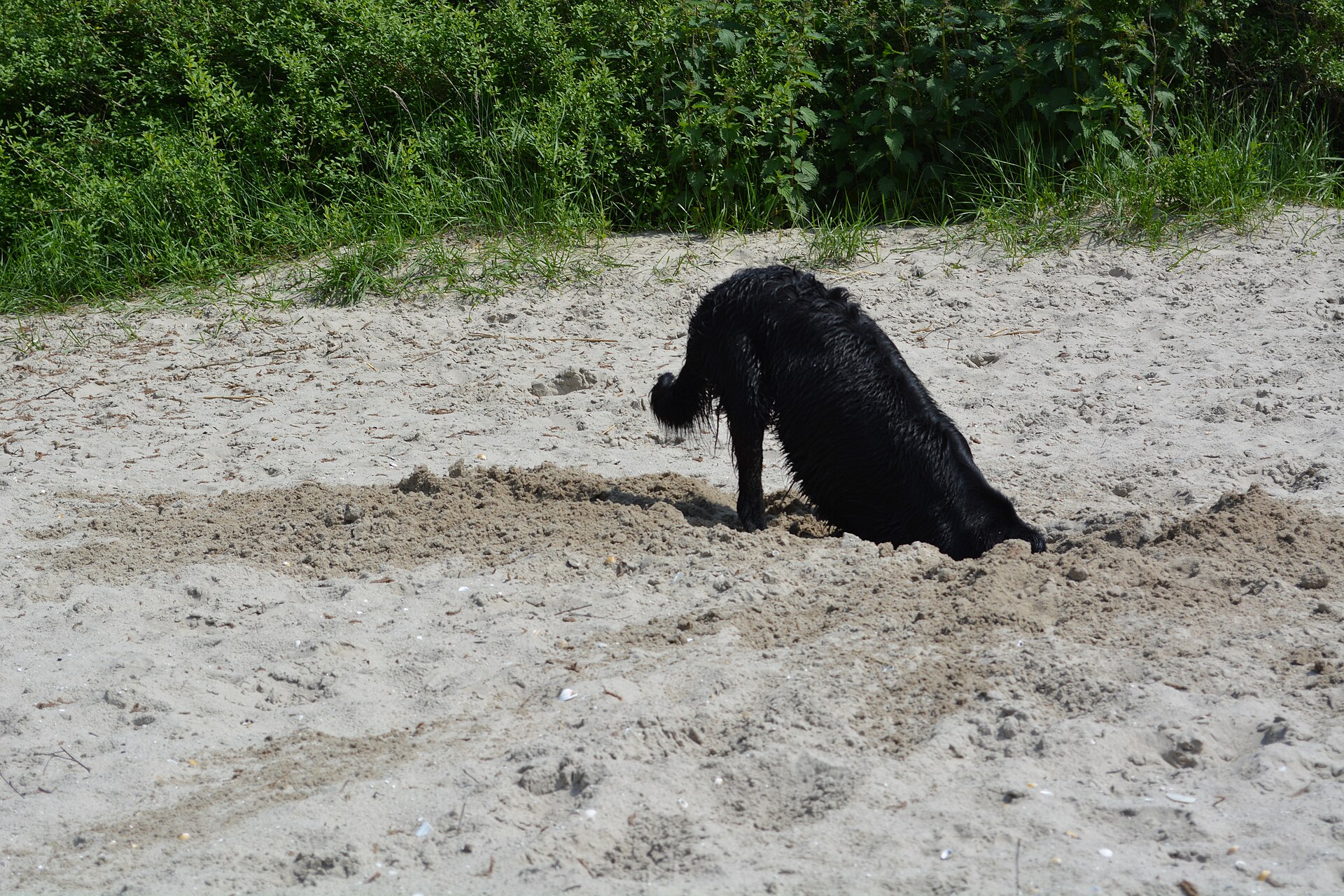
A dog digging in the garden soil with its paws. Photograph: Hondenfun.nl
Image Credits: Wikimedia Commons
You give your dog a bone. An hour later it is gone, and the backyard has a fresh hole.
Then the remote control vanishes under the couch cushions. Your dog is not being difficult. It is running software millions of years old.
This article explains why dogs bury bones and toys, including the caching instinct, what wild canids do, why toys and socks count as treasure, the role of boredom and anxiety, and when hiding becomes something to worry about.
Caching: your dog's savings account
The behavior has a name: caching. It means storing valuable resources for later use, and it is one of the oldest programs in the canine brain. Think of it as your dog's savings account, except the deposits are buried instead of banked, in the words of Canine Journal's behavior guide.
Wild canids cached surplus food because they never knew when the next meal would come. A wolf pack that killed more than it could eat buried the rest, protecting it from scavengers and returning later when food ran scarce. Dogs that cached had more to eat during lean times, which meant better survival.
Evolution never sent the cancellation notice. Today's dogs get dinner in the same bowl every evening, yet the burying program still fires. The instinct fires hardest for high-value items: a marrow bone, a favorite chew, a squeaky toy.
Scatter hoarders, like wolves and foxes
Dogs did not invent this. Leslie Sinn, a doctor of veterinary medicine and board-certified veterinary behaviorist who owns Behavior Solutions in Hamilton, Virginia, described the pattern to Daily Paws: "Canids are scatter hoarders, meaning they hide things for later consumption throughout their range."
Scatter hoarding means spreading hidden items across a territory rather than keeping one stash. Wolves, coyotes, and red foxes all do it. The strategy works because one discovered cache costs only one meal, not the whole winter's supply.
Burying may also hide the smell. Some scientists think buried food is harder for other foragers to find by scent, according to Chewy's behavior guide quoting trainer Teoti Anderson.
Others believe cool soil slows spoilage. Either way, burial was good engineering for a wild animal.
Why toys, socks, and remotes count as treasure
Bones are the classic example, but dogs bury or stash treats, chews, toys, socks, shoes, and remote controls, Canine Journal notes. Anything the dog values can become a candidate for burial. Value is in the eye of the dog.
Blankets, cushions, and couch seams serve as indoor soil. A dog pushing a toy under a pillow is performing the same motor pattern as one digging a hole, just adapted to an apartment. The digging, the nosing, the careful covering: all of it matches the ancestral sequence.
Nicole Kohanski, a certified dog behavior consultant and founder of Wiggle Butt Academy in Dallas, put it in human terms for PetMD: "Burying food and other treasures is a normal, innate behavior." She compared caching to "putting something in a pantry, closet, or safe for humans."
Boredom, anxiety, and other dogs
Instinct explains most burying, but context explains the timing. A dog that suddenly buries everything may be bored, anxious, or reacting to changes in the household. Newly adopted dogs sometimes hide possessions while they settle in and decide the home is safe.
Multi-dog households add competition. Chewy's guide, quoting trainer Teoti Anderson of Pawsitive Results in Lexington, South Carolina, notes that a dog may conceal toys and treats so the other dogs cannot get them. Dogs can also learn digging simply by watching another dog do it.
Some breeds bury more than others. Dachshunds are frequent diggers, Anderson explains, because they were originally bred to hunt badgers in tunneled dens. Terriers, hounds, and northern breeds like Siberian Huskies also show stronger burying tendencies, tied to their hunting and foraging histories.
When hiding turns into guarding
Occasional hiding is not a concern. But watch for the line where saving becomes defending. If your dog growls, snaps, goes tense, or blocks you from approaching a buried item, that is resource guarding, and it needs attention.
Constant burying paired with refusing to eat around people or other pets is another warning sign. The ABP Live pet guide, summarizing veterinary advice, recommends making sure the dog has a quiet, comfortable place to eat where other pets are not taking its food.
For guarding behavior, professional help is the right call. A qualified canine behaviorist or veterinary behaviorist can work on the underlying insecurity. This is a training issue, not a discipline issue.
Should you try to stop it?
For normal caching, redirect rather than punish. Give the dog a legal outlet: a digging box filled with sand, or a designated corner of the yard. Praise burying in the right place and calmly interrupt the wrong place.
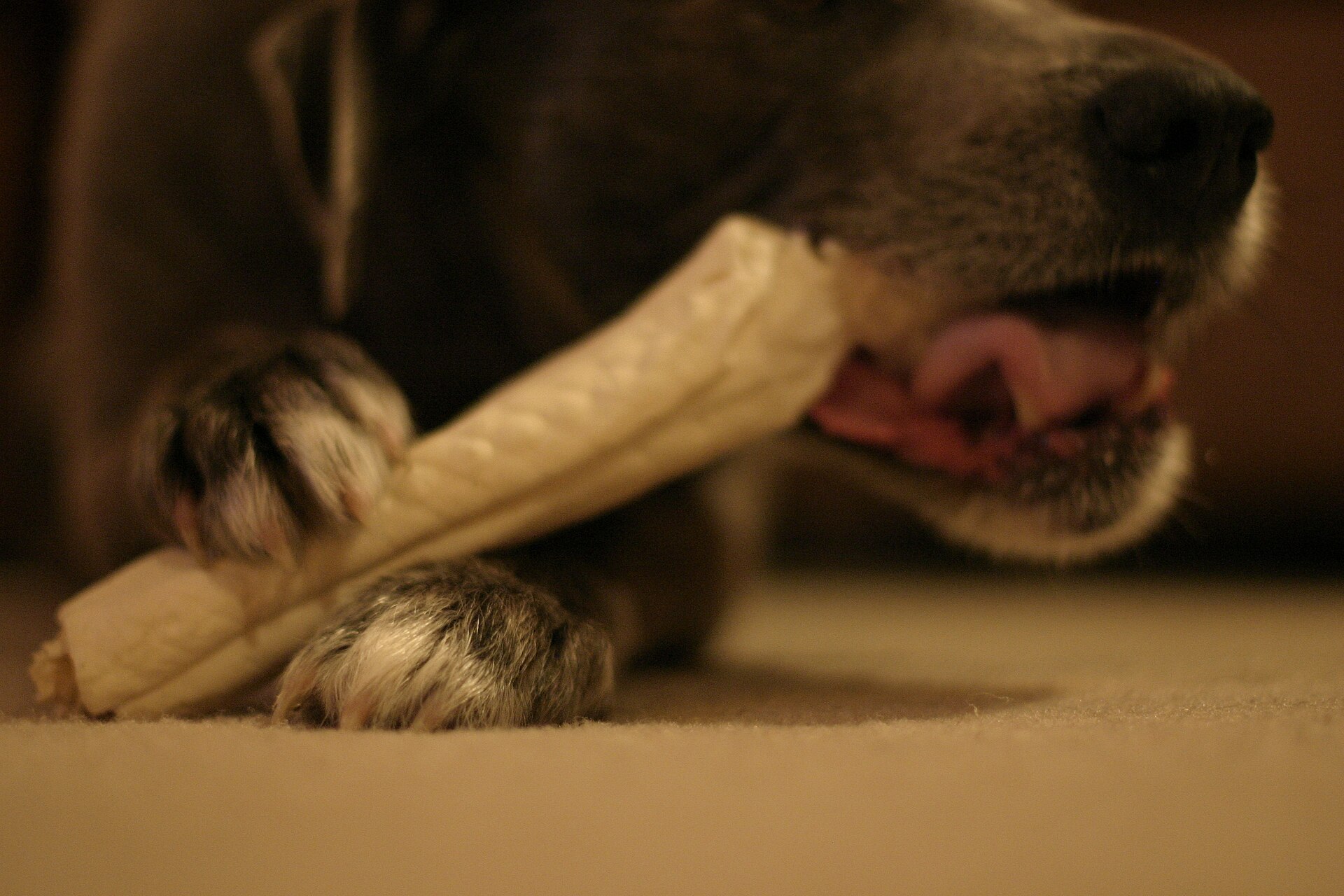
A dog carrying a favorite toy in its mouth. Photograph: Shane Adams
Image Credits: Wikimedia Commons
Manage the treasures instead of fighting the instinct. Pick up high-value chews when you cannot supervise, and offer them at set times. A tired dog with a full enrichment schedule buries less than a bored one.
Never chase a dog to retrieve a buried item. Chasing turns the object into a prize and teaches the dog to guard harder next time. Trade instead: offer something better and let the dog choose.
The bottom line
Your dog buries bones and toys because its ancestors survived by caching food, and the program still runs. It is normal, it is shared with wolves and foxes, and it only becomes a problem when it turns obsessive or aggressive.
Give the instinct somewhere legal to go, and let the backyard holes remind you that your couch companion is, deep down, still a little bit wild.
Frequently asked questions
Why does my dog bury toys in blankets instead of the yard?
Blankets and cushions mimic soil in texture and function. The burying motor pattern transfers indoors, so the dog performs the same dig-nose-cover sequence on the couch. It is the same caching instinct in a softer setting.
Is it bad for dogs to bury bones?
The burying itself is normal. The bone is the part to manage: cooked bones can splinter, and large raw bones should be supervised. Burying a bone does not make it unsafe, but a bone left underground can collect dirt and bacteria, so retrieve stashes you do not want saved.
Why does my dog dig holes but never bury anything?
Digging serves more than caching. Alexandra Bassett, a Los Angeles-based certified professional dog trainer, told PetMD that digging also helps dogs adapt to environmental changes, like cooling off in a hole on a hot day. Boredom and breed tendency drive plenty of empty holes.
Should I worry if my dog suddenly starts hiding food?
A sudden change deserves attention. New hiding can signal anxiety, a change in the household, or competition with another pet. If it comes with growling, snapping, or refusing to eat near people, consult a veterinary behaviorist.
Tags: dog behavior, pets, instinct
Rive News is a research desk covering education, careers, and everyday science. Articles are written from public sources and reviewed against a strict accuracy checklist.
Related
- What to do when your dog eats something it should not: act fast
- Why does your dog bark at every visitor? Causes and fixes
- Why Do Parrots Mimic Human Speech: Syrinx, Brain, and Flock
- Why Do Cats Chatter at Birds? Predatory Instinct Explained
Subscribe for weekly explainers that actually answer the question.
Rive News: every claim sourced, every number checked, no filler.
Related stories
Why Does My Dog Eat Grass and Vomit?
A UC Davis study of 1,571 owners found grass eating is normal dog behavior, not self-medication: only 10% were ill first. What the science
Why Does My Dog Stare at Me While I Eat?
Dogs stare at you while you eat because it has worked before, and mutual gaze raises bonding hormones. Learn the reinforcement science
Foods toxic to dogs: the list, with reasons
Chocolate, xylitol, grapes, onions: common foods can harm dogs. Learn what makes each one toxic, the warning signs, and what to do if your