
Why do dogs spin in circles before pooping?
By Rive News / Research desk | Rive News / Published October 24, 2026 at 9:00 AM PKT
Key takeaways
- A 2013 study found dogs prefer a north-south body alignment when pooping under calm magnetic conditions.
- The spinning may be the dog calibrating an internal magnetic compass before settling on a direction.
- Older theories, flattening grass and scanning for predators, still explain part of the ritual.
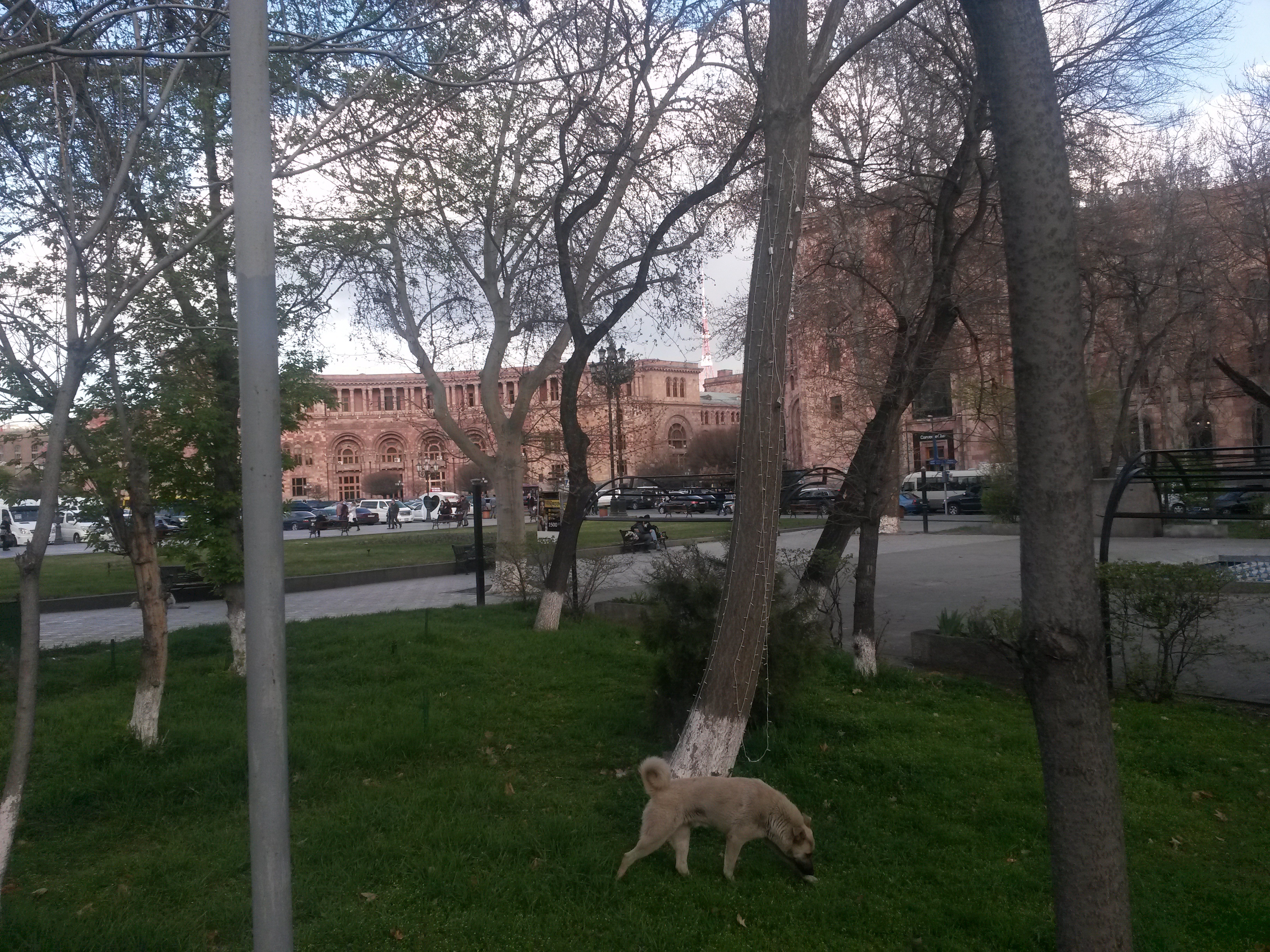
[A dog sniffs the grass in a park, the kind of ground inspection that often comes right before the spin.] Photograph: Wikimedia Commons
Image Credits: Wikimedia Commons
Almost every dog owner knows the ritual. The dog picks a spot, walks a few tight circles, sniffs the ground between turns, and only then settles into position.
The whole performance can take thirty seconds or several minutes. It looks deliberate, and research suggests at least part of it is.
This article explains the circling behavior, including the magnetic-alignment study behind the compass theory, the older grass-and-predator explanations, what the spinning motion itself accomplishes, and when circling signals something worth checking.
The magnetic compass theory
The most famous explanation comes from a 2013 paper published in the journal Frontiers in Zoology. A team led by Vlastimil Hart, working with zoologist Hynek Burda of the Czech University of Life Sciences and the University of Duisburg-Essen, spent two years recording how dogs oriented their bodies while eliminating.
The scale of the data collection was unusual for a behavior study: 70 dogs across 37 breeds, with 1,893 defecation observations and 5,582 urination observations logged over the two-year period. The finding was that under calm geomagnetic conditions, dogs showed a clear preference for aligning their bodies along the north-south axis when defecating. When the magnetic field was unstable, such as during geomagnetic disturbances, that preference disappeared and the dogs faced in random directions.
The researchers ruled out other directional cues. Wind direction, sun position, and terrain did not explain the pattern.
Even off-leash dogs in open fields with no visual landmarks showed the same tendency. The preference was strongest during defecation and weaker during urination, which suggests the mechanism is tied specifically to the bowel-movement context rather than a general habit.
Burda has described the spinning as a calibration step. As he told the Washington Post, "Doing so, and/or calibrating his magnetic compass, is probably easier for him when being aligned with the magnetic field."
In this reading, the dog is not looking for north as a destination. It is settling its internal compass, and the circles are the settling process made visible.
What the study does not prove
Honesty requires the limits too. The study shows a directional preference under specific conditions, not that every spin is a compass reading.
The magnetic field is calm only about 20 percent of daylight hours, according to the researchers' own accounting. The rest of the time, dogs in the study still circled and still pooped facing random directions.
The paper also does not explain why a dog would care about facing north-south while defecating. Burda's suggestion is that alignment helps the dog remember where it marked its territory, since territory marking is spatial memory work.
That is a hypothesis, not a demonstrated fact. Magnetoreception is well documented in migratory birds, sea turtles, and foxes, but the mechanism in dogs remains unclear, with iron-rich cells in the nasal cavity or inner ear as the leading suspects.
The older explanations still hold weight
Long before the compass study, people had common-sense theories, and Burda himself tested them against the data.
The grass theory says circling flattens tall grass, making a cleaner and more comfortable spot. The predator theory says the circling is a last security sweep before the dog assumes a vulnerable position.
Burda was skeptical of both. Dogs evolved from wolves, which had little reason to fuss over grass, and a dog genuinely scanning for threats would do better standing still to listen and sniff than turning in rapid circles.
Yet neither theory is dead. Modern dogs do trample vegetation when they circle, and the turning motion keeps the head moving across the surroundings.
For a domestic dog with a full bladder and no predators in sight, the ancestral version of the behavior can persist simply because it was never selected against. Behaviors do not need to stay useful to stay common.
There is also a simpler mechanical reading. Dogs have scent glands in their paws, and the circling plus pawing that often follows a bowel movement spreads their scent across the spot.
Territory marking through scent is well established in canines. The spin may serve two jobs at once: orienting the dog and stamping the ground with its signature.
Why the spinning itself helps
Whatever the dog is sensing, the rotation has practical effects. Circling lets the dog inspect the ground from every angle before committing.
It tests the footing. It gives the bowels a few more seconds to get moving. And it appears to be self-reinforcing: dogs that circle tend to circle the same direction each time, which suggests a settled personal routine rather than fresh decision-making on every walk.
That routine quality matters for owners. A dog that suddenly stops its usual circling, spins far more than normal, or strains without producing anything may be telling you something.
Difficulty eliminating can signal constipation, digestive upset, or in older dogs, joint pain that makes the squat position uncomfortable. Knowing what to do when a dog eats something it should not is part of the same owner toolkit: watch the elimination habits, because changes show up there first.
Do all dogs align north-south?
No. The preference appeared only under calm magnetic conditions in the 2013 study, and even then it was a statistical tendency, not a rule. Plenty of dogs in the study pooped facing every other direction.
Why does my dog stare at me while pooping?
Dogs are vulnerable during elimination, and many check in with their owner as a security measure. The stare is often the dog posting you on guard duty, not guilt or shame.
Should I worry if my dog circles a lot?
Extended circling alone is usually normal, especially in a new location. Worry signs are straining without results, crying, blood, or a sudden change in a long-established pattern. Those merit a vet visit.
Is the magnetic sense proven in dogs?
The directional preference is documented in one peer-reviewed study. The sensory mechanism behind it is not yet identified. Treat magnetoreception in dogs as a real but incompletely understood phenomenon.
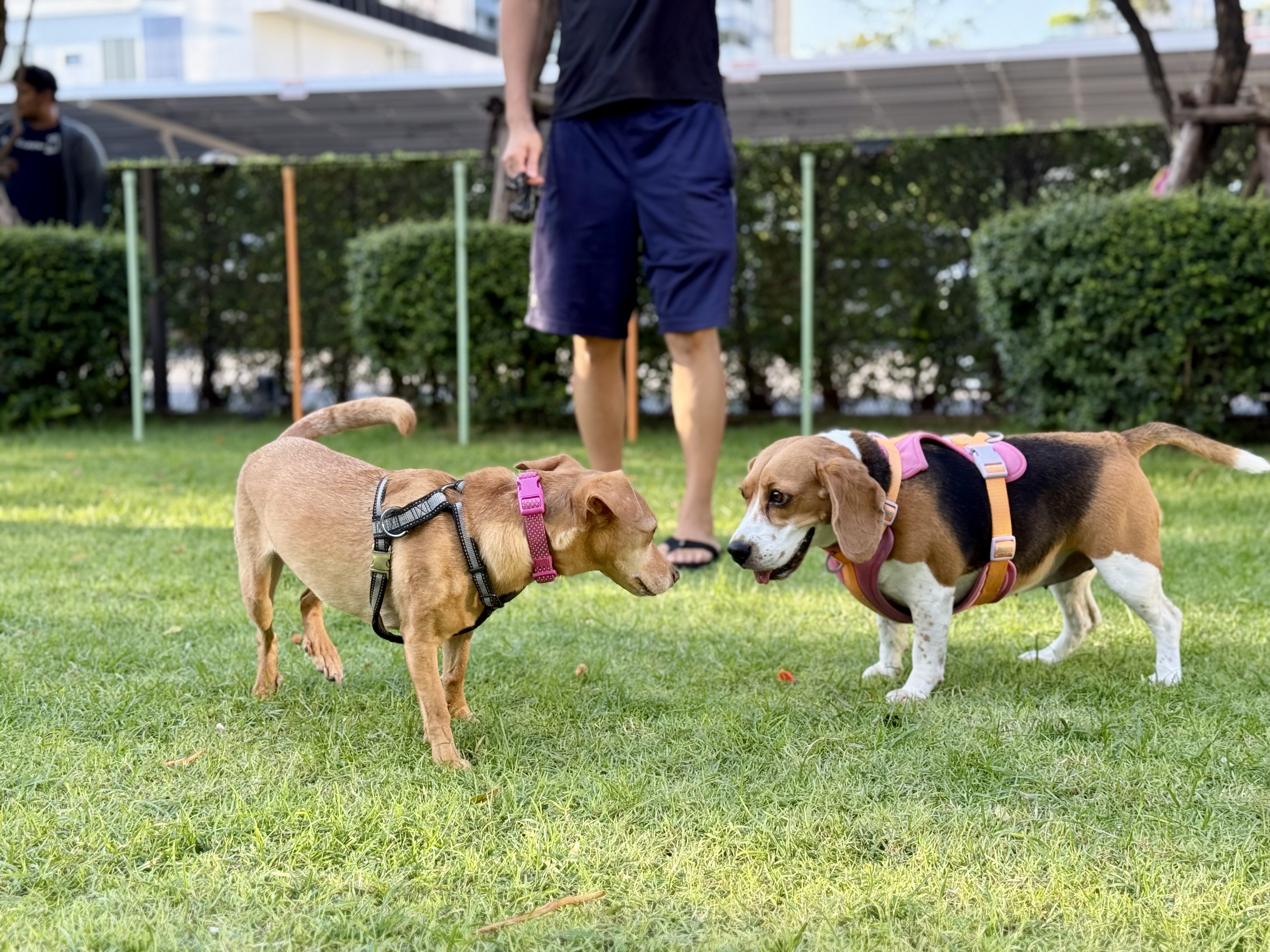
[Two dogs sniff each other at a dog park; scent inspection is a constant background task in canine life.] Photograph: Wikimedia Commons
Image Credits: Wikimedia Commons
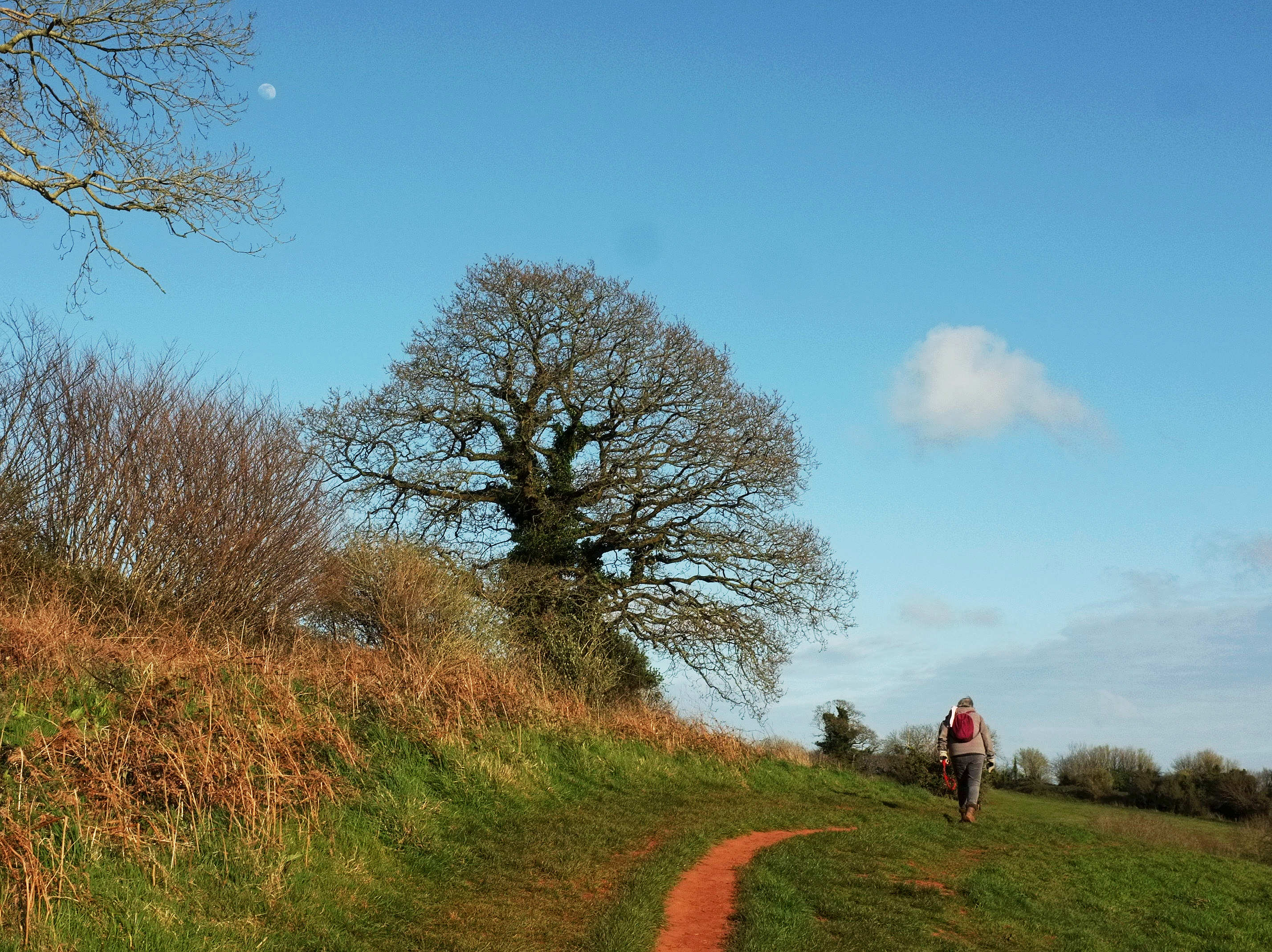
[A dog walks a trail; the circling ritual appears on familiar routes and brand-new ones alike.] Photograph: Wikimedia Commons
Image Credits: Wikimedia Commons
The bottom line
Dogs spin before pooping for layered reasons. The best-supported scientific explanation is the magnetic one: a large 2013 study found dogs prefer north-south alignment under calm geomagnetic conditions, and the circling looks like compass calibration.
Underneath it sit older instincts, flattening the spot, checking the surroundings, and marking territory with scent. None of the theories fully excludes the others. The spin is probably several small purposes stacked into one ritual, which is why it has survived thousands of years of domestication intact.
Topics: pets, dogs, animal behavior, magnetoreception, science
Rive News is a research desk producing evidence-based explainers across everyday topics.
Related
- What to Do When Your Dog Eats Something It Should Not: Act Fast
- Why Does Your Dog Bark at Every Visitor? Causes and Fixes
- Why Do Parrots Mimic Human Speech: Syrinx, Brain, and Flock
- Why Do Cats Chatter at Birds? Predatory Instinct Explained
Subscribe for one practical pet insight every morning.
Rive News holds its explainers to publisher standards: named sources, verifiable facts, and no invented claims.
Related stories
Why Does My Dog Eat Grass and Vomit?
A UC Davis study of 1,571 owners found grass eating is normal dog behavior, not self-medication: only 10% were ill first. What the science
Why Does My Dog Stare at Me While I Eat?
Dogs stare at you while you eat because it has worked before, and mutual gaze raises bonding hormones. Learn the reinforcement science
Foods toxic to dogs: the list, with reasons
Chocolate, xylitol, grapes, onions: common foods can harm dogs. Learn what makes each one toxic, the warning signs, and what to do if your