
Why parrots mimic speech but most birds cannot
Key takeaways
- Only three bird groups are vocal learners: parrots, songbirds, and hummingbirds. Most birds hatch with fixed, hard-wired calls.
- Parrots have a nested "core and shell" brain structure for vocal learning, with the shell unique to them, found by a Duke-led team.
- A flexible syrinx plus a muscular tongue gives parrots the hardware to shape human-like sounds with precision.
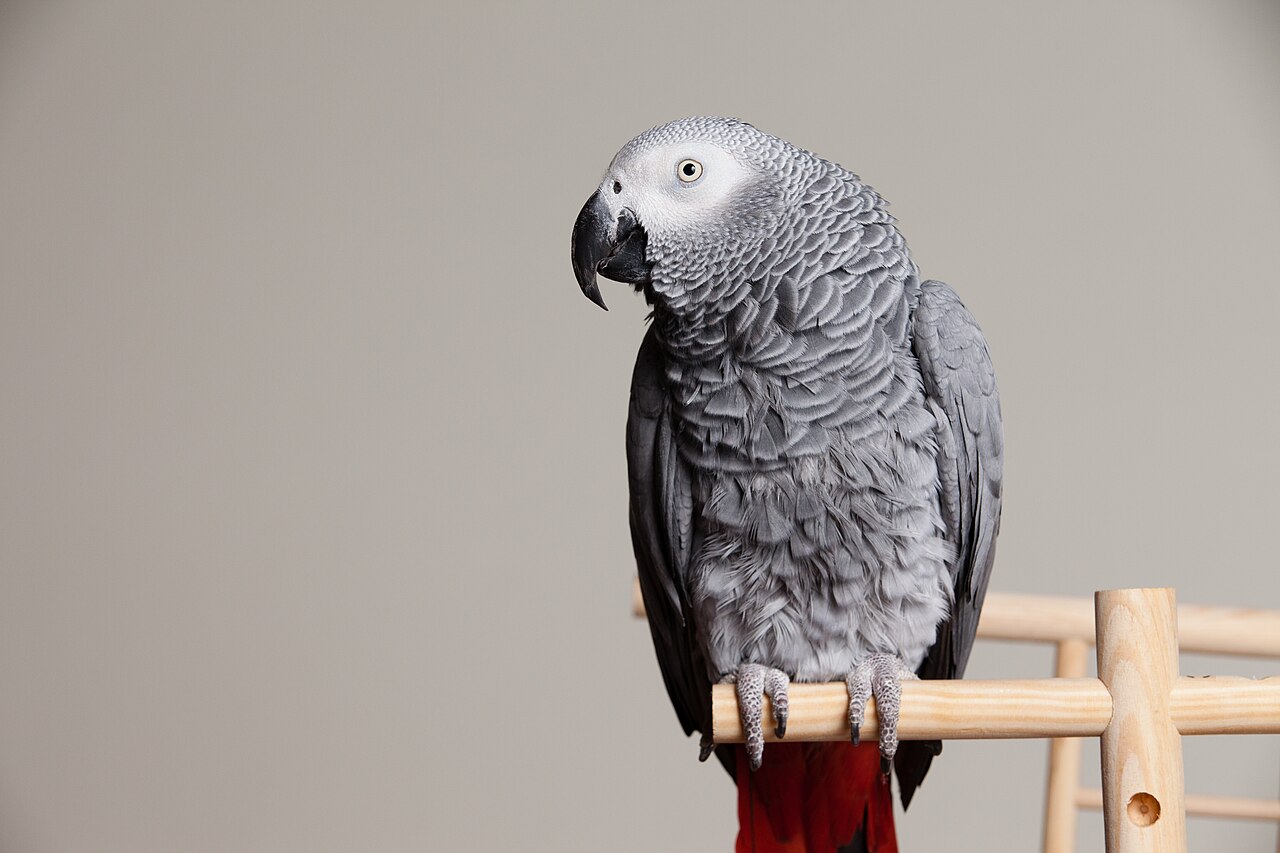
The African grey is among the most accomplished mimics in the animal kingdom. Image Credits: Wikimedia Commons
A parrot that greets you by name is not performing a trick. It is using a rare combination of specialized brain wiring and vocal anatomy that most birds simply do not have. Parrots are one of only a few animals considered vocal learners, meaning they can hear a sound, remember it, and recreate it with remarkable accuracy.
This article explains why parrots mimic speech but most birds cannot, including the brain structures involved, the vocal hardware, and the social reasons parrots bother to copy us at all.
Vocal learning: the rare ability most birds lack
Most birds are born with their calls largely pre-programmed. A duck quacks and a chicken clucks without lessons.
Vocal mimicry is found primarily in three bird groups: parrots (order Psittaciformes), songbirds (suborder Passeri), and hummingbirds. These species share a unique brain structure that allows for vocal learning: the ability to modify vocalizations based on auditory experience.
Vocal learning means the animal must do three hard things: perceive a sound precisely, store an acoustic template of it in memory, and then drive its vocal muscles to match that template. That requires dedicated neural circuitry connecting auditory processing centers to motor control regions. Without this infrastructure, a bird simply cannot produce human speech, no matter how much exposure it gets.
Even among vocal learners, parrots stand apart. Songbirds mostly learn songs within a narrow range of frequencies and patterns. Parrots copy an astonishing variety of sounds: human words, ringtones, microwave beeps, other animals, and even other parrot species.
The parrot brain's secret: core and shell
An international team led by Duke University researchers uncovered key structural differences in parrot brains that may explain their unparalleled imitation ability. Reported June 24 in PLOS ONE, the study examined gene expression patterns across eight parrot species besides the budgerigar, including conures, cockatiels, lovebirds, two species of Amazon parrots, a blue and gold macaw, a kea, and an African grey parrot.
The team found that the parrot brain has a nested "core and shell" structure for vocal learning. In addition to having defined centers that control vocal learning called cores, similar to those in songbirds, parrots have outer rings called shells that are also involved in vocal learning. These brain structures had gone unrecognized in studies published over the previous 34 years.
The shells are relatively bigger in species of parrots well known for imitating human speech. The researchers' hypothesis is that in humans and other song-learning animals, the ability to imitate arose by brain pathway duplication. Interestingly, many of the same genes that code for vocal learning in parrots are also expressed in their movement centers, which may explain why some parrots bob and step to music, appearing to dance to the beat.
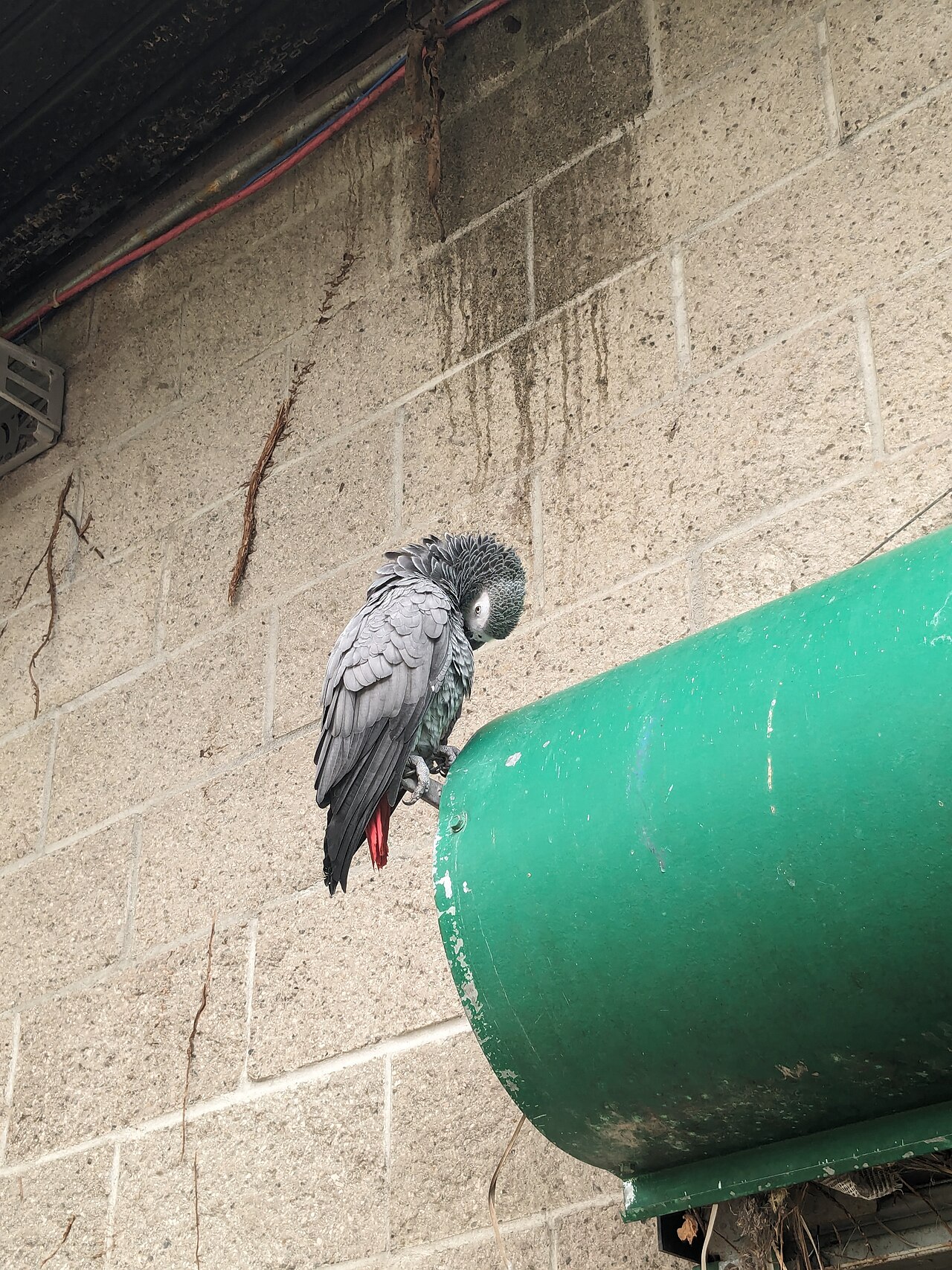
African greys have proportionally large brains with dense neuron counts in vocal control regions. Image Credits: Wikimedia Commons
The syrinx and tongue: hardware for human sounds
The primary organ enabling parrots to produce diverse sounds is the syrinx, located at the base of the trachea where it branches into the lungs. Unlike the human larynx, the syrinx lacks vocal cords.
Sound is generated by the vibration of specialized membranes and a small bone as air flows through. Crucially, the syrinx can produce two different sounds simultaneously, allowing complex tonal variations.
Parrots precisely control the tension of these membranes and the bronchial openings, enabling a wide range of pitch, tone, and volume. Beyond the syrinx, the parrot's thick, muscular tongue plays a significant part in shaping sounds. This flexible tongue, similar to a human tongue, lets the bird manipulate airflow and vocal tract resonances, which is why parrot speech can sound so eerily human.
Researchers have also identified genes such as FOXP2, also present in humans, that play a role in song development in zebra finches. Comparative genomics suggests convergent evolution between human speech circuits and bird song circuits: nature built similar machinery twice.
Why parrots want to copy us
Anatomy explains how parrots can talk. Social life explains why they bother.
Parrots are flock animals that use complex vocalizations to maintain social bonds and coordinate behavior. In the wild, they learn contact calls, alarm signals, and flock-specific dialects from their parents and peers.
A parrot raised in a human home treats its people as the flock. The bird's brain is primed to acquire novel vocalizations from social contacts, so it treats human words the way it would treat parrot calls: as important acoustic patterns worth learning and reproducing. Parrots raised in isolation from other parrots but with consistent human interaction often learn human speech more readily than those raised with other parrots.
Learning involves observation and repetition. Parrots listen intently to sounds in their environment and, through consistent exposure, begin to imitate them. Positive reinforcement, such as attention or rewards, strengthens the behavior.
Words with sharp consonants, clear vowels, and moderate pitch tend to be easiest for parrots, partly because they match the frequencies the syrinx naturally produces well. For another species-specific behavior mystery, see why dogs howl along with sirens.
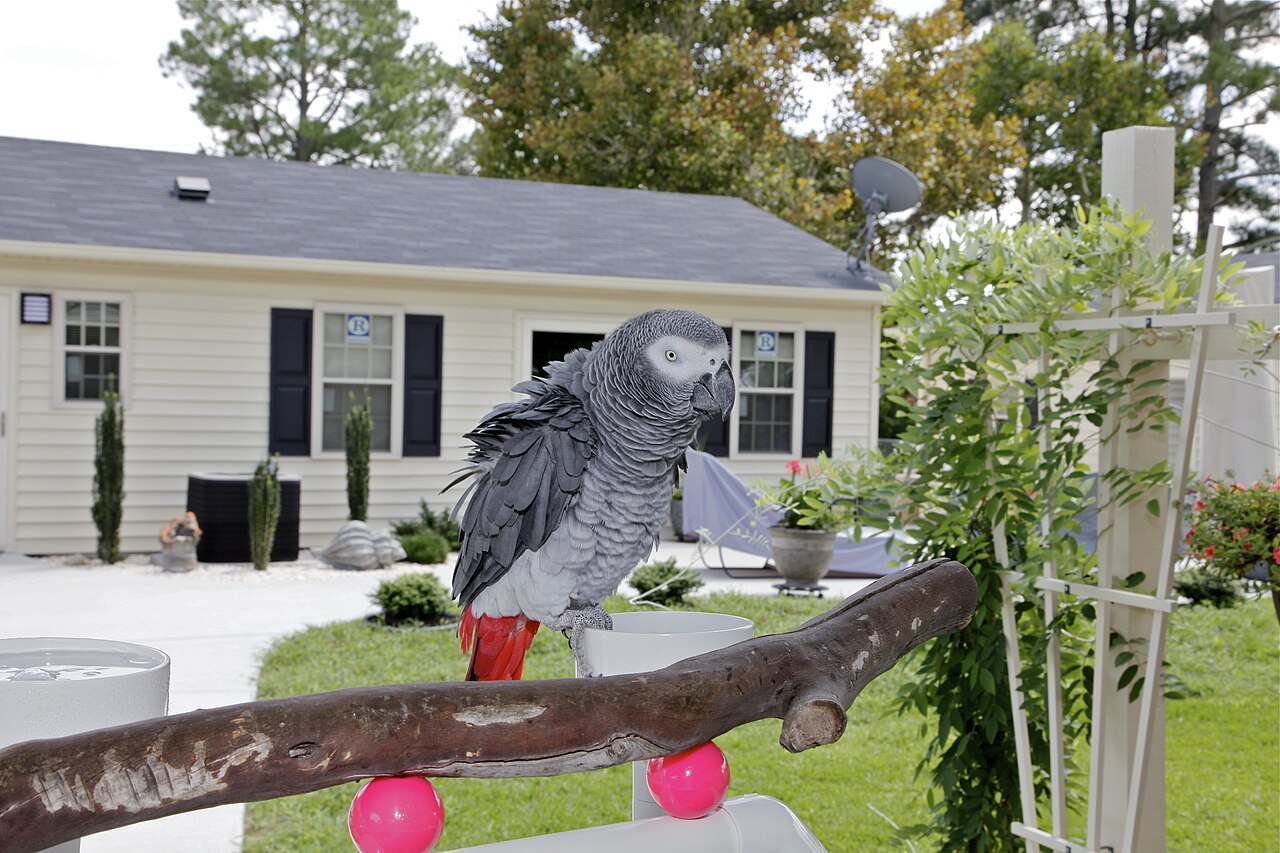
Social flock instincts drive parrots to copy the sounds of their chosen companions, human or otherwise. Image Credits: Wikimedia Commons
Do parrots understand what they say?
Parrots mimic sounds rather than generating spontaneous language. Some individuals, like the famous African grey studied by researchers, show striking context awareness, but the baseline ability is precise imitation, not grammar.
Which parrot species talk best?
African greys stand out as perhaps the most accomplished mimics, with proportionally large brains and dense neurons in vocal control regions. Amazons, macaws, and cockatoos are also strong talkers. The Duke study found larger vocal-learning "shells" in species known for speech imitation.
Can a parrot learn new words its whole life?
Yes. The plasticity in parrots' brain regions supports learning new sounds and words throughout their lives, unlike many songbirds that learn only during a critical window as chicks.
Why can't my budgie talk like an African grey?
Until the Duke study, the budgerigar was the only parrot whose brain had been probed for vocal learning mechanisms. Budgies can learn words, but their smaller vocal-learning structures and simpler social repertoire limit how far they get.
Is it true only male parrots talk?
No. In most pet parrot species, both sexes can learn to mimic. Ability depends more on species, individual temperament, and social bonding than on sex.
The bottom line
Parrots talk because evolution gave them both the instrument and the score. The syrinx and muscular tongue provide the hardware for human-like sound, while the duplicated core-and-shell brain circuits provide the software for lifelong vocal learning.
Most birds lack one or both, so their calls stay fixed for life. Add a flock-bonded social drive that treats your voice as the flock's dialect, and you get a bird that answers when you call its name. For another look at how animals read us, see why dogs tilt their heads when you talk.
Latest in Pets
- Why cats purr: what it really means
- Why dogs howl along with sirens
- Why cats squeeze into boxes that look too small
- Why dogs tilt their heads when you talk
One animal-behavior explainer in your inbox each week. Subscribe to the Rive News newsletter.
Related stories
Why Does My Dog Eat Grass and Vomit?
A UC Davis study of 1,571 owners found grass eating is normal dog behavior, not self-medication: only 10% were ill first. What the science
Why Does My Dog Stare at Me While I Eat?
Dogs stare at you while you eat because it has worked before, and mutual gaze raises bonding hormones. Learn the reinforcement science

Foods toxic to dogs: the list, with reasons
Chocolate, xylitol, grapes, onions: common foods can harm dogs. Learn what makes each one toxic, the warning signs, and what to do if your