
What a slow blink from a cat actually means
By Rive News / Research desk | Rive News / Published October 26, 2026 at 9:00 AM PKT
Key takeaways
- A slow blink is a cat narrowing its eyes and closing them for a couple of seconds, widely read as a calm, friendly signal.
- A 2020 University of Sussex study found cats slow blink back more often after a person slow blinks at them first.
- A slow blink is not a promise of cuddles. It signals comfort in the moment, and the cat may still walk away.
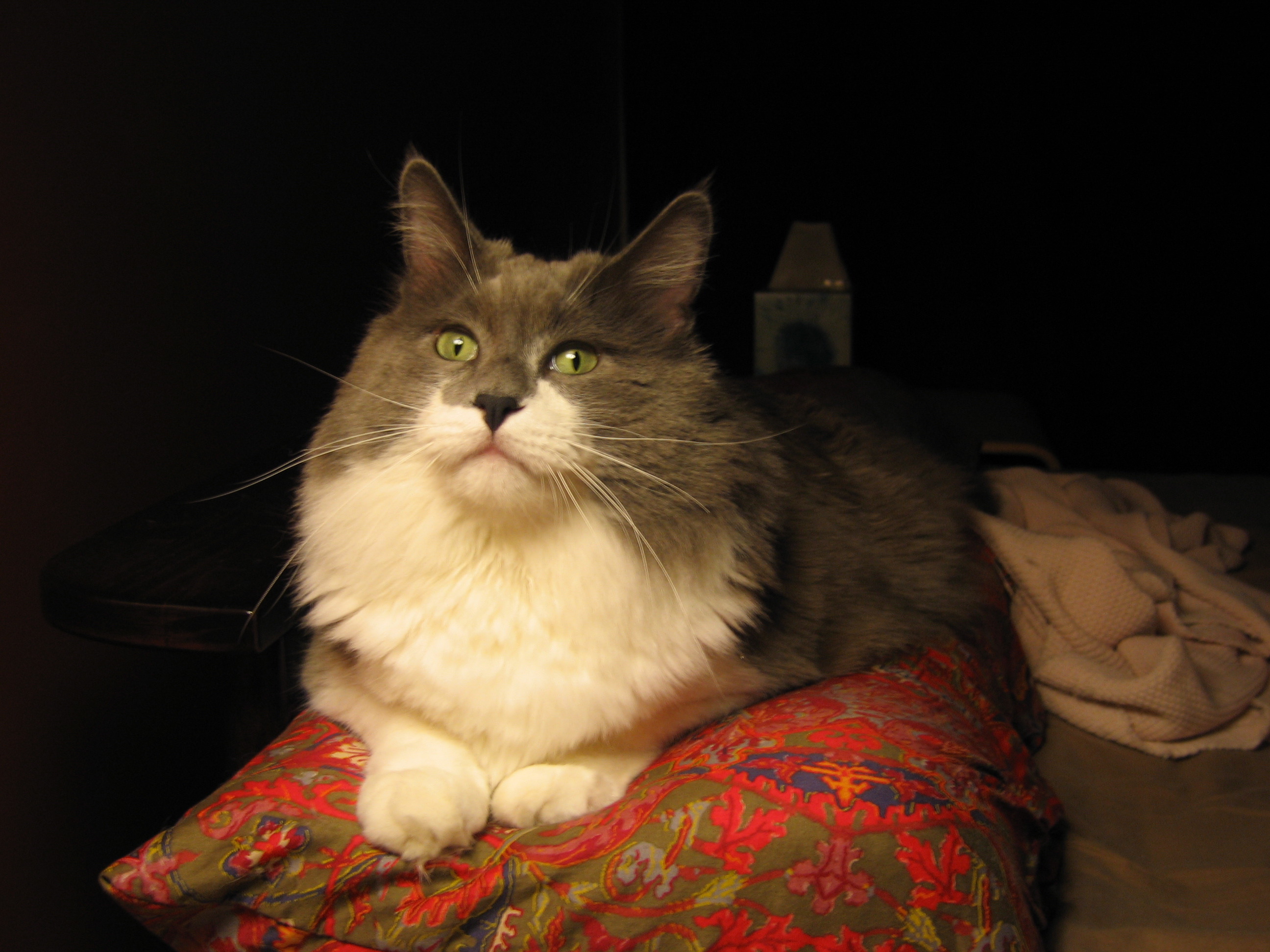
[A grey and white cat resting on a cushion indoors.] Photograph: Wikimedia Commons contributor
Image Credits: Wikimedia Commons
A slow blink is a deliberate, unhurried closing of the eyes. The cat narrows its eyes first, then closes them for a second or two, then opens them again. It looks nothing like a normal blink, which is fast and easy to miss.
This article explains what a slow blink from a cat actually means, including what the research found, why closing the eyes signals safety, how to try a slow blink yourself, and what it does not mean.
What the research actually found
The best evidence comes from a study published in Scientific Reports in 2020. Researchers at the University of Sussex and the University of Portsmouth, led by psychologist Karen McComb, ran two experiments on slow blinking between cats and people.
In the first experiment, cat owners slow blinked at their own cats from about a metre away. The cats slow blinked back more often than in a control condition where the owner simply sat nearby without slow blinking.
In the second experiment, researchers who were strangers to the cats did the slow blinking. This time 24 cats from eight households took part. Again, the cats slow blinked back more often after a slow blink than after a neutral, unblinking stare.
The second experiment went one step further. After slow blinking, the researcher sometimes held out a hand toward the cat.
Cats were more likely to approach the outstretched hand after a slow blink than after no slow blink. That approach behaviour is the part that points toward trust, not just mimicry.
Karen McComb put it in plain terms. "If you've ever noticed your cat sitting with partially closed eyes and blinking slowly, they're actually smiling at you," she said. She added that many cat owners had long suspected this, and the study gave them scientific evidence to support it.
Why closing the eyes signals safety
For a predator, closing the eyes in front of another creature is a small act of vulnerability. A cat that keeps its eyes open can watch for danger. A cat that closes them, even briefly, is giving up that watch for a moment.
That is why the slow blink reads as a friendly signal. Direct, unbroken staring can feel like a challenge to a cat. Narrowing the eyes softens the stare and removes the threat from it.
The researchers noted that eye narrowing appears linked to positive emotional communication in a range of species, not just cats. In other words, the slow blink may belong to a broader family of signals that say "I am not a threat."
It also helps to read the rest of the body. A slow blink paired with a relaxed posture, ears in a neutral position, and a still or gently swishing tail points to a calm cat. A slow blink paired with a tense body, flattened ears, or a lashing tail is a different message, and the tension matters more than the eyes.
How to slow blink at your cat
The technique from the study is simple. Sit near the cat without looming over it.
Relax your face. Narrow your eyes slightly, as if you were smiling with your eyes, then close them slowly for a couple of seconds and open them again.
Wait after you do it. Cats often need a few seconds to respond, and some will blink back only after a pause.
If the cat blinks back, that is a good sign. If it looks away, that is usually fine too.
Looking away after a slow blink is often misread as rejection. In cat body language, breaking eye contact is a polite way to lower pressure. A cat that blinks and then turns its head may simply be comfortable and not looking for more interaction right now.
Do not stare the cat down while waiting for a reply. Hold a soft gaze, blink slowly again if nothing happens, and then leave it alone. Repeating the gesture several times in a row can turn a calm moment into an intense one.
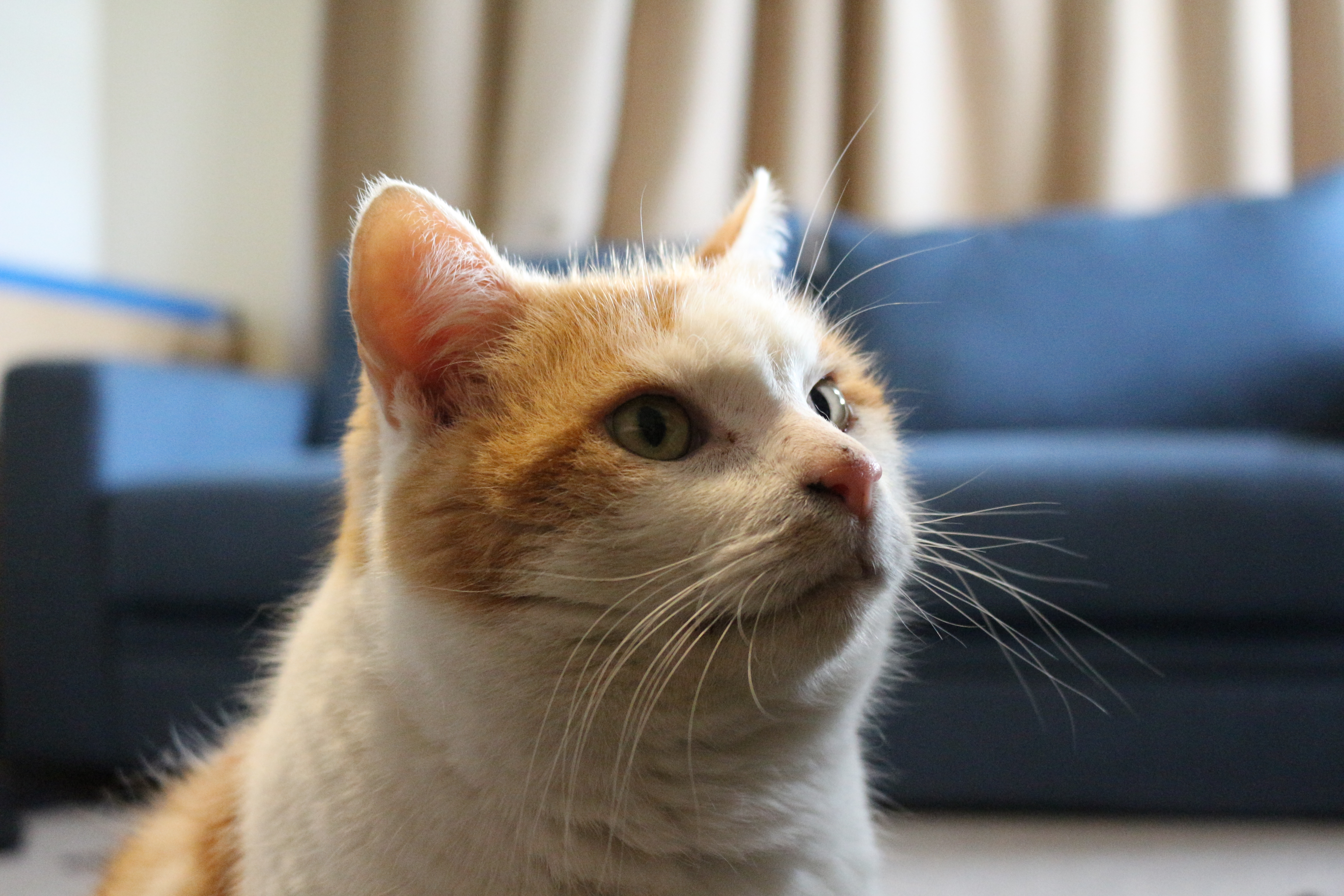
[A close-up of a ginger and white cat's face indoors.] Photograph: Wikimedia Commons contributor
Image Credits: Wikimedia Commons
What a slow blink does not mean
A slow blink is not a cat saying "I love you" in human language. The study describes it as positive emotional communication, not a translated sentence. Treating it as a word-for-word message overstates what the evidence shows.
It is also not a guarantee that the cat wants to be touched. Some cats slow blink from across the room and stay exactly where they are.
The blink signals comfort in that moment. It does not invite a lap visit, a belly rub, or being picked up.
It is worth noting that cats also narrow their eyes when they are sleepy, content, or simply resting. Context decides the meaning.
A slow blink aimed at you during a calm interaction is a social signal. Half-closed eyes on a cat dozing in a sunbeam are mostly just rest.
And a cat that never slow blinks at you is not necessarily unhappy. Cats vary.
Some are expressive with their eyes, and others show comfort by staying nearby, kneading, or purring. One missing signal does not cancel the others.
When a slow blink is worth a second look
Eye behaviour can also flag a health problem, and it pays to know the difference. A slow blink is relaxed and symmetrical, with both eyes narrowing together. Squinting with one eye, pawing at the face, discharge, or a cloudy eye are not slow blinks.
If a cat suddenly starts squinting, keeps one eye closed, or shows redness or discharge, that is a reason to contact a veterinarian rather than interpret it as affection. The same applies if the cat's behaviour changes suddenly in other ways, such as hiding more or eating less.
None of this takes away from the ordinary slow blink. It just keeps the signal in its place: a small, everyday piece of cat communication, not a health check.
The bottom line
A slow blink is a cat's way of saying it feels safe enough to lower its guard for a moment. The 2020 Sussex study gives that reading real backing: cats blinked back more often and approached more readily after a person slow blinked first.
Try it once, softly, and let the cat answer in its own time. If it blinks back, enjoy the moment. If it looks away and settles back down, that is an answer too.
Tags: cats, cat body language, pet behaviour
Rive News is a research desk that writes plain-language explainers from published studies and public sources.
Related
- Why cats stare at you for so long
- Why cats purr and what the science says it means
- Why cats knead with their paws at home
- Why your cat bites you gently then licks you
Subscribe for one plain-language animal behaviour explainer each week.
Rive News publishes explainers based on public sources. Corrections are made promptly when a source is shown to be wrong.
Related stories
Why Does My Dog Eat Grass and Vomit?
A UC Davis study of 1,571 owners found grass eating is normal dog behavior, not self-medication: only 10% were ill first. What the science
Why Does My Dog Stare at Me While I Eat?
Dogs stare at you while you eat because it has worked before, and mutual gaze raises bonding hormones. Learn the reinforcement science
Foods toxic to dogs: the list, with reasons
Chocolate, xylitol, grapes, onions: common foods can harm dogs. Learn what makes each one toxic, the warning signs, and what to do if your