
How to Trim a Dog's Nails Without Hurting Them
Key takeaways
- The quick is the blood vessel inside the nail. Cut only the tip, and leave at least 2 mm clear of it.
- Most dogs need a trim every 3 to 4 weeks, and overgrown nails need small weekly trims, not one big cut.
- A nervous dog learns to accept trims through slow desensitization, treats, and short sessions.
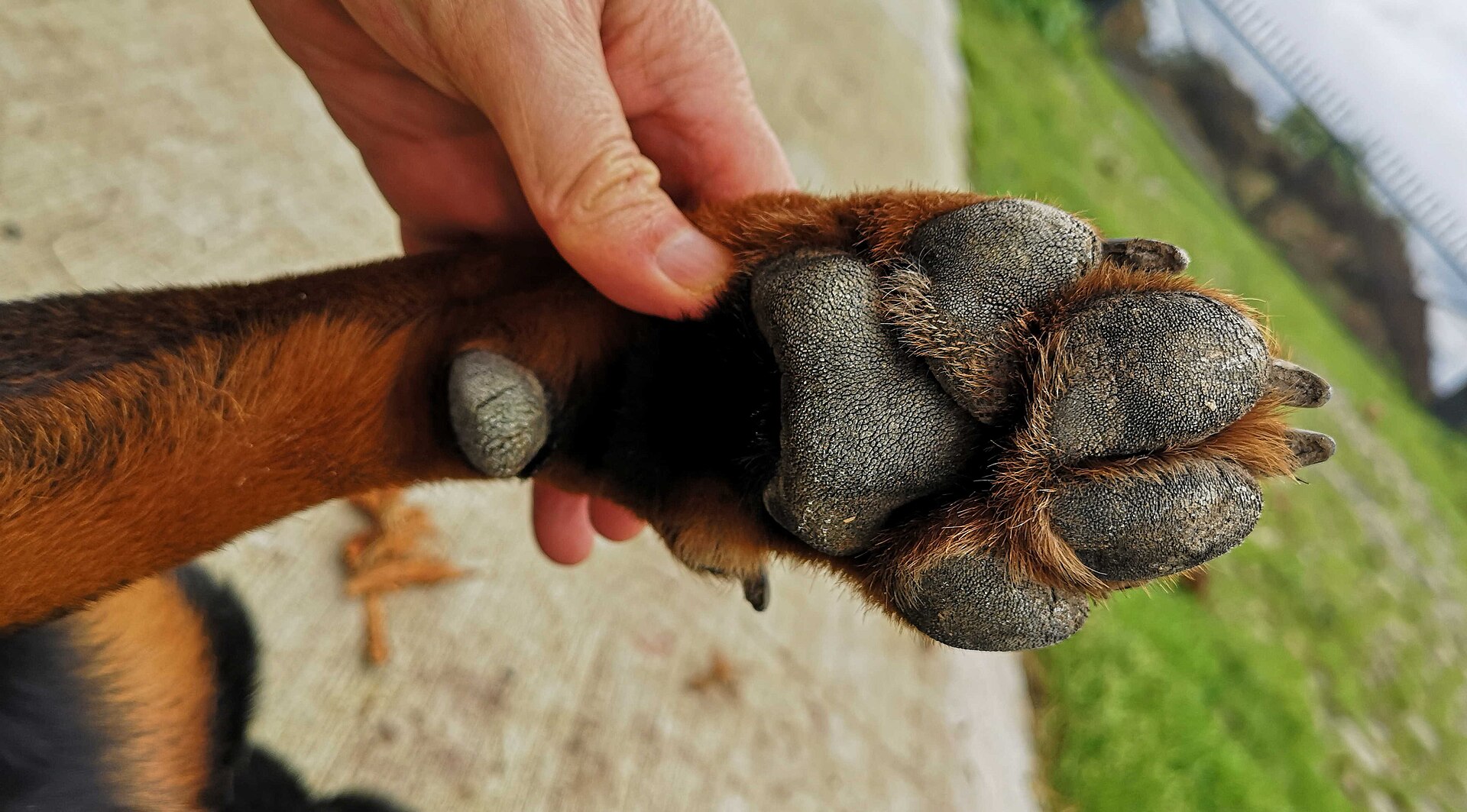
Trimming a dog's nails sounds simple until you hold the clippers. The fear is real: cut too far and the nail bleeds, the dog yelps, and the next session gets harder. The good news is that a safe trim follows a small set of rules.
Cut only the tip. Know where the quick sits. Work slowly, and reward the dog after every nail.
This article explains how to trim a dog's nails without hurting them, including the tools, the cutting technique for light and dark nails, what to do if a nail bleeds, and how to help a nervous dog accept the routine.
Why nail trims matter
Domestic dogs do not wear their nails down the way wild canines do. Good Dog People notes that pet dogs do not wear down their nails naturally because of the urban environment, so regular trimming matters. Long nails catch on carpets, break or splinter during play, and make standing and moving painful and awkward.
Left long enough, nails can twist, curl, and press into the paw pads.
Overgrown nails change how a dog walks. OneHealthGlobe warns that overgrown nails press into the ground with every step, forcing toe joints to splay and twist, and that over months this creates chronic inflammation in the toe joints and strain on the knees and hips. Nail care is not cosmetic.
It protects the dog's gait and joints.
The simplest test for length is sound. Good Dog People advises placing the dog's paws flat on a table: if the nails touch the surface, or if you hear clicking when the dog walks, the nails are still too long. Nails should end just above the ground when the dog stands.
How often to trim
Most dogs need their nails trimmed every 3 to 4 weeks, according to Dial A Vet. The exact schedule depends on how fast the nails grow and how active the dog is. Dogs that walk often on pavement wear their nails down more than dogs that stay indoors.
OneHealthGlobe gives a useful breakdown by dog type. Indoor dogs need a trim every 2 to 3 weeks, active outdoor dogs every 3 to 5 weeks, and senior dogs every 2 to 4 weeks. Puppies can be trimmed every 1 to 2 weeks, since small, frequent trims build a positive association.
Overgrown nails need weekly small trims, which let the quick recede safely over 4 to 8 weeks.
Short, regular sessions beat rare, dramatic ones. A dog that gets a small trim every few weeks stays calm, and the quick stays short, which makes each future trim safer.
The tools you need
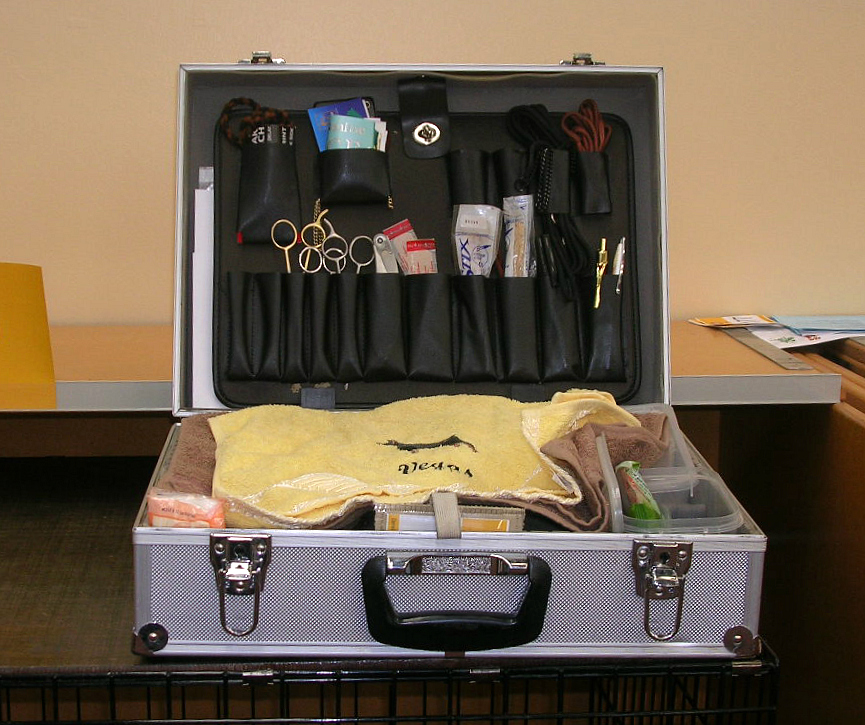
Gather everything before you start. You need dog nail clippers, treats, and styptic powder. Good lighting matters as much as the tools.
Trim in daylight or under a bright lamp so you can see the nail clearly. A non slip mat under the dog helps the dog feel steady.
Dial A Vet lists the three essentials: the correct nail clippers for dogs, a tip-only cut to avoid the quick, and styptic powder ready in case of accidental cuts. Styptic powder stops bleeding from a nicked quick. Keep it within arm's reach, not in another room.
There are three main tool types. Scissor style clippers suit small dogs and puppies with thin nails. Plier style clippers suit medium and large dogs and are the most common choice for owners.
A nail grinder removes material gradually and gives the most control, which helps with dark nails.
Finding the quick
The quick is the sensitive area inside the nail that holds nerves and blood vessels. Dial A Vet describes it as the pink area visible inside light colored nails. Cutting it causes bleeding and pain, which is why the whole technique centers on staying clear of it.
For light nails, look for the pink center and cut only the white tip below it. Good Dog People advises leaving at least 2 mm between the quick and the cut. That small margin keeps the trim safe.
For dark nails, the quick is hidden. Trim in tiny slices and inspect the cut surface after each slice. OneHealthGlobe describes the stop signal: early cuts show a chalky white or grey center, and as you approach the quick the center turns darker, looks slightly moist, or shows a small dark dot.
Stop at the first sign of that dark center. You are 1 to 2 mm from the quick, and the nail is safely short.
Do not forget the dewclaws. These sit on the inner side of the front paws, and sometimes on the hind paws too. They never touch the ground, so they never wear down, and they curl fastest.
Check them on the same schedule as the other nails.
The trim, step by step
Start with a calm dog. Spend a few minutes petting the dog and giving treats for relaxed behavior. OneHealthGlobe advises never starting a nail trim when the dog is already anxious or over excited.
If the dog is wound up, wait.
Hold the paw gently but with confidence. Grasp one paw and apply steady, gentle pressure.
Isolate one toe at a time. OneHealthGlobe recommends squeezing the paw pad slightly to extend the nail fully, which makes the quick and the nail tip easier to see.
Cut at a 45 degree angle, tip only. Position the clippers at 45 degrees to the nail and cut the sharp tip in one clean, confident motion. OneHealthGlobe warns against sawing back and forth: one clean squeeze is cleaner and less traumatic than several partial cuts.
Smooth the rough edge with a file or grinder after the cut.
Reward after every nail, not just at the end. A small treat and calm praise after each nail tells the dog that each nail brings a reward. Good Dog People suggests giving the dog treats between every few cuts.
If the dog pulls away or gets tense, take a break. One or two nails in a calm session beat a full set in a struggle.
Work one paw at a time. For a first session, stopping after one paw is a win. The dog learns that the session ends while things are still good, and the next session starts with that memory.
If you nick the quick
It happens to almost every owner at some point. Stay calm. The dog reads your reaction, and panic makes the next session harder.
Dial A Vet advises using styptic powder to stop the bleeding and giving the dog a break before attempting another nail.
Press a pinch of styptic powder onto the bleeding nail and hold gentle pressure for a few seconds. Good Dog People gives the same advice: dip the nail into styptic powder, which helps the blood clot, and watch the dog until the bleeding stops. Cornstarch works as a backup if you have no styptic powder.
If the bleeding does not stop after several minutes, or the nail looks cracked or infected, contact a veterinarian. OneHealthGlobe warns that a nail curling into the paw pad, an infected nail, or a dog that is limping needs a vet before any home trimming. A nicked quick is a minor mishap.
A nail that has grown into the pad is a medical problem.
Fixing overgrown nails
Overgrown nails need patience, not one big cut. The quick grows with the nail, so a nail that has been long for months has a quick that reaches much further toward the tip. OneHealthGlobe warns that trying to cut overgrown nails short in a single session will almost certainly cause bleeding and pain.
The fix is a gradual schedule: trim only the tip once per week for 4 to 8 weeks. Each weekly trim nudges the quick to recede slightly, typically 1 to 2 mm per week, according to OneHealthGlobe. After 6 to 8 weeks of weekly small trims, the quick has receded enough to allow a much shorter nail.
Helping a nervous dog accept trims
Most nail trim fear is learned. A bad early experience, being rushed, or one painful bleed can create a lasting association. OneHealthGlobe notes that this fear can be unlearned with patience and the right protocol.
The method is desensitization: break the process into tiny steps and reward each one.
Start with paw handling only. Touch the dog's paw, hold it for 2 seconds, release, and give a treat. Repeat 5 to 10 times per session, 2 to 3 sessions per day, for a few days.
Do not touch the nails yet. The goal is a simple link: paw touching brings good things.
Next, bring out the clippers without cutting. Let the dog sniff them. Tap them lightly on the paw and treat at once.
Good Dog People describes the same slow build: let the dog smell the clipper, touch the paw with the clipper, then squeeze the clipper near the paw so the dog hears the sound, all without trimming. Repeat for a few days.
Then cut exactly one nail. Give 3 to 4 small treats and end the session, even if the dog stayed calm. OneHealthGlobe stresses that ending on a positive note before anxiety begins is the entire strategy.
Build to two or three nails per session in the second week, then a full session by week 3 or 4.
FAQ
How short should a dog's nails be?
Short enough that they do not touch the ground when the dog stands. If you hear clicking on hard floors, or the nails touch a flat surface when the paw rests on it, they are too long.
How do I trim black nails safely?
Take thin slices off the tip and check the cut surface after each slice. Stop when the center turns dark or looks moist. A grinder gives even more control, since it removes material gradually.
What if my dog will not sit still?
Do not fight the dog. Trim one nail, reward, and stop. Short sessions build trust.
If the dog is truly panicked, ask a groomer or vet to handle trims while you work on desensitization.
The bottom line
A safe nail trim is a small, careful job. Use sharp dog clippers, cut only the tip at a 45 degree angle, and stay clear of the quick. Trim every 3 to 4 weeks, and use small weekly trims to fix overgrown nails.
Keep styptic powder close, reward after every nail, and build a nervous dog's confidence in tiny steps. With a steady routine, nail trims become an ordinary part of grooming, not a battle.
Tags: dogs, grooming, nail trimming, pet care
Latest in Pets
- How to help an older dog with stiff joints
- The best way to travel with a pet by car
- How to litter train a kitten step by step
- Why cats stare at you
Subscribe to the Rive News newsletter for one practical pet care guide each week.
Related stories

Why Does My Dog Eat Grass and Vomit?
A UC Davis study of 1,571 owners found grass eating is normal dog behavior, not self-medication: only 10% were ill first. What the science

Why Does My Dog Stare at Me While I Eat?
Dogs stare at you while you eat because it has worked before, and mutual gaze raises bonding hormones. Learn the reinforcement science

Foods toxic to dogs: the list, with reasons
Chocolate, xylitol, grapes, onions: common foods can harm dogs. Learn what makes each one toxic, the warning signs, and what to do if your