
How Do Bees Make Honey Step by Step
Key takeaways
- Forager bees collect nectar in a special honey stomach, then pass it to house bees for enzyme treatment.
- Enzymes split sucrose into glucose and fructose, while wing fanning drops water from about 70 percent to under 18 percent.
- Bees cap each cell with wax only when the honey is thick and stable enough to store for months.
Honey is not something bees find ready-made. It is something they build, one flower at a time, through a chain of chemistry and teamwork that turns thin, watery nectar into a thick food that can sit in a hive for months without spoiling.
The process has a clear order. Foragers gather nectar, enzymes break down its sugars, house bees pass it mouth to mouth, wing fanning drives off water, and wax caps seal the finished cells. Each step changes the nectar a little, and the finished honey is very different from the liquid the bees first collected.
This article explains how bees make honey step by step, including the enzymes involved, the water levels at each stage, and the scale of work behind a single jar.
Step 1: Foragers collect nectar from flowers
Nectar is a sugary liquid that flowers produce to attract pollinators. It is mostly water, with sucrose, glucose, and fructose dissolved in it, plus trace amino acids, minerals, and plant compounds that vary by flower species.
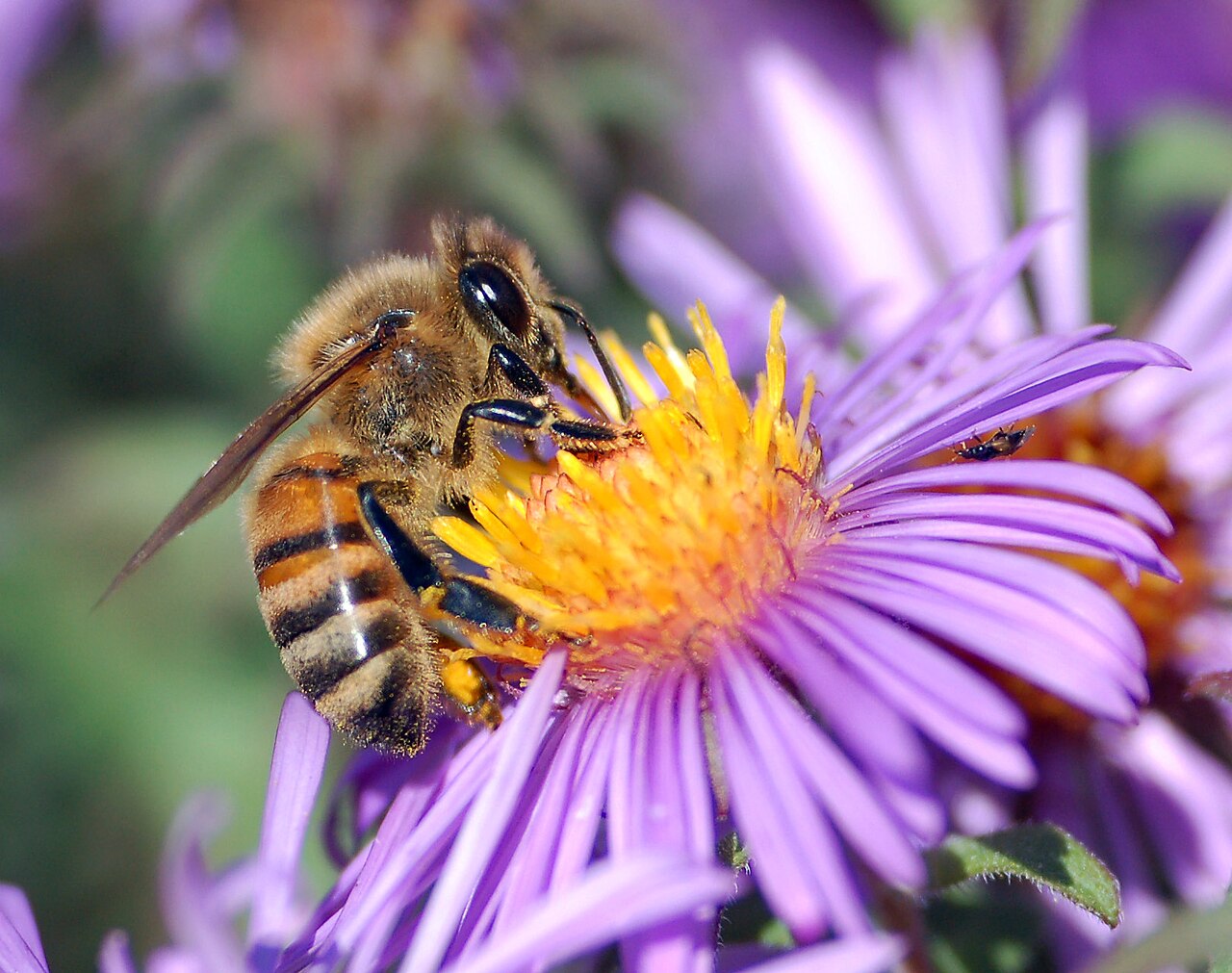
A forager bee visits dozens to hundreds of flowers per trip, using a long tongue called a proboscis to suck up tiny amounts of nectar from each one. Britannica puts the upper end higher, saying worker bees hit as many as 1,500 flowers each time they leave the hive.
The bee does not store this nectar in its regular stomach. It goes into a special organ called the honey stomach, or crop, which sits in front of the digestive system. ScienceInsights reports that the crop can hold about 40 milligrams of nectar at a time.
A filter called the proventriculus sits between the honey stomach and the gut. It catches pollen grains and other particles and keeps digestive microbes from flowing back into the nectar. The cargo stays clean on the flight home.
The Beelistener adds a useful detail on loads. The crop can hold around 100 milligrams of nectar, but most foragers carry home around 15 to 40 milligrams. Some of that nectar gets used as flight fuel on the way back, so the amount delivered is smaller than the amount collected.
Step 2: Enzymes start breaking down sugars
The chemistry begins while the bee is still flying. Glands in the head and throat release enzymes into the nectar as it sits in the honey stomach. The two most important are invertase and diastase.
Invertase, also called sucrase, splits sucrose, a double sugar, into two single sugars: glucose and fructose. Diastase breaks down starch-like chains of sugar molecules into glucose and maltose. That is why finished honey is dominated by simple sugars rather than the sucrose that filled the original nectar.
The bees also add glucose oxidase. This enzyme converts a small amount of glucose into gluconolactone and produces hydrogen peroxide as a byproduct. That hydrogen peroxide is one of the main reasons honey resists bacterial growth.
Britannica describes the division of labor by age. Processor bees are middle-aged bees, since they carry the most enzymes in their stomachs, while older bees stop producing the enzymes and become foragers. After about half an hour of processing, Britannica says, the processor bees have broken the nectar down into honey.
The chemical equation is simple to state. Sucrose plus water plus sucrase gives glucose plus fructose. The enzyme speeds up a reaction that would otherwise take years in plain water, according to The Beelistener.
Step 3: House bees pass nectar mouth to mouth
When a forager returns to the hive, she does not deposit the nectar straight into a cell. She passes it to a house bee through trophallaxis, a mouth-to-mouth transfer.
That house bee may pass it to another bee, and another. Each transfer mixes in more enzymes and spreads the nectar in thin films across the bees tongues. Each thin film exposes more surface area to the air, so water starts to evaporate even during this handoff stage.
This social processing is why honey making is a colony job, not a solo job. A single bee cannot carry enough enzymes, or move enough air, to finish a batch alone. The chain of handoffs spreads the work across many bees and keeps the nectar moving while it ripens.
Step 4: Wing fanning drives off the water
Fresh nectar is roughly 70 to 80 percent water. Finished honey is about 17 to 20 percent water. Removing all that moisture is the slowest part of the process, and bees handle it with ventilation.
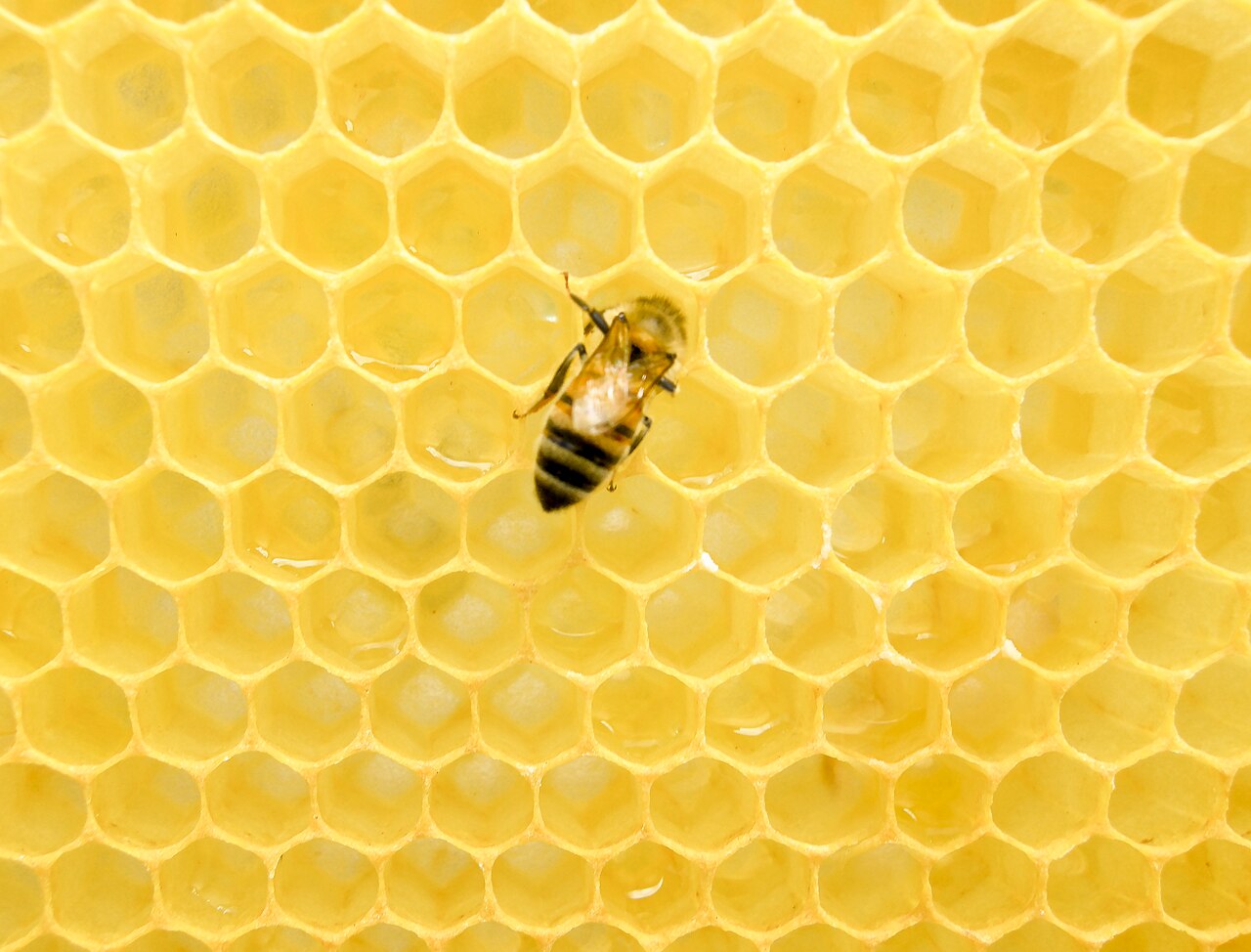
After the mouth-to-mouth stage, bees deposit the nectar into hexagonal wax cells in the comb. Thousands of bees then fan their wings near the comb, running a ventilation system that pulls humid air out of the hive. ScienceInsights notes that this fanning continues day and night until the nectar thickens into honey.
Britannica gives the same picture in plain terms. Once the honey is in the comb, it is still about 70 percent water, so processor bees spend the next few days fanning the cells with their wings until it dries out to just under 18 percent water.
Water level decides whether honey keeps. Below roughly 18 percent water, microbes cannot grow easily, and the honey resists fermentation. The Beelistener notes that United States regulations set the limit at under 18 percent, while United Kingdom rules allow under 20 percent, or under 23 percent for heather honey.
The acid level helps too. Glucose oxidase produces gluconic acid, which pushes honey pH to around 3.9, according to The Beelistener. Low water, acid conditions, and hydrogen peroxide together give honey its famous shelf life.
Step 5: Bees cap the cells with wax
Bees do not cap cells on a fixed schedule. The timing depends on colony strength, temperature, and humidity. ScienceInsights cites a study tracking rapeseed honey in which bees began capping cells on the fifth day after the nectar was deposited.
By day ten, about 69 percent of cells were sealed, and full capping reached 100 percent by day fourteen.
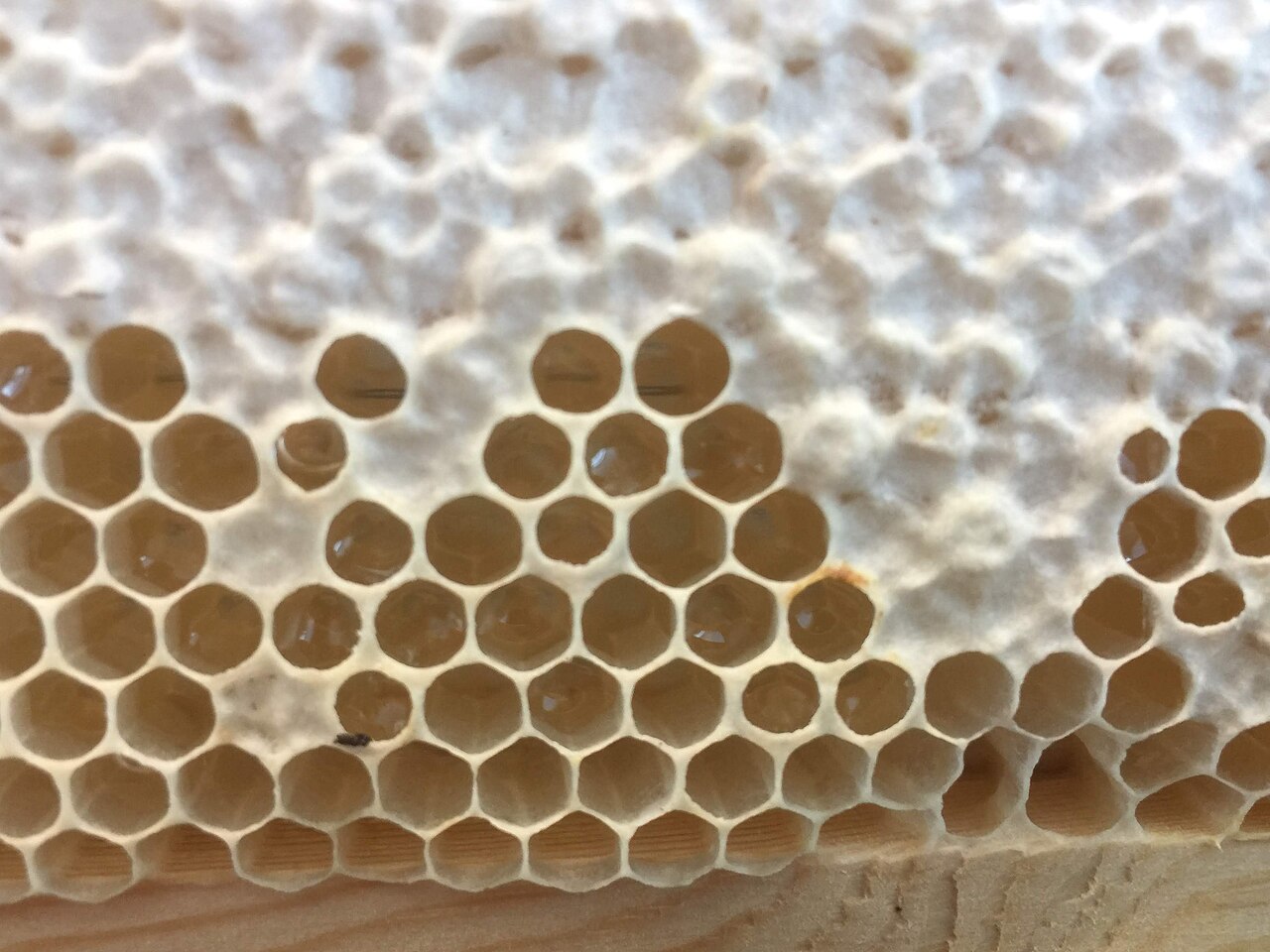
The caps are fresh beeswax, produced by glands on the underside of the bees abdomens. A sealed cell signals that the honey inside has reached the right moisture level and enzyme activity to stay stable for months or even years.
Uncapped honey from the first day or two of ripening differs clearly from the finished product. It holds more water, a different sugar balance, and lower enzyme activity. Capping is the colony stamp of approval.
Why honey almost never spoils
Honey keeps because of three factors working together. The water content sits near 17 to 18 percent, so microbes lack the free water they need to grow. The pH sits near 3.9, an acid level that discourages many bacteria.
Hydrogen peroxide from glucose oxidase adds a third layer of protection.
Archaeologists have found edible honey in ancient Egyptian tombs, a story often repeated because it shows how far these defenses go. The honey survived because its chemistry stayed hostile to microbes across thousands of years.
Why different honeys taste different
Each plant species produces nectar with its own mix of sugars, minerals, and aromatic compounds, and those differences carry into the finished honey. Clover honey is light amber with a mild, slightly floral flavor. Buckwheat honey is dark brown and intensely malty.
Darker honeys generally hold higher concentrations of minerals and antioxidants than lighter ones. When bees forage mostly from one flower species, the result is monofloral honey, with a flavor clear enough that practiced tasters can often name the source plant. Mixed foraging gives wildflower honey, which changes from batch to batch and season to season.
How much work goes into one jar
The scale of the effort is hard to grasp until the numbers land. A single forager bee produces about one-twelfth of a teaspoon of honey in her entire lifetime, which lasts roughly six weeks during foraging season, according to ScienceInsights. Britannica gives the same figure: about 1/12 of a teaspoon per bee.
To make one pound of honey, bees collectively fly about 55,000 miles and visit around two million flowers. A healthy colony might produce 60 to 100 pounds of honey per year, but it consumes most of that to feed itself through winter. Beekeepers harvest the surplus.
The United States Food and Drug Administration defines honey simply as a thick, sweet, syrupy substance that bees make as food from the nectar of plants, or from secretions of living parts of plants, and store in honeycombs. Some honeys, called honeydew honeys, come not from flower nectar but from sugary secretions that insects like aphids leave on plant surfaces. Bees process those the same way.
Frequently asked questions
Is honey bee vomit?
Not in the usual sense. Bees regurgitate nectar from the honey stomach, which is a storage organ separate from the digestive stomach. The nectar never enters the gut for digestion.
The word vomit misleads more than it explains, since the process is controlled storage and transfer, not illness.
How long does it take bees to make honey?
The full run takes roughly one to two weeks from collection to capping. Enzyme work starts during the flight home and continues through mouth-to-mouth transfers. Water removal takes days of fanning.
In one tracked study, capping began on day five and finished by day fourteen.
Why do bees cap honey with wax?
Capping seals the cell at the right moisture level and keeps humid hive air from rewetting the honey. A capped cell holds stable honey for months or years. An uncapped cell is still drying, and its honey may ferment if harvested too early.
The bottom line
Bees make honey in five linked steps: foragers collect nectar in the honey stomach, enzymes split its sugars, house bees pass it mouth to mouth, wing fanning drops the water below 18 percent, and wax caps seal the finished cells. Chemistry, teamwork, and patience do the rest.
The next time you see a jar, remember the arithmetic behind it. Two million flower visits, 55,000 miles of flight, and one-twelfth of a teaspoon per bee. That is a lot of work for something that spreads so easily on toast.
For another look at how living things shape the world around them, see our piece on why all life depends on photosynthesis.
Tags: honey bees, honey, insects, biology
Latest in Science
- Why All Life Depends on Photosynthesis
- Why Some Animals Glow in the Dark
- How Clouds Stay Up in the Sky When They Are Made of Water
- What Causes Thunder and Why You See Lightning First
Subscribe for one clear science explainer each week, straight to your inbox.
Related stories

Why diamond is hard and graphite is soft when both are carbon
Diamond and graphite are both pure carbon, yet diamond is 10 on the Mohs scale and graphite is 1 to 2. The difference is not the atoms;

Why Hot Water Can Freeze Faster Than Cold: The Mpemba Effect Explained
Hot water can freeze faster than cold under specific conditions. The Mpemba effect, named for a 1963 schoolboy experiment, still divides

How Magnets Work at the Atomic Level: Spins, Domains, and Iron
Magnetism comes from electrons: their spin and orbits make each atom a tiny magnet. In iron, quantum forces align these atomic magnets into