
What Is Photosynthesis and Why All Life Depends on It
Key takeaways
- Photosynthesis converts sunlight, water, and carbon dioxide into glucose and oxygen inside plant cells.
- The process feeds nearly every food web on Earth, directly or indirectly.
- Almost all the oxygen in the air comes from photosynthesis, past and present.
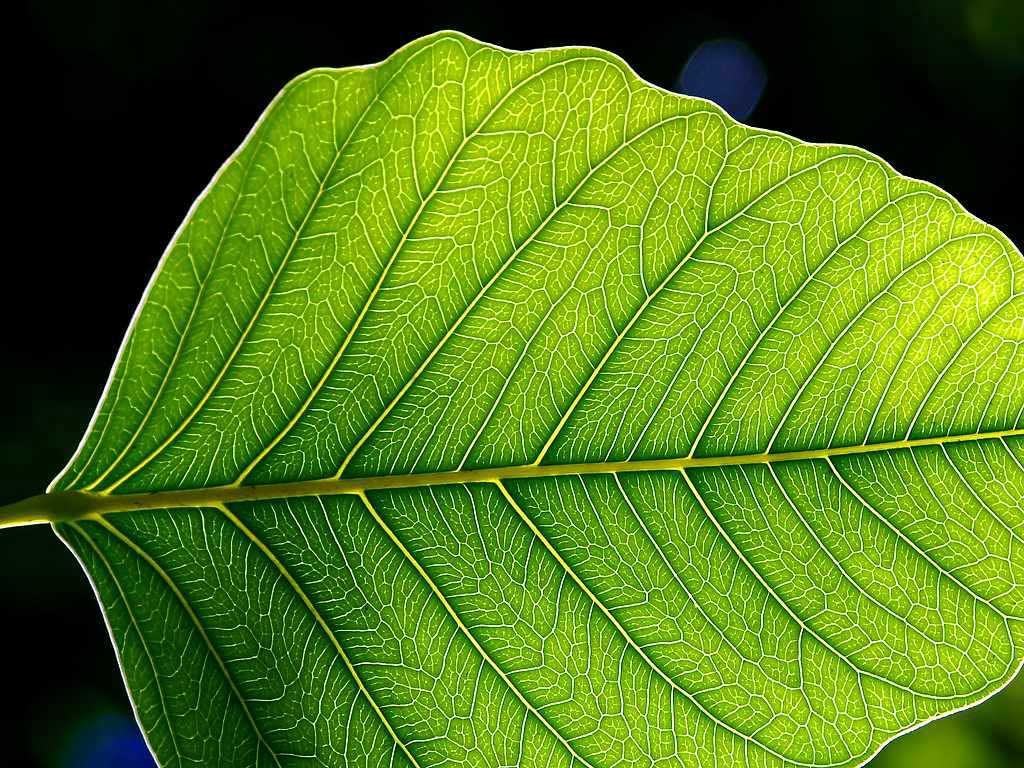
Photosynthesis is the process by which green plants, algae, and some bacteria turn light energy into chemical energy. They use that energy to convert water and carbon dioxide into glucose, a sugar that stores energy, and oxygen, which they release as a byproduct.
This article explains what photosynthesis is, including how the process works inside a cell, why nearly all life depends on it, and what happens when it slows down.
What is photosynthesis?
Photosynthesis is how most of the energy in the living world becomes available to living things. Plants, algae, and photosynthetic bacteria are called primary producers because they make their own food from sunlight, water, and carbon dioxide.
Britannica defines photosynthesis as the process by which green plants and certain other organisms transform light energy into chemical energy. During photosynthesis in green plants, light energy is captured and used to convert water, carbon dioxide, and minerals into oxygen and energy-rich organic compounds.
The word itself gives a plain clue. "Photo" means light, and "synthesis" means putting together. A plant puts together sugars using light.
Not every organism photosynthesizes. Animals cannot.
As Britannica notes, no animals are thought to be independently capable of photosynthesis, though the emerald green sea slug can temporarily borrow algae chloroplasts for food production. Every animal, including humans, depends on organisms that can.
How photosynthesis works
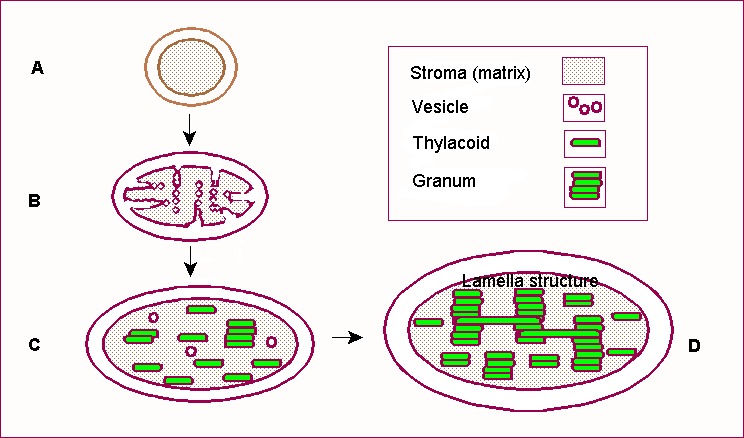
Photosynthesis happens inside chloroplasts, the small green organelles in plant cells. Chloroplasts carry their own DNA and contain chlorophyll, the pigment that absorbs light and gives leaves their green color.
The process runs in two linked stages. In the light reactions, chlorophyll in the thylakoid membranes of the chloroplast absorbs sunlight. That energy splits water molecules, releases oxygen, and produces two energy-carrying compounds, ATP and NADPH.
In the second stage, often called the dark reactions or the Calvin cycle, those energy carriers power a reaction in the stroma, the fluid around the thylakoids. Carbon dioxide is fixed into sugars. The plant ends up with glucose, which it can use for growth or store as starch.
The overall equation is commonly written as 6CO2 + 6H2O turning into C6H12O6 + 6O2, with light energy captured by chlorophyll driving the change. Six molecules of carbon dioxide and six of water become one sugar molecule and six molecules of oxygen.
Light, water, temperature, and carbon dioxide all affect the rate. The California Academy of Sciences points out that sunlight limits how much carbon dioxide plants can take in, and that deserts show low productivity despite abundant sun because water is scarce. In the ocean, nutrients such as nitrogen limit phytoplankton growth, which limits photosynthesis there too.
Why nearly all life depends on it
Photosynthesis sits at the base of almost every food web. Herbivores eat plants.
Carnivores eat herbivores. Even a deep-sea fish or a desert fox traces its energy back to a plant, an alga, or a photosynthetic bacterium that captured sunlight.
Britannica puts it plainly: as primary producers, photosynthetic organisms form the base of Earth's food webs and are consumed directly or indirectly by all higher life-forms. If photosynthesis stopped, there would soon be little food or other organic matter on Earth, and most organisms would disappear.
Oxygen is the second gift. Almost all the oxygen in the atmosphere comes from photosynthesis. Sciencing reports that oxygen now makes up approximately 21 percent of the atmosphere, and that the balance between photosynthesis and respiration keeps it near that level.
That oxygen was not always there. The early Earth had an atmosphere of water vapor, carbon dioxide, and ammonia, according to Sciencing. It was only after cyanobacteria, a form of photosynthetic bacteria, evolved that oxygen began to build up.
Britannica describes the Great Oxidation Event, which began about 2.4 billion years ago and was largely driven by photosynthetic cyanobacteria. Over a span of 600 million years, it raised atmospheric oxygen to nearly 1 percent of present levels, paving the way for most forms of multicellular life.
Photosynthesis also shapes the climate. It pulls carbon dioxide out of the air and stores the carbon in sugars, wood, soils, and ocean life. Sciencing notes that carbon dioxide is one of the most important greenhouse gases, and that photosynthetic organisms help keep its levels relatively steady.
There is a twist in that story. Britannica explains that energy from photosynthesis carried out by plants millions of years ago is responsible for the fossil fuels that power industrial society.
Coal, oil, and natural gas formed from ancient plant and plankton remains. Burning them returns that stored carbon to the air far faster than photosynthesis removed it.
What happens when photosynthesis slows
When photosynthesis slows, the effects show up in several places at once. Less carbon dioxide is pulled from the air.
Less oxygen is released. Less sugar is made, which means less growth for plants and less food for everything that eats them.
Seasonal swings show the scale. The California Academy of Sciences notes that net primary productivity, the carbon plants absorb minus what they release through respiration, rises in each hemisphere during its summer, when days are longer and sunlight is more direct.
Drought is one brake. When water runs short, plants close the tiny pores in their leaves called stomata to save water.
Closed pores also block carbon dioxide from entering, which slows sugar production. That is one reason dry years cut crop yields even when sunlight is plentiful.
Heat can brake it too. Very high temperatures damage the enzymes that run the dark reactions.
Cold slows them. Both ends of the thermometer narrow the window in which photosynthesis runs at full speed.
Human activity adds a third pressure. Clearing forests removes photosynthetic capacity.
Burning fossil fuels adds carbon dioxide faster than the remaining plants can absorb it. The result is a rising concentration of carbon dioxide in the atmosphere, which Sciencing links to a warming climate.
None of this means plants alone can fix the imbalance. Photosynthesis is powerful at planetary scale, but the rate at which humans release stored carbon dwarfs the rate at which living plants can take it back up.
Questions people ask about photosynthesis
Do plants breathe out oxygen at night too?
Plants respire around the clock, taking in oxygen and releasing carbon dioxide, just as animals do. During the day, photosynthesis outpaces respiration, so the net flow is oxygen out and carbon dioxide in. At night, with no light, only respiration runs, so the net flow reverses.
Why are leaves green?
Leaves look green because chlorophyll absorbs red and blue light for photosynthesis and reflects green light. That reflected green light is what reaches your eyes. Some leaves carry extra pigments that mask the green, which is why autumn leaves turn yellow, orange, or red as chlorophyll breaks down.
Can photosynthesis happen without sunlight?
No. Light provides the energy that drives the whole process.
Artificial light can substitute for sunlight, which is how grow lights work, but some energy input is always required. Without light, a plant can only respire, and it will slowly use up its stored sugars.
Which organisms photosynthesize besides plants?
Algae are the other dominant group, from giant kelp to microscopic diatoms, according to Britannica. Cyanobacteria and certain sulfur bacteria are photosynthetic prokaryotes, and photosynthesis evolved in them first. Ocean phytoplankton, which are mostly algae and cyanobacteria, carry out a large share of global photosynthesis.
How does photosynthesis relate to the food web?
Every food web starts with a producer that captures energy from an outside source. For almost all webs, that source is sunlight captured through photosynthesis.
The energy then passes from plants to herbivores, to predators, and to decomposers. Without the first step, the rest of the chain has nothing to run on.
This is also why a pond, a meadow, and a forest all depend on the same chemistry. The organisms differ, but the energy entry point is the same. To see how other living things fit into these webs, read about how bees make honey step by step and why some animals glow in the dark.
The bottom line
Photosynthesis turns sunlight, water, and carbon dioxide into sugar and oxygen. That single process feeds nearly every food web, keeps oxygen near 21 percent of the atmosphere, and has shaped Earth's climate for billions of years.
A leaf looks simple. It is running the chemistry that makes most life on Earth possible.
Tags: photosynthesis, plants, biology, oxygen
Latest in Science
- What causes thunder and why do you see lightning first?
- How bees make honey, step by step
- Why some animals glow in the dark
- Why clouds stay up in the sky when they are made of water
Subscribe for one clear science explainer in your inbox each week.
Related stories

Why diamond is hard and graphite is soft when both are carbon
Diamond and graphite are both pure carbon, yet diamond is 10 on the Mohs scale and graphite is 1 to 2. The difference is not the atoms;

Why Hot Water Can Freeze Faster Than Cold: The Mpemba Effect Explained
Hot water can freeze faster than cold under specific conditions. The Mpemba effect, named for a 1963 schoolboy experiment, still divides

How Magnets Work at the Atomic Level: Spins, Domains, and Iron
Magnetism comes from electrons: their spin and orbits make each atom a tiny magnet. In iron, quantum forces align these atomic magnets into