
Why Do We Have Fingerprints and What Are They For?
Key takeaways
- Fingerprints are raised ridges of skin that tune touch, manage moisture, and help grip.
- Research shows ridges shape skin vibrations so nerve endings can read fine textures.
- Every person has a unique pattern, including identical twins, and prints last a lifetime.
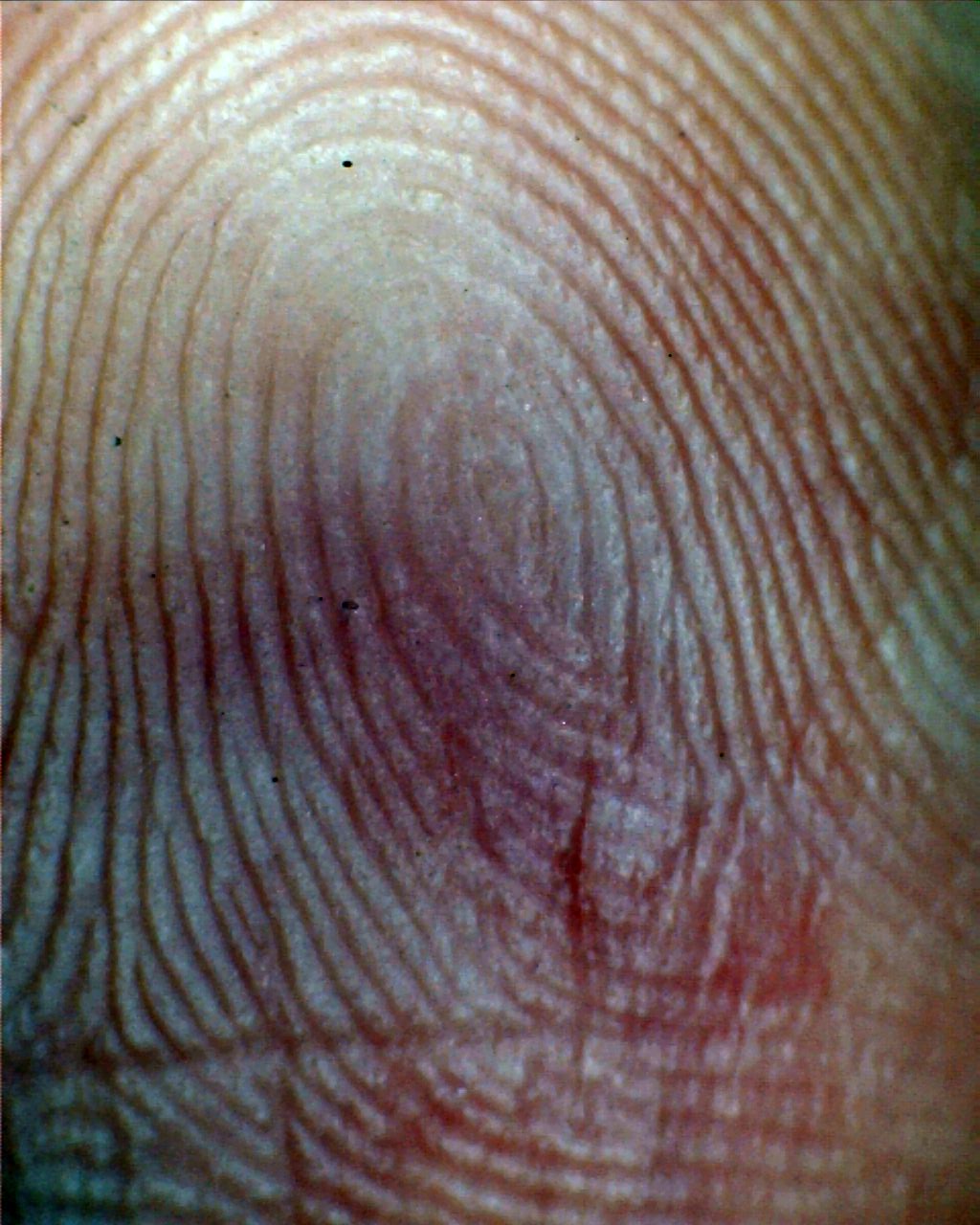
Run a fingertip across a table and you feel the grain of the wood. Press the same finger to a phone screen and it unlocks. Both tricks rely on the same feature: the tiny ridges that cover your fingertips.
Those ridges are your fingerprints, and they do more than identify you.
Fingerprints are raised patterns of skin called friction ridges. They sit on the fingertips, palms, and soles, and they stay the same from before birth until death. They are not decoration.
Research points to three jobs: sharpening the sense of touch, regulating moisture for grip, and helping the hand hold objects.
This article explains what fingerprints are, how they form, what the research says they do, why no two people share the same pattern, and where scientists still disagree.
What fingerprints actually are
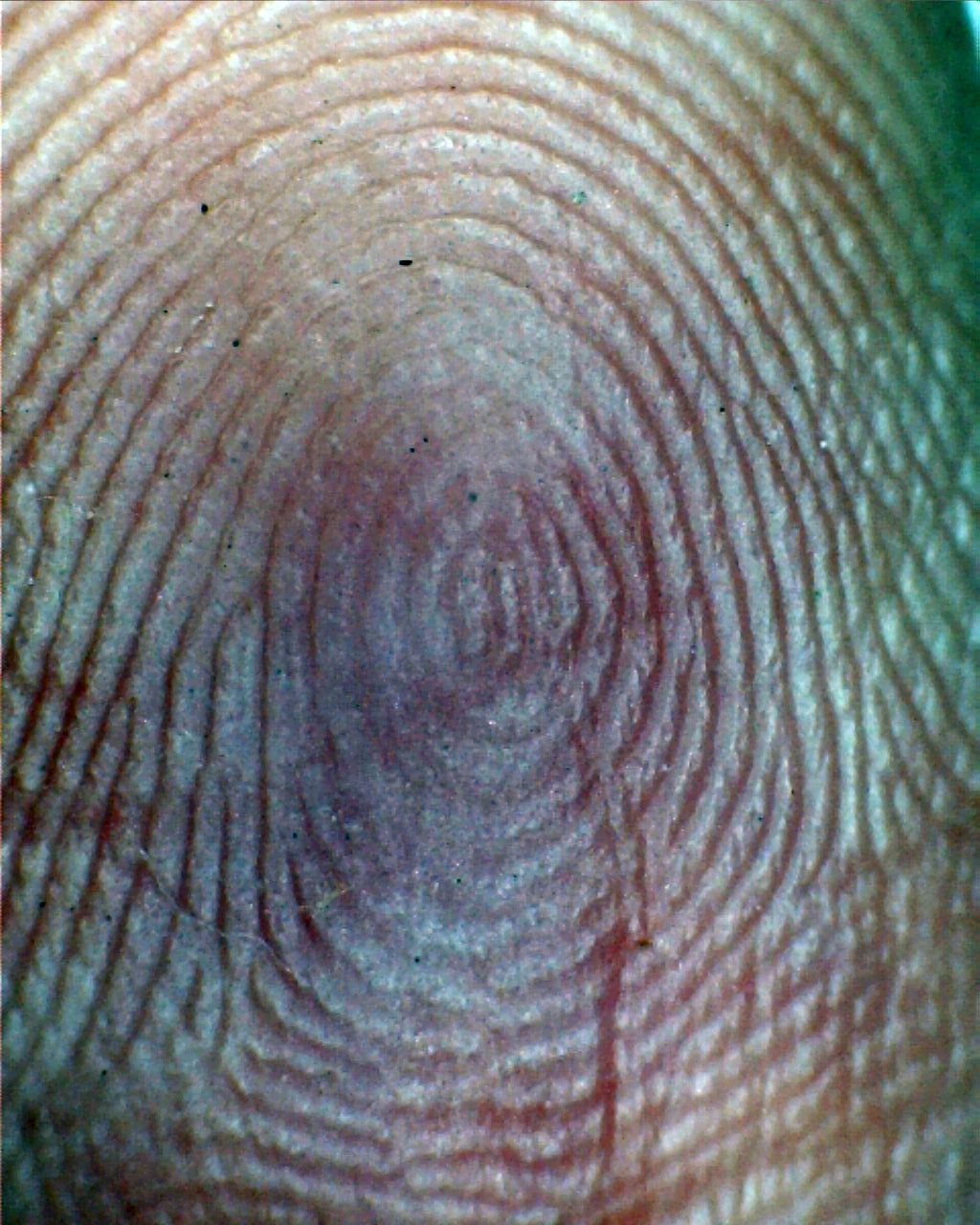
A fingerprint is a pattern of raised ridges and shallow valleys in the outer skin. Under the surface, the deeper skin layer folds into matching shapes, which is why the pattern survives scrapes and regrows in the same layout. The skin on the palms and soles is different from skin elsewhere.
It has no hair, it is much thicker, and it carries a high density of sweat glands.
The ridges form early. According to the University of California, Santa Barbara Science Line, fingerprint ridges begin to form about two months after fertilization, as the growing skin layers push and pull against each other. Once set, the pattern is permanent.
A person is born with the same fingerprints they will carry for life, barring deep scarring.
Fingerprints fall into three broad pattern families. Arches are ridges that sweep from one side to the other with a rise in the middle, and they appear in about 5 percent of prints. Loops curve back on themselves and enter and exit on the same side, and they are the most common type at roughly 60 to 70 percent.
Whorls form circles or spirals and account for roughly 25 to 35 percent. The FBI's version of the Henry Classification System splits these families into eight subtypes used for identification.
Why the grip story is only part of the truth
The classic explanation is that ridges work like tire tread. The grooves add friction, so fingers hold objects better. That story is tidy, and it is partly true, but researchers have pushed back on the simple version.
One challenge came from friction tests. Because skin behaves like soft rubber, grip depends on how much skin actually touches the surface. Ridges reduce that contact area, which can slightly lower friction on a smooth, dry surface compared with smooth skin.
That finding does not make fingerprints useless for grip. It means grip is not a simple tread story.
A 2020 study published in the Proceedings of the National Academy of Sciences offered a subtler answer. Researchers at the University of Birmingham, working with partners at Seoul National University and Yonsei University, found that fingerprints run a self-regulating moisture system. Sweat pores in the ridges release moisture that softens the skin and raises friction.
As the ridges press against a surface, the pores gradually close, which stops moisture from building up to the point where grip falls. The grooves also let excess water drain away, so wet fingers keep working.
Co-author Mike Adams of the University of Birmingham described the payoff in plain terms: the ridges keep moisture at the level where friction is highest, so people avoid a sudden slip and keep hold of objects such as a phone. The system works in both directions, clearing surplus water and holding a reserve at the base of the ridges. That moisture control is one reason fingerprints help in wet and dry conditions alike.
How fingerprints sharpen the sense of touch
The strongest modern evidence points to touch itself. When a fingertip slides across a surface, the ridges chop the contact into a rhythm of tiny vibrations. Those vibrations travel to nerve endings below the skin, including Pacinian corpuscles about 2 millimeters beneath the surface.
Those receptors are tuned to a particular range of vibration frequencies.
In a 2009 study published in Science, Julien Scheibert and colleagues tested this idea with a biomimetic sensor shaped like a fingertip. When the sensor surface carried parallel ridges like fingerprints, the vibrations from a textured surface were dominated by one frequency. That frequency was set by the ratio of the scanning speed to the distance between ridges.
For human touch, that frequency falls inside the range where Pacinian receptors are most sensitive.
The result matters for textures finer than 200 micrometers, which is smaller than the width of a human hair. Without ridges, the vibrations from such fine textures would be too weak or too muddled for the receptors to read well. With ridges, the signal gets filtered and amplified into a form the nervous system can use.
In short, fingerprints may act as a tuning system that turns faint surface detail into a readable signal.
This helps explain everyday skills. Reading Braille, judging the weave of cloth, or feeling a single grain of sand all depend on fine texture perception. The ridges do not create the sense of touch, but they shape the raw signal before the nerves pick it up.
Why no two people share the same prints
Fingerprints are unique because they form from a mix of genetics and chance. Genes set the broad layout, such as whether a finger tends toward a loop or a whorl. The fine detail, the exact path of each ridge, the splits, and the endings, forms as skin grows under shifting pressure in the womb.
That process never repeats exactly.
Even identical twins, who share the same DNA, end up with different fingerprints. Their genes match, but the small random pushes and pulls during development differ. The result is two people with similar pattern families but different ridge detail.
Forensic examiners rely on that detail, called minutiae, to tell prints apart.
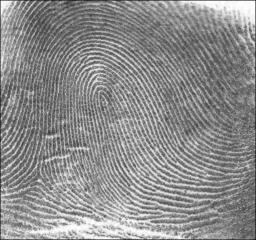
That uniqueness is why fingerprints became an identification tool. Police and border agencies compare ridge detail rather than pattern family alone. A partial print can still match if it carries enough clear minutiae.
Modern databases store and search those details, but the underlying idea is old: the pattern on a finger belongs to one person only.
Why fingerprints last a lifetime
The pattern survives because it is anchored in the deeper skin layer. Surface skin sheds and regrows constantly, but the deeper layer keeps the same folded shape. A shallow cut or burn heals and the ridges return in the same layout.
Only damage deep enough to scar the lower layer changes the pattern, and then the change is a scar, not a new print.
That stability is what makes fingerprints useful across a lifetime. A print taken in childhood still matches the same finger decades later. Age, work, and weather change the skin around the ridges, but the ridge layout itself stays put.
This is one reason fingerprint identification has lasted as a method even as newer biometric tools arrived.
Do other animals have fingerprints?
Humans are not the only animals with ridged fingertips. Other primates, including monkeys and apes, have epidermal ridges on their hands and feet. The 2020 PNAS study notes that this ridge system gave primates an edge in gripping and fine manipulation, abilities that other mammals such as bears and big cats lack in the same form.
The surprise member of the club is the koala. Koalas have fingerprints so similar to human ones that they are hard to tell apart under a microscope. The resemblance is a case of convergent evolution: koalas grasp branches with their hands, and similar pressures shaped similar skin.
Gorillas and chimpanzees have ridges too, but the koala match is the closest of any non-primate.
What scientists still debate
The grip debate is not settled. The moisture-regulation research shows fingerprints help grip through water control, while the friction tests show ridges can reduce contact area on smooth, dry surfaces. Both findings can be true at once, because grip depends on surface, moisture, and pressure together.
The honest summary is that fingerprints help grip mainly by managing moisture and draining water, not by acting as simple tread.
A third question is how much of the touch benefit comes from ridges versus the receptors themselves. The biomimetic sensor work shows ridges shape the signal, but human testing is harder to run. Researchers continue to test how ridge spacing and finger speed change what people can feel, and how aging and skin condition affect the result.
Frequently asked questions
Do fingerprints change as you age?
The ridge pattern does not change. Skin may thin, dry, or wrinkle with age, which can make prints harder to read, but the underlying layout stays the same. Deep scars are the main exception, and they add a mark rather than rewriting the pattern.
Can you lose your fingerprints?
Everyday wear cannot erase them. Heavy manual labor, chemicals, or burns can wear the surface skin thin for a while, but the pattern regrows from the deeper layer. Only deep injury that scars that layer leaves a lasting change.
Are fingerprints really unique?
Yes, in the practical sense used by forensics. No two people have been found with identical ridge detail, including identical twins. Identification depends on matching enough minutiae, not on the broad pattern family alone.
A smudged or partial print may carry too little detail to match with confidence.
Why do phones use fingerprints?
Phones read the ridge pattern because it is stable, unique, and easy to scan. The sensor maps the ridges and compares them with a stored template. It is a convenience feature built on the same uniqueness that makes fingerprints useful for identification, and it shares the limits of any single biometric check.
The bottom line
Fingerprints are not just an ID badge. They are working parts of the hand. They tune vibrations so nerves can read fine textures, they manage moisture so grip stays high in wet and dry conditions, and they give each person a pattern that lasts a lifetime.
The old tire-tread story is too simple, but the real story is better: a small piece of skin that shapes what we feel and how we hold the world. For more on how the body reads the world, see how lie detector tests work and why courts stay skeptical, why time feels slower during emergencies, and what dark matter is, explained without jargon. Seismology offers another window on hidden signals in how seismographs detect earthquakes from far away.
Tags: fingerprints, human body, biology, touch
Latest in Science
- How do lie detector tests work and why are courts skeptical
- Why does time feel slower during emergencies
- What is dark matter explained without jargon
- How do seismographs detect earthquakes from far away
Subscribe to the Rive News newsletter for one clear science explainer each week.
Related stories

Why diamond is hard and graphite is soft when both are carbon
Diamond and graphite are both pure carbon, yet diamond is 10 on the Mohs scale and graphite is 1 to 2. The difference is not the atoms;

Why Hot Water Can Freeze Faster Than Cold: The Mpemba Effect Explained
Hot water can freeze faster than cold under specific conditions. The Mpemba effect, named for a 1963 schoolboy experiment, still divides

How Magnets Work at the Atomic Level: Spins, Domains, and Iron
Magnetism comes from electrons: their spin and orbits make each atom a tiny magnet. In iron, quantum forces align these atomic magnets into