
How Do Lie Detector Tests Work and Why Are Courts Skeptical?
Key takeaways
- A polygraph measures heart rate, breathing, blood pressure, and sweat. It never measures a lie directly.
- Courts exclude polygraph results because no unique physical signal of lying exists and accuracy is well below certainty.
- The best-supported method, the Guilty Knowledge Test, still performs well above chance but far below perfection.
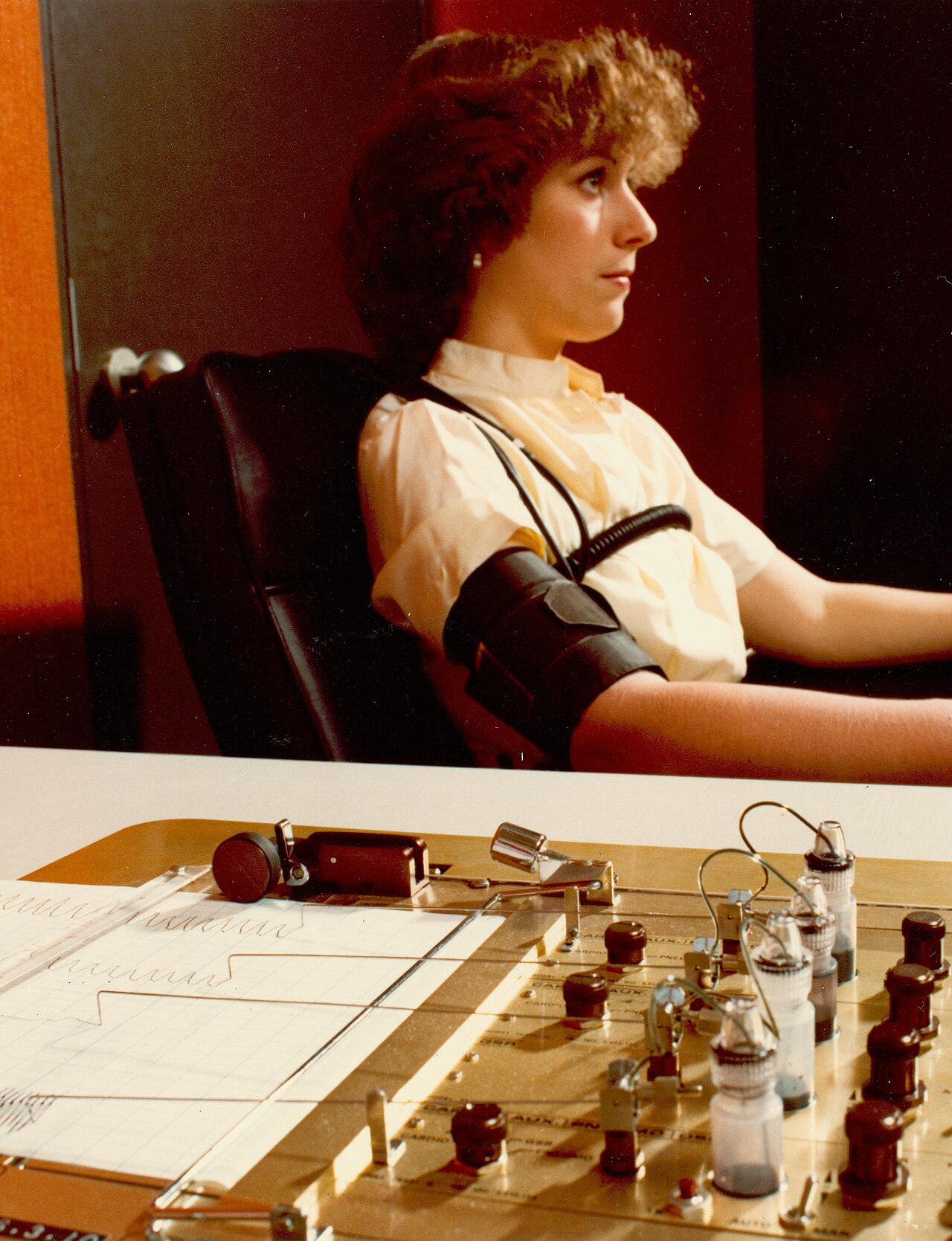
A "lie detector" sounds like a machine that reads the truth. It is nothing of the kind. The device most people mean is the polygraph, and it records the body, not the truth.
It tracks a handful of physical signals while an examiner asks questions, and the examiner then interprets the wiggles on the chart.
That gap between what the machine measures and what people think it proves is why courts stay skeptical. Judges have been asked to admit polygraph evidence for a century, and the answer has mostly been no. The reasons are scientific, not just legal: there is no known physical reaction that belongs only to lying, and accuracy depends heavily on the examiner, the method, and the person being tested.
This article explains what a polygraph records, how the two main test methods work, what the research says about accuracy, and why courts keep polygraph results out of most trials.
What a polygraph actually measures
The name gives it away. "Poly" means many, and "graph" means to write. A polygraph writes down several physiological responses at once.
Most modern instruments record perspiration, heart rate, breathing rate, and blood pressure. Sensors on the chest track breathing. A cuff on the arm tracks blood pressure.
Electrodes on the fingers track sweat gland activity, known as galvanic skin response.
None of those signals is a lie. All of them move with stress, fear, excitement, anger, pain, and effort. A truthful person who is nervous about the test can show a strong response.
A calm liar can show a weak one. The machine cannot tell the difference between "this person is lying" and "this person is anxious." That distinction belongs entirely to interpretation.
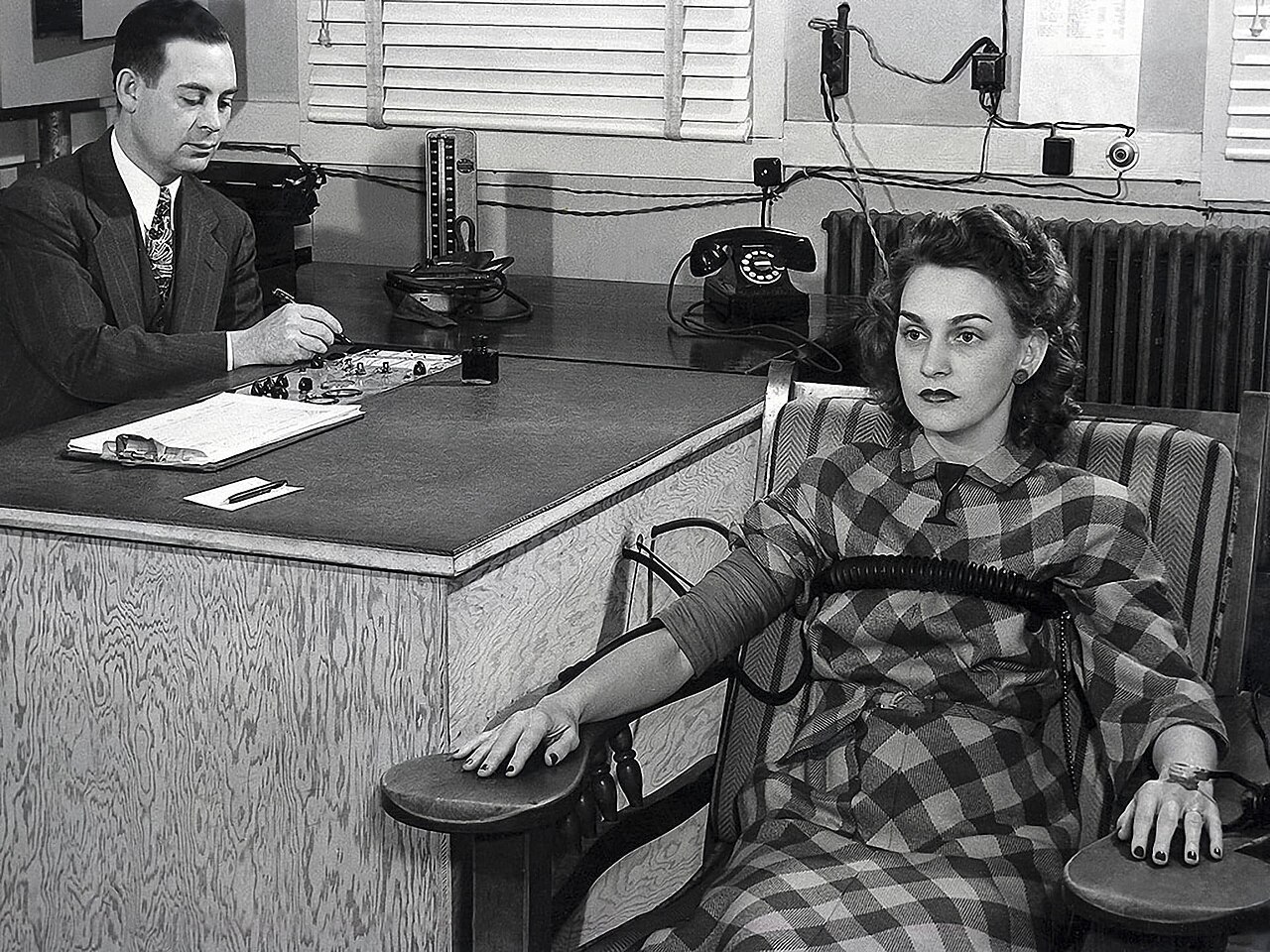
The examiner runs the session, not the machine.
That subjectivity is one of the first things courts notice.
A short history of the machine
People have tried to catch lies with the body for centuries. Early methods were cruel, including trial by water and trial by hot iron. The modern polygraph grew out of a more humane idea: that lying might raise blood pressure and breathing in a measurable way.
In the early 20th century, William Moulton Marston studied the link between systolic blood pressure and deception. Marston, who later created the comic book character Wonder Woman, argued that lying raised blood pressure.
The Berkeley Police Department used it to assess witnesses.
In 1939, Larson's protege Leonarde Keeler made the device compact enough to travel and added a component to measure galvanic skin response, the sweat signal. The FBI bought Keeler's version, the ancestor of the modern polygraph.
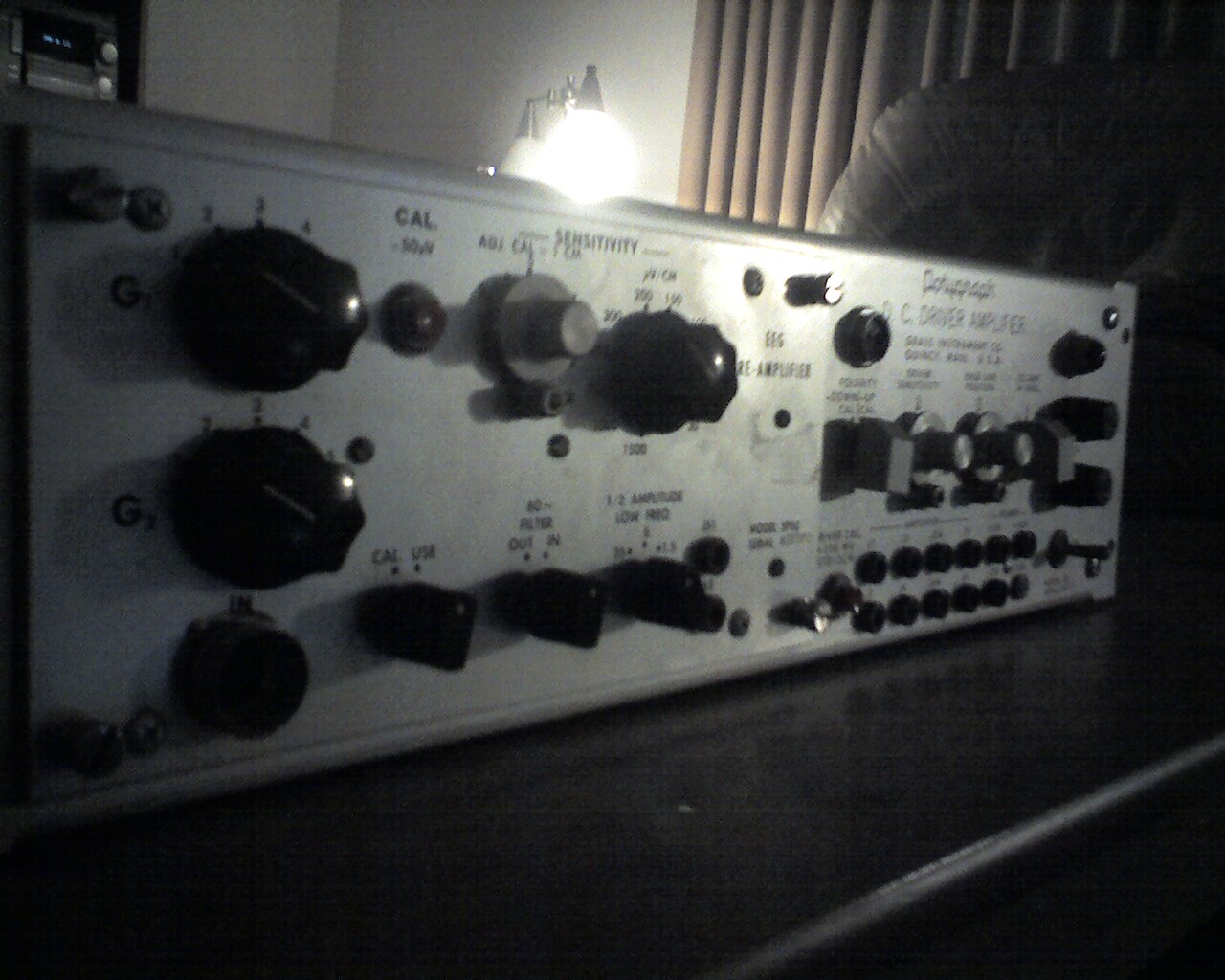
Later versions changed the sensors and the charting, but the core idea stayed the same: watch the body while asking questions.
The legal trouble started almost at once. In 1923, a court was asked to admit Marston's blood pressure test in a murder case. The DC Circuit refused.
That ruling in the Frye case set the standard that scientific evidence had to gain general acceptance in its field before a court would admit it.
Polygraph evidence failed that test, and courts kept refusing it for decades.
The two main test methods
The Control Question Technique
The most common method is the Control Question Technique, usually shortened to CQT. The examiner asks three kinds of questions: irrelevant questions, control questions, and relevant questions.
Control questions are broad and mildly uncomfortable, such as asking whether the subject has ever lied to a friend. Relevant questions are the ones that matter, such as asking whether the subject committed the act under investigation.
The logic runs like this. A truthful person is expected to react more to the control questions, because those questions feel threatening in a vague way. A deceptive person is expected to react more to the relevant questions, because those questions carry the real risk.
The examiner compares the size of the responses and decides which set drew the stronger reaction.
The weakness is the assumption underneath. The method assumes that deception creates extra stress, and that extra stress shows up as a bigger physical response. Stress has many sources, and the comparison depends on how the examiner phrases each question.
Critics argue that the control questions are not a real baseline at all, because they are designed to unsettle the subject on purpose.
The Guilty Knowledge Test
The second method is the Guilty Knowledge Test, or GKT. Despite the name, it tests knowledge, not guilt. The examiner asks about details of an event that only someone with firsthand knowledge would know.
That could be the number of times a victim was stabbed, the color of a getaway car, or the weapon used. The subject is shown several options, one correct and several wrong.
The logic is different from the CQT. A person with no knowledge of the event should react about the same to every option. A person who knows the event should react more to the correct detail, because recognition itself triggers a response.
The method does not ask "did you do it." It asks "do you know this."
The GKT has a narrower reach. It only works when investigators hold back details that have not been made public. If the details leak, an innocent person can recognize them too.
What the research says about accuracy
The most cited review came from the National Research Council. The panel found that in populations untrained in countermeasures, specific-incident polygraph tests using the GKT method can discriminate lying from truth telling at rates well above chance, though well below perfection.
The same review warned against using polygraphs for employment screening. Screening asks broad questions about many possible acts, which is the weakest use of the method. Specific-incident tests, which focus on one known event, perform better.
A focused question such as "was the robbery committed with a gun" gives the examiner a cleaner comparison than a sweep of a person's whole history.
The American Psychological Association has summarized the field in similar terms. Most psychologists agree there is little evidence that polygraph tests can accurately detect lies. The core problem is theoretical: there is no unique physiological reaction to deception.
Polygraph researcher Leonard Saxe of Brandeis University has put it plainly, saying that because of the nature of deception there is no good way to validate the test for judgments about criminal behavior. If lying has no signature in the body, then no chart can read it directly.
Error runs in both directions. A false positive labels a truthful person as deceptive, and a false negative clears a deceptive person.
The consequences of a false positive can be severe, from losing a job to being treated as a suspect in a serious crime. The APA fact sheet also notes that error rates, including unknown false-positive rates, remain a central concern.
Countermeasures add another problem. People trained in simple physical or mental tricks, such as tensing muscles during control questions, can shift their own responses. Examiners watch for countermeasures, but no method for detecting them is fully reliable.
Why courts stay skeptical
The legal story starts with Frye v. United States in 1923. The DC Circuit held that the blood pressure deception test had not gained general acceptance in its field.
That "general acceptance" test governed scientific evidence in American courts for about 70 years. Polygraph evidence kept failing it, because the scientific community never reached consensus that the method was valid.
In 1993, the Supreme Court changed the framework in Daubert v. Merrell Dow Pharmaceuticals. Federal courts now judge expert evidence by reliability, peer review, known error rates, standards, and acceptance, rather than by acceptance alone.
The new test did not rescue the polygraph. Courts still found that polygraph evidence lacked a reliable scientific base and a known error rate that judges could trust.
The Supreme Court spoke directly in the Scheffer case in 1998. The majority wrote that there is simply no consensus that polygraph evidence is reliable. The Court drew a contrast with other forensic experts.
A fingerprint or DNA expert testifies about physical facts outside the jury's knowledge. A polygraph expert, the Court said, can supply the jury only with another opinion. In 2005, the 11th Circuit Court of Appeals agreed, holding that polygraphy did not enjoy general acceptance from the scientific community.
That opinion would invite the jury to hand its core job, judging credibility, to a machine and its operator.
Some states allow them in civil cases, and some allow them in criminal cases only when both sides agree in advance. Police may still use the test as an investigative tool, and a suspect's willingness to take one can shape an interrogation, but the chart rarely reaches a jury.
What polygraphs are still used for
Polygraphs have not disappeared. Government agencies use them in security screening and in monitoring some offenders on probation or parole. Investigators use them to pressure suspects, to check stories, and to generate leads.
A subject who believes the machine works may confess, which is a real effect even if the chart itself proves nothing.
Frequently asked questions
Can a polygraph detect lies with certainty?
No. The best-reviewed method performs well above chance but well below perfection, according to the National Research Council. No polygraph result amounts to proof that someone lied or told the truth.
Why are polygraph results inadmissible in most courts?
Courts find that polygraph evidence lacks a reliable scientific foundation and general acceptance.
Judges also worry that a polygraph expert would simply offer an opinion about credibility, which is the jury's job.
A truthful person under stress can fail, which is one reason courts and the APA treat the test with caution.
The bottom line
A polygraph is a stress recorder dressed up as a truth machine. It tracks heart rate, breathing, blood pressure, and sweat while an examiner asks questions, then the examiner interprets the pattern.
Courts stay skeptical for that reason, and the skepticism is well earned. The machine can be a useful investigative nudge. It cannot deliver a verdict.
For other cases where human senses and signals mislead, see why we have fingerprints and what they are for, why time feels slower during emergencies, and what dark matter is, explained without jargon.
Tags: polygraph, lie detector, courts, psychology
Latest in Science
- Why do we have fingerprints and what are they for
- Why does time feel slower during emergencies
- What is dark matter explained without jargon
- How do seismographs detect earthquakes from far away
Subscribe to the Rive News newsletter for one clear science explainer each week.
Related stories

Why diamond is hard and graphite is soft when both are carbon
Diamond and graphite are both pure carbon, yet diamond is 10 on the Mohs scale and graphite is 1 to 2. The difference is not the atoms;

Why Hot Water Can Freeze Faster Than Cold: The Mpemba Effect Explained
Hot water can freeze faster than cold under specific conditions. The Mpemba effect, named for a 1963 schoolboy experiment, still divides

How Magnets Work at the Atomic Level: Spins, Domains, and Iron
Magnetism comes from electrons: their spin and orbits make each atom a tiny magnet. In iron, quantum forces align these atomic magnets into