
Why Does Lava Glow but Solid Rock Does Not?
Key takeaways
- Lava glows because it is hot enough to emit visible light; the color comes from its temperature, not from burning.
- Around 800°C lava looks red, at 1000°C or more it turns orange, and rock cooled below about 525°C stops glowing visibly.
- Solid rock still radiates heat, just in infrared your eyes cannot see but your skin can feel.
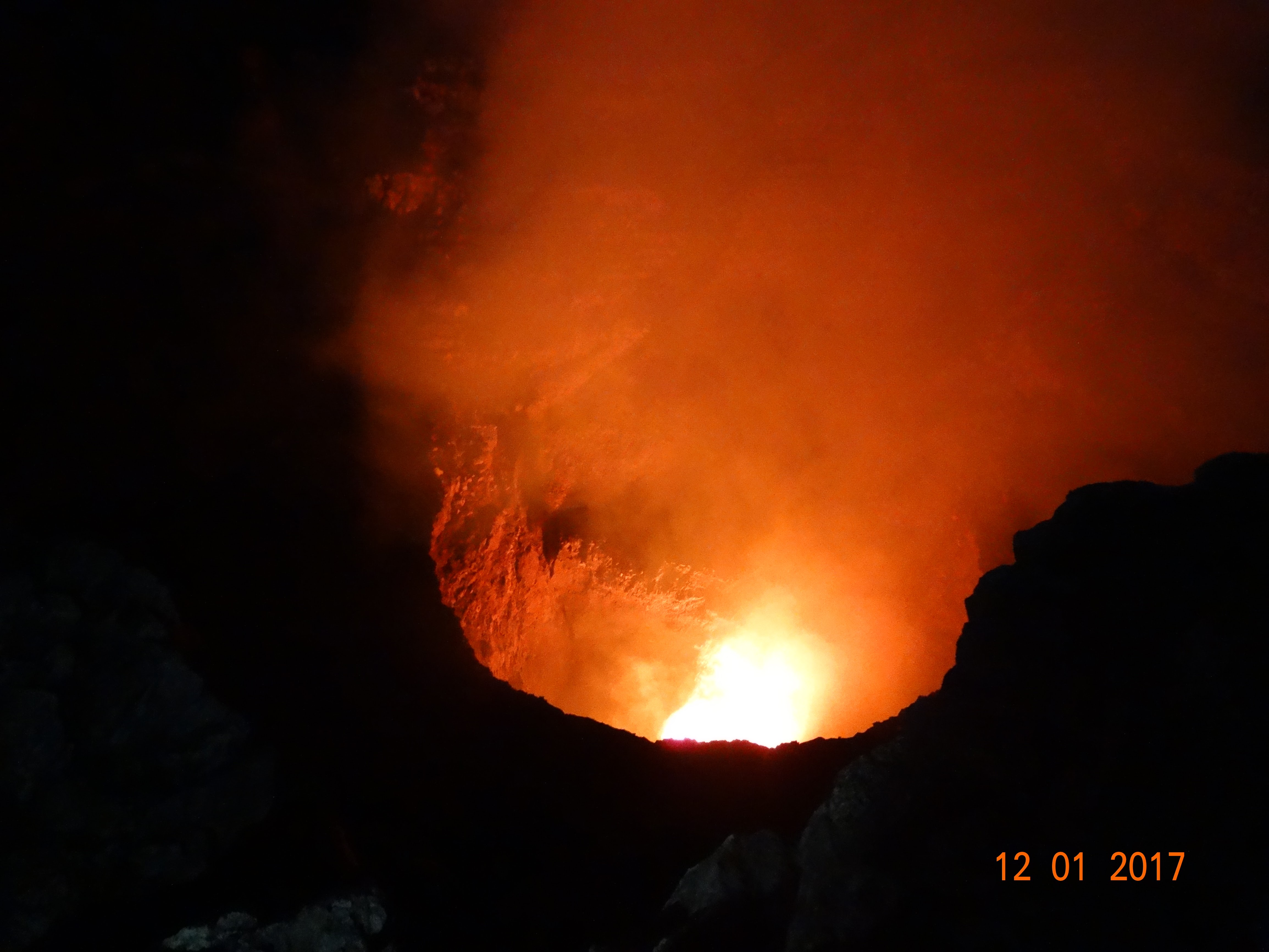
Masaya volcano in Nicaragua, photographed at night. The crater glows orange because the lava is hot enough to emit visible light. Image: Wikimedia Commons
Image Credits: Wikimedia Commons
Lava pours out of a volcano glowing bright orange, while the solidified rock a few meters away looks plain black. Both came from the same eruption.
The difference is not what they are made of. It is how hot they are.
Anything hot enough emits visible light. Lava is hot enough. Solid rock is not, though it is still pumping out invisible heat your skin can feel.
This article explains what glowing actually is, the temperature where the glow begins, why the color shifts from red to orange, why solid rock looks dark, and what the invisible heat is doing.
What glowing actually is
Glowing is thermal radiation. Every object warmer than absolute zero radiates energy, and the spectrum of that radiation depends on temperature. Physicists call this blackbody radiation, and it was described by Planck's law in the early 1900s.
At everyday temperatures, everything radiates in the infrared, which our eyes cannot see. Heat something up enough and the radiation shifts into the visible range. That is when it starts to glow.
The threshold sits around 798 Kelvin, roughly 525°C, according to the physics explainer at TuitionPhysics. Below that, an object is technically glowing, just not in light your eyes can detect.
This is why the rule applies far beyond volcanoes. Turn an electric stove burner to high and it glows red. Heat iron in a furnace and it goes red, then yellow, then white-hot.
The temperature sets the color
Lava's color is a thermometer you can read with your eyes. According to VolcanoCafe, lava at about 800°C appears red. If it looks more orange and much brighter, it is probably 1000°C or more.
The physics behind the color shift is simple. As temperature rises, the peak of the emitted radiation moves toward shorter wavelengths, and the total energy climbs steeply. Hotter means brighter, and bluer.
This is the same reason the bright yellow body of a candle flame glows: tiny soot particles heated until they emit visible light. Different fuel, same physics.
An NRAO lecture on thermal radiation states the rule in one line: the hotter something is, the brighter it glows, and the bluer the color of the light it emits.
Why solid rock looks dark
The black crust on a lava flow is not cold. VolcanoCafe notes that the solid crust is around 500°C or less, which produces little light our eyes can see.
Two things hide the glow. First, 500°C sits below the visible threshold, so the crust radiates almost entirely in the infrared. Second, the brilliant liquid lava nearby drowns out any faint visible light the crust might emit.
Your skin tells the real story. Stand a few meters from that shiny black crust and the radiant heat feels burning hot, because nearly all the energy leaves as infrared. If you had infrared eyes, the whole flow would blaze like daylight.
About two-thirds of a lava flow's heat escapes after the lava solidifies, according to VolcanoCafe. The glow fades fast, but the heat lingers for a long time.
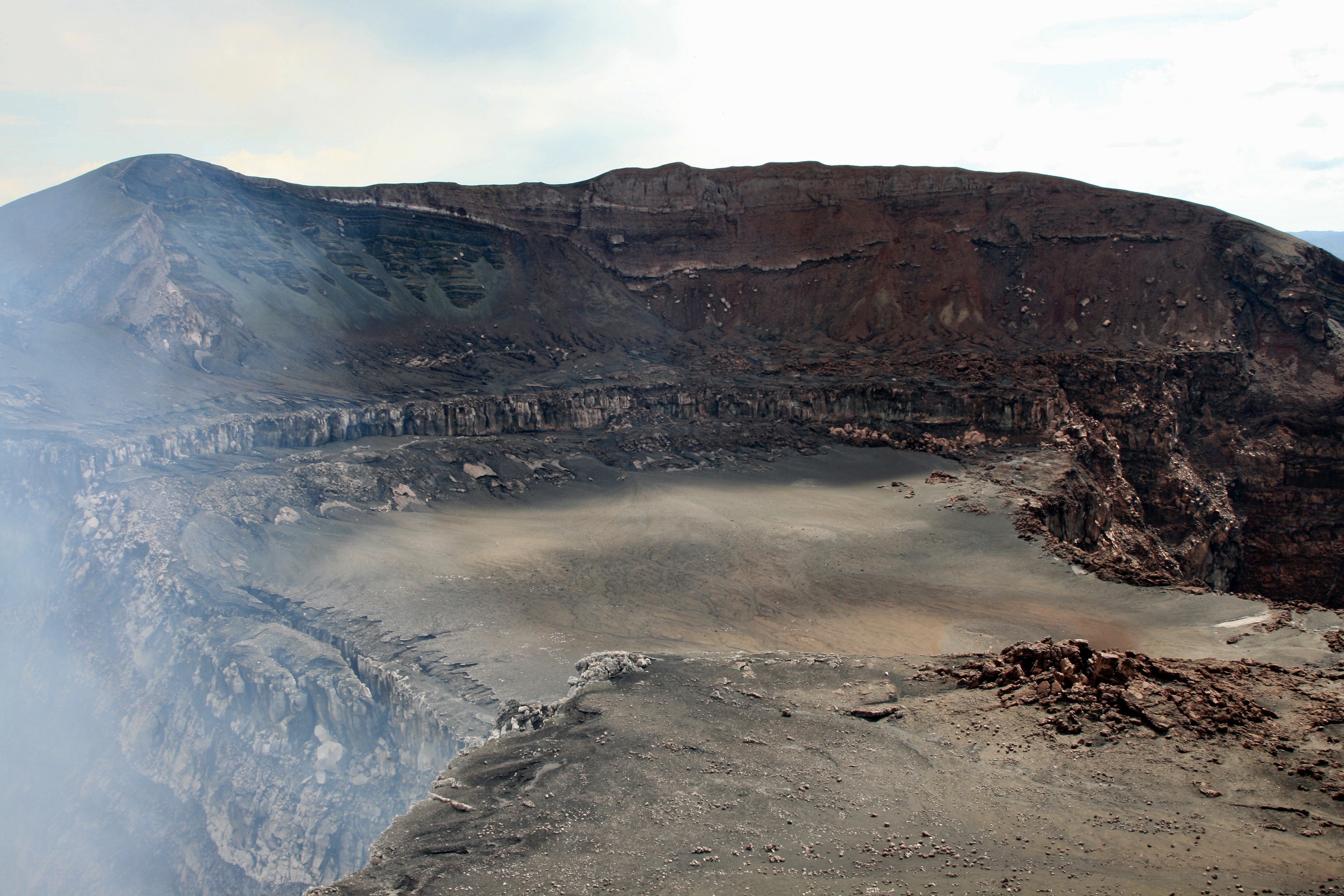
The same volcano in daylight: dark, solidified rock with no visible glow. It is still hundreds of degrees, radiating heat as infrared your eyes cannot see. Image: Wikimedia Commons
The invisible heat is doing real work
Infrared cameras reveal what our eyes miss. Thermal cameras that see short-wave infrared, around 2.1 microns, pick up hot lava clearly even through smoke and daylight.
That invisible radiation also explains a common illusion. Lava that looks dull black in daylight can still be hundreds of degrees. The glow is gone, but the danger is not.
Solidification happens around 750°C, per VolcanoCafe. Below that the rock is solid, still cooling, and still radiating most of its remaining heat as infrared.
Scientists actually use the glow to measure lava temperature from a safe distance. Because a hot body constantly emits photons according to its temperature, as the University of Illinois Physics Van explains, capturing those photons in a photograph costs the lava nothing. The color in the image then reveals the temperature: red means cooler, orange means hotter.
This trick works on anything hot, from furnace steel to distant stars. Astronomers use the same blackbody logic to read the temperature of stars they will never touch.
Frequently asked questions
Is lava glowing because it is on fire?
No. The glow is thermal radiation from the heat itself, not combustion. Lava glows the way a stove element glows: hot atoms emitting light because of their temperature.
Why does lava look black during the day but glow at night?
Daylight washes out the glow, the same way stars vanish at noon. At night, with no competing light, even the dimmer red glow of cooling lava stands out clearly.
How hot is lava when it erupts?
Fresh lava typically reaches the surface at 700 to 1200°C depending on its composition. Basaltic lava, the runny kind, sits at the hotter end of that range.
Can solid rock ever glow again?
Yes, if you reheat it. Heat any rock past about 525°C and it will start glowing red, the same threshold that applies to lava, iron, or a stove burner.
The bottom line
Lava glows because it is hot enough to push its thermal radiation into visible light. Solid rock from the same eruption has cooled below that threshold, so it radiates only invisible infrared, even though it is still dangerously hot.
The color is a temperature gauge: red means around 800°C, bright orange means 1000°C or more. Everything else is the same physics that makes a stove burner or a candle flame glow.
Next time you see a photo of a lava flow, look at the black crust between the glowing cracks. That darkness is an illusion of your eyes, not a measure of the heat.
---
Author bio: Rive News is the research desk behind this site's science explainers. We read the physics lectures so the glow makes sense.
Latest in Science
- Why Does a Spinning Top Stay Upright While It Spins?
- Why Do Shadows Get Blurry Edges?
- Why Do Candles Flicker Even Indoors With No Wind?
- Why Do You Feel Your Stomach Drop on a Roller Coaster?
Subscribe: Get one plain-English science explainer in your inbox every morning. No jargon, no spam.
Corrections: Found an error? We fix verified mistakes within 24 hours. Contact the research desk with the article title and the correct source.
© 2026 Rive News. All rights reserved.
Related stories
Why diamond is hard and graphite is soft when both are carbon
Diamond and graphite are both pure carbon, yet diamond is 10 on the Mohs scale and graphite is 1 to 2. The difference is not the atoms;
Why Hot Water Can Freeze Faster Than Cold: The Mpemba Effect Explained
Hot water can freeze faster than cold under specific conditions. The Mpemba effect, named for a 1963 schoolboy experiment, still divides
How Magnets Work at the Atomic Level: Spins, Domains, and Iron
Magnetism comes from electrons: their spin and orbits make each atom a tiny magnet. In iron, quantum forces align these atomic magnets into