
What makes one sound louder than another sound source
By Rive News / Research desk | Rive News / Published October 28, 2026 at 9:00 AM PKT
Key takeaways
- Amplitude is the main control: bigger pressure swings in a sound wave mean a louder sound.
- Sound intensity grows with the square of amplitude, so doubling amplitude quadruples the energy.
- Decibels compress that energy onto a logarithmic scale, where 10 decibels means ten times the intensity.
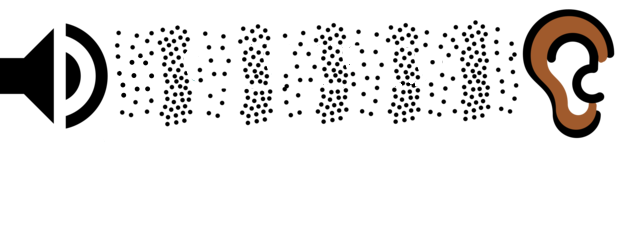
[Compressions and rarefactions travelling along a sound wave.] Photograph: a sound wave diagram
Image Credits: Wikimedia Commons
A whisper and a shout are the same kind of thing, and that is the key to the whole question. Both are waves of pressure travelling through air, made by something vibrating. The shout is louder not because it is a different kind of wave, but because its wave swings further.
This article explains what amplitude is, how it turns into energy, why decibels use a logarithmic scale, why distance and frequency change what you hear, and where loud becomes dangerous.
Amplitude is the main control
Sound starts with vibration. A guitar string, a vocal cord, or a loudspeaker cone moves back and forth, and that motion pushes air molecules together and pulls them apart in turn. The result is a travelling pattern of compressions, where air is squeezed, and rarefactions, where it is stretched thin.
Amplitude is the size of that swing: how far the pressure rises above and falls below normal air pressure as the wave passes.
Loudness follows amplitude directly. Testbook's physics summary states the rule plainly: amplitude is the height of a sound wave and directly determines loudness, with greater amplitude producing a louder sound. A whisper has small pressure swings, so your eardrum moves only slightly, and your brain registers a quiet sound.
A shout has large pressure swings, so your eardrum moves much further, and the sound registers as loud. Frequency, which sets pitch, does not change in this comparison. The same note played softly or loudly keeps its pitch, because pitch depends on how often the wave repeats, not on how far it swings.
Energy grows faster than amplitude
The relationship between amplitude and energy is not one to one. OpenStax University Physics explains that sound intensity is proportional to the square of the amplitude, so doubling the amplitude quadruples the intensity. Intensity is the power carried by the wave across each square meter, measured in watts per square meter.
That squared relationship is why a modest increase in swing can produce a surprisingly large increase in energy.
The decibel scale translates that energy into numbers your brain can compare. OpenStax defines the sound intensity level in decibels as 10 times the logarithm of the intensity divided by a reference intensity of 10 to the power of minus 12 watts per square meter, which is roughly the quietest sound a healthy young ear can detect. A doubling of amplitude raises the level by about 6 decibels, according to the same OpenStax chapter.
Two equal sound sources together add only about 3 decibels, because doubling the intensity is a smaller step on a logarithmic scale than most people expect.
The rule of thumb for judging loudness is separate from the physics of intensity. Measuring Expert explains that an increase of 10 decibels means ten times the sound intensity, and most listeners judge it as about twice as loud. That gap between measured energy and perceived loudness matters.
A sound meter and a human ear answer different questions, and both answers are useful in different situations.
Distance thins a sound out
A sound gets quieter as you move away from it, even if the source never changes. The wave spreads over a larger and larger sphere as it travels, so the same total energy is shared across a growing area. Testbook's summary notes that intensity decreases as distance from the source increases.
Step back from a speaker and the pressure swings reaching your ears shrink, which your brain reads as quieter.
Rooms add their own effects on top of distance. Hard walls reflect sound back toward you, so a bare room can sound louder than a carpeted one playing the same speaker at the same setting. Measuring Expert notes that soft surfaces absorb sound instead of reflecting it, so less reflected energy reaches your ears.
That is why the same television can seem loud in a tiled kitchen and quiet in a furnished living room. The source amplitude never changed, but the energy arriving at your ears did.
Your ears are not flat meters
Human hearing is not equally sensitive at all frequencies. Measuring Expert reports that ears are most sensitive from about 2,000 to 5,000 hertz, so sounds in that range can seem louder than very low or very high sounds at the same measured level. This is an evolutionary quirk with a practical payoff, since much of human speech sits near that sensitive band.
It also explains why a high-pitched whine can feel piercing at a level that a low rumble would not.
That uneven sensitivity is why noise measurements often use A-weighting, reported as dBA, which adjusts the reading to match how ears actually respond. Two sounds with the same raw decibel reading can have different dBA readings if their frequencies differ. Duration matters too, since a brief loud bang and a steady loud drone tax the ear differently.
Loudness is therefore a partnership between physics and biology: the wave supplies the energy, and the ear and brain decide how loud it feels.
Where loud becomes dangerous
There is a practical edge to all of this, and it sits lower than many people assume. Measuring Expert cites the US National Institute for Occupational Safety and Health (NIOSH) and the National Institute on Deafness and Other Communication Disorders (NIDCD), which say long or repeated exposure at or above 85 dBA can cause hearing loss. Sounds at or below 70 dBA are unlikely to harm hearing even after long exposure, according to the same summary.
Normal conversation sits around 60 decibels, comfortably below the danger zone.
The danger grows with both level and time. A short burst at a high level and a full workday at a moderate level can both damage hearing, through different routes. That is why hearing protection is rated for the job, not just for the loudest moment, and why volume limits on headphones are set where they are.
If a sound forces you to raise your voice to be heard, or leaves your ears ringing afterward, it was loud enough to deserve respect.
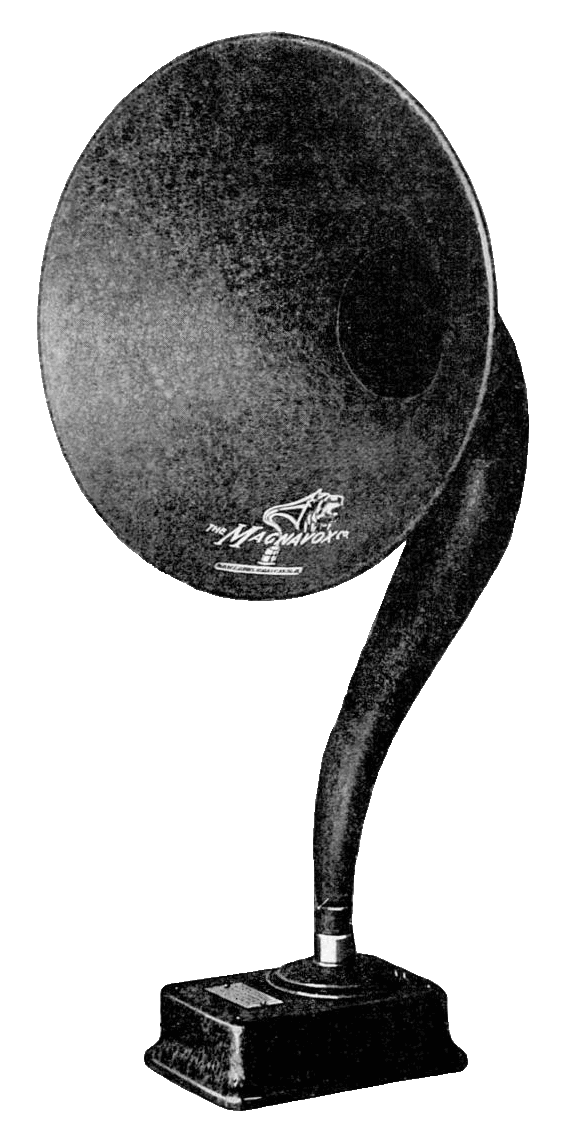
[An early horn loudspeaker with a flared bell.] Photograph: a horn loudspeaker
Image Credits: Wikimedia Commons
Why do two speakers not sound twice as loud?
Two identical speakers playing together double the sound intensity, but decibels are logarithmic, so the level rises by only about 3 decibels. Your ears judge a 10 decibel rise as roughly twice as loud, so two speakers sound a little louder, not twice as loud. To sound about twice as loud, you would need roughly ten times the intensity.
Adding speakers helps coverage and headroom more than it helps raw perceived loudness.
Does a louder sound travel further?
A louder sound can be heard from further away, because it starts with more energy and takes longer to fade below the hearing threshold. Distance still thins it out at the same rate as a quiet sound. Low frequencies also tend to carry further in practice, since they are absorbed less by air and obstacles.
Loudness buys range, but it does not change the spreading rule.
Why does a whisper carry in a quiet library?
A whisper sounds loud in a library because loudness is partly relative to the background. The library's background level is very low, so even small pressure swings stand out clearly against it. The same whisper on a busy street disappears, because the street's background energy swamps it.
Your brain judges a sound against what surrounds it, not in isolation.
Can loudness change without amplitude changing?
Yes, when frequency, distance, or the room changes. Move closer to a speaker and it sounds louder with no change at the source. Play the same level at a frequency your ears are more sensitive to and it can seem louder.
Add soft furnishings and the same speaker sounds quieter. Amplitude at the source is the main control, but it is not the only thing your ears respond to.
The bottom line
One sound is louder than another mainly because its wave swings further, pushing air pressure up and down by a larger amount. That larger amplitude carries energy that grows with the square of the swing, and decibels report that energy on a logarithmic scale where 10 decibels means ten times the intensity. Distance, rooms, and the uneven sensitivity of your own ears then shape what you actually hear.
If you remember one rule, make it this: amplitude starts the story, but your ears finish it.
Tags: sound, physics, decibels, hearing
Rive News's research desk writes plain-language explainers from public sources, with every key claim tied to a named document or institution.
Related
- Why helium makes your voice squeaky
- How noise cancelling headphones actually work
- Why your ears ring when the room goes silent
- Why do we see lightning before we hear thunder
Subscribe for one plain-language science explainer in your inbox each morning.
Rive News publishes explainers from public sources; corrections are welcomed and noted on the article.
Related stories

Why diamond is hard and graphite is soft when both are carbon
Diamond and graphite are both pure carbon, yet diamond is 10 on the Mohs scale and graphite is 1 to 2. The difference is not the atoms;

Why Hot Water Can Freeze Faster Than Cold: The Mpemba Effect Explained
Hot water can freeze faster than cold under specific conditions. The Mpemba effect, named for a 1963 schoolboy experiment, still divides
How Magnets Work at the Atomic Level: Spins, Domains, and Iron
Magnetism comes from electrons: their spin and orbits make each atom a tiny magnet. In iron, quantum forces align these atomic magnets into