
Why Do Plants Grow Toward the Light Every Time?
Key takeaways
- A plant bends toward light through phototropism, and the hormone auxin is the engine behind the bend.
- Blue-light receptors called phototropins detect the direction of light and shift auxin to the shaded side of the stem.
- On the shaded side, auxin makes cells elongate faster, so the stem curves toward the light.
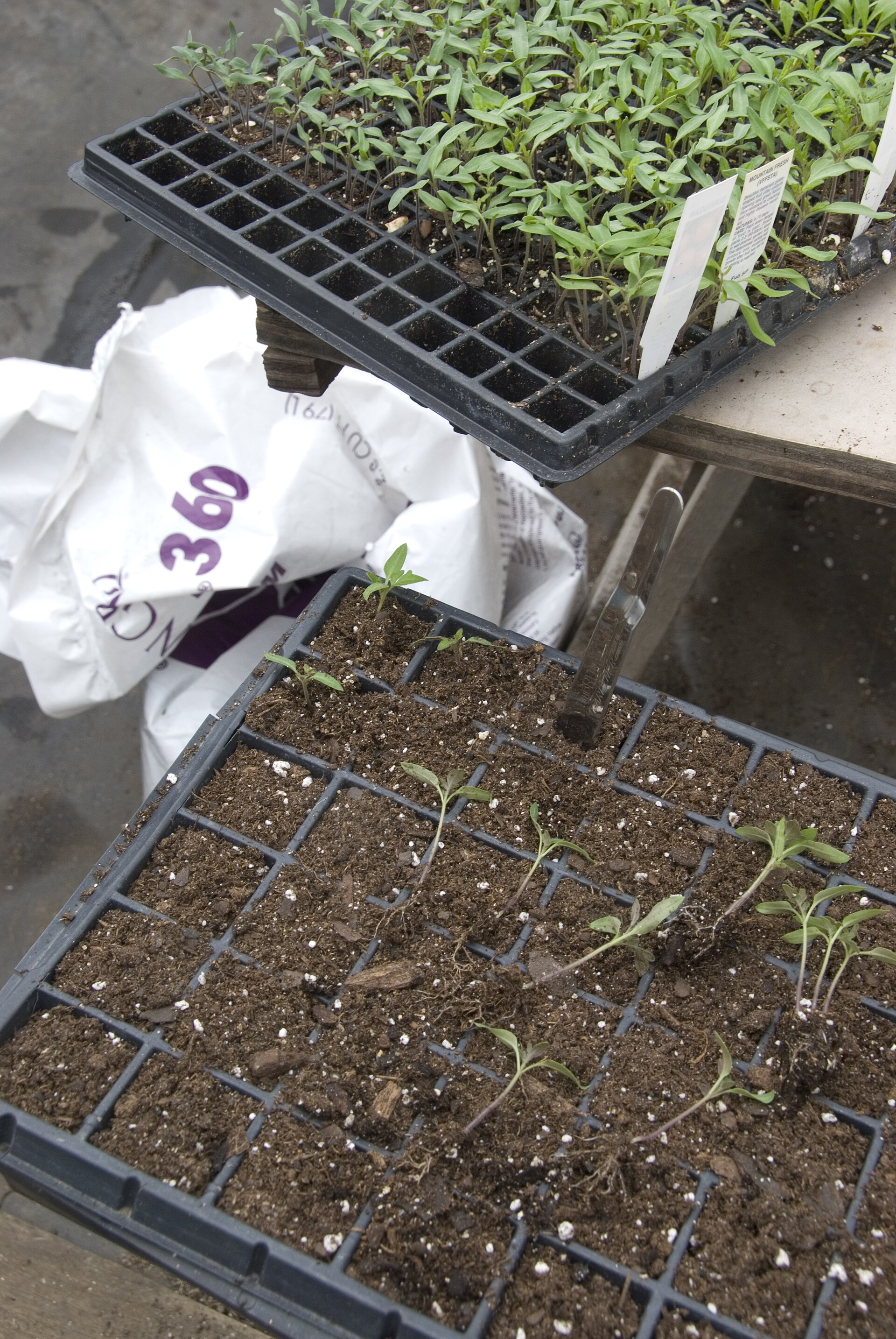
A tray of young tomato seedlings. When light comes mostly from one side, seedlings lean and stretch toward it, the visible result of auxin gathering on the shaded side. Photograph: Dwight Sipler / Wikimedia Commons (CC BY 2.0)
Image Credits: Wikimedia Commons / Dwight Sipler (CC BY 2.0)
Phototropism is the word scientists use for a plant's directional growth toward light. It is the reason a houseplant on a dark shelf leans toward the nearest window, and why seedlings in a garden point their leaves at the sun.
The mechanism comes down to a single hormone called auxin. When light hits a shoot from one side, auxin moves to the shaded side, and the cells there stretch faster than the cells on the lit side. Uneven growth bends the stem, the way a row of dominoes curves when one side falls faster.
This article explains phototropism in plain language, including what the word means, how plants detect the direction of light, why auxin gathers on the shaded side, and what it means for your houseplants.
What is phototropism?
Phototropism is simply a plant growing in response to the direction of light. Growth toward the light source is called positive phototropism, and growth away from light is called negative phototropism, according to the plant biology reference at Fiveable.
Most shoots, stems, and leaves show positive phototropism. Roots usually do the opposite and grow away from light, which is why they stay buried and keep absorbing water.
The response is one of many plant tropisms, or movements triggered by outside stimuli. Plants cannot walk toward a sunny spot, so they grow toward it instead.
How plants sense the direction of light
Plants have no eyes, but they do have light sensors. The key sensors for this job are proteins called phototropins, which sit in the cells at the tip of the shoot and react to blue wavelengths of light.
When light strikes one side of a stem, the phototropins on that side get activated. This sets off a chemical signal that tells the plant which direction the light is coming from.
The sensing happens mostly at the tip of the shoot. Even if the rest of the stem is covered, a lit tip is enough to start the whole bending response, because the tip is where the auxin signal begins.
Even a small light source can trigger the response. A candle flame in a dark room gives off enough light to pull a young seedling toward it.
Why auxin gathers on the shaded side
Auxin is a plant hormone that promotes cell elongation, and it is produced mainly at the tip of the shoot. According to BiologyInsights, once the phototropins detect one-sided light, they trigger a signaling cascade that redistributes auxin from the lit side to the shaded side of the stem.
Proteins called PIN transporters do the moving. Research summarized on Wikipedia identifies PIN3 as the primary auxin carrier in this process, and the activation of PIN3 leads directly to the lopsided auxin distribution.
Once the auxin piles up on the shaded side, it switches on proton pumps in the cell membranes. These pumps push hydrogen ions into the cell wall, lowering its pH.
The acidity activates enzymes called expansins, which loosen the bonds between cellulose fibers in the wall. With the wall loosened, the cells take in more water and expand.
So the shaded side grows longer and faster while the lit side stays shorter. That difference in growth is what physically bends the stem toward the light.
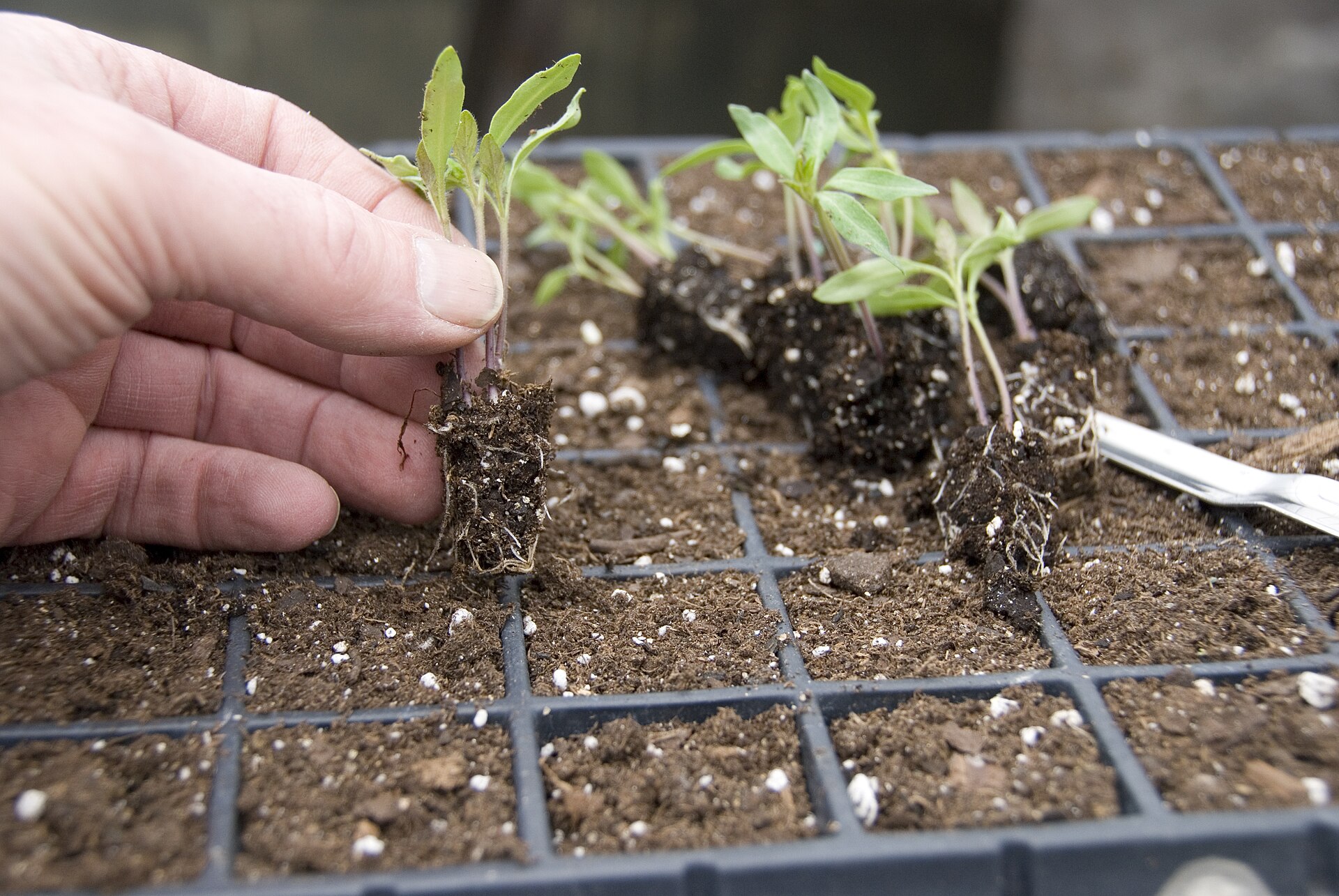
A young seedling lifted from its tray. Seedlings started under light from directly overhead grow short and straight instead of leaning. Photograph: Dwight Sipler / Wikimedia Commons (CC BY 2.0)
The process starts quickly. Auxin begins moving soon after a light shift, and the visible bending follows over hours to days.
Light quality matters too. Blue light is the most effective wavelength for phototropism, because phototropins are tuned to blue wavelengths. Red light produces a much weaker response.
Temperature and water supply affect the result as well. Cells need turgor, or internal water pressure, to expand, so a dry plant bends more slowly than a well-watered one.
What this means for your houseplants
The most visible effect of phototropism is the lopsided houseplant. A plant left in one position for months grows toward the window and looks uneven.
The fix is simple: rotate the pot a quarter turn every week or two. Each turn gives the shaded side its chance to face the light, and the plant grows straighter over time.
Seedlings started indoors need the same attention. If a tray of seedlings leans hard to one side, move the tray or turn it daily so the stems thicken evenly instead of growing long and floppy.
The shaded side of the stem is where all the action happens, much like the darker side of a scene where shadows blur at their edges. Light does not stop at a hard line, and the plant responds to the gradient.
One thing not to worry about: phototropism is not a sign of a sick plant. It is a healthy plant doing its job, hunting for the light it needs to make food.
Frequently asked questions
Do all plants grow toward the light?
Nearly all shoot tips and leaves show positive phototropism, according to Fiveable. Roots and some climbing vine tips show negative phototropism instead, growing away from light toward dark supports they can climb.
Can plants feel light touching them from any direction?
They respond best to blue light detected by phototropins. A uniform light from all sides produces no bend, because there is no shaded side for auxin to gather on.
Why do my seedlings get tall and spindly indoors?
Low light triggers two responses at once: the stem stretches toward the light and grows tall searching for it. Move the light source closer, and the seedlings stay short and sturdy.
Does phototropism work with artificial light?
Yes. Phototropins respond to blue wavelengths, which grow lights and daylight bulbs provide. That is why seedlings bend toward a desk lamp just as they bend toward a window.
The bottom line
A plant grows toward the light because its blue-light sensors detect the direction and shift the hormone auxin to the shaded side. Auxin then stretches the cells there faster, and the uneven growth bends the stem toward the source.
It is a survival strategy. More light means more photosynthesis, which means more energy for growth. The plant cannot move, so it aims its body at the sun.
The practical move is easy: give your indoor plants even light by rotating them regularly. You will get straighter stems, fuller leaves, and a plant that looks balanced from every angle.
---
Author bio: Rive News is the research desk behind this site's science explainers. We read the textbooks and the journals so you get the mechanism in plain language.
Latest in Science
- Why Do Shadows Get Blurry Edges?
- Why Does a Spinning Top Stay Upright While It Spins?
- Why Do Candles Flicker Even Indoors With No Wind?
- Why Do You Feel Your Stomach Drop on a Roller Coaster?
Subscribe: Get one plain-English science explainer in your inbox every morning. No jargon, no spam.
Corrections: Found an error? We fix verified mistakes within 24 hours. Contact the research desk with the article title and the correct source.
© 2026 Rive News. All rights reserved.
Related stories

Why diamond is hard and graphite is soft when both are carbon
Diamond and graphite are both pure carbon, yet diamond is 10 on the Mohs scale and graphite is 1 to 2. The difference is not the atoms;

Why Hot Water Can Freeze Faster Than Cold: The Mpemba Effect Explained
Hot water can freeze faster than cold under specific conditions. The Mpemba effect, named for a 1963 schoolboy experiment, still divides

How Magnets Work at the Atomic Level: Spins, Domains, and Iron
Magnetism comes from electrons: their spin and orbits make each atom a tiny magnet. In iron, quantum forces align these atomic magnets into