
Why Does the Sea Have Tides Twice a Day?
Key takeaways
- Most coastlines get two high tides and two low tides a day, roughly six hours apart.
- The Moon's gravity pulls the ocean into two bulges, one facing the Moon and one on the far side of Earth.
- Earth rotates through both bulges each day, so every shoreline passes through two highs and two lows.
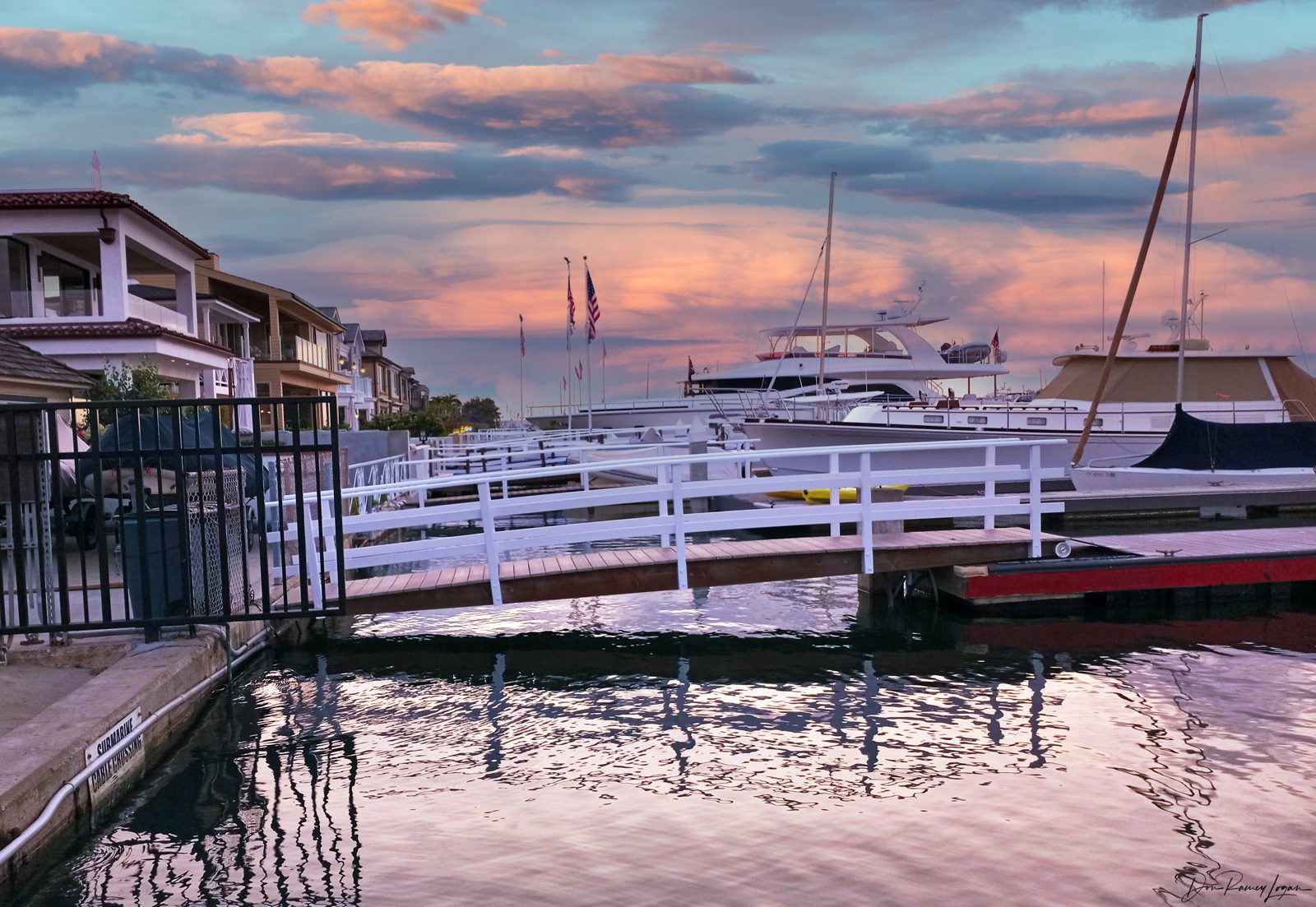
A harbor at high water. Twice a day, the Moon's twin ocean bulges lift shorelines like this one, then let them fall again. Image: Wikimedia Commons
Image Credits: Wikimedia Commons
Tides are the regular rise and fall of the sea. On most coastlines the water climbs to a high point, falls to a low point, and repeats, twice every day.
The engine behind this is the Moon's gravity. It pulls the ocean into two bulges on opposite sides of the planet, and Earth spins through them once a day.
This article explains what tides are, why there are two bulges instead of one, why the cycle runs a little longer than 24 hours, what the Sun adds to the picture, and why a few places break the pattern.
What tides are
A tide is a slow, predictable change in sea level. The typical pattern, called a semi-diurnal tide, reaches a high and a low twice a day, about six hours apart, according to NOAA.
The change from low to high is the flood tide. The change from high back to low is the ebb tide. Fishermen, sailors, and surfers plan their days around this rhythm.
Tides are not waves made by wind. They are the whole ocean shifting its weight, driven by gravity and Earth's rotation.
Why there are two bulges
This is the part that confuses most people. The Moon pulls the ocean toward it, so a bulge on the Moon-facing side makes sense. But there is a second bulge on the far side too.
The key, as NOAA explains, is that the Moon's gravity does not just pull the ocean. It pulls the entire Earth, and it pulls unevenly.
Gravity weakens with distance. The Moon pulls hardest on the ocean closest to it, a little less on Earth's solid body, and least on the ocean on the far side. Subtract the middle pull from the other two, and you get two leftover forces: one toward the Moon, one away from it.
Think of it this way. The near-side water gets yanked toward the Moon and bulges outward.
The far-side water barely gets pulled at all, so it lags behind while Earth itself is tugged forward. That lagging water forms the second bulge.
NASA puts it plainly: the Moon's gravity tugs at Earth and shifts its mass, distorting the planet's shape slightly into a football, elongated with a bulge on each end. As Earth rotates inside this layer of water, coastlines pass through both bulges. Those bulges are the high tides.
Why the cycle is 24 hours and 50 minutes
One high tide to the next takes a little over 12 hours. A full cycle of two highs and two lows takes about 24 hours and 50 minutes.
The extra 50 minutes comes from the Moon's own motion. While Earth spins through its day, the Moon advances along its 27.3-day orbit around Earth. Any given spot needs about 50 extra minutes of rotation to catch up and sit under the Moon again, according to NASA's SciJinks team.
That is also why high tide arrives roughly 50 minutes later each day. If high tide is at 8 in the morning today, expect it near 8:50 tomorrow.
The bulges do not line up exactly with the Moon either. They run a little ahead of it, because the Moon keeps moving in the same direction Earth rotates.
The Sun's role: spring and neap tides
The Moon dominates, but the Sun helps. The Sun's gravitational pull on Earth is about 178 times stronger than the Moon's, yet the Moon's tidal pull is over twice the Sun's, because the Moon is so much closer, NOAA reports.
Twice a month, the Sun, Moon, and Earth line up. Their pulls combine and the ocean bulges grow taller. These are spring tides, with extra-high highs and extra-low lows.
About a week later, the Sun and Moon sit at right angles to each other as seen from Earth. The Sun's pull partly cancels the Moon's, and the tides go moderate. These are neap tides, when high tide is not very high at all.
Spring tides arrive around the new and full moons. Neap tides arrive around the quarter moons.
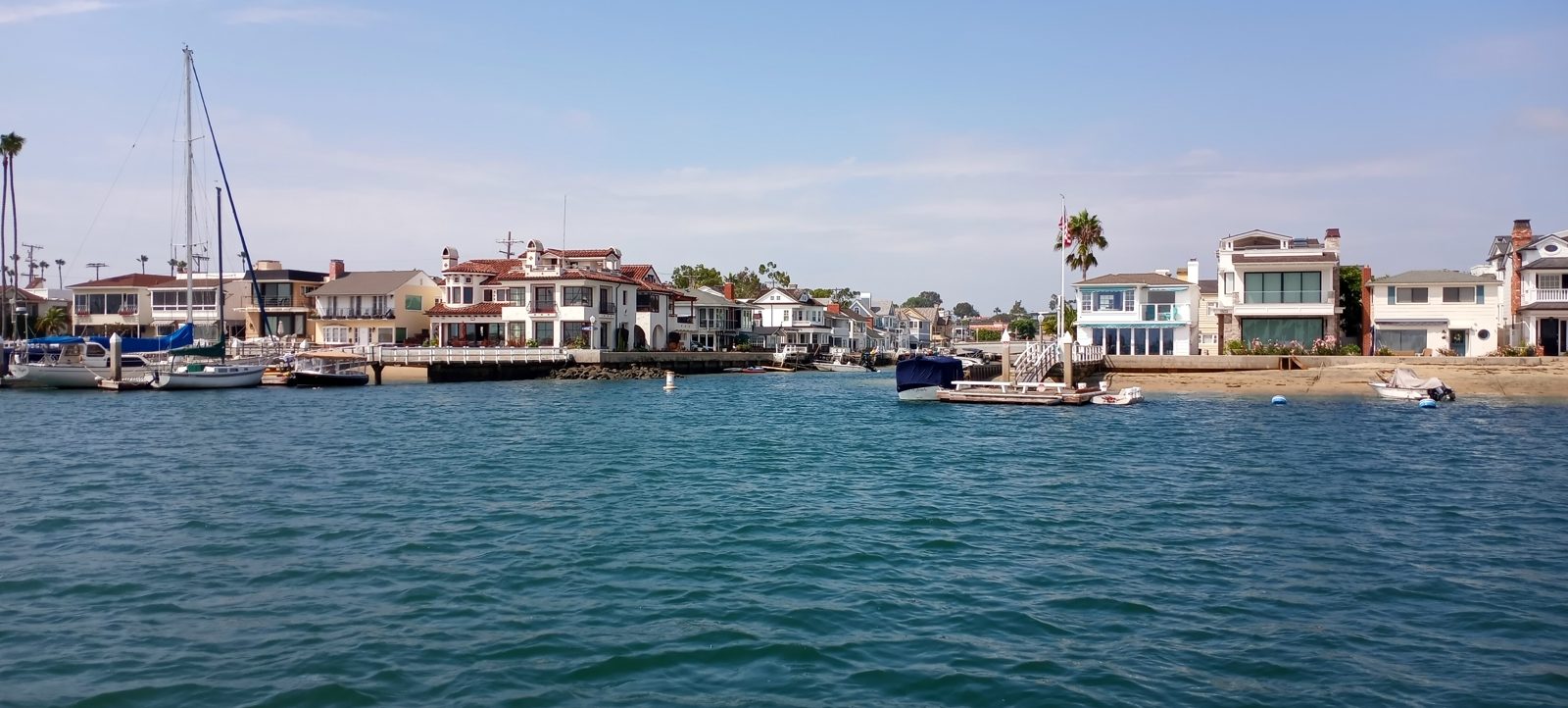
The same harbor at lower water, with sand exposed along the seawall. About six hours separate the two states, driven by Earth's rotation through the tidal bulges. Image: Wikimedia Commons
Why some places get only one tide a day
Not every coastline follows the two-a-day pattern. Some places, like parts of the Gulf of Mexico, get just one high and one low tide per day.
The reason is geometry. The Moon's orbit is tilted about 5 degrees, and Earth's axis tilts 23.5 degrees. So the biggest tidal bulge usually sits above or below the equator, not on it.
Some shorelines only pass through one of the two bulges each day. They get a single daily tide, called a diurnal tide. Others pass through both but unevenly, getting two unequal highs and lows.
Local shape matters too. Bays, straits, and continental shelves can amplify, delay, or distort the tide, which is why tide tables are local.
What the tides mean for you
If you visit the coast, check the local tide table before you go. A beach that looks wide and inviting at low tide can shrink to almost nothing at high tide.
The 50-minute daily shift is the useful rule. Whatever the tide is doing today, it will do the same thing about 50 minutes later tomorrow.
Spring tides are the ones to respect. Around new and full moons, the extra-high water can flood low causeways and the extra-low water exposes rocks that boats normally clear.
Frequently asked questions
Does the Moon's phase change the tides?
The phase itself does not, but the alignment does. New and full moons line the Sun and Moon up with Earth, producing spring tides. Quarter moons set them at right angles, producing neap tides.
Why is high tide not exactly when the Moon is overhead?
Because the Moon moves along its orbit while Earth spins, the bulges run slightly ahead of the Moon. Friction in the ocean also delays the water's response by a day or two around spring tides.
Do lakes have tides?
Technically yes, but they are tiny. The Moon's pull needs a huge body of water to build a visible bulge, so lake tides are measured in centimeters and go unnoticed.
Can the Moon's gravity affect me personally?
No, not in any way you could feel. Tidal force is the difference in gravity across a body, and across a human body that difference is far too small to notice.
The bottom line
The sea has two tides a day because the Moon's uneven gravity raises two ocean bulges on opposite sides of Earth, and our rotating planet carries every coastline through both of them. The Sun tweaks the height, and the Moon's orbit stretches the cycle to 24 hours and 50 minutes.
It is one of the most predictable rhythms in nature. Learn your local pattern and the 50-minute rule, and you will rarely be surprised by the water again.
Next time you are at the shore, check the tide table for today and tomorrow. Watch the 50-minute shift happen with your own eyes.
---
Author bio: Rive News is the research desk behind this site's science explainers. We read the NASA and NOAA explainers so you get the gravity in plain language.
Latest in Science
- Why Does a Spinning Top Stay Upright While It Spins?
- Why Do Shadows Get Blurry Edges?
- Why Do Candles Flicker Even Indoors With No Wind?
- Why Do You Feel Your Stomach Drop on a Roller Coaster?
Subscribe: Get one plain-English science explainer in your inbox every morning. No jargon, no spam.
Corrections: Found an error? We fix verified mistakes within 24 hours. Contact the research desk with the article title and the correct source.
© 2026 Rive News. All rights reserved.
Related stories
Why diamond is hard and graphite is soft when both are carbon
Diamond and graphite are both pure carbon, yet diamond is 10 on the Mohs scale and graphite is 1 to 2. The difference is not the atoms;

Why Hot Water Can Freeze Faster Than Cold: The Mpemba Effect Explained
Hot water can freeze faster than cold under specific conditions. The Mpemba effect, named for a 1963 schoolboy experiment, still divides
How Magnets Work at the Atomic Level: Spins, Domains, and Iron
Magnetism comes from electrons: their spin and orbits make each atom a tiny magnet. In iron, quantum forces align these atomic magnets into