
Why thunder rumbles instead of one sharp bang
By Rive News / Research desk | Rive News / Published October 27, 2026 at 9:00 AM PKT
Key takeaways
- Thunder is the sound of air exploding outward as lightning heats it to about 30,000 degrees Celsius in a fraction of a second.
- It rumbles because a lightning bolt is miles long, so sound from far parts of the bolt reaches you later than sound from near parts.
- Echoes and bending sound waves stretch the noise further, and counting five seconds per mile gives a rough distance to the strike.
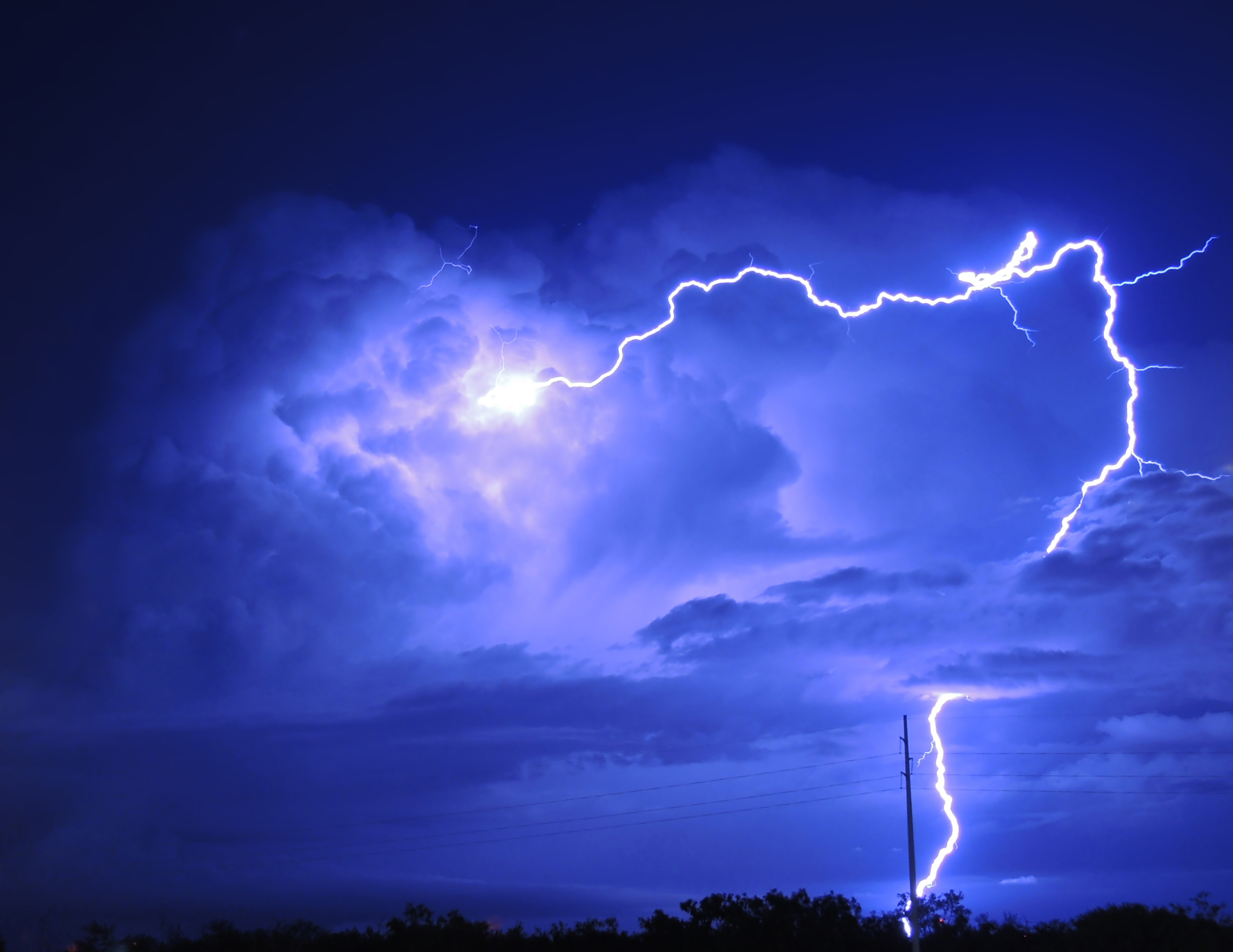
[Branched lightning lights up the sky over Dallas during a storm.] Photograph: the subject
Image Credits: Wikimedia Commons
Thunder is the sound made when lightning heats the air around it so fast that the air expands violently. That expansion forms a shock wave, much like a sonic boom, and the ear hears it as a crack, a boom, or a rolling rumble. The flash and the sound come from the same strike, but light travels far faster than sound, so the flash arrives first.
A nearby strike often sounds like a single sharp crack. A strike farther away, or a long bolt seen from the side, tends to roll and rumble for several seconds. The difference is not a different kind of thunder, and it is not a weaker strike.
This article explains how thunder is made, why bolt length stretches the sound, how echoes and air temperature add to the rumble, and how to estimate distance from the flash.
How thunder is made
Lightning heats the air in its channel to around 30,000 degrees Celsius, about five times hotter than the surface of the Sun, according to the National Oceanic and Atmospheric Administration (NOAA). That heating happens in a fraction of a second, so the air has no time to expand gently. It bursts outward and compresses the air in front of it, forming a shock wave.
Britannica describes the same process in plainer terms: lightning heats the air in its path, creates a large overpressure in the channel, and the channel expands supersonically into the surrounding air. The loudest thunder from a flash to the ground, Britannica adds, comes from the return stroke, because it carries a larger and faster-rising electric current than the leader stroke that forged the path.
The first sound to reach a listener close to the strike is therefore a sharp bang, crack, or snap. NOAA notes that the shock wave starts with a sharp boundary, and that boundary is what the ear registers as the initial crack. What happens next depends on where the rest of the bolt sits relative to the listener.
Why bolt length stretches the sound
A lightning bolt is not a point, and it is not a short line. Bolts are usually branched, crooked, and several kilometres long, and sound is made at every point along the channel at roughly the same moment. The catch is that sound from each point has a different distance to travel, so it arrives at different times.
Sound from the nearest part of the bolt arrives first, and sound from the farthest part arrives last. The ear hears those arrivals as a sequence rather than a single event, which is why a long bolt produces a roll instead of one bang. Britannica puts it directly: sound waves from more distant portions arrive later than those from nearer portions, accounting for the duration of thunder and for the characteristic claps and rumbles.
The shape of the bolt matters too. When a long stretch of bolt sits at roughly the same distance from a listener, a lot of sound arrives at once, and the result is a boom.
When the bolt points toward or away from the listener, only a small part of it sits at any one distance, so the sound arrives as a softer, drawn-out rumble. Two people in different places can therefore hear the same strike differently, because each hears a different pattern of arrival times.
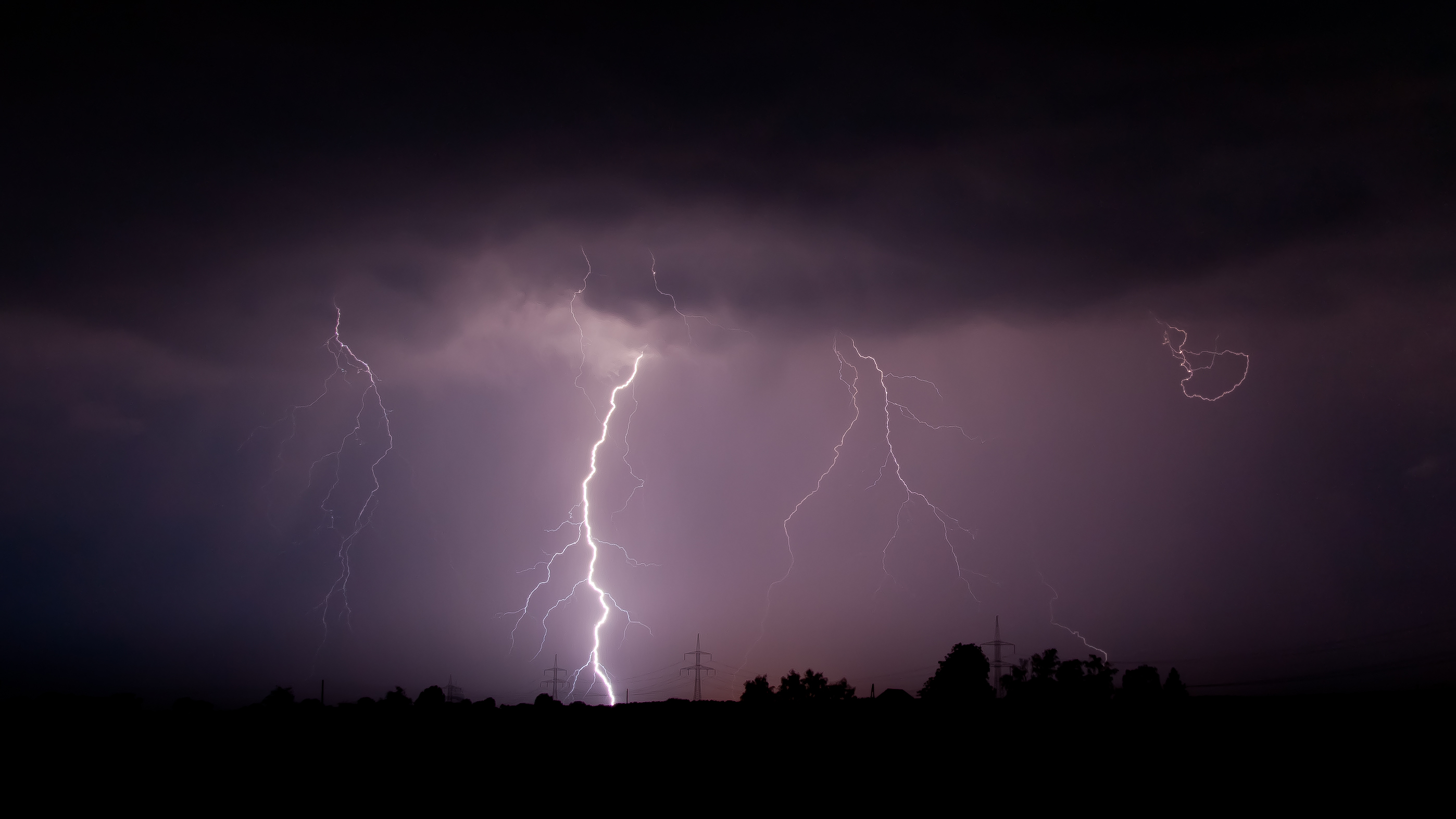
[A branched lightning bolt crosses a dark sky.] Photograph: the subject
Image Credits: Wikimedia Commons
How echoes and warm air add to the rumble
Echoes are a second ingredient, though they are not the whole story. Sound waves bounce off the ground, clouds, buildings, and mountains, and each reflection takes a longer path to the ear. Those delayed arrivals fill in the gaps between the direct sounds from the bolt, stretching the noise further.
Temperature changes in the air bend sound waves as well, in a process called refraction. Sound travels faster in warm air than in cold air, so a wave crossing layers of different temperatures changes speed and direction. During a storm, warm and cold air sit in shifting layers and pockets, and the bending sends sound along many crisscrossing paths.
NOAA notes that as shock waves travel away from the bolt, they stretch and lose their sharp edge, becoming more muted. At large distances, the combined shock wave can be many miles across, and the combination of millions of shock waves gives thunder its continuous booming and rumbling sound. Thunder is seldom heard beyond about 20 kilometres, or 12 miles, according to Britannica, because the sound weakens and spreads as it travels.
How to estimate distance from the flash
The gap between flash and thunder is a rough ruler for distance. Sound travels about one mile in five seconds, or about one kilometre in three seconds, so counting the seconds between the flash and the first thunder gives an estimate. A ten-second gap points to a strike roughly two miles away, and a fifteen-second gap points to about three miles.
The rule works because light arrives almost instantly at storm distances, while sound crawls by comparison. Sound moves through air at roughly 340 metres per second, which is why the delay grows so quickly with distance. The estimate is rough rather than exact, because temperature, wind, and terrain all nudge the speed and path of sound.
A short gap is also a safety signal, not just a curiosity. Thunder means lightning is close enough to matter, and the standard advice from weather agencies is to move indoors and stay there until the storm passes. Counting seconds is useful for understanding the storm, but it is not a reason to stay outside and watch it.
The bottom line
Thunder rumbles because a lightning strike is a long, branched event, not a single point of sound. Sound from near parts of the bolt arrives first, sound from far parts arrives later, and echoes plus bending air stretch the sequence into a roll.
A sharp crack means much of the bolt sat at one distance, or the strike was close, while a long rumble means the sound arrived in stages. Either way, the five-seconds-per-mile count turns that rumble into a rough map of how far away the strike fell.
Tags: weather, thunder, lightning
Rive News is a research desk that writes plain-English explainers from public sources. It does not replace official weather safety guidance.
Related
- What causes thunder and why lightning comes first
- How clouds stay up in the sky if they are made of water
- What is the difference between a hurricane and a tornado
- What causes earthquakes and can we predict them
Subscribe for one plain-English explainer each morning.
Rive News follows a simple standard: named sources, no invented quotes, and corrections noted openly.
Related stories

Why diamond is hard and graphite is soft when both are carbon
Diamond and graphite are both pure carbon, yet diamond is 10 on the Mohs scale and graphite is 1 to 2. The difference is not the atoms;

Why Hot Water Can Freeze Faster Than Cold: The Mpemba Effect Explained
Hot water can freeze faster than cold under specific conditions. The Mpemba effect, named for a 1963 schoolboy experiment, still divides
How Magnets Work at the Atomic Level: Spins, Domains, and Iron
Magnetism comes from electrons: their spin and orbits make each atom a tiny magnet. In iron, quantum forces align these atomic magnets into