
Why boxers touch gloves before a fight begins
By Rive News / Research desk | Rive News / Published October 29, 2026 at 9:00 AM PKT
Key takeaways
- Boxers touch gloves as a sign of respect and sportsmanship before fighting.
- Referee manuals direct boxers to touch gloves at the start and again before the final round.
- Touching gloves is customary, not compulsory: a fighter may refuse, and the refusal itself sends a message.

[A boxing ring set up for a Uganda Boxing Federation event.] Photograph: Kyakwera
Image Credits: Wikimedia Commons
Two boxers meet in the centre of the ring, the referee speaks, and the fighters tap their gloves together before returning to their corners. The moment lasts a second, and then the fight begins.
This article explains why boxers touch gloves before a fight, including what the gesture means, what the rules say about it, and what happens when a fighter refuses.
A handshake that fits the equipment
The simplest explanation is practical. Boxers cannot shake hands in the usual way, because their hands are inside padded gloves laced at the wrist.
Touching gloves is the handshake adapted to the sport. One gloved fist taps the other, briefly and lightly, in the same spirit as a handshake before a contest.
The gesture says several things at once. It acknowledges the opponent's courage in stepping into the ring, it accepts the contest as fair, and it draws a line between the promotion outside the ring and the fight inside it.
Fighters often spend weeks trading insults to sell tickets. The glove touch is the moment where both sides confirm, in front of the referee, that the hostility was business and that the fight itself will follow the rules.
That meaning carries into other combat sports. Mixed martial artists touch gloves for the same reason, and the gesture resembles the bow in karate, judo, and jujitsu: a formal sign of respect before combat begins.
What the referee manuals say
The glove touch is not just a folk custom. It is written into the instructions that govern professional bouts.
The Association of Boxing Commissions and Combative Sports referee manual, revised in August 2025, tells referees to keep final in-ring instructions brief, because the boxers have already been briefed in their dressing rooms. It then states that boxers should touch gloves at this time and again before the final round.
Ontario's professional combative sport rules set out the same sequence. The referee calls the contestants together before the bout for final instructions, with each boxer accompanied by their lead second, and after receiving instructions the contestants may touch gloves and return to their corners.
Note the careful wording in Ontario's version: the fighters "may" touch gloves. The touch is expected and invited, but it is not a rule violation to decline it. The referee offers the moment; the fighters decide whether to take it.
The manual also repeats the touch before the final round. By then the fighters have spent most of the bout trying to hurt each other, and the second touch restates the same respect under harder conditions.
The sequence on fight night
The glove touch sits inside a fixed pre-fight routine. Understanding that routine explains why the touch happens when it does.
First, the referee inspects both fighters in the ring. Gloves must be the correct weight, usually 8 or 10 ounces for professional bouts, tape must be applied correctly, and no foreign substance may be on the gloves or body beyond a light application of petroleum jelly on the face.
Then the referee calls both fighters to the centre with their chief seconds. The referee gives final instructions: obey commands, break cleanly on the break, keep punches legal, and protect yourself at all times.
The glove touch follows immediately. The fighters tap gloves, turn, and walk back to their corners, where the seconds step out and the bell rings for round one.
That placement matters. The touch is the last peaceful act before the contest, and it happens under the referee's eye, which is why using it as a trick carries such a strong taboo.
The cheap-shot taboo
One unwritten rule around the glove touch is absolute: never throw a punch off it. A fighter who taps gloves and then immediately hits an opponent who is still lowering their guard has broken the sport's trust, not just its etiquette.
Gym etiquette guides state the rule plainly. Touch gloves, give your partner a moment to establish their guard, and then begin. The same standard applies in sparring, where touching gloves at the start and end of each session marks the bout as training rather than a real fight.
Referees can punish a cheap shot with a warning or a points deduction, and crowds remember it far longer. The taboo exists because the touch only works if both fighters believe it is safe to offer their glove.
That trust is also why the gesture matters beyond politeness. Two people about to hit each other need one shared signal that the contest has rules, and the glove touch is that signal.
What refusal means
A fighter may refuse to touch gloves, and refusals are part of boxing theatre. Some fighters stare past the offered glove, turn away, or keep their hands down, and the crowd reads the snub instantly.
Refusal can mean several things. It can be genuine dislike, a psychological tactic to unsettle the opponent, or a statement that respect must be earned in the ring rather than given before it.
Refusal carries a cost. Fans and commentators often read it as disrespect, and the refusing fighter may face a more aggressive opponent who takes the snub personally. It can also backfire if the refuser then loses, since the pre-fight gesture becomes part of the story of the defeat.
Promoters sometimes welcome refusals, because a staredown that ends without a touch makes better television than a friendly tap. The referee, though, treats both outcomes the same: the instructions stand, and the bell rings either way.
Touching gloves during the fight
Glove touches also happen mid-fight, and they mean something slightly different. A fighter may tap gloves after a clean exchange, after an accidental clash of heads, or at the start of a later round.
Commentators have sometimes criticised mid-fight touches as a sign of softness. A Queensberry Rules column from 2010 pushed back on that idea, pointing out that Andre Ward nodded at Allan Green after good punches and still won their bout clearly, which proved a gesture said nothing about a fighter's will to win.
Mid-fight touches usually acknowledge a good shot or a fair exchange. They can also defuse tension after an accidental foul, signalling that no retaliation is coming.
Fighters still debate the wisdom of it. A touch requires lowering the guard for a moment, and an opponent can exploit that, though doing so would break the same taboo that protects the opening touch.
The touch at the end
Boxing's respect rituals do not end with the opening touch. After the final bell, fighters usually embrace, touch gloves again, or raise each other's arms, and the winner often praises the loser in the post-fight interview.
That closing gesture completes the arc. The opening touch says the fight will be fair, and the closing touch says it was, whatever the result.
Amateur boxing follows the same pattern, with shorter bouts of three rounds at Olympic level compared with up to 12 rounds of 3 minutes each in professional title fights. The glove touch appears in both, because the need for a shared signal does not depend on the length of the bout.
For newcomers in a boxing gym, the rule is taught on day one. Touch gloves before sparring and after it, win or lose, because the gym only works if partners trust each other to stop when the bell rings.
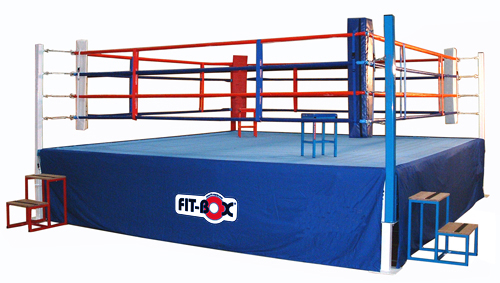
[A boxing ring stands ready for a bout.] Photograph: Slr722x
Image Credits: Wikimedia Commons
Why the gesture survives
Boxing has changed enormously since its bare-knuckle days: gloves, rounds, weight classes, judges, and television all arrived later. The glove touch survived because it answers a permanent need.
A combat sport needs a visible boundary between violence with consent and violence without it. The referee's instructions state that boundary in words, and the glove touch states it in action.
The touch also protects the sport's image. Boxing sells aggression, but it depends on the public belief that fighters are athletes under rules, not brawlers. A second of mutual respect at the start helps carry that belief through twelve rounds of hard punches.
For fans, the moment is a useful tell. A warm touch suggests mutual respect, a refused touch promises bad blood, and either way the fight that follows becomes easier to read.
Frequently asked questions
Do boxers have to touch gloves?
No. Referee manuals say boxers should touch gloves after final instructions, and Ontario's rules say they may, but declining is not a rule violation.
When do boxers touch gloves?
At the start of the fight after the referee's final instructions, again before the final round, and often at the end of the bout and after sparring sessions.
Is it legal to punch someone during a glove touch?
Throwing a punch off a glove touch is treated as a foul and a serious breach of etiquette, and referees can warn or deduct points for it.
Why do some boxers refuse to touch gloves?
Refusal can be genuine dislike, a psychological tactic, or a statement that respect must be earned in the ring, and it usually adds tension to the fight.
The bottom line
Boxers touch gloves before a fight because the tap is the sport's handshake: a brief, referee-supervised sign of respect that confirms the contest will follow the rules. The gesture is written into referee manuals, repeated before the final round, and protected by a strict taboo against punching off it, while refusal remains allowed and always sends its own message. For a sport built on controlled violence, that one second of mutual acknowledgment is what separates a fight from a brawl.
Tags: boxing, sportsmanship, boxing rules
Rive News's research desk covers everyday science and sport explainers from published studies and official sources.
Related
- Why do athletes ice bath after training? The evidence explained
- How to improve your balance for any sport: 8 drills
- Dynamic vs static stretching before sport explained
Subscribe to Rive News for one plain-English explainer every weekday.
Rive News publishes explainers based on cited public sources; corrections are welcomed and noted on the article.
Related stories

Why Is Altitude Sickness Worse for Some People?
Altitude sickness hits some people harder because of genetics, ascent speed, and prior history, not fitness level. Here is what raises risk
Why Do You Get Blisters When Hiking and How to Prevent Them
Friction plus moisture plus heat equals a blister. Learn why hiking breeds all three, and the boots, socks, and tape system that keeps
How to choose hiking boots for beginners: fit, features, and break-in
Beginners should buy for fit first: snug everywhere, tight nowhere, with a thumb's width at the toes. Here is how to size, test,