
Why do your calves burn on uphill runs?
By Rive News / Research desk | Rive News / Published October 24, 2026 at 9:00 AM PKT
Key takeaways
- The burn comes from hydrogen ions acidifying the muscle, not from lactic acid buildup.
- Uphill running raises lower-limb muscle activation measurably, with the calf complex among the hardest-working muscles.
- Shortening your stride and keeping cadence up reduces the per-step load on the calves.
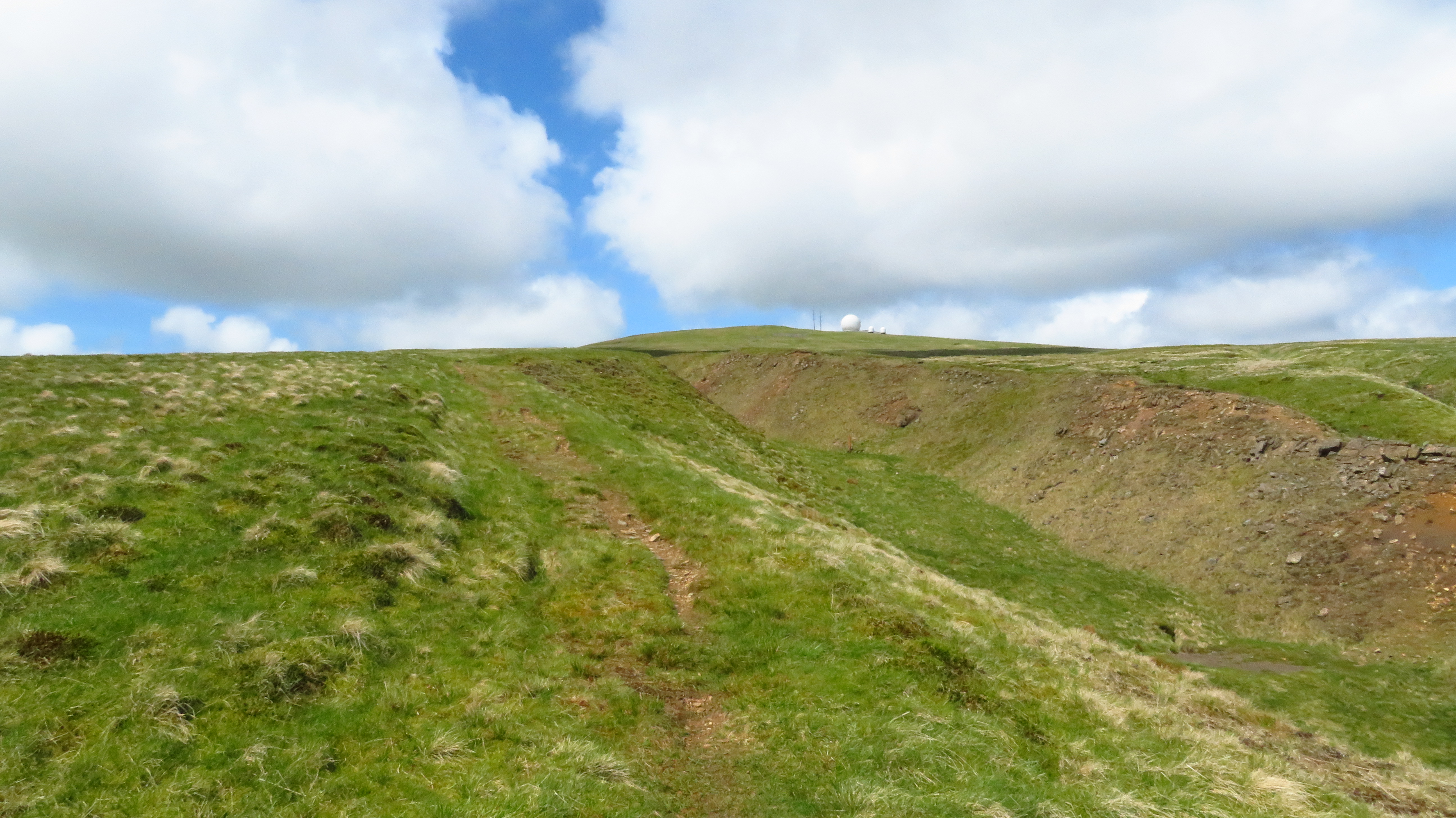
[A steep fell trail, the kind of sustained gradient that loads the calves far more than flat ground.] Photograph: Wikimedia Commons
Image Credits: Wikimedia Commons
Every runner knows the sensation. The road tilts up, the pace slows, and within a minute the calves start to smolder.
The burn feels like a warning, and the folk explanation is always the same: lactic acid. That explanation is wrong in an interesting way, and the real story says a lot about how hills change the mechanics of running.
This article explains the burn, including what actually causes it, why uphill running loads the calves so heavily, how gradient and cadence change the equation, and what genuinely helps.
The burn is acidity, not lactic acid
Here is the correction first, because it reframes everything else.
Lactic acid, as a molecule, barely exists inside the body. Blood pH is too alkaline to sustain the bond between lactate and its hydrogen ion, so the two split apart almost immediately.
What accumulates in a hard-working muscle is not lactic acid but free hydrogen ions, and those ions lower the pH inside the muscle cell. Acidic muscle tissue stimulates nerve endings, and that stimulation is the burning sensation.
Lactate itself is innocent. It is a fuel, not a waste product: the heart and neighboring muscle fibers consume lactate during exercise.
TrainerRoad's exercise-science writers put it bluntly: lactate is produced by normal muscular metabolism and is a fuel, not just a waste product, and lactic acid is not the cause of the burning feeling in the legs. The old belief lasted for decades, but the science no longer supports it.
What does cause the burn is the speed of the chemistry. When effort rises faster than oxygen delivery, the muscle splits ATP rapidly for energy, and that splitting releases hydrogen ions faster than the blood can clear them.
The burn is the feeling of that backlog.
It fades quickly when effort drops, because the ions clear fast. That quick fade is itself evidence: true tissue damage does not vanish in ninety seconds of easy jogging.
Why hills load the calves so hard
On flat ground, running recycles energy. The Achilles tendon stretches as the foot lands and recoils as it leaves, returning free elastic energy with every step. The calf muscles guide that spring rather than doing all the work themselves.
Hills break the spring. Climbing demands positive work: lifting the body's mass against gravity with every step.
A 2025 review of uphill and downhill running in Frontiers in Bioengineering and Biotechnology, summarizing work by Vernillo and colleagues, found that the EMG activity of the lower-limb muscles was 6 percent greater during uphill running at a 10 percent grade than on the flat. The distribution shifted too: the vastus group worked 23 percent harder and the soleus 14 percent harder, while the gastrocnemius ranked among the most activated muscles overall at 76 percent of its volume.
The calf complex, gastrocnemius plus soleus, sits at the center of this because of what the ankle must do on a slope.
Uphill, the foot strikes with the ankle already in a more plantarflexed position, and the calf must generate force through a longer portion of the stride to push the body up and over. There is less elastic return and more raw concentric contraction. More concentric work means more ATP splitting, which means more hydrogen ions, which means the burn arrives sooner and hotter than on the flat at the same speed.
Gradient matters more than most runners expect. Even a modest 5 percent grade changes the mechanics noticeably, and at 10 percent the calves are doing a fundamentally different job than they do on the flat. This is why a runner who cruises comfortably on flat roads can feel destroyed two minutes into a hill at the same effort.
The gradient and cadence logic
Cadence is the lever runners actually control. When the hill steepens, the natural response is to lengthen the stride and muscle up the slope. That is exactly backwards for the calves.
A long stride on a hill increases the braking force at landing and asks the calf to produce a bigger single push-off. Shorten the stride instead.
Higher cadence with shorter steps spreads the same climbing work across more, smaller contractions. Each push-off demands less peak force from the calf, which slows the accumulation of hydrogen ions.
Coaches often cue hill runners to keep the feet turning over quickly and let the pace be whatever it is. The watch pace will drop on a steep grade no matter what; fighting that with long strides just burns the calves faster.
Two more mechanical details help. First, lean from the ankles, not the waist. A forward lean hinged at the hips shuts down the glutes and dumps the work onto the calves.
A slight whole-body lean keeps the bigger hip muscles in the effort. Second, drive the arms. On hills the arms set the rhythm, and an active arm swing supports a quicker cadence without conscious counting.
Footwear plays a smaller but real role. Very soft, highly cushioned shoes can feel unstable on steep grades and make the calf work harder to stabilize the ankle.
The difference between football boots and running shoes is an extreme illustration of the same principle: the shoe changes what the lower leg must do. For hill training, a stable shoe with a moderate drop usually beats a maximal marshmallow.
What actually helps
The burn itself needs no treatment. It is a signal, not an injury, and it clears within minutes of easing off. What runners actually want is to raise the point where the burn starts, and that comes from training, not tricks.
Hill repeats are the direct route. Short, controlled climbs at a hard but sustainable effort teach the calves to produce force under exactly the conditions that hurt.
Start with 6 to 8 repeats of 60 to 90 seconds on a moderate grade, jogging back down for recovery. The downhill matters: it is low-cost recovery that lets the session accumulate quality climbing.
Calf strength work supports the same goal from the other side. Straight-knee calf raises target the gastrocnemius; bent-knee raises shift the load to the soleus.

[A marathon runner in full stride; trained calves produce the same force with less metabolic cost.] Photograph: Wikimedia Commons
Image Credits: Wikimedia Commons
Two or three sessions a week, progressing slowly, build the force capacity that delays the burn. Beginners ramping up mileage should also respect how many rest days beginners actually need, because tired calves burn earlier and tear easier.
Warm up before attacking a hill. Cold calves at high force are the classic recipe for a strain, which is a different and sharper pain than the burn.
If the sensation is sudden, localized, and feels like a pop or a kick, stop. That is not hydrogen ions. That is tissue, and it needs rest and assessment.
Is the burn dangerous?
No. The burning sensation from hard effort is hydrogen ion accumulation, and it clears within minutes of backing off. Sharp, sudden, or one-sided pain is different and worth stopping for.
Why do my calves burn more on some hills than others?
Steeper grades demand more concentric calf work and kill the elastic bounce of flat running. A 10 percent grade measurably raises lower-limb muscle activation versus flat ground. Gradient, not just effort, sets the burn.
Will stretching stop the burn?
Stretching helps flexibility and warm-up, but it does not prevent the metabolic burn. Strength training and hill repeats raise the threshold where the burn starts.
Should I run through the burn?
The metabolic burn is safe to run through if your form holds. If your stride collapses, your calves cramp, or the pain turns sharp and localized, back off. There is a line between discomfort and damage, and form is how you read it.
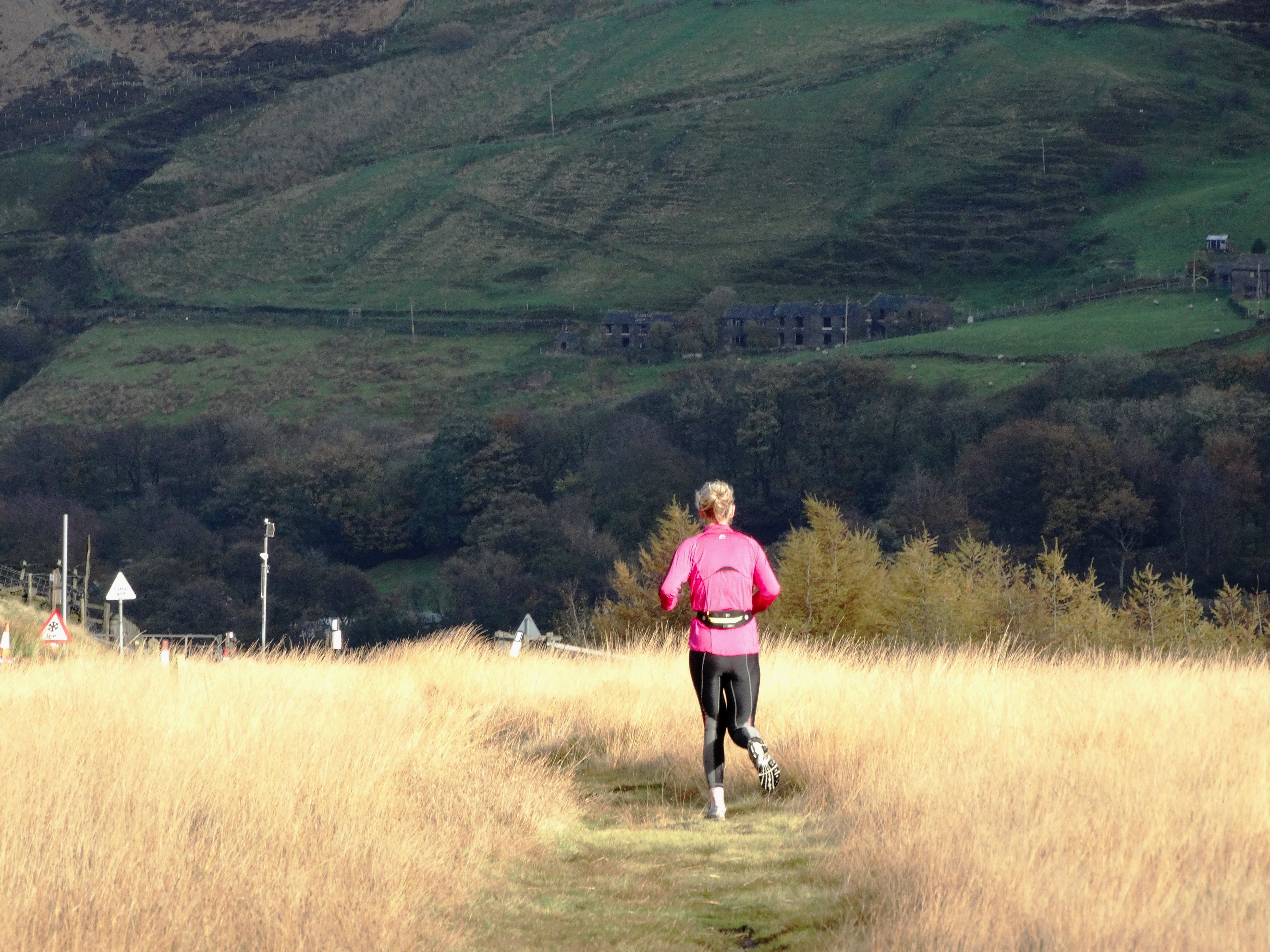
[A fell runner climbs a trail, the exact scenario where calf activation spikes.] Photograph: Wikimedia Commons
Image Credits: Wikimedia Commons
The bottom line
Your calves burn on hills because uphill running is a different mechanical job: more concentric force, less elastic return, and a steep rise in calf muscle activation. The burn itself is hydrogen ions acidifying the muscle, not lactic acid, and it clears fast when you ease off.
Shorten your stride, keep the cadence turning over, lean from the ankles, and train the specific demand with hill repeats and calf strength work. The hill will not get flatter, but your calves will get better at climbing it.
Topics: sports, running, calves, exercise physiology, hills
Rive News is a research desk producing evidence-based explainers across everyday topics.
Related
- How to Train for Your First 5K Run
- What Is the Difference Between Football Boots and Running Shoes?
- Why Does Your Heart Rate Stay Elevated After Exercise? EPOC and Recovery
- How Many Rest Days Do Beginners Actually Need?
Subscribe for one practical training insight every morning.
Rive News holds its explainers to publisher standards: named sources, verifiable facts, and no invented claims.
Related stories
Why Is Altitude Sickness Worse for Some People?
Altitude sickness hits some people harder because of genetics, ascent speed, and prior history, not fitness level. Here is what raises risk
Why Do You Get Blisters When Hiking and How to Prevent Them
Friction plus moisture plus heat equals a blister. Learn why hiking breeds all three, and the boots, socks, and tape system that keeps
How to choose hiking boots for beginners: fit, features, and break-in
Beginners should buy for fit first: snug everywhere, tight nowhere, with a thumb's width at the toes. Here is how to size, test,