
Why you feel sick after intense exercise: causes and fixes
By Rive News / Research desk | Rive News / Published October 24, 2026 at 9:00 AM PKT
Key takeaways
- Nausea after hard exercise is usually blood being diverted from the gut to working muscles, which stalls digestion.
- The three most common triggers are eating too close to training, dehydration, and stopping abruptly without a cool-down.
- Most cases are preventable with meal timing, steady hydration, and easing off intensity instead of quitting cold.
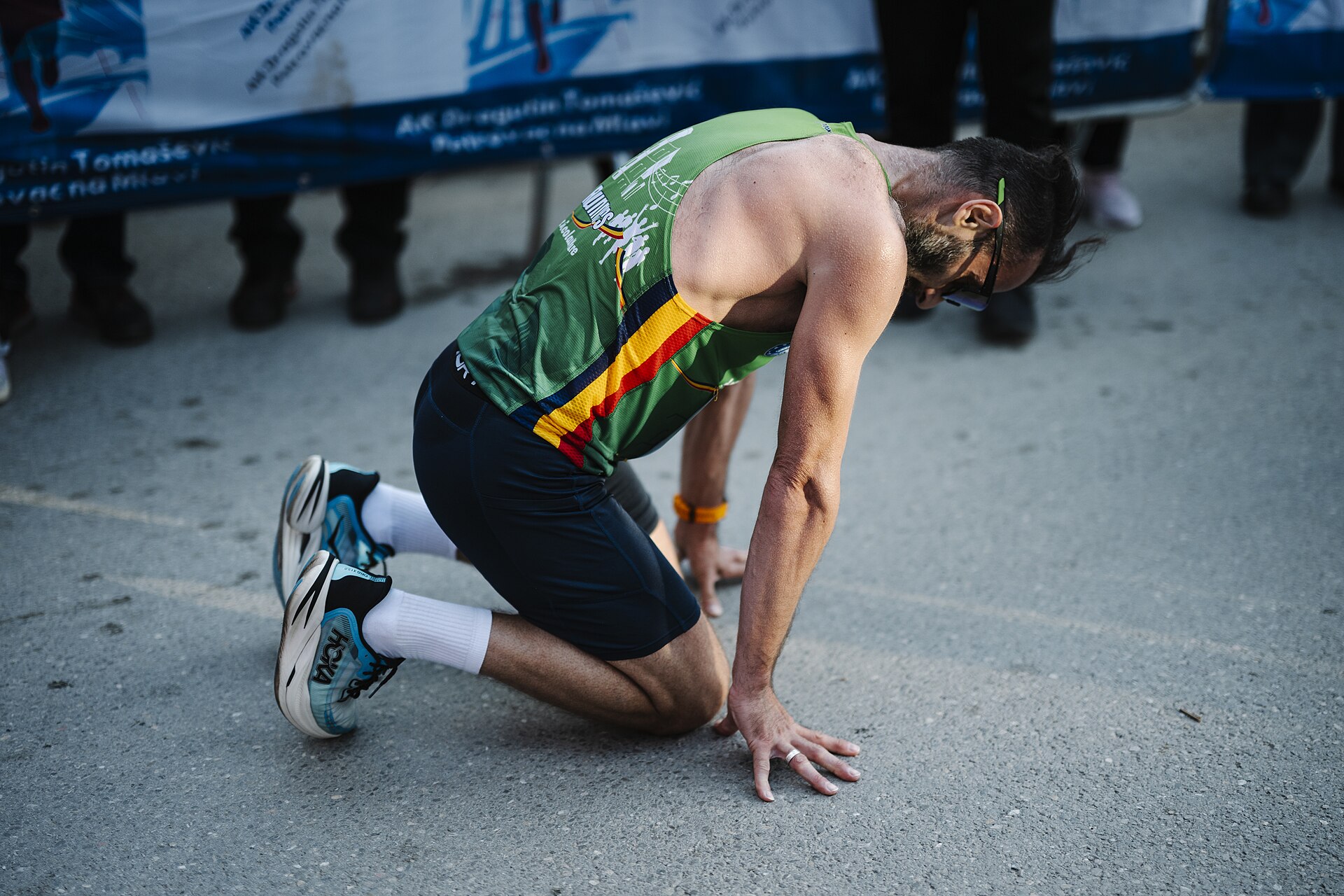
[An exhausted marathon runner kneels at the finish line after an all-out effort.] Photograph: Shixart1985
Image Credits: Wikimedia Commons
Exercise-induced nausea is the sick, queasy feeling that shows up during or right after a hard workout. It is common, it is physiological, and it is not a sign that you are unfit. During intense effort, the body redirects blood away from the digestive system toward working muscles and the skin, and digestion slows or stops as a result.
The mechanism matters because each cause has a different fix. Rehydrating will not help if the real problem is that you ate a heavy meal 30 minutes before training. This article explains the six main causes of post-exercise nausea, how to triage them, and what to do when the sick feeling is actually a warning sign.
The blood flow problem
At rest, the digestive organs receive roughly 25% of the body's blood flow. During intense exercise, that picture flips: as much as 80% of blood can be redirected to working muscles and the skin for cooling, leaving the gut with as little as 5%.
With so little blood, digestion slows or stops. Food sitting in a poorly supplied stomach irritates it, and nausea follows. Maxine Yeung, MS, RD, CPT, a dietitian and certified personal trainer, told Health that less blood, oxygen, and nutrients flowing to the stomach and digestive tract can slow digestion and contribute to nausea, bloating, cramping, vomiting, and diarrhea.
The effect scales with intensity and duration. Yeung told Health that blood flow to the gut decreases the longer you exercise at moderate or higher effort, which helps explain why nausea can build across a long session rather than striking instantly. High-impact activities add another layer: the repeated up-and-down motion of running jostles the stomach contents and raises pressure inside the abdomen, which can trigger nausea on its own.
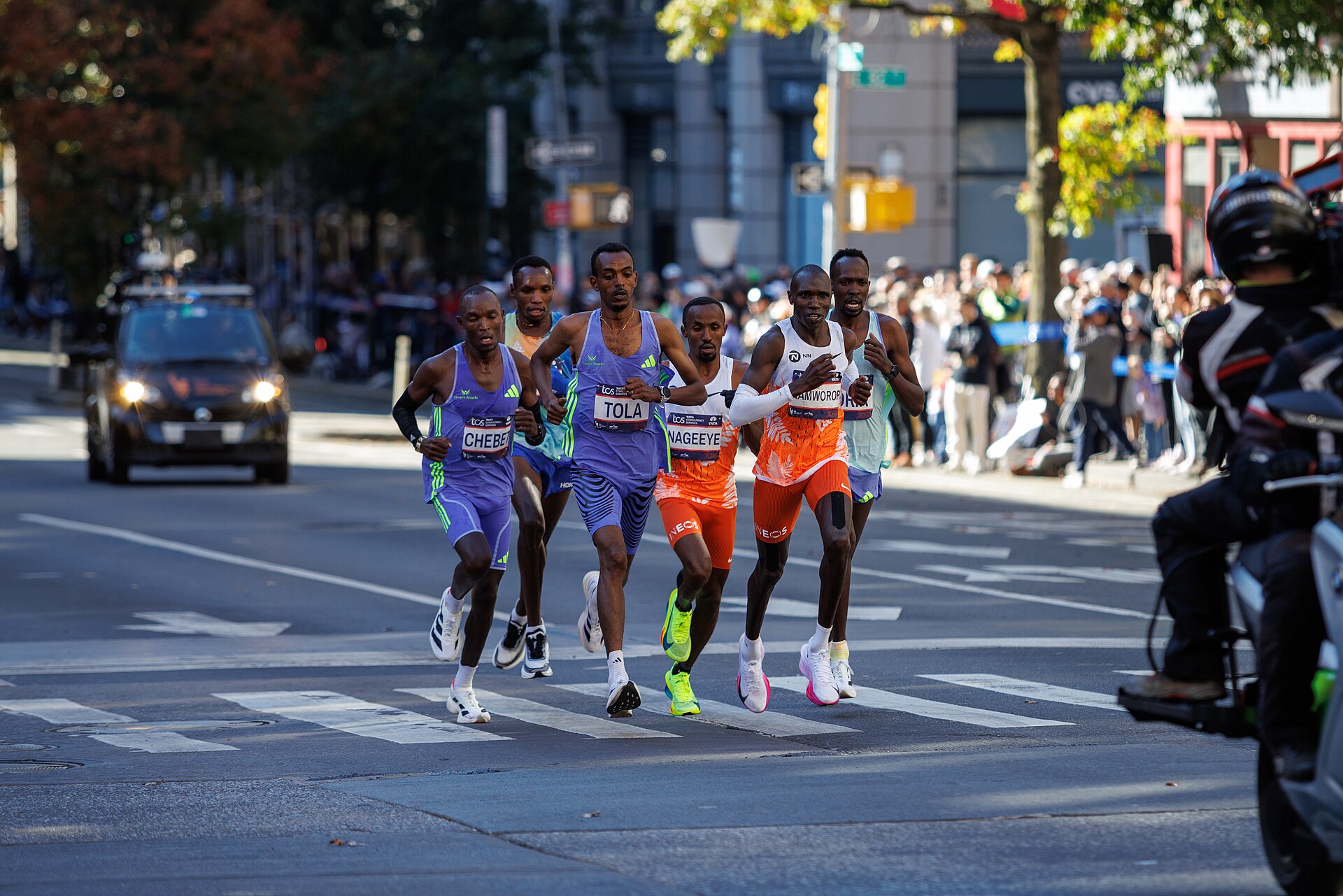
[The men's lead pack at the 2024 New York City Marathon; at high intensity, most blood flow goes to muscles, not the gut.] Photograph: Nrbelex
Image Credits: Wikimedia Commons
Eating too close to the workout
Food timing is the most common cause. A study of 20 volunteers at Nagoya University in Japan, published in the journal Appetite in 2001 by Kondo and colleagues, found that exercise-induced nausea was exaggerated after eating. Food in the stomach during a workout simply has nowhere to go when digestion is paused.
The practical rule is to finish a full meal 2 to 3 hours before hard exercise, and keep any snack within the last hour small and easy to digest. Fat and fiber slow digestion the most, so they are the worst choices right before training. A banana or a small piece of toast beats a cheeseburger every time.
Dehydration and the water side of the equation
Dehydration is the second pillar of the triage. Sweating reduces blood volume, and with less blood to go around, the body struggles to supply muscles and organs at the same time. Jim White, RDN, owner of Jim White Fitness and Nutrition Studios in Virginia, told Health that during exercise the body loses water through sweating to cool down, and that water loss combined with reduced blood flow to the digestive tract can worsen nausea.
Performance-oriented sources put the danger line at fluid losses of around 2% of body mass. Past that point, cardiovascular strain rises and gut symptoms get worse.
Yeung told Health that dehydration is a very common cause of nausea, especially during longer sessions, in hot weather, or for heavy sweaters. Heat makes everything worse: the body sends more blood to the skin for cooling, leaving even less for digestion.
The fix is steady sipping, not gulping. Large volumes of water sloshing in the stomach can cause nausea on their own, so small, regular drinks beat occasional big gulps. For sessions longer than an hour, especially in heat, an electrolyte drink helps because plain water alone does not replace lost sodium.
Overhydration: too much water hurts too
Drinking too much is the mirror-image problem. Excessive water intake before, during, or after extreme exercise dilutes the body's sodium levels, a condition called hyponatremia. Symptoms include nausea, diarrhea, confusion, and muscle tremors, according to the exercise-induced nausea literature summarized on Wikipedia.
This mostly affects endurance athletes who drink aggressively at every opportunity. The symptom overlap with dehydration is the tricky part: both cause nausea.
The distinguishing clue is usually context. Nausea with clear or very pale urine after heavy drinking points toward too much water; nausea with dark urine, dry mouth, and dizziness points toward too little.
Intensity, cool-down, and blood sugar
Going too hard, too fast is its own cause. Pushing past your current fitness level overwhelms the system, and the body's stress response, including adrenaline and cortisol, further suppresses digestion. Wikipedia notes that exercise-induced nausea can also follow from ending a session too abruptly rather than cooling down.
An abrupt stop lets blood pool in the legs instead of circulating back to the core, which can drop blood pressure and trigger dizziness and nausea. Five to ten minutes of easy walking or light cycling at the end gives the cardiovascular system a ramp-down it clearly appreciates.
Blood sugar swings round out the list. Training fasted can drop blood sugar low enough to cause nausea, and a big sugary pre-workout snack can spike and crash it mid-session. A small balanced snack about an hour out, with some carbohydrate and a little protein, keeps levels steadier than either extreme.
The triage: food, water, cool-down
When nausea hits, work through the three in order. First, think about food: did you eat a real meal within 60 to 90 minutes of training? If yes, that is the likeliest culprit, and the fix is timing, not toughness.
Second, check water. Estimate how much you drank and sweated.
If the session was long or hot and you drank little, rehydrate slowly with small sips. If you drank enormous amounts and your stomach is sloshing, stop drinking and let it settle.
Third, check the cool-down. If you sprinted to the finish and collapsed, the sudden stop is probably part of the problem.
Next time, add an easy 5 to 10 minutes at the end. Most recurring cases resolve once these three are handled honestly.
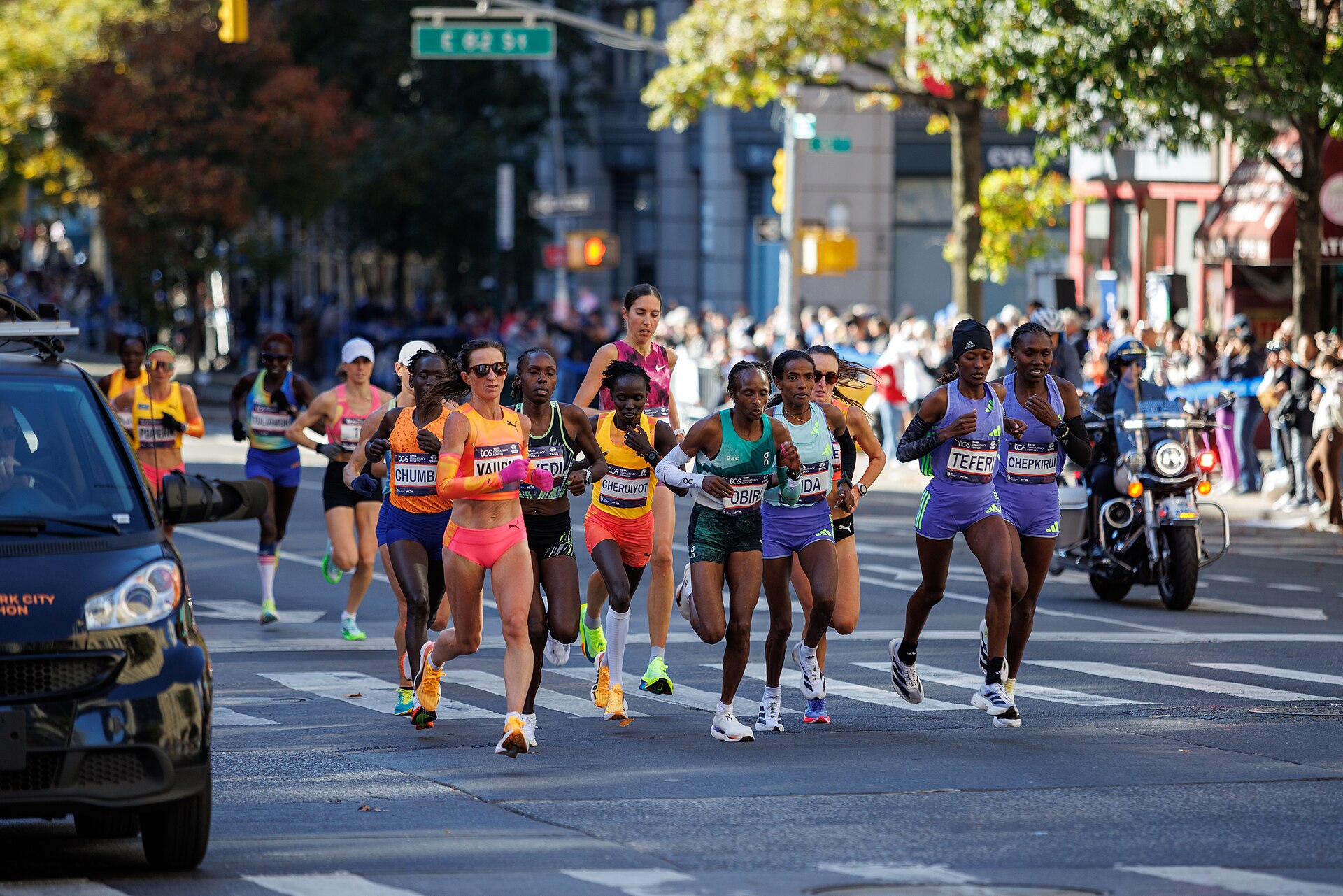
[The women's lead pack at the 2024 New York City Marathon; an abrupt stop after maximal effort lets blood pool instead of circulating.] Photograph: Nrbelex
Image Credits: Wikimedia Commons
When nausea is a warning sign
Ordinary exercise nausea fades within 30 to 60 minutes of stopping. Some symptoms should not be trained through. Stop exercising and get medical help for chest pain, fainting, severe headache, persistent vomiting, or dark or bloody urine after training.
Recurring nausea despite good fueling and hydration also deserves a checkup. Underlying conditions from migraines to gallbladder disease to cardiac issues can all surface as nausea during exertion, and only a clinician can sort those out. Nausea that shows up at easy intensities, rather than only at hard ones, is another reason to get checked.
This article is for general information only and is not medical advice; talk to a clinician about any symptoms.
Frequently asked questions
Is it normal to throw up after a really hard workout?
It happens, especially in high-intensity sports. The blood-shift and adrenaline response can push all the way to vomiting in some people. Occasional vomiting after a maximal effort is usually not dangerous, but regular vomiting means something in the fueling or pacing needs fixing.
Does lactic acid cause the nausea?
Probably not directly. Lactate rises during hard exercise, but the evidence points to blood-flow redistribution, meal timing, and dehydration as the main drivers. Lactate clears quickly after exercise while nausea can linger, which weakens the link.
Should you eat before a workout or train fasted?
For most people, a small easy-to-digest snack 60 to 90 minutes before is better than fully fasted training. Fasted sessions raise the risk of low blood sugar and nausea, especially at higher intensities.
Why does running cause more nausea than cycling?
Running is high impact. Each footstrike jostles the stomach contents and raises intra-abdominal pressure, which adds a mechanical trigger on top of the blood-flow one. Cycling and swimming are lower impact and tend to be gentler on the gut at the same effort level.
How long should nausea last after exercise?
Usually 30 minutes to an hour. If it lasts several hours, keeps you from keeping fluids down, or comes with headache, confusion, or dark urine, treat it as a medical issue rather than a training quirk.
The bottom line
Post-exercise nausea is usually the body doing its job: blood goes to muscles first, and the gut waits its turn. The fix is rarely mysterious.
Time your meals, sip water steadily instead of gulping or skipping, and cool down instead of stopping dead. When those three are right, most cases of the post-workout sick feeling simply stop showing up.
Rive News's research desk covers exercise science, health explainers, and training guides from published studies and clinical sources.
Related
- Why does your heart rate stay elevated after exercise?
- Why do you get a stitch in your side while running?
- How to train for your first 5K run
- When a muscle cramp won't go away: what it means
Subscribe for one science-backed training explainer every week.
Rive News publishes research-backed explainers; claims are sourced from the studies and clinical references listed above.
Related stories
Why Is Altitude Sickness Worse for Some People?
Altitude sickness hits some people harder because of genetics, ascent speed, and prior history, not fitness level. Here is what raises risk
Why Do You Get Blisters When Hiking and How to Prevent Them
Friction plus moisture plus heat equals a blister. Learn why hiking breeds all three, and the boots, socks, and tape system that keeps
How to choose hiking boots for beginners: fit, features, and break-in
Beginners should buy for fit first: snug everywhere, tight nowhere, with a thumb's width at the toes. Here is how to size, test,