
Why footballers wear shin pads under their socks
By Rive News / Research desk | Rive News / Published October 28, 2026 at 9:00 AM PKT
Key takeaways
- Shin pads are compulsory equipment under Law 4 of the Laws of the Game.
- The same law requires pads to be covered entirely by the socks.
- The sock holds the pad in place and stops its hard edge injuring another player.
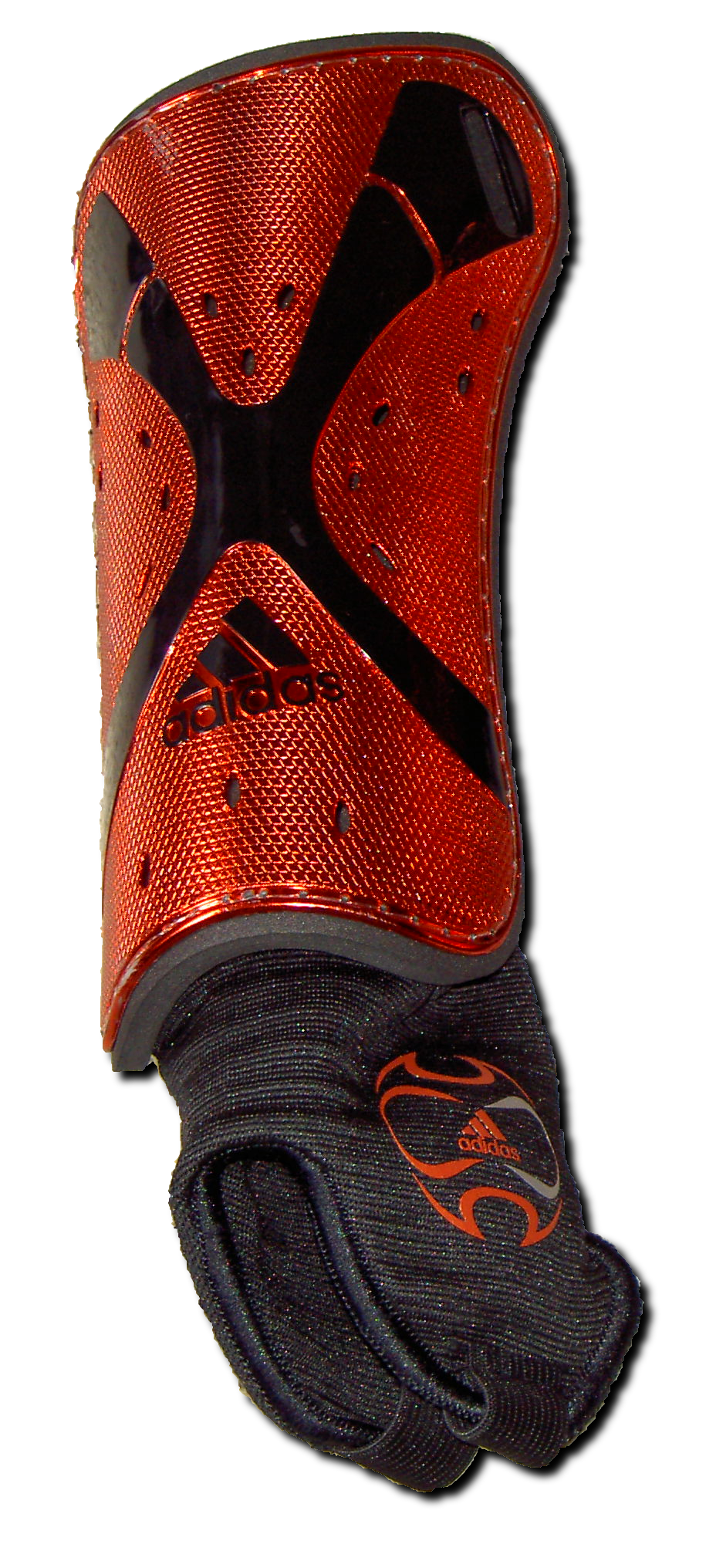
[A shin guard with its hard outer shell and padding.] Photograph: Wikimedia Commons contributor
Image Credits: Wikimedia Commons
Footballers wear shin pads under their socks for two reasons that work together. The pads protect the shin, a bone with almost no muscle or fat in front of it. The socks hold the pads in exactly the right place, and the rules require both parts of the arrangement.
This is not a style choice. Shin guards are compulsory equipment in matches played under the Laws of the Game, and the law states that they must be covered entirely by the stockings. A player whose pads sit outside the socks will be told to fix the problem before play resumes.
This article explains what Law 4 requires, how pads protect the leg, why the sock matters, and why some professionals now wear pads barely larger than a credit card.
What the rules actually require
Law 4 of the Laws of the Game, written by the International Football Association Board (IFAB), lists shin guards as compulsory equipment. The current wording requires guards to be made of a suitable material, to be of an appropriate size to provide reasonable protection, and to be covered by the socks.
Shin guards became compulsory in 1990, according to football histories of the equipment. Before that, some players wore socks rolled down at the ankle and no pads at all, a sight visible in old World Cup footage.
Referees check equipment before kick-off. If a player loses a shin guard during play, the law requires replacing it as soon as possible, and no later than when the ball next goes out of play. A player who plays on without a guard risks being sent from the field to correct the equipment.
Recent IFAB wording places responsibility for size and suitability on the player. The board found it impractical to legislate an exact dimension, since a referee checking equipment cannot predict whether a given guard will prevent a later injury.
How a shin pad protects the leg
The shin bone, the tibia, sits just under the skin with little padding of its own. Tackles, stray kicks and collisions with other players' boots all strike this exposed area, which is why shin injuries are both common and painful.
A pad spreads the force of a blow across a wider area. Research cited in football safety coverage has found that shin guards protect bones from more than 90 percent of the force load in many test cases. That does not make the leg injury-proof, but it changes a direct blow into a distributed one.
Fractures make up roughly 2 to 11 percent of soccer injuries, with 30 to 33 percent of fractures occurring in the lower extremities, according to studies cited by The18. Padding cannot remove that risk, yet it lowers the force that reaches the bone in the first place.
Materials vary. Basic pads use plastic or rubber, while higher-end models use carbon fibre or polyurethane. Carbon fibre has shown greater protection than common polypropylene in some studies, though fit and coverage matter as much as material.
Why the sock must cover the pad
The sock does three jobs. It holds the pad against the shin so it cannot slide sideways or pop out during a sprint or tackle.
It covers the hard edge of the pad so that edge cannot cut or bruise an opponent. It also keeps the pad's colour out of sight, which avoids clashes with kit colours.
Referees explain the first point bluntly. A pad that moves leaves the shin unprotected at the moment of impact, which defeats the purpose of wearing it. Many players add tape around the sock for extra hold, especially when socks are loose.
For footballers wondering about other kit rules, the same Law 4 covers the whole kit: shirt, shorts, socks, footwear and shin guards all count as compulsory equipment.
Why some professionals wear tiny pads
Top players increasingly wear very small pads, sometimes little larger than a credit card. The reasons are comfort, mobility and fit: a small pad interferes less with touch and sprinting, and some players feel larger pads restrict the ankle.
IFAB requires an appropriate size but defines no minimum dimension. That gap lets tiny pads pass pre-match checks, since referees cannot be expected to assess long-term suitability in a quick equipment check.
The trend has drawn warnings. Football associations and grassroots clubs have cautioned that reduced coverage may raise injury risk, and at least one youth club banned tiny pads after a player suffered a double leg break. The debate continues because the law balances player choice against safety, and the two do not always point the same way.
Young players should note the practical point: a pad that covers only part of the shin protects only that part. Coaches and parents who buy pads for children usually choose full coverage over the professional look.
Choosing and fitting shin pads
Size is measured against the leg, not the shoe size alone. A pad should cover from just below the knee to just above the ankle, without pressing into either joint when the player runs.
Ankle pads and sleeves help keep the guard centred, and many modern guards come with a compression sleeve rather than loose straps. The sleeve grips the calf and stops the pad rotating during play.
Players who find pads slipping should check the sock first. A tight, long sock with a wrap of tape at the top holds most pads in place, and replacing stretched socks often fixes a slipping problem without buying new guards.

[Footballers contesting a match, their shin pads covered by their socks.] Photograph: Wikimedia Commons contributor
Image Credits: Wikimedia Commons
FAQ
Can a referee send a player off for wearing pads outside the socks?
A referee will require the player to correct the equipment, and the player leaves the field to do so if play has started. The player returns once the referee is satisfied the kit complies.
Do shin pads prevent broken legs?
No. Pads reduce the force that reaches the shin and lower the risk, but they cannot prevent every fracture. Severe tackles can break bones even through a pad, which is why dangerous tackling is punished separately.
Why do goalkeepers wear shin pads too?
Goalkeepers face the same kicks and collisions, and the law applies to every player on the field. Some goalkeepers choose smaller pads for mobility, but they must still wear guards covered by socks.
Are shin pads required in training?
Training rules depend on the club or organiser, since Law 4 applies to matches. Most clubs still require pads in training because the same tackles happen there, just without a referee.
The bottom line
Footballers wear shin pads under their socks because the rules demand it and because the arrangement works. The pad absorbs and spreads impact, while the sock keeps it centred and covers its hard edge.
Tiny pads may pass a referee's check, but coverage is what protects the shin. For most players, a pad that covers the full shin, held firm by a good sock, remains the sensible choice.
Tags: football, rules, player safety
Rive News's research desk covers outdoor skills and everyday science explainers.
Related
Subscribe to Rive News for one practical explainer each week.
Rive News publishes researched explainers with named sources. Corrections are welcome at any time.
Related stories

Why Is Altitude Sickness Worse for Some People?
Altitude sickness hits some people harder because of genetics, ascent speed, and prior history, not fitness level. Here is what raises risk
Why Do You Get Blisters When Hiking and How to Prevent Them
Friction plus moisture plus heat equals a blister. Learn why hiking breeds all three, and the boots, socks, and tape system that keeps
How to choose hiking boots for beginners: fit, features, and break-in
Beginners should buy for fit first: snug everywhere, tight nowhere, with a thumb's width at the toes. Here is how to size, test,