
How hiking boots affect ankle rolls on trails
By Rive News / Research desk | Rive News / Published October 26, 2026 at 9:00 AM PKT
Key takeaways
- High hiking boots do restrict ankle motion in lab tests, but field studies find no clear reduction in ankle sprains.
- Ankle stability comes mainly from muscles, ligaments, and fast reflexes, not from the height of a boot collar.
- Balance training, good fit, and careful foot placement lower roll risk more reliably than boot height alone.
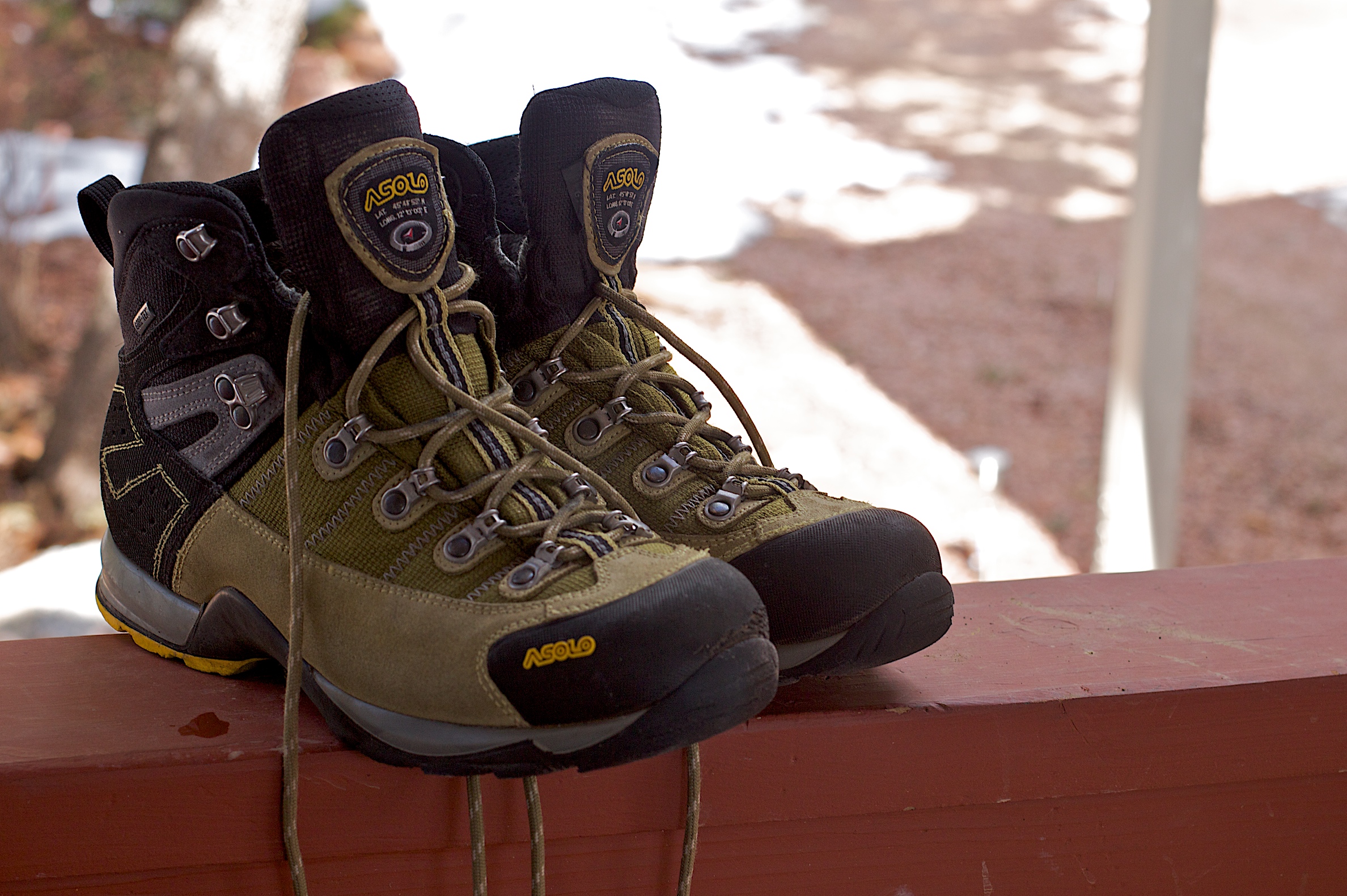
[A pair of high-cut hiking boots resting on a ledge.] Photograph: Wikimedia Commons contributor
Image Credits: Wikimedia Commons
An ankle roll happens in a fraction of a second. A foot lands on a rock edge or a root, the ankle tips outward, and the ligaments on the outside of the joint stretch past their limit. The question is whether a taller boot can stop that sequence.
This article explains how hiking boots actually affect ankle rolls, including what lab tests show, what field studies found, why the two disagree, and what lowers roll risk in practice.
The intuitive case for high boots
The logic for high boots feels obvious. A high collar wraps the ankle joint.
The ankle is what gets sprained. So the boot must protect it.
Lab tests give this idea partial support. Stiff, high-cut footwear does restrict how far the ankle can roll in a controlled test. The collar and the stiff upper act as a splint, limiting sideways motion at the joint.
That lab finding is real, and it is worth stating plainly. A boot can mechanically limit ankle movement. The question is whether that limit translates into fewer sprains on a real trail, where the foot, the boot, and the ground interact in ways a lab rig does not capture.
What the field studies found
The field evidence points the other way, or at least refuses to confirm the claim. A 2019 meta-analysis in the Journal of Athletic Training, reviewing more than a dozen field and laboratory studies, found no statistically significant difference in ankle injury rates between hikers in boots and hikers in trail runners.
The same pattern shows up in other populations. Research on military recruits found no significant difference in ankle injury rates between groups wearing high-cut boots and groups wearing low-cut shoes during similar terrain exercises. The soldiers in low-cut shoes actually reported less overall foot fatigue.
Research in the Journal of Athletic Training also identified the strongest predictors of ankle sprains, and footwear height was not among them. The leading predictors were previous injury history, muscle fatigue, and poor proprioception, which is the body's sense of where its joints are in space.
A 2014 lab study adds a wrinkle. It found no difference in how far the ankle rolled between footwear types, and it raised a possible trade-off: a stiff collar may slow the muscles that catch a roll. Both results are preliminary, but they cut against the simple story that more stiffness means more safety.
Why lab results and trail results disagree
The gap between lab and trail has a plausible explanation. A roll is not a slow bend.
It is a fast event, over in milliseconds. What catches it is not a passive collar but an active correction: the peroneal muscles on the outside of the lower leg fire and pull the foot back under the body.
If those muscles react fast enough, the ankle recovers. If they are slow, fatigued, or undertrained, the roll completes regardless of boot height. That is why balance and strength work reduce sprain risk more reliably than footwear choice, according to the evidence summarised by OffChartCPD.
There is also a use-it-or-lose-it argument. Wearing stiff boots all the time may mean the stabilising muscles are rarely asked to work.
Trail runners, by contrast, load those muscles on every step. No large randomised trial proves that stiff boots weaken ankles over time, but the mechanism fits what is known about disuse in other contexts.
None of this means boots are useless. It means their value lies elsewhere: protection from rocks, roots, and scree; debris kept out of the shoe; warmth and water resistance; and a stiff sole that spreads load under a heavy pack.
Those are real benefits. They are just not the same as preventing ankle rolls.
The thru-hiker test
Long-distance hikers provide a large, informal test of the claim. By most estimates, 70 to 80 per cent of thru-hikers on the Pacific Crest Trail and the Appalachian Trail now wear trail runners rather than boots. These are people walking ten or more hours a day for months across rough terrain, often carrying significant pack weight.
If boots were essential for ankle safety, this group should show an epidemic of ankle injuries. The data does not support that. Injury rates are not higher than in hikers wearing boots, and blisters, not sprains, are the dominant footwear problem on long trails, with cohort studies putting blister prevalence at 54 to 86 per cent.
That does not prove trail runners are safer. The honest reading is narrower: boot height has not been shown to meaningfully change ankle sprain risk either way, in any population studied so far.
What actually lowers roll risk
The evidence points to four levers that matter more than collar height.
First, ankle strength and balance. Single-leg balance work, wobble-board training, and calf and peroneal strengthening improve the reflexes that catch a roll. These are the interventions with the strongest support for people with a history of sprains.
Second, fit. A boot or shoe that holds the heel firmly and leaves the toes room to spread keeps the foot from sliding inside the footwear. A loose heel turns every step into a small slide, and a sliding foot is a rolling foot.
Third, lacing and load. A snug lace through the midfoot, a pack weight matched to fitness, and poles on rough descents all reduce the forces that cause rolls. Fatigue matters too: most rolls happen late in the day, when muscles are tired and attention drops.
Fourth, real support where it is proven. People with chronic ankle instability are a different case from healthy hikers.
For them, an external brace or rigid taping is a better-evidenced intervention than boot height specifically. A brace is designed to resist a roll; a boot collar is designed to cover the ankle.
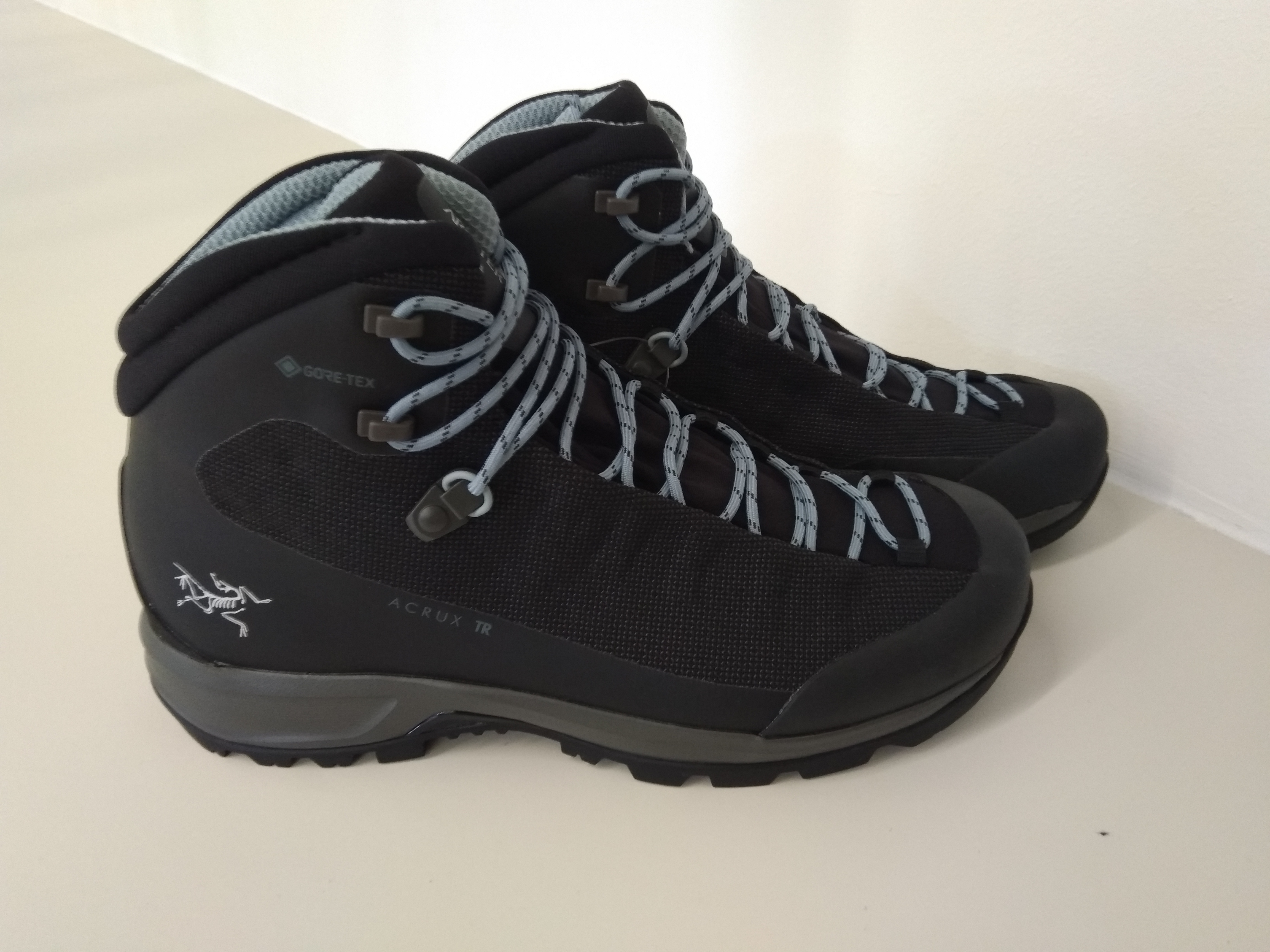
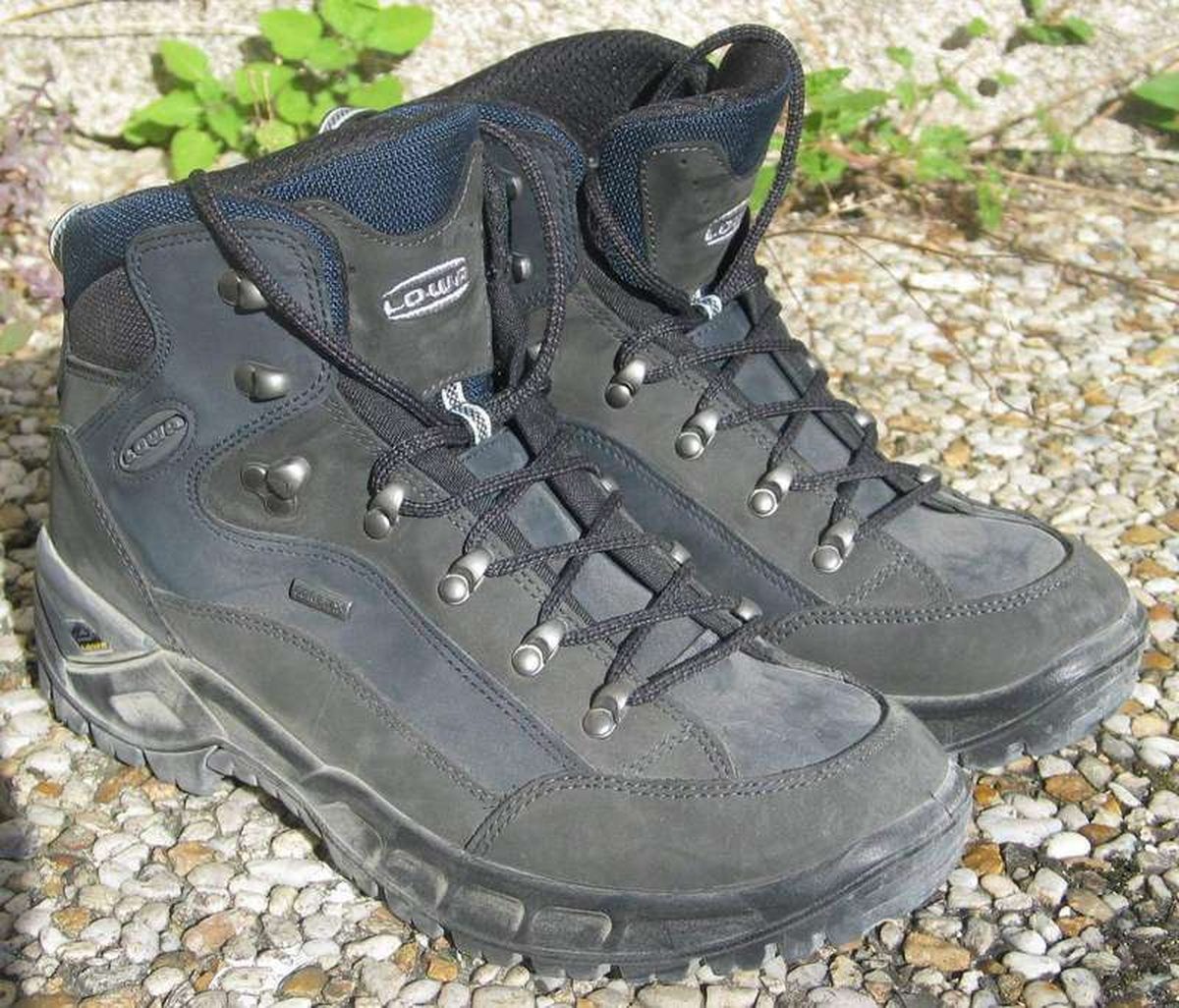
[A pair of black high-cut trekking boots.] Photograph: Wikimedia Commons contributor
Image Credits: Wikimedia Commons
How to choose, honestly
Choose boots for the job they actually do. Heavy loads, rough and rocky ground, snow, and cold are good reasons to pick a stiffer, higher boot. The boot protects the foot, keeps debris out, and supports a heavy pack.
Do not choose a taller boot for ankle support alone. If ankle rolls are your worry, spend the money and time on balance training, a well-fitted shoe, and, if you have a history of sprains, a proper brace discussed with a clinician.
And break boots in before a long hike. A stiff, unfamiliar boot changes how you walk, and an altered gait on rough ground is its own risk. Short walks first, then longer ones, with the socks you will actually wear.
The bottom line
Hiking boots do not reliably prevent ankle rolls. They restrict motion in the lab, but field studies find no clear reduction in sprains, and the muscles that catch a roll matter far more than the collar around it.
Pick boots for protection, fit, and load. Protect your ankles with strength, balance, and attention to the ground in front of you.
Tags: hiking boots, ankle support, trail safety
Rive News is a research desk that writes plain-language explainers from published studies and public sources.
Related
- How to choose your first pair of hiking boots
- Why do you get blisters when hiking and how to prevent them
- Why you need to break in hiking boots before the trail
- How to build endurance for mountain hiking step by step
Subscribe for one plain-language outdoors explainer each week.
Rive News publishes explainers based on public sources. Corrections are made promptly when a source is shown to be wrong.
Related stories
Why Is Altitude Sickness Worse for Some People?
Altitude sickness hits some people harder because of genetics, ascent speed, and prior history, not fitness level. Here is what raises risk
Why Do You Get Blisters When Hiking and How to Prevent Them
Friction plus moisture plus heat equals a blister. Learn why hiking breeds all three, and the boots, socks, and tape system that keeps
How to choose hiking boots for beginners: fit, features, and break-in
Beginners should buy for fit first: snug everywhere, tight nowhere, with a thumb's width at the toes. Here is how to size, test,