
Why Do Marathoners Hit the Wall Around Mile 20?
Key takeaways
- Hitting the wall is a sudden energy collapse caused by glycogen depletion, not ordinary tiredness, and it typically strikes between miles 18 and 22.
- The average runner stores about 1,800 calories of glycogen and burns roughly 100 per mile, which is why the crisis lands near mile 20.
- Pacing discipline and in-race fuelling with 60 to 90 grams of carbohydrate per hour are the main defences.
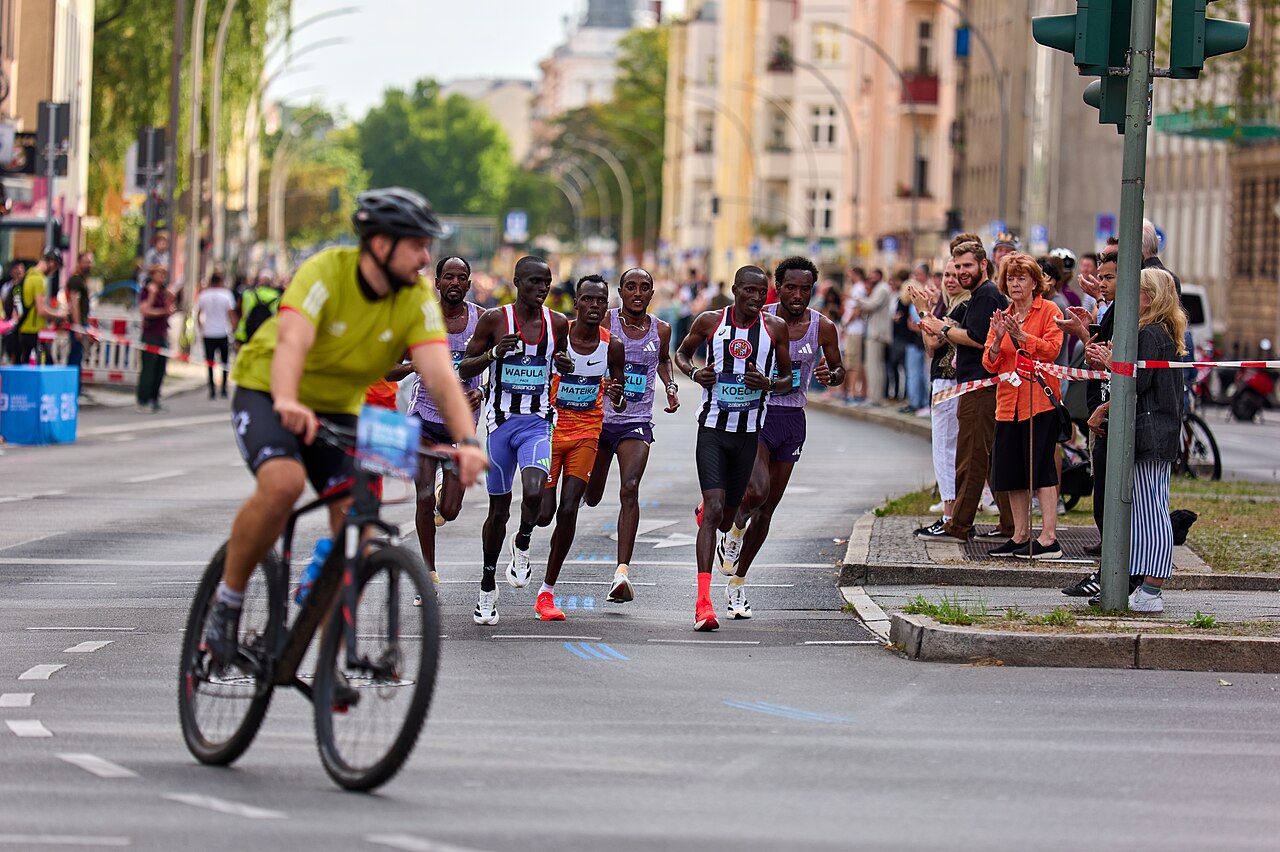
The wall is one of the most famous phenomena in endurance sport. A marathoner feels strong through the halfway point, settles into rhythm, and then, somewhere around the twentieth mile, the body simply stops cooperating.
Legs turn to lead. Pace collapses. The brain starts negotiating about walking.
This is not just tiredness. Every marathoner gets tired. The wall is a distinct physiological event with a measurable cause, and sports scientists can predict, almost to the mile, where it will strike.
This article explains what the wall is, why it arrives around mile 20, why some runners meet it and others sail past, what the brain does during the shutdown, and how runners push it back.
What the wall actually is
The technical term is glycogen depletion. Muscles and the liver store carbohydrate as glycogen, a chained form of glucose that the body can break down quickly for energy. At marathon effort, glycogen is the high-octane fuel: it burns efficiently and powers both hard running and the brain.
The problem is the size of the tank. The average person stores roughly 1,800 calories worth of glycogen in their muscles, and a runner burns about 100 calories per mile, according to experts quoted by Live Science. Simple arithmetic puts empty somewhere around mile 18.
When glycogen runs out, the body shifts to fat. Fat holds far more total energy, but it burns slowly and cannot sustain marathon pace. The result is the sudden, dramatic deterioration runners describe: legs feel heavy during a run, pace falls off a cliff rather than fading gradually.
Research analysing more than four million marathon race records, summarised by Runna, found that the wall has four defining features: generalised fatigue, unintentional slowing, a powerful desire to walk, and a psychological shift from racing to surviving. It is a change of state, not a slow fade.
Why mile 20 is the danger zone
If the average tank holds 1,800 calories and each mile costs 100, the wall should arrive at mile 18. In practice most runners report it between miles 18 and 22, with 20 as the legendary number.
A computational model built at Harvard helps explain the range. Dr Benjamin Rapoport's model, published in PLOS Computational Biology, showed that athletes running at 80 to 95 percent of their aerobic capacity hit glycogen depletion around mile 20 to 21, Runna reports. The model weighs five variables: stored glycogen, running speed, pacing strategy, body size, and muscle mass.
Pacing is the great multiplier. Running even slightly above aerobic threshold in the early miles burns carbohydrate at a far higher rate. A runner who goes out ten seconds per mile faster than planned in the first half is spending fuel they will not have at mile 20. A study of nearly 92,000 marathon performances, cited by RunnersConnect, found runners slowed in the second half by an average of 15.6 percent for men and 11.7 percent for women, a pattern driven largely by starting too fast.
This is why coaches say the marathon is really two races: the first 20 miles, and the last six. The first is about discipline. The second is about the fuel ledger.
Why some runners hit it and others do not
Not everyone meets the wall. More than two-fifths of runners who race the full marathon distance hit it, RunnersConnect reports, which means most do not. The difference comes down to fitness, fuelling, and pacing.
Trained runners store more glycogen and burn a higher share of fat at a given pace, sparing their limited carbohydrate. Men hit the wall more often than women: a 2021 study of 928 marathon runners, reported by Live Science, found 28 percent of men versus 17 percent of women experienced it. The researchers concluded that men were more likely to overestimate their ability and run too fast early.
Fuelling during the race matters enormously. The liver's glycogen is the only reserve that can release glucose into the bloodstream to feed the brain, and it empties after about 90 to 120 minutes of hard effort without food. Runners who take on 60 to 90 grams of carbohydrate per hour, through gels, drinks, or chews, keep that reserve topped up and push the wall back or past the finish line.
Experience plays a role too. Runners who have practised their race-day nutrition in training, including the unglamorous work of training their stomach to absorb fuel at speed, handle the late miles far better than those trying gels for the first time on race day.
The brain's role in the shutdown
The wall is not only a muscle problem. It is a brain problem, and newer research suggests the brain acts before the muscles are truly empty.
When liver glycogen runs low, blood glucose starts to fall. The brain runs almost entirely on glucose and carries no meaningful reserve of its own.
Faced with a falling supply, it raises the sense of effort and pulls the plug on pace to protect itself. Runners describe this as the sudden loss of will, the moment the race becomes about survival.
Researchers studying central fatigue link prolonged exercise to shifts in brain chemistry, including serotonin and dopamine changes that amplify perceived effort. Some evidence even suggests the brain anticipates depletion and begins slowing the body gradually, before the tank is fully dry.
This is why the wall feels so psychological. The legs are failing, but the despair, the confusion, the urge to stop, come from a brain defending its own fuel supply.
No second wind arrives to rescue the race at this point. Eating helps, but ingested carbohydrate takes 15 to 30 minutes to lift blood sugar, which is why the cardinal rule of marathon fuelling is to eat before you feel empty.
How runners push the wall back
The wall is one of the most preventable failures in endurance sport. The strategies are well tested and unglamorous.
First, pace honestly. Racing at the pace your training supports, rather than the pace your ambition wants, keeps carbohydrate burn in check through the critical early miles. Even small surges cost disproportionate fuel.
Second, fuel early and often. Starting a race under-fuelled is like skipping breakfast before a hard day: the body runs on reserves from the first mile.
For any effort lasting over 90 minutes, runners need on-the-move carbohydrate: a gel or chews every 30 to 45 minutes, aiming for 60 to 90 grams per hour depending on body size and stomach tolerance. Waiting until mile 15 to start eating is waiting too long.
Third, train the gut. The digestive system can be trained like a muscle. Runners who practise fuelling on long runs absorb more carbohydrate on race day with less stomach trouble.
Fourth, build the aerobic base. Months of easy running raise the share of fat burned at marathon pace, which spares glycogen for the final miles. This is the slow, boring work that makes the fast finish possible.
Finally, respect the distance. The runners who sail through mile 20 looking fresh are not tougher than the ones walking it.
They are usually just better fuelled, better paced, and better trained. Fitness opens the door, but fuelling walks through it.
Frequently asked questions
Is hitting the wall the same as being tired?
No. Tiredness builds gradually and responds to slowing down slightly.
The wall is a sudden, qualitative collapse in both physical performance and mental function, driven by glycogen depletion. Runners who have felt it describe it as unmistakable and nothing like ordinary fatigue.
Can elite runners hit the wall?
Rarely, but it happens. Professionals are less likely to hit the wall than recreational runners because they store more glycogen, burn more fat at pace, and fuel aggressively during races. When an elite does collapse late, the cause is usually a pacing miscalculation or a fuelling failure.
What should you eat if you hit the wall during a race?
Fast-acting carbohydrate: gels, sports drink, or chews. Solid food takes too long to digest to help quickly.
Slow down, take fuel, and give it 15 to 30 minutes to reach the bloodstream. Walking through aid stations to get fluids down is a legitimate strategy.
Does carb-loading the night before prevent the wall?
It helps but does not guarantee prevention. A carbohydrate-rich diet in the days before a race maximises glycogen stores, a practice called carbohydrate loading. But even full stores only last 90 to 120 minutes at marathon effort, so in-race fuelling is still essential for most runners.
Why do men hit the wall more often than women?
A 2021 study of 928 marathoners found 28 percent of men versus 17 percent of women hit the wall. The authors concluded men were more likely to overestimate their fitness and start too fast. Physiological differences in fuel use may also play a role, but pacing discipline is the dominant factor.
The bottom line
Marathoners hit the wall around mile 20 because that is where the arithmetic of fuel runs out. Roughly 1,800 calories of stored glycogen, burned at about 100 calories a mile, buys 18 to 20 miles of hard running. Past that point, the body switches to slow-burning fat, the brain defends its shrinking glucose supply, and pace collapses.
The good news is that the wall is optional. Honest pacing, early and steady fuelling, and months of aerobic training move it past the finish line. The marathon rewards the patient, and punishes the ambitious, almost to the mile.
Latest in Sports & Outdoors
- Cyclists ride in a peloton: how it works
- Trail vs road running shoes: what is the real difference
- Why runners get a second wind
- Why altitude sickness hits some people harder
Subscribe to the Rive News newsletter for one science-backed sports explainer every week.
Related stories

Why Is Altitude Sickness Worse for Some People?
Altitude sickness hits some people harder because of genetics, ascent speed, and prior history, not fitness level. Here is what raises risk
Why Do You Get Blisters When Hiking and How to Prevent Them
Friction plus moisture plus heat equals a blister. Learn why hiking breeds all three, and the boots, socks, and tape system that keeps
How to choose hiking boots for beginners: fit, features, and break-in
Beginners should buy for fit first: snug everywhere, tight nowhere, with a thumb's width at the toes. Here is how to size, test,