
Why cold weather makes you pee more when you exercise
By Rive News / Research desk | Rive News / Published October 24, 2026 at 9:00 AM PKT
Key takeaways
- Cold diuresis is the reason: cold constricts blood vessels, blood pressure rises, and the kidneys flush out extra fluid as urine.
- You also sweat less in cold air, so more of the body's water leaves through the bladder instead of the skin.
- Exercise in the cold can still dehydrate you, so keep drinking water even when you do not feel thirsty.
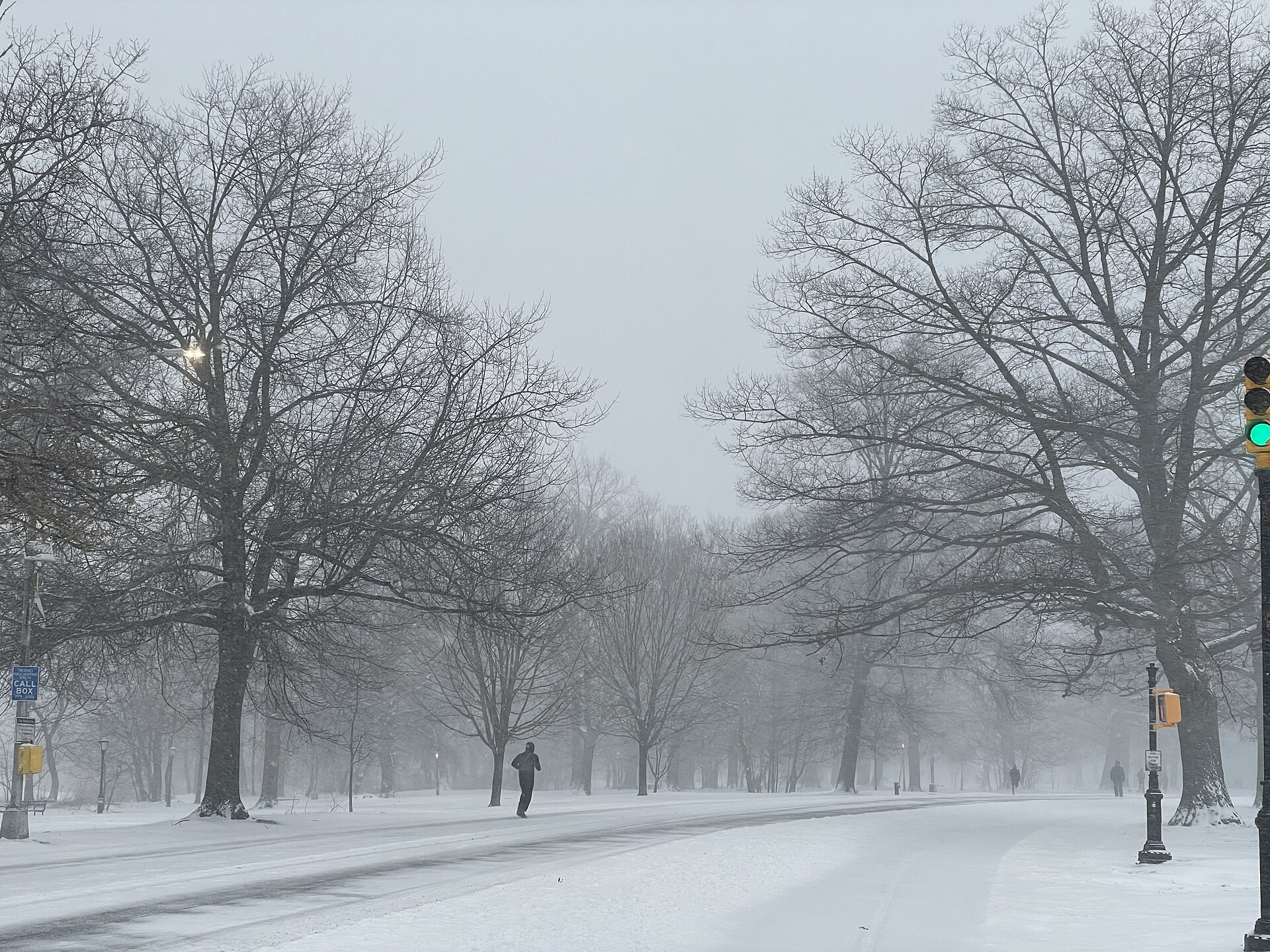
[A lone runner keeps training on a snow-covered path in Prospect Park, Brooklyn, during a winter storm.] Photograph: Wil540 art
Image Credits: Wikimedia Commons
Cold diuresis is the body's response to cold temperatures that increases urine production. When you are out in the cold, your blood vessels narrow to keep heat around your vital organs, and your kidneys respond by filtering out extra fluid. The result is simple: you need to pee more often.
This effect shows up during winter exercise too, which confuses people. You are working hard, so you expect to sweat the fluid out, but instead your bladder fills up faster than usual. This article explains how cold diuresis works, why exercise makes the pattern more noticeable, what to do about it, and when extra frequency means you should talk to a clinician.
How cold diuresis works
Cold diuresis starts with vasoconstriction. When your body senses a drop in temperature, it narrows the blood vessels near the skin to reduce heat loss. This keeps warm blood concentrated around the internal organs, where it matters most.
That narrowing has a side effect. The same volume of blood now flows through a smaller space, so blood pressure rises.
According to the MedShun medical explainer on winter urination, the kidneys respond to that pressure increase by increasing their filtration rate to reduce the blood's volume. More fluid gets filtered out, and more urine is produced.
The kidneys are normally the body's fluid-balance managers. When they detect higher pressure, they treat it as excess fluid and work to bring the volume down. That is the core mechanism: cold leads to constriction, constriction raises pressure, and the kidneys relieve pressure by making more urine.
Why you sweat less matters too
There is a second, simpler reason behind cold-weather bathroom breaks. In warm weather, a meaningful share of the body's water leaves through the skin as sweat. In cold weather, you sweat far less because the body does not need to shed heat.
With less fluid leaving through sweat, more of it stays in the body and eventually exits through the kidneys. Carewell's guide to winter incontinence puts it plainly: the body still has to eliminate fluid, so excess fluid collects in the bladder and the need to urinate rises.
During exercise, this feels contradictory. You are exerting yourself and expect to sweat like you do in summer. But in cold air, a large share of your fluid loss shifts from sweat to urine, even during a run.
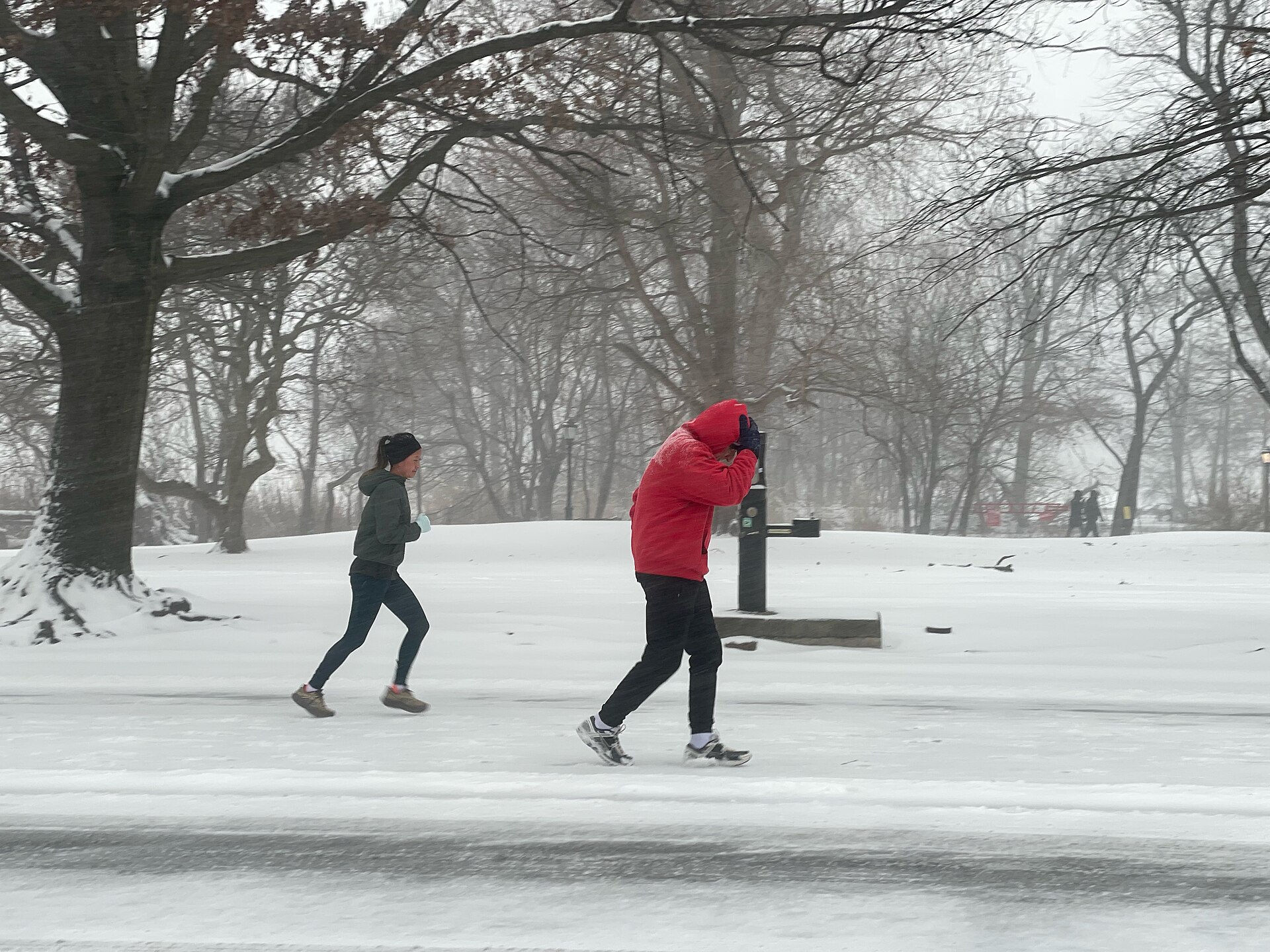
[Joggers train through a January snowstorm; in cold air, fluid loss shifts from sweat to urine even mid-run.] Photograph: Wil540 art
Image Credits: Wikimedia Commons
The exercise angle: why runners notice it most
Runners and cyclists notice cold diuresis more than couch-sitters for a few reasons. First, exercise increases blood flow and blood pressure on its own, which adds to the pressure-driven kidney response the cold already triggers.
Second, workouts often happen early in the morning, when temperatures are lowest and the body's cold response is strongest. Third, exercise increases fluid intake: you drink water before and during the workout, and that water has to go somewhere.
There is one trap to avoid. Because you are peeing more and sweating less, it is easy to assume you do not need water. That is backwards.
MedShun notes that staying hydrated matters in the cold precisely because the body still loses fluid through urination even without visible sweating. Cold-diuresis dehydration is real, and it can quietly hurt performance.
What happens inside the kidneys
The deeper physiology is still being worked out, but researchers have identified part of the renal story. A clinical review summarized by DrOracle.ai reports that during cold exposure, the kidneys express fewer renal V2 receptors, which normally help the kidneys concentrate urine and retain water.
Aquaporin-2 water channels in the kidney's collecting ducts are also suppressed by cold exposure. These channels are critical for water reabsorption, and when they downregulate, urine output rises. Interestingly, blood levels of antidiuretic hormone (ADH) stay unchanged during cold exposure, according to the same review.
That detail matters. It suggests the problem is not less hormone being produced, but the kidneys becoming less responsive to it. The ratio of urine output to fluid intake increases during cold exposure, meaning you lose more water through urination relative to what you drink.
Cold diuresis can lower working capacity
This is more than a bathroom inconvenience. The same clinical review notes that cold-induced diuresis decreases blood volume, lowers physical working capacity, and increases blood viscosity. These effects can be hazardous for vulnerable people, especially those with underlying cardiac disease.
Electrolyte disturbances are also possible, including low potassium, magnesium, and calcium, according to the review. For healthy exercisers, the practical takeaway is straightforward: the extra urination is not harmless "free fluid loss." It is fluid your body would otherwise keep, and it needs replacing.
Practical tips for winter workouts
Plan bathroom stops into your route. If you know the first 20 minutes of a cold run reliably trigger a stop, pick a loop near facilities or a trail with cover rather than fighting it.
Hydrate on schedule, not on thirst. Thirst response is already blunted in the cold. Drink before, during, and after, the same as a summer workout, even though your sweat rate looks lower.
Dress warm enough to reduce the cold trigger. Layers, gloves, and wind protection keep your core temperature up, which softens the vasoconstriction response. Overdressing has the opposite cost, so aim for feeling slightly cool at the start.
Skip the extra coffee right before a cold workout. Caffeine is a mild diuretic and a bladder irritant, and it stacks on top of cold diuresis. One regular cup is fine; two or three is asking for trouble on the trail.
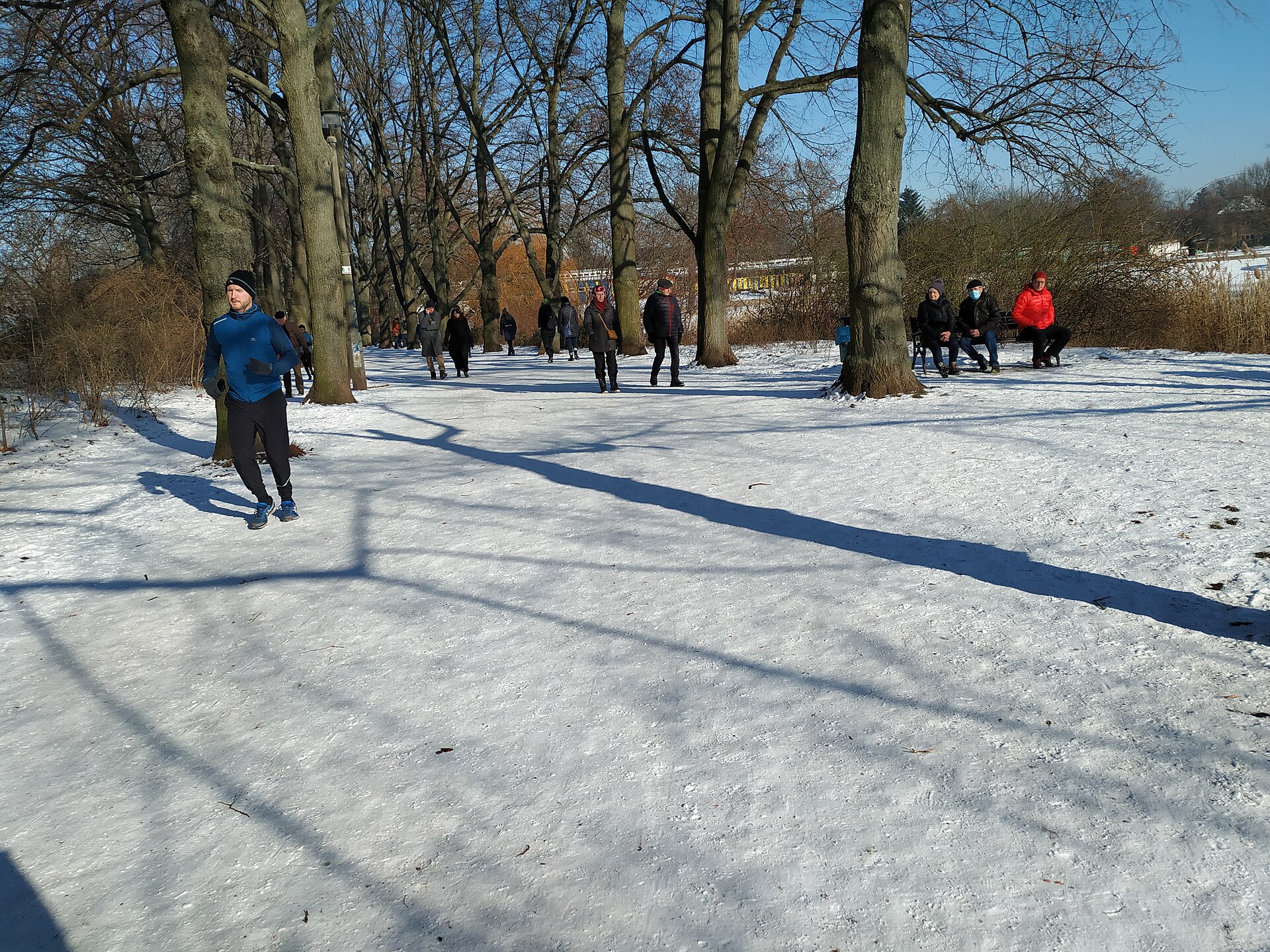
[A frozen winter landscape; dressing warm enough to blunt the cold response softens the vasoconstriction trigger.] Photograph: Geoprofi Lars
Image Credits: Wikimedia Commons
When frequency means something else
Cold diuresis is a normal physiological response, and for most people it is harmless. But there are lines where extra urination stops being weather-related and starts being a symptom.
If frequent urination comes with pain or burning, blood in the urine, fever, or back pain, those point toward a urinary tract infection, not the cold. MedShun notes that cold-weather fluid habits can raise UTI risk in some people, so symptoms deserve attention.
If urgency disrupts your daily life, if you leak urine, or if the pattern continues in warm weather, see a clinician. Persistent frequency can signal overactive bladder or other bladder conditions that cold merely unmasks. One honest caveat from MedShun: there is currently no definitive research on the exact temperatures or exposure times that induce cold diuresis, so the boundaries of "normal" are still fuzzy.
This article is for general information only and is not medical advice; talk to a clinician about any symptoms.
Frequently asked questions
Does cold diuresis happen during exercise or only at rest?
It happens in both. Exercise adds its own blood-pressure increase on top of the cold response, and workout hydration gives the kidneys more fluid to process. That combination is why runners notice it so clearly.
Can cold diuresis dehydrate you?
Yes. The extra urine output removes fluid your body would otherwise keep, and reduced thirst in the cold means you may not replace it. The clinical review of cold diuresis links it to decreased blood volume and lower physical working capacity, so hydration still matters in winter.
Is peeing more in the cold a sign of hypothermia?
Frequent urination in the cold is usually just cold diuresis, not hypothermia. But MedShun notes it can be a warning sign that the body is sensing the threat of hypothermia. If you are shivering uncontrollably, confused, or extremely cold alongside the frequency, get warm and seek help.
Do warm clothes reduce cold diuresis?
They can soften it. Staying warm reduces the vasoconstriction response that starts the whole chain. Layers, wind protection, and keeping your core warm are the practical levers you control.
Should men or older adults worry more?
Age is listed as a risk factor for cold diuresis effects, and cold weather can aggravate existing bladder conditions such as overactive bladder. If you have a prostate condition or known bladder issues, winter workouts deserve extra planning and a conversation with your clinician.
The bottom line
Cold weather makes you pee more because vasoconstriction raises blood pressure, the kidneys filter out extra fluid to relieve it, and less sweat leaves more water for the bladder. During exercise, the effect stacks with workout hydration and higher blood flow, which is why winter runners feel it so strongly. Drink water anyway, dress warm, and treat persistent or painful frequency as a medical question rather than a weather quirk.
Rive News's research desk covers exercise science, health explainers, and training guides from published studies and clinical sources.
Related
- Why does your heart rate stay elevated after exercise?
- Why do you get a stitch in your side while running?
- How to train for your first 5K run
- How many rest days do beginners actually need?
Subscribe for one science-backed training explainer every week.
Rive News publishes research-backed explainers; claims are sourced from the studies and clinical references listed above.
Related stories
Why Is Altitude Sickness Worse for Some People?
Altitude sickness hits some people harder because of genetics, ascent speed, and prior history, not fitness level. Here is what raises risk
Why Do You Get Blisters When Hiking and How to Prevent Them
Friction plus moisture plus heat equals a blister. Learn why hiking breeds all three, and the boots, socks, and tape system that keeps
How to choose hiking boots for beginners: fit, features, and break-in
Beginners should buy for fit first: snug everywhere, tight nowhere, with a thumb's width at the toes. Here is how to size, test,