
Why Do Soccer Balls Swerve in Flight? The Magnus Effect Explained
Key takeaways
- A spinning soccer ball swerves because spin deflects the airflow around it, and the air pushes back sideways: this is the Magnus effect.
- The force acts at right angles to the ball's motion and grows with spin rate and speed, so sidespin bends shots left or right.
- A spinless knuckleball wobbles for a different reason: shifting seam turbulence, not steady Magnus force.
Watch a great free kick and the physics looks like cheating. The ball leaves the foot heading for the wall, then bends around it and dips into the corner.
No strings, no wind, no trick ball. The swerve comes from one of the oldest principles in fluid dynamics, a force that appears whenever a spinning object moves through air or water, and it has a name: the Magnus effect.
Understanding the swerve means understanding three things: how spin changes the airflow around the ball, why that change pushes the ball sideways, and why a ball with almost no spin behaves in the opposite way, wobbling unpredictably instead of curving smoothly. This article explains the Magnus effect in plain terms, walks through what the spin actually does to the air, and separates the bending free kick from its feared cousin, the knuckleball.
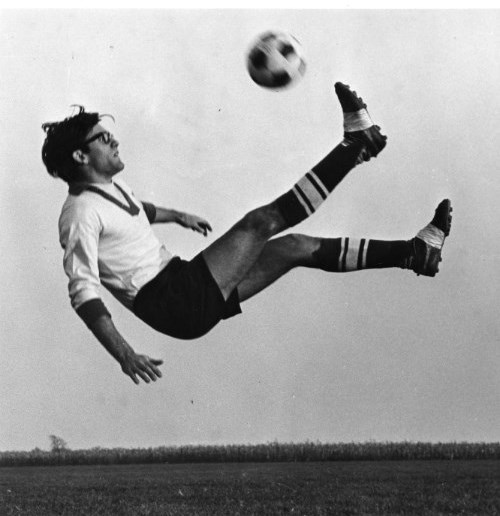
A soccer player striking the ball. Photograph: Mennonite Church USA Archives
Image Credits: Wikimedia Commons / Mennonite Church USA Archives, Jackshots256
What the Magnus effect actually is
The Magnus effect is the sideways force on a spinning object moving through a fluid, named for the German physicist Heinrich Gustav Magnus, who investigated it rigorously in 1852, according to ScienceABC. It is not magic and not a quirk of soccer. The same force bends a topspin tennis shot downward, hooks a backspun basketball in midair, and slices a golf drive.
Here is the plain-English version. When a ball flies without spin, gravity and air resistance shape its path, and the flight is a fairly predictable arc. Give the ball spin and something new enters the picture.
The spinning surface drags a thin layer of air around with it, and the airflow separates from the ball's surface at different points on each side. On one side, the surface motion works with the passing airflow; on the other, it works against it. That asymmetry changes the pressure distribution and deflects the ball's wake sideways.
How the sideways push works
Deflecting air means changing its momentum. The ball has exerted a force on the air, so the air exerts an equal and opposite force on the ball. That reaction is the Magnus force, and it acts at right angles to the direction the ball is traveling.
Instead of speeding the ball up or slowing it down, it bends the path. PhysicsUK describes the mechanism precisely: the sideways Magnus force continually changes the direction of the ball's velocity, and that is what we see as the swerve.
The force always points toward the side the ball's front face is turning into. Sidespin to the right bends the shot right; sidespin to the left bends it left.
Topspin points the force downward, making the ball dip; backspin points it upward, making the ball float. Its strength grows with how fast the ball spins and how fast it flies, which is why a struck free kick curves so dramatically and a casual pass barely bends at all.
Why the swerve sharpens as the ball slows
One of the most beautiful details of the free kick came from a 2010 study by French physicists who tested spinning balls in water. As a spinning ball slows down, the sideways Magnus push matters more and more relative to the ball's forward momentum, so the path tightens into a spiral, as summarized by English Bridges.
On a short kick you barely notice this. On a long free kick it becomes pronounced: the longer the flight, the more of the spiral you see.
This is why the classic bending free kick seems to accelerate its curve late in flight. The ball is not gaining spin; it is losing speed.
The Magnus force stays roughly proportional to the spin, while the forward momentum it must overcome keeps shrinking. The result is a tightening curve that looks, from the goalkeeper's view, like the ball suddenly changes its mind.
Drag plays a supporting role and has its own quirks. Air resistance does not change smoothly with speed.
At a certain point, the airflow around the ball switches from smooth to turbulent, and the drag falls abruptly. The rougher the surface, the lower the speed at which this switch happens, which is why golf balls carry dimples and why each generation of soccer ball behaves slightly differently at the edge of its speed range.
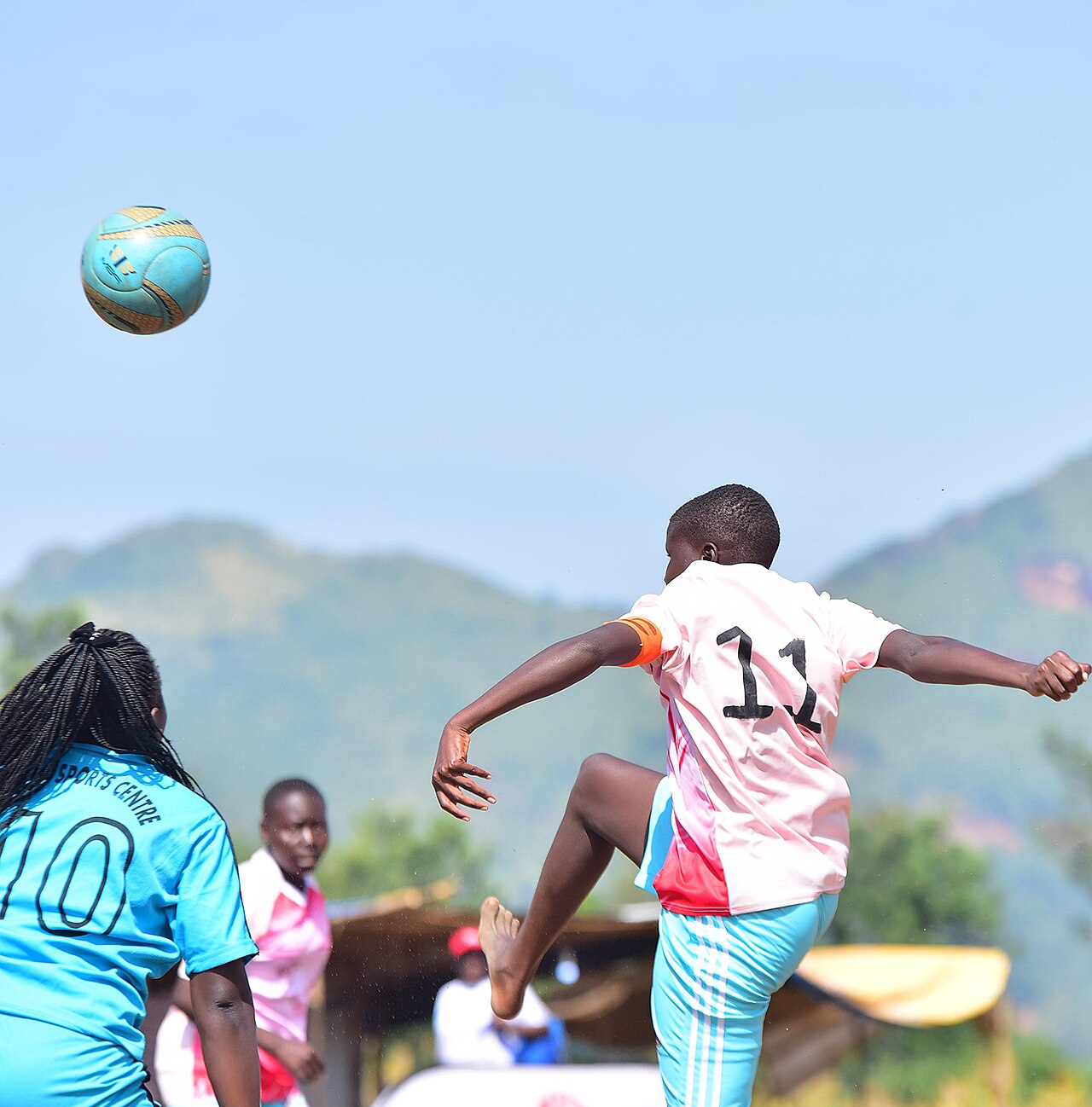
A beach soccer match in play. Photograph: Jackshots256
The knuckleball: swerve's unpredictable cousin
Some of the most feared shots in soccer do the opposite of curving: they carry almost no spin at all. A knuckleball is struck through the center of the ball so it leaves the foot with minimal rotation. You might expect a spinless ball to fly straight, but it often wobbles, dips, or veers erratically, and goalkeepers consistently call it the hardest shot to read.
The mechanism here is different from the Magnus effect, and confusing the two is the most common mistake in sports explainers. With no spin, there is no steady pressure difference to guide the ball.
Instead, the panel stitching and seams of the ball sit in different positions as the ball drifts, producing asymmetric pockets of turbulence and tiny, fluctuating sideways pushes from shed vortices in the wake. The ball wobbles because the forces acting on it keep changing direction mid-flight.
What the research confirms
Peer-reviewed work confirms the distinction. Borg and Morrissey's 2014 study of knuckleball aerodynamics in the American Journal of Physics, and Texier and colleagues' 2016 paper in the New Journal of Physics, both conclude that knuckleball motion is driven by seam-induced vortex shedding, not by the Magnus force, as ScienceABC summarizes.
A bending free kick is predictable physics. A knuckleball is controlled chaos: the kicker cannot fully predict where it will go either, which is why goalkeepers hate it and strikers keep trying it.
Free-kick physics questions
How much spin makes a ball swerve?
There is no single threshold, but the effect scales with spin rate and speed. Elite free-kick takers impart several revolutions per second. Below that, the swerve fades into the noise of drag and wind.
Why do some free kicks dip instead of bending?
Dip comes from topspin, which points the Magnus force downward. Combined with gravity, the ball falls faster than a normal projectile would, which is how shooters get it over the wall and under the bar.
Can weather change how much a ball swerves?
Yes. Denser, colder air strengthens the aerodynamic forces, and a crosswind adds its own push. Altitude matters too, which is one reason players notice different behavior at high elevation beyond just their own breathing.
Do all sports balls swerve the same way?
The principle is universal, but the details depend on size, seams, and spin. A table tennis ball, which spins furiously relative to its mass, curves dramatically, as the physics of spinning table tennis balls shows. A smooth ball swerves less than a seamed one at the same spin.
Why don't goalkeepers just watch the spin?
They try, but reading spin from 25 yards at night, through a wall of jumping defenders, is brutally hard. By the time the curve declares itself, the ball has often already committed.
The bottom line
Soccer balls swerve because spin reshapes the airflow around them, deflecting the wake sideways and drawing an equal, opposite push from the air: the Magnus effect, first investigated by Heinrich Magnus in 1852. The force bends the path at right angles to the flight, grows with spin and speed, and tightens into a spiral as the ball slows, which is why great free kicks seem to bend harder late.
The spinless knuckleball is a separate phenomenon, driven by shifting seam turbulence rather than steady force. Once you know the difference, every free kick tells you which physics it is using. And if the curve has you lacing up, a beginner run-walk plan is the honest first step before the fancy footwear.
Latest in Sports & Outdoors
- Do Running Shoes Need a Heel-to-Toe Drop?
- Why Altitude Sickness Hits Some People Harder
- How to Start Running if You Hate Running
- Why Table Tennis Balls Spin So Much
Subscribe for sports explainers that go beyond the highlight reel.
Related stories

Why Is Altitude Sickness Worse for Some People?
Altitude sickness hits some people harder because of genetics, ascent speed, and prior history, not fitness level. Here is what raises risk
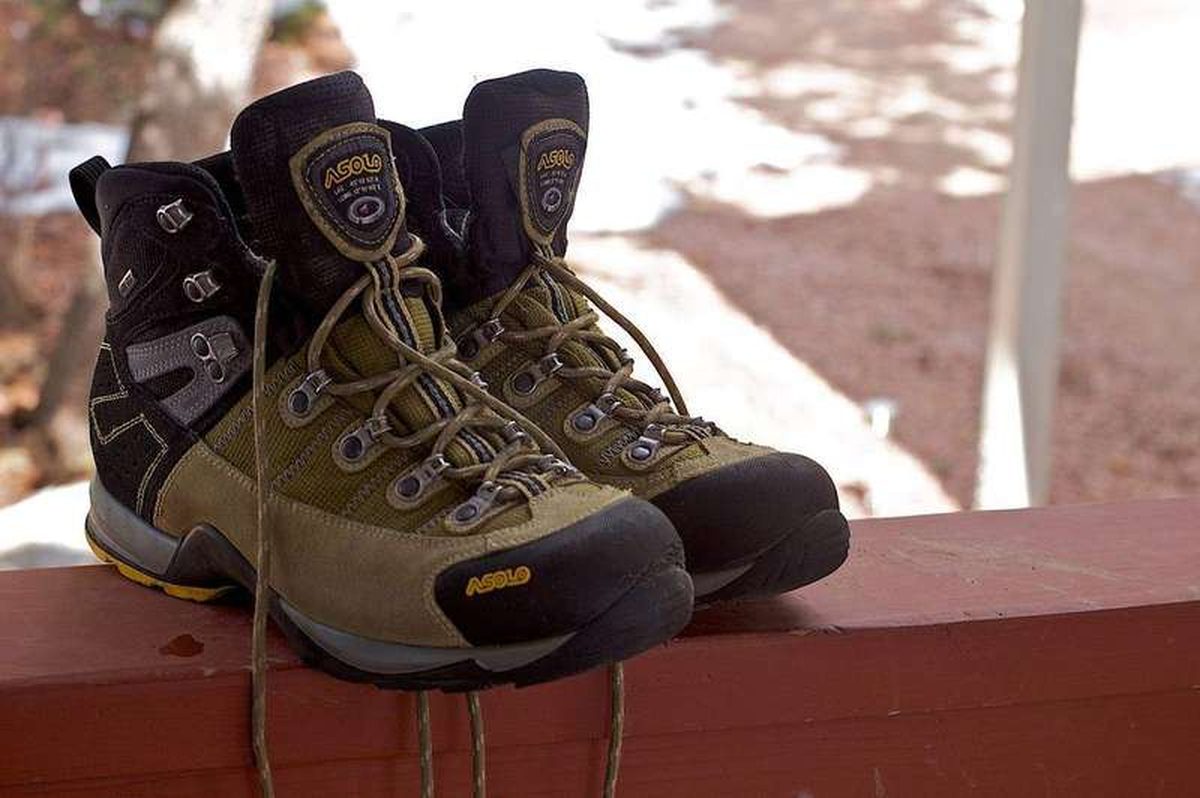
Why Do You Get Blisters When Hiking and How to Prevent Them
Friction plus moisture plus heat equals a blister. Learn why hiking breeds all three, and the boots, socks, and tape system that keeps
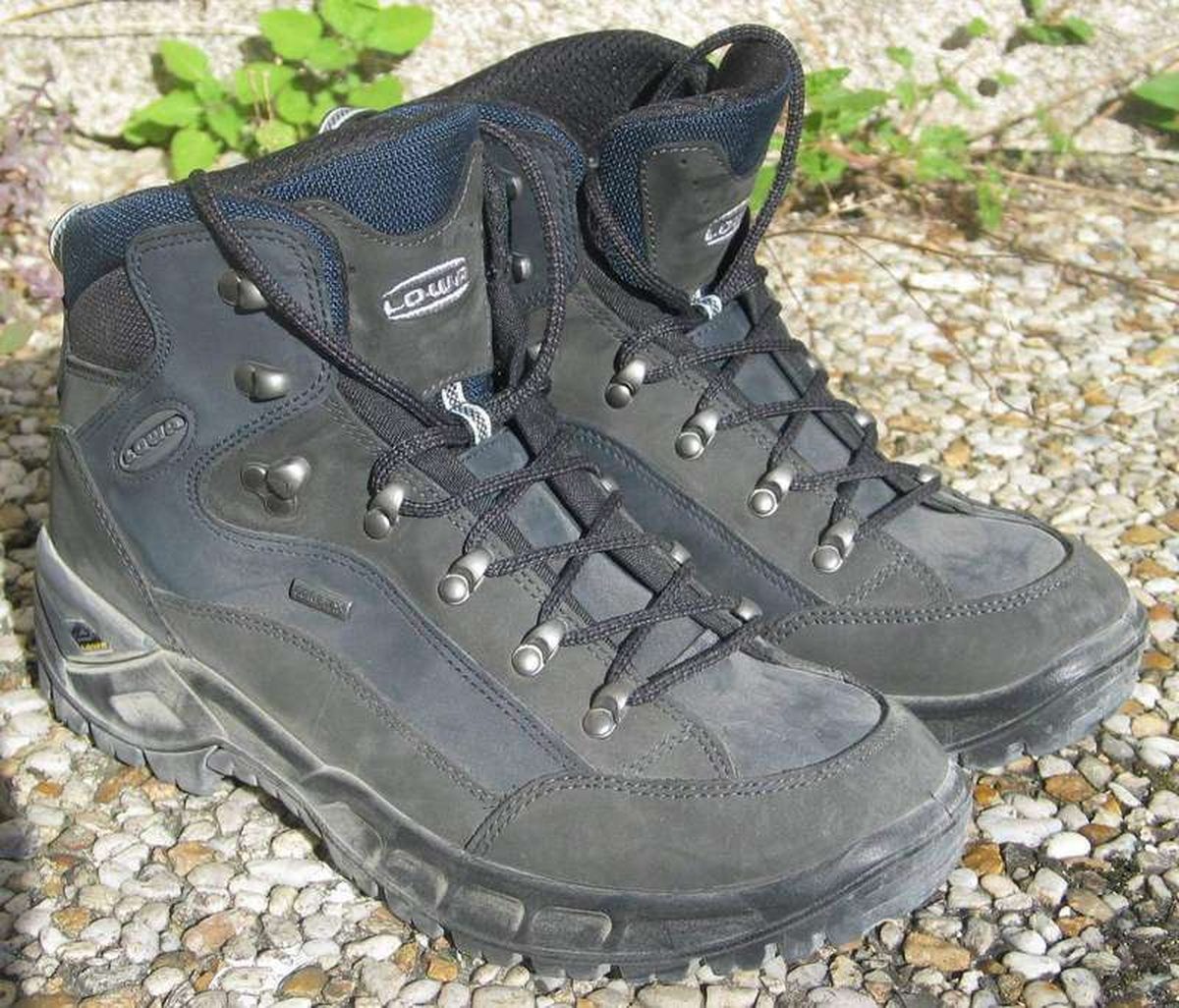
How to choose hiking boots for beginners: fit, features, and break-in
Beginners should buy for fit first: snug everywhere, tight nowhere, with a thumb's width at the toes. Here is how to size, test,