
Why tennis balls go dead in the cold: the physics of lost bounce
Key takeaways
- A tennis ball bounces because pressurized air inside pushes back when the rubber deforms on impact.
- Cold lowers that internal pressure under the gas law PV = nRT, so the ball rebounds less and feels dead.
- The effect is reversible: warm the ball and the bounce returns, unlike a truly dead ball that has leaked.
Every tennis player knows the feeling. The can is fresh, the balls are new, but on a cold morning they thud off the strings like rocks. They are not broken.
They are cold. This article explains what makes a tennis ball bounce, why cold air steals that bounce, and how to tell a cold ball from a genuinely dead one.
What makes a tennis ball bounce in the first place
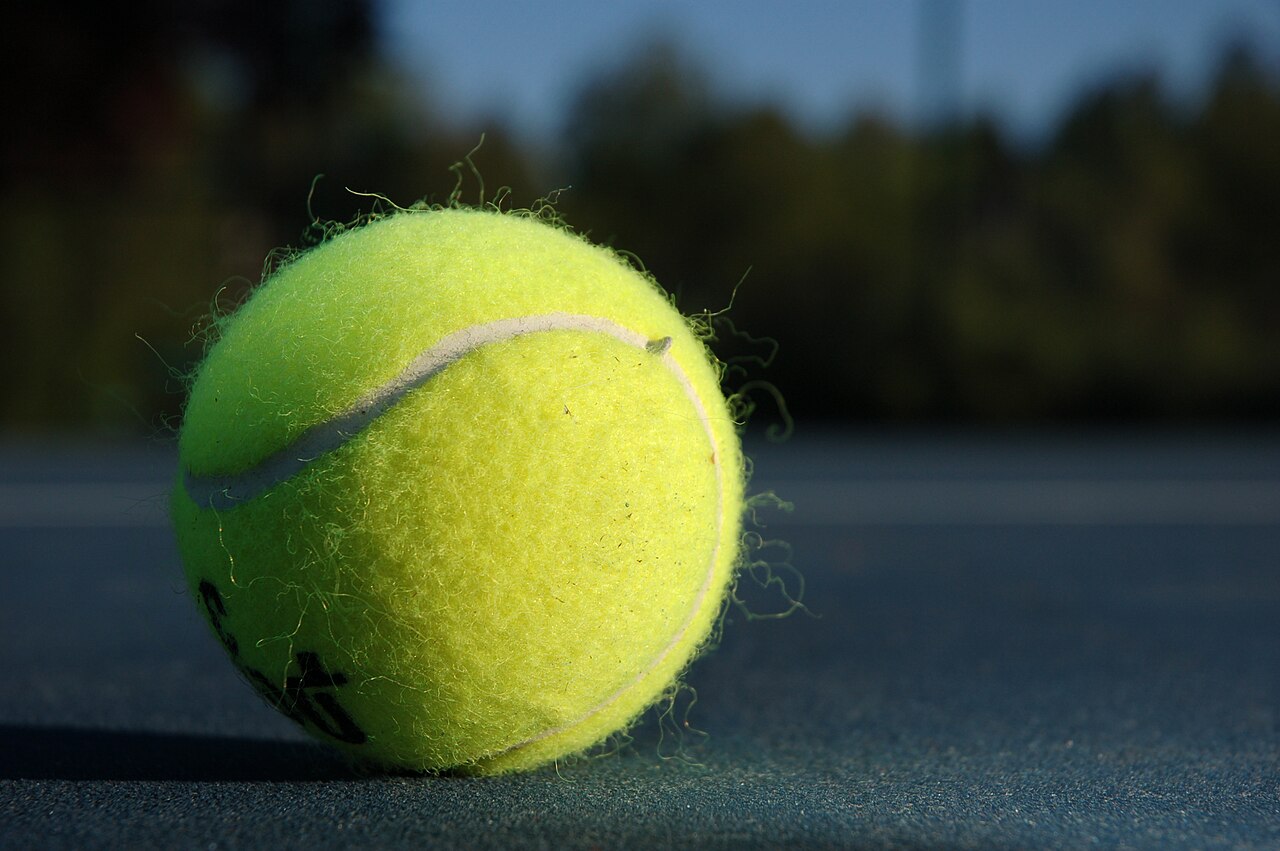
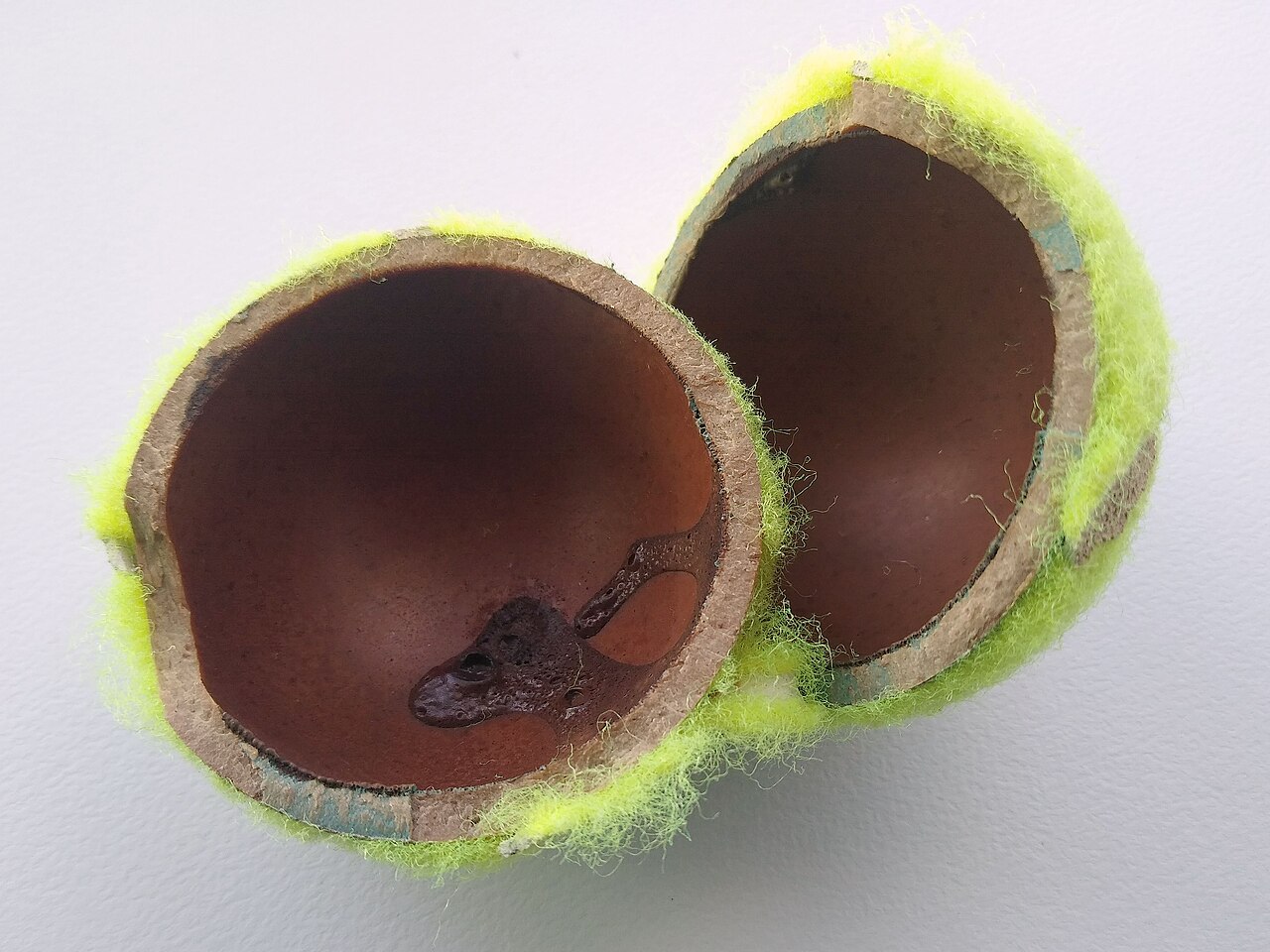
A modern tennis ball is a hollow rubber sphere with a felt cover, pressurized to about 27 to 29 PSI to achieve its regulation bounce, according to the Net World Sports equipment guide. Balls are kept under roughly two atmospheres of pressure in the sealed can until first use.
When the ball hits the court, it deforms. That sudden squeeze raises the internal air pressure, and the pressure pushes the rubber back into shape, launching the ball upward. The bounce is literally a spring made of air.
The standard is strict. The International Tennis Federation requires an approved ball to rebound 53 to 58 inches when dropped from 100 inches onto a concrete base.
The test is run at 68 degrees Fahrenheit and 60 percent relative humidity, per the Tennis Warehouse University testing lab. A regulation ball weighs 56.0 to 59.4 grams and measures 6.54 to 6.86 centimeters across.
So a "lively" ball is a precisely pressurized one. Anything that changes the pressure inside the shell changes the bounce.
The cold effect: gas law in a rubber shell
Cold steals bounce through basic physics. The ideal gas law, PV = nRT, says that for a fixed amount of air in a fixed volume, pressure is directly proportional to absolute temperature. Cool the air inside the ball and the molecules move more slowly, colliding with the rubber walls fewer times and with less force.
Vectree's explainer on pressurized sports equipment puts it plainly: lower temperature reduces the average kinetic energy of the molecules, producing fewer and weaker collisions against the inner bladder, which reduces internal pressure. A basketball left outside on a cold night feels flat for the same reason.
Cold hits the rubber too. The shell stiffens as temperature drops, so it absorbs more of the impact energy instead of snapping back. School physics experiments confirm the combined effect: tennis balls chilled in a freezer rebound far less than room-temperature balls, and heated balls bounce the highest, with one student experiment reporting freezer-chilled balls retaining only about 55 percent of their bounce height.
There is a third factor players feel but rarely name. Cold air is denser, so the ball also meets slightly more drag in flight, and cold strings lose some of their own springiness. The whole system gets sluggish together, which is why winter tennis feels so different from a summer evening hit.
Why cold is not the same as dead
Here is the distinction that matters. A cold ball is temporarily flat. Warm it up and the pressure, and the bounce, come back.
A truly dead ball has lost air permanently: the pressurized gas slowly seeps through the rubber over weeks and months until the inside pressure equals the outside air.
The 0685 science-education guide to tennis ball experiments describes exactly this: dead balls have equalized with the surrounding air, which is why an old can of balls feels lifeless even at room temperature. Felt wear and hardening of the shell contribute, but pressure loss is the main killer.
The test is simple. Leave the suspect balls indoors overnight. If they bounce like new in the morning, they were cold.
If they still thud, the pressure is gone for good and no amount of warming will save them.
Altitude adds a related twist. At higher elevations the outside pressure is lower, so the same internal pressure feels relatively greater and balls bounce higher.
The ITF even defines a special high-altitude ball with a lower rebound range for play above 4,000 feet. Cold and altitude push in opposite directions, which is why a Denver winter match plays so strangely.
How to keep balls lively in winter
Keep the can sealed until you play. An unopened can holds its two atmospheres of pressure; an opened one starts leaking immediately, and cold only makes a half-flat ball worse.
Warm the balls before the match. Keep them in the car with the heater on, in an inside pocket, or simply indoors until game time. Players who layer properly for cold-weather hiking already know the principle: insulation works for equipment as well as people.
Use fresh balls and rotate them. In winter, a ball that was lively in September may already be half-dead by December through slow leakage. Opening a new can for cold-weather play is the single biggest upgrade available.
Adjust your expectations and your game. Cold balls sit up less and fly shorter, so rallies get grindy. Lower string tension slightly in winter to recover some of the lost spring, a standard adjustment club players make every year.
Frequently asked questions
Do tennis balls go bad in the cold?
Cold makes them play dead, but the effect reverses when they warm up. True death comes from pressure leaking through the rubber over time, which is permanent.
How long do tennis balls stay pressurized?
An unopened can holds pressure for a long time. Once opened, balls start losing bounce immediately and are noticeably deader within weeks of regular play, faster if stored in heat.
Can you revive dead tennis balls?
You can warm a cold ball back to life, but you cannot restore leaked pressure. Pressurizer tubes exist that claim to repressurize balls, though results are mixed and tournament players simply open fresh cans.
Why do new balls feel so different?
Fresh balls hold the full factory pressure of about 27 to 29 PSI, giving the crisp 53 to 58 inch rebound the ITF requires. Every hit and every week in an open can bleeds a little of that away.
The bottom line
Tennis balls go dead in the cold because cold air holds less pressure, and pressure is what makes the ball bounce. The gas law guarantees it: cool the air inside the shell and the rebound shrinks.
The good news is that cold is reversible, so keep balls warm, keep cans sealed, and save your judgment for room temperature. If they still thud after a night indoors, they are genuinely dead, and it is time for a fresh can. For more on how thin air changes the game, see why altitude affects some athletes more than others, and pack smart with a day-hike checklist before heading to cold-weather courts.
Latest in Sports & Outdoors
- How to layer clothing for cold-weather hiking
- Why altitude sickness hits some people harder
- What to pack for a day hike
- How to start running when you hate running
One practical outdoors explainer in your inbox each week. Subscribe for the Sports briefing.
Image Credits: Wikimedia Commons / Miscellaneous contributor, Cmglee, RegionalQueenslander
Related stories

Why Is Altitude Sickness Worse for Some People?
Altitude sickness hits some people harder because of genetics, ascent speed, and prior history, not fitness level. Here is what raises risk
Why Do You Get Blisters When Hiking and How to Prevent Them
Friction plus moisture plus heat equals a blister. Learn why hiking breeds all three, and the boots, socks, and tape system that keeps
How to choose hiking boots for beginners: fit, features, and break-in
Beginners should buy for fit first: snug everywhere, tight nowhere, with a thumb's width at the toes. Here is how to size, test,