
How a tent stays up in strong wind
By Rive News / Research desk | Rive News / Published October 28, 2026 at 9:00 AM PKT
Key takeaways
- A tent resists wind as a tension system, not as a rigid box: poles push up while stakes and guylines pull down and out.
- Pointing the narrow end into the wind cuts the area the wind can push against.
- Stakes hold best when driven at roughly 45 degrees, at a right angle to the pull of the guyline.
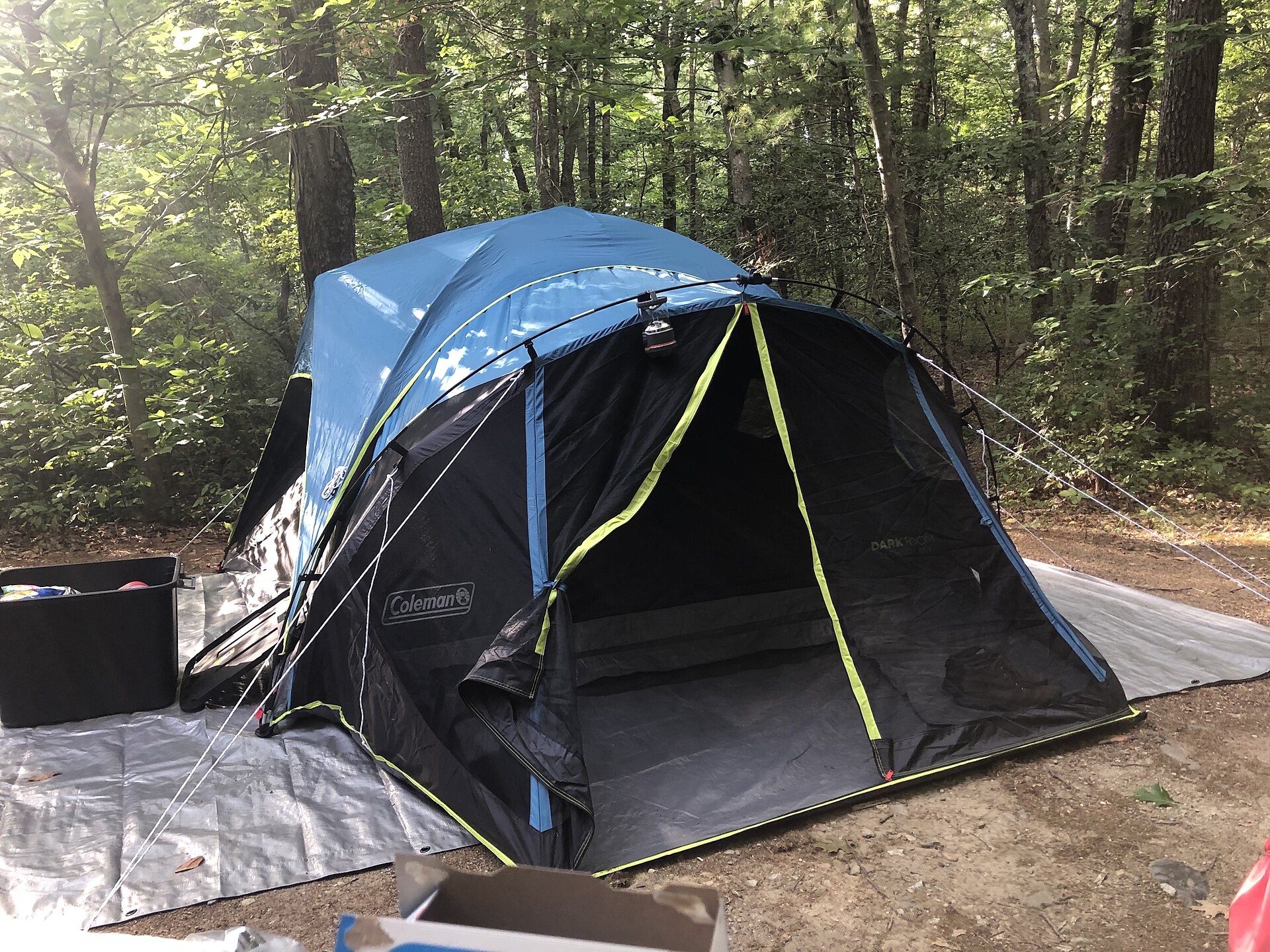
[A pitched tent with its fly staked out taut on open ground.] Photograph: Wikimedia Commons contributor
Image Credits: Wikimedia Commons
A tent stays up in strong wind because it is a tension structure. Flexible poles bend into arches that hold the fabric up, while stakes and guylines pull the fabric outward and downward to keep those arches in place.
Wind pushes on the tent wall and tries to flatten, lift or drag it. The system answers by spreading that push across many anchor points instead of letting one pole or stake carry it alone. When one part is loose, the rest must work harder, and that is usually when something bends, pulls out or tears.
This article explains how tent poles carry load, how stakes and guylines anchor the tent, how pitch and site choice change wind force, and where the safe limits of a tent lie.
How tent poles carry the load
Tent poles form arches or crossed hoops that hold the fabric in shape. The poles flex under a gust and spring back, which lets the tent absorb short bursts of wind instead of snapping rigidly.
A dome tent uses poles that cross near the top, so wind from any direction meets a curved surface. A tunnel tent is stronger end-on but weaker from the side, because its long wall gives the wind a broad flat target. Shape therefore matters as much as material.
Pole sections join with elastic cord or ferrules, and each joint is a weak point. A pole that is already cracked or bent will fail sooner under gusts, so checking poles before a trip is part of wind safety, not just maintenance.
How stakes and guylines anchor the tent
Stakes turn the ground into part of the tent. Each stake resists pull through friction and the weight of the soil around it, and the guyline transfers wind load from the fly to that stake.
REI's pitching guidance says guylines attach to sturdy loops called guyout points, found midway up a wall and directly over a pole. Loops on the bottom edge of the fly are for staking the fly out, not for adding a stabilizing guyline, according to the same guidance.
REI also advises attaching guylines at minimum on the windward side, the side the wind comes from. Adding guylines evenly around the tent gives greater stability, since every side is then anchored rather than only the side facing the wind.
Stake angle matters. Backpacking guides recommend driving stakes at roughly 45 degrees to the ground, so the stake sits at a right angle to the direction of pull. A stake driven straight down can lever out more easily when the line pulls sideways.
Why a taut pitch matters more than a heavy tent
A loose tent flaps, and flapping is destructive. Each flap slams fabric, seams and stakes with a sharp shock load that can be far higher than steady wind pressure.
The Backpacking Light discussion of tent failure makes this point directly: loose flapping lets impact pressures hammer stakes loose, and a stake worked loose by repeated shocks will eventually pull out. A taut fly moves less, so loads stay steadier and lower.
Nylon stretches when damp, so a fly pitched tight in the afternoon may sag by nightfall. Re-tensioning guylines after rain or a temperature drop is normal practice, and tensioners on the lines exist for exactly this adjustment.
How pitch and site choice change wind force
Orientation is the cheapest wind defence available. Pitching the narrow end into the wind presents the smallest face to the gusts, while pitching broadside gives the wind the largest possible wall to push.
Natural shelter helps too, but it needs care. A hollow or a stand of healthy trees can break the wind, while a ridge top or a narrow gap between hills can funnel it faster. Campers often pick a spot that looks flat without checking which way the wind funnels through it.
Dan Durston, writing for Slower Hiking about pyramid and X-Mid tents, recommends staking the rectangular base fully before raising poles where the design allows it. His advice also covers pitching low in cold, windy weather, since a lower profile catches less wind.
For first-time campers choosing a tent, wind resistance is one of several trade-offs, and a low, well-guyed design usually beats a tall, roomy one in exposed sites.
What happens when wind beats the tent
Failure usually starts at one point and spreads. A stake pulls out, a panel goes slack, the slack panel flaps, and the flapping works the next stake loose.
Fabric can also tear at a guyout point if the line is over-tensioned or the fabric is old and sun-damaged. Poles bend permanently when a gust exceeds what their arch can flex back from, and a broken pole section can then puncture the fly.
No ordinary camping tent is storm-proof. Makers publish no universal wind rating, and most general camping tents are built for moderate conditions rather than gales. When gusts threaten to lift the tent or stakes keep pulling out despite re-pitching, the safe move is to take the tent down and find solid shelter.
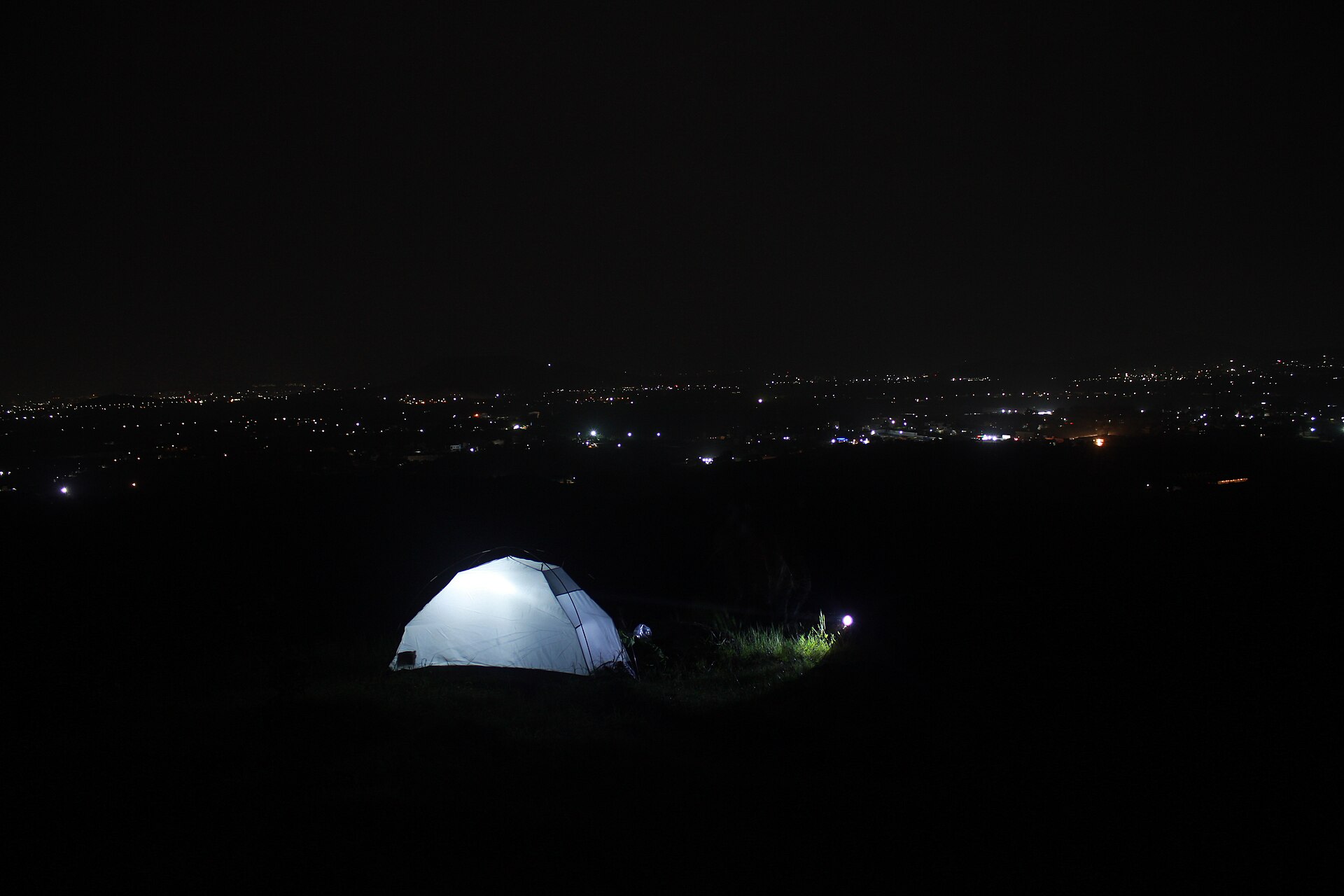
[A tent pitched at night with its fly pulled taut.] Photograph: Wikimedia Commons contributor
Image Credits: Wikimedia Commons
Pitching checklist for windy nights
- Stake the windward corners first, before raising poles, where the tent design allows it.
- Attach guylines on the windward side at minimum, then add them evenly around the tent.
- Drive stakes at roughly 45 degrees, at a right angle to the line's pull.
- Pull the fly taut, then re-check tension after rain or a cold snap.
- Point the narrow end into the wind and keep the door on the sheltered side where possible.
- Carry spare stakes, spare cord and a pole repair sleeve.
FAQ
How much wind can a normal camping tent handle?
Most general camping tents cope with moderate winds in the range of roughly 30 miles per hour, while sturdier mountain tents handle more. There is no single industry rating, so the maker's guidance for a specific model is the only number worth trusting.
Should guylines be tight or slightly loose?
Guylines should be taut enough to stop the fly flapping, but not so tight that they strain seams and guyout points. The fly should look smooth and drum-like, without wrinkles, and tensioners let you adjust as fabric stretches.
Do heavier stakes hold better in wind?
Heavier stakes help in soft ground, but shape and length matter more than weight alone. Long stakes, Y-shaped stakes and buried deadman anchors grip loose soil and sand better than short wire pegs.
Why does my tent flap even when it is staked?
Flapping usually means a panel is slack, a guyline is missing at a key guyout point, or the tent is pitched broadside to the wind. Re-tensioning the fly and adding a windward guyline usually settles it.
The bottom line
A tent stays up in strong wind because poles, fabric, stakes and guylines work as one tension system. Poles hold the shape, guylines spread the load, and stakes anchor the whole assembly to the ground.
Pitch low, point the narrow end into the wind, stake early, and keep the fly taut. When gusts keep pulling stakes out or the tent starts to deform, take it down and seek solid shelter rather than testing its limits.
Tags: camping, tents, wind safety
Rive News's research desk covers outdoor skills and everyday science explainers.
Related
Subscribe to Rive News for one practical explainer each week.
Rive News publishes researched explainers with named sources. Corrections are welcome at any time.
Related stories

Why Is Altitude Sickness Worse for Some People?
Altitude sickness hits some people harder because of genetics, ascent speed, and prior history, not fitness level. Here is what raises risk
Why Do You Get Blisters When Hiking and How to Prevent Them
Friction plus moisture plus heat equals a blister. Learn why hiking breeds all three, and the boots, socks, and tape system that keeps
How to choose hiking boots for beginners: fit, features, and break-in
Beginners should buy for fit first: snug everywhere, tight nowhere, with a thumb's width at the toes. Here is how to size, test,