
Battery calibration: what it is and whether it helps
By Rive News / Research desk | Rive News / Published October 24, 2026 at 9:00 AM PKT
Key takeaways
- Battery calibration resets your phone's full and empty reference points so the percentage readout matches the battery's actual state of charge.
- It cannot restore lost capacity. Battery University states plainly that a calibration cycle "does not address the fading capacity of the battery."
- Calibrate about every three months or after 40 partial cycles, per Battery University. Doing it more often adds needless wear to the cells.
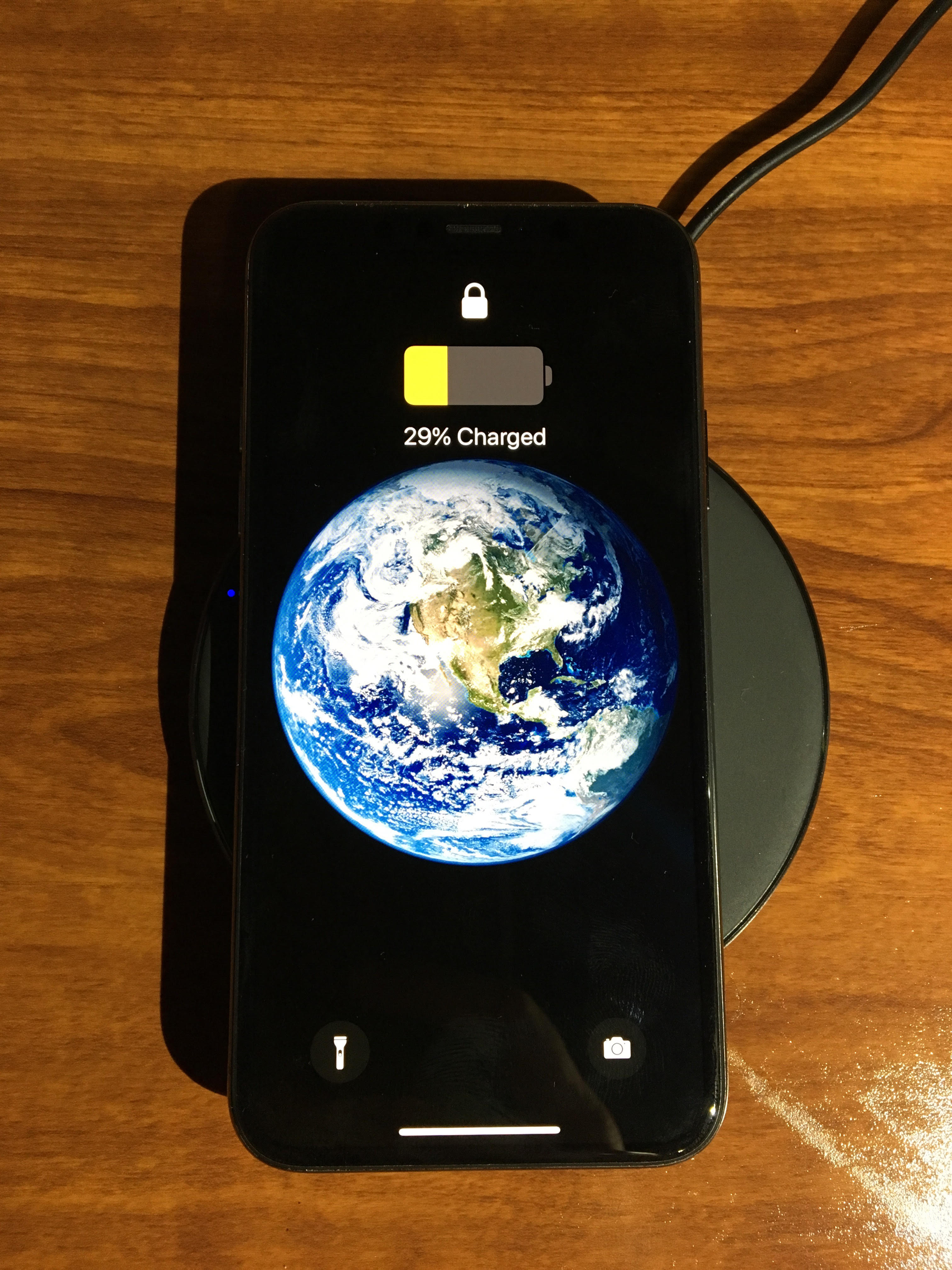
[An iPhone on a wireless charging pad displays 29% charged. That percentage is a software estimate, and calibration exists to keep it honest.] Photograph: Seawhelan
Image Credits: Wikimedia Commons
Battery calibration is the process of correcting your phone's battery percentage readout so it reflects the actual charge inside the battery. It is a software adjustment, not a repair.
Your phone estimates the percentage with a tiny fuel-gauge chip that tracks energy flowing in and out. When that estimate drifts, running the battery from empty to full gives the chip two fresh reference points to rebuild from.
This article explains battery calibration, including what the fuel gauge actually measures, how calibration corrects the tracking error, what calibration cannot fix, how to calibrate your own phone, and when calibration is worth doing.
What the fuel gauge actually measures
Think of your phone as carrying two batteries at once. Battery University calls them the chemical battery and the digital battery, and only one of them is real.
The chemical battery is the physical lithium-ion cell that stores energy. The digital battery is the phone's internal model of it, built by counting coulombs (units of electric charge) as they flow in and out during use.
That model is what drives the percentage on your screen. The counting is never perfect. Heat, self-discharge, and charge inefficiency mean the energy fed into the battery is always larger than what comes back out.
Counting charge sounds simple, but the accounting always leaks. Charge acceptance drops off toward the end of a charge, fast charging wastes more energy as heat, and a warm phone self-discharges faster than the chip can track. Battery University's article on battery diagnostics notes that coulomb counting should be flawless, but tracking errors occur every cycle.
Over months of partial top-ups, the model drifts away from reality. Battery University's BU-603 article, last updated in September 2023, describes how the electrochemical and digital battery "drift apart" with use and time, and says calibration is what corrects the error.
The gauge is only one part of the battery management system. The same chip also watches cell voltage, load current, and temperature to keep charging safe and extend the cell's life, according to Battery University's BU-605 article.
How calibration corrects the tracking error
Calibration works by anchoring the two ends of the scale. Draining the battery until the phone reports low battery sets what Battery University calls the discharge flag. Charging it fully afterward sets the charge flag.
Between those two markers, the phone draws a straight line and estimates the state of charge by tracking how far along that line the battery sits. Battery University puts it plainly: "a linear line forms between these two anchor points that allow SoC estimation."
In everyday use, the phone rarely gets these clean anchors. Most discharges stop at random depths, the phone gets topped up partway through the day, and warm storage adds self-discharge that the chip cannot track.
Those small gaps are why the line blurs over time. A deliberate calibration cycle redraws it, and the percentage snaps back into line with reality.
The fix is not permanent. Once the line is redrawn, months of partial top-ups start blurring it again. That is why the recommended routine repeats every few months instead of being a one-time job.
Engineers have a name for how far the model has drifted: Max Error, expressed as a percentage. Battery University notes that some manufacturers recommend calibration at a Max Error of 8 percent, readings above 12 percent may trigger an alarm, and 16 percent could render a battery unserviceable.
What calibration cannot fix
Here is the myth that refuses to die: calibration does not heal your battery. It fixes the meter, not the cell.
Battery University's BU-603a article states this directly: "Such a calibration cycle does not address the fading capacity of the battery." It continues with the arithmetic: "A fully charged battery with a usable capacity of 50% will cut the runtime in half, reducing an hour to 30 minutes."
If your phone dies at 20%, calibration might reveal an uncomfortable truth. The battery may have been genuinely empty at 20% all along, and the gauge was simply wrong about it.
A worn battery shows its age as sagging voltage under load, not as a confused gauge. No software ritual restores lost chemistry, and no amount of recalibrating changes that.
The same principle shows up in electric cars. Battery University's BU-605 article notes that a proper calibration can improve an EV's range prediction by up to 80 km (50 miles). The car does not gain range; the dashboard just gets better at predicting it.
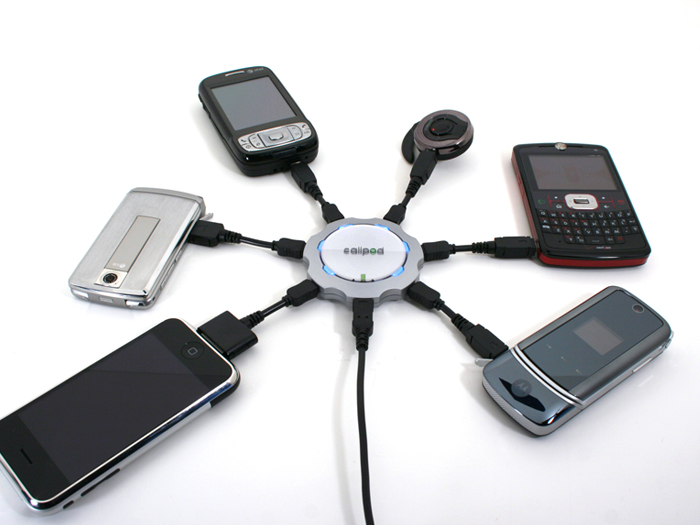
[Multiple phones charge from one hub. Every one of them relies on a fuel-gauge chip to report its percentage.] Photograph: Mmckinley
Image Credits: Wikimedia Commons
How to calibrate your phone battery
The basic method is simple. Use the phone normally until it shuts itself down, then charge it uninterrupted to 100%, avoiding heavy use while it charges.
Give the battery a little rest at each end of the cycle if you can. A few hours of rest lets the voltage settle, which gives the gauge a cleaner reference point.
Apple has documented the same idea for its own hardware. Battery University quotes the instructions for an Apple iPad: "For proper reporting of SoC, be sure to go through at least one full charge/discharge cycle per month."
Every modern smartphone carries a fuel-gauge chip, from models with dual eSIM to those still on a physical SIM card. The chip does not care which SIM you use; the physics of charge counting is the same.
Some newer battery systems calibrate themselves. Battery University notes that certain smart batteries use impedance tracking, a self-learning algorithm that reduces or removes the need for manual calibration.
When calibration is worth doing
You do not need to calibrate every week. Battery University recommends doing it once every three months, or after about 40 partial charge cycles.
The real signal is behavior. Calibrate when the percentage jumps suddenly, when the phone shuts off with charge apparently remaining, or when the battery health figure stops matching what you experience.
Apple has shipped recalibration itself. With iOS 14.5 in April 2021, Apple recalibrated battery health reporting on the iPhone 11, iPhone 11 Pro, and iPhone 11 Pro Max to address inaccurate health estimates. Apple's support document, as reported by MacRumors at the time, said the "inaccurate battery health reporting does not reflect an issue with actual battery health," and the process completed over regular charge cycles across a few weeks.
There is a downside to overdoing it. Deep discharges stress lithium-ion cells, so running full drain cycles every month or two may cost more battery life than it saves in gauge accuracy.
One rule of thumb covers most people: calibrate when the readout misbehaves, and skip it when the numbers look right. Shallow top-ups the rest of the time are kinder to the chemistry.
Frequently asked questions
Does battery calibration give me more battery life?
No. It makes the percentage readout accurate; it does not add capacity. If your runtime dropped, the cell itself is worn, and no calibration reverses that.
Should I drain my phone to 0% every day?
No. Full drains are a calibration tool, useful a few times a year. Daily deep discharges wear lithium-ion cells faster, so they cost more than they give.
Why does my phone shut off at 15%?
The gauge was wrong and the battery was genuinely empty. Calibration may correct the readout, but if the shutdowns keep happening after a calibration cycle, the battery is likely degraded.
Does Apple still recalibrate iPhone batteries?
Apple built recalibration into iOS 14.5 for the iPhone 11 series in 2021. Modern iPhones manage the gauge automatically, and newer battery systems use impedance-tracking algorithms that learn on their own, according to Battery University.
The bottom line
Battery calibration fixes the meter, not the battery. A full drain followed by a full recharge redraws the line the phone uses to estimate charge, so the percentage stops lying to you.
If the numbers look wrong, calibrate once. Every few months at most. And if the runtime stays short after calibration, the cell is worn, and only a new battery fixes that.
Topics: battery calibration, phone battery, fuel gauge
Rive News's research desk covers consumer technology with reporting sourced from manufacturer documentation and technical references.
Related
- Can an eSIM be hacked or cloned? The honest security answer
- Why Do Phone Cameras Stick Out So Far? Physics, Sensors, Zooms
- How to switch from eSIM back to a physical SIM card
Get one honest tech explainer in your inbox every morning: subscribe to the Rive News newsletter.
Rive News publishes verified, source-backed technology explainers. Corrections: contact the research desk.
Related stories

Apple plans two October launches: smart home hub, OLED MacBook Pro
Apple set October 13 for a smart home launch with a new hub, Apple TV 4K and HomePod mini, then October 27 for OLED MacBook Pro models

How to Check If Your Phone Supports eSIM in 30 Seconds
Dial *#06# and look for an EID number to confirm eSIM support in under 30 seconds. This guide also walks through the iPhone and Android

eSIM vs iSIM: what is the difference?
An eSIM is a dedicated chip on the phone's board, while an iSIM lives inside the processor itself. Qualcomm's Snapdragon 8 Gen