
Why Does Your Car Beep When You Leave the Key Inside?
Key takeaways
- The beep is a key-reminder system: sensors confirm the key or fob is still inside when you open the door, and a buzzer warns you.
- On a 2022 Honda Civic the alert is three short beeps; Toyota hybrids use a repeating chime until the key is removed.
- It exists to prevent lockouts and theft, and it stops the moment you take the key with you.
You switch off the car, push the door open, and the car starts beeping at you. Nothing is wrong. The engine is off, the lights are off, the doors are fine.
The car is simply objecting to one thing: the key is still inside.
This article explains why your car beeps when you leave the key inside, including the sensor chain that detects it, how keyless fobs changed the alert, and what to check when the beeping will not stop.
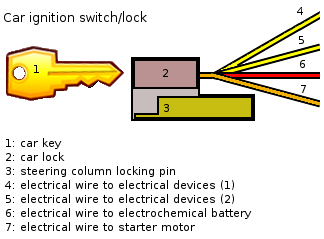
A schematic of a car ignition and steering wheel lock. The key reminder system starts with a simple switch that knows whether a key is sitting in the slot. Diagram: KVDP, public domain
Image Credits: Wikimedia Commons / KVDP
The key reminder system: a buzzer with a job
The beep you hear is one of the oldest electronic nannies in the car, and its job is narrow: stop you from locking your keys inside. Automakers call it the key reminder or key-in-ignition warning, and nearly every car built in the last few decades has some version.
The logic is simple. The car watches two things at once: is there a key in the ignition, and is the driver-side door open? If both are true, it sounds the buzzer.
Toyota's Prius repair manual documents the chain precisely: with the power switch off and the key in the slot, opening the driver door sends a signal from the transponder key ECU and the body ECU's door courtesy switch to the combination meter, which drives the warning buzzer. Three electronic control units agree, and you get beeped at.
The classic implementation used a small switch in the ignition cylinder, sometimes called the halfway or key-unlock warning switch. It detects the physical presence of the key. The door side uses the same courtesy switch that turns on the dome light.
Neither part is exotic; the cleverness is only in combining them.
Why bother? Two reasons. First, lockouts.
A driver who walks away with the key in the ignition and the doors locked behind them needs a locksmith. Second, theft. A car sitting with its key inside is an invitation.
The chime is cheap insurance against both, and it works exactly because it is annoying enough to make you turn around.
How keyless fobs changed the alert
Push-button start removed the ignition cylinder, so the old key-in-slot switch had nowhere to live. The reminder system moved to radio detection instead. Keyless cars constantly check for the presence of the authorized fob using low-frequency antennas in and around the cabin.
The behavior varies by brand, but the pattern is consistent. A 2022 Honda Civic emits three short beeps when the driver's door opens and the Smart Entry fob is still inside the cabin. Toyota's system uses a repeating chime until the fob is removed or the doors are locked from outside.
Newer push-button systems pair the sound with a dashboard message, often reading "Remove Key Fob" or "Key Detected In Vehicle."
The fob version solves a harder problem than the old switch did. A physical key is either in the cylinder or not. A fob can be anywhere: in your pocket, in a bag on the back seat, in the cupholder.
The car's antennas divide the world into inside and outside zones, and they are not perfect. Fobs near the door, in a bag pressed against it, or in a jacket pocket leaning out the window can confuse the boundary. If your car beeps about a fob you are sure you are carrying, the fix is often just moving the fob a few feet further from the car; guidance from Autoowa suggests moving it at least 10 feet away to end proximity confusion.
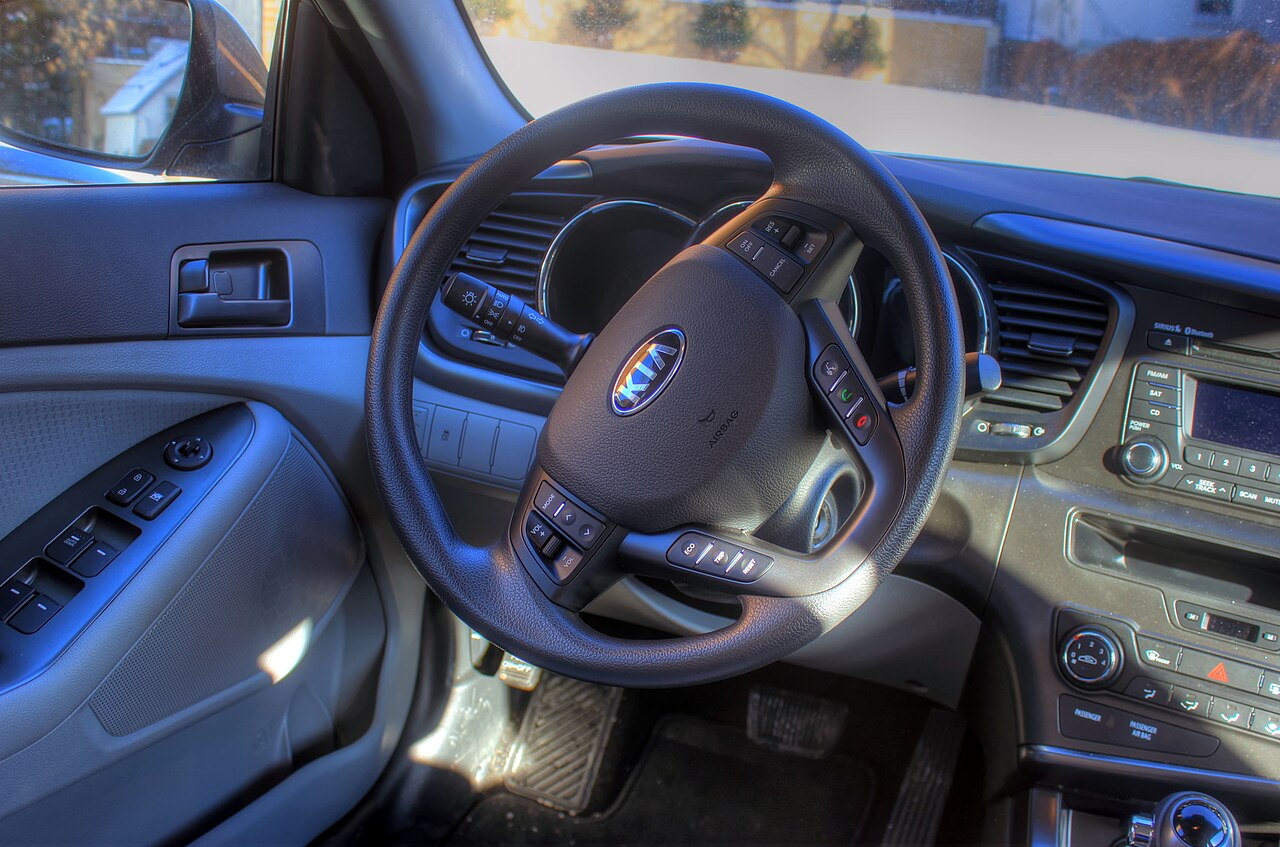
A car steering wheel and interior. In keyless cars, antennas in the cabin detect whether the fob is inside or outside, replacing the old ignition-cylinder switch. Photograph: Yinan Chen, public domain
Image Credits: Wikimedia Commons / Yinan Chen
Why the beep sometimes will not stop
Most of the time the alert is doing its job and the cure is obvious: take the key. When it misbehaves, the cause is usually one of a few things.
A weak fob battery is a common culprit. As the battery fades, the fob's signal gets erratic and the car misreads its position, triggering false alerts. Replacing the coin-cell battery, usually a CR2032, takes minutes.
A weak 12-volt car battery can cause similar sensor flakiness across the car's electronics.
Aftermarket accessories are another classic. A poorly integrated alarm, remote starter, or dashcam install can interfere with the factory door and ignition signals. If the beeping started right after an accessory install, that is the first place to look.
Then there is the door latch switch itself. The little rubber-covered button in the door jamb tells the car whether the door is truly open or closed. If it sticks, the car thinks the door is open when it is not, and the whole warning logic misfires.
A stuck courtesy switch can also keep the dome light on and drain the battery, so it is worth checking.
Finally, some cars let you change the behavior. Many models allow the key reminder chime to be adjusted or disabled through the infotainment settings or a dealer-level configuration. Before you silence it, remember what it is protecting you from: the reminder only fires when you are actually about to make the mistake.
The beep is not the only door chime
It helps to know the key reminder is one member of a family of chimes, because drivers often misdiagnose which one they are hearing. The headlight-on warning fires when you open the door with the lights left on and the engine off. The seatbelt reminder, mandated in the United States under Federal Motor Vehicle Safety Standard No.
208 for drivers and front passengers, uses a similar tone. The door-ajar chime fires when any door, trunk, or hood is not fully latched.
The key clue is timing. The key reminder fires when you open the driver door with the engine off and the key inside. Headlight warnings fire in the same moment but stop when you switch the lights off.
Seatbelt chimes fire while driving. Match the sound to the moment and you will almost always identify the right system without a trip to the mechanic.
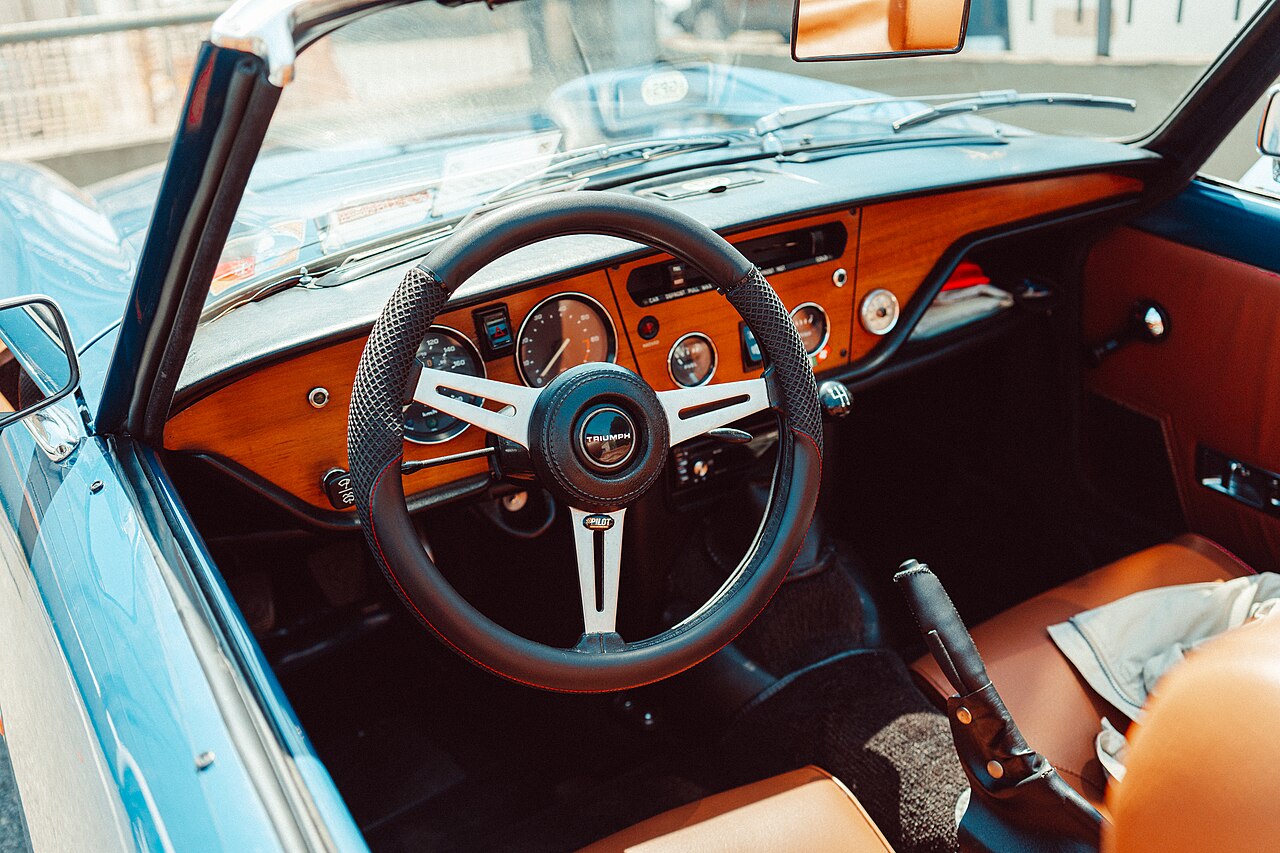
A classic sports car cockpit. Modern warning chimes replaced the simple buzzers of older cars, but the key reminder logic is decades old. Photograph: Deerpeter
Image Credits: Wikimedia Commons / Deerpeter
Why does my car beep three times when I get out?
Three short beeps on exit is the signature of a keyless fob reminder, used by Honda and several other brands. It means the car detects the fob still inside the cabin after you opened the door. Grab the fob and the alert stops.
Can I turn off the key-in-ignition beep?
On many cars, yes, through vehicle settings or dealer programming. Owner manuals document the procedure per model. Think twice first: the chime exists to prevent lockouts, and disabling it trades a small annoyance for a real risk.
Why does the beep happen even when the key is in my pocket?
If your pocket is near the door or window, the car's antennas can misjudge the fob as inside. Metal objects, phone interference, or a weak fob battery make misreads more likely. Step a few feet away and open the door again to test.
Is the beeping a sign something is broken?
Almost never. It is a designed alert doing its designed job. Treat it as broken only if it sounds with no key inside, no door open, and a fresh fob battery.
Then suspect the door jamb switch or a weak 12-volt battery.
The bottom line
Your car beeps when you leave the key inside because a small committee of sensors, the ignition switch, the door courtesy switch, and the body control module, agreed you are about to lock yourself out. It is one of the oldest driver-assist systems on the road, older than backup cameras and lane warnings, and it still earns its keep one prevented locksmith visit at a time. Take the key, and the car goes quiet.
Related reading: what to do when your key fob stops working and how to keep your car battery from dying in winter.
Latest in Automotive
- What to do when your key fob stops working
- How to keep your car battery from dying in winter
- How to prepare your car for winter in cold climates
- Why your car smells like petrol when starting
Get one clear automotive explainer like this in your inbox every week. Subscribe to the Rive News newsletter.
Image Credits: Wikimedia Commons / KVDP, Yinan Chen, Deerpeter
Related stories

Why Does Tire Pressure Drop in Cold Weather?
Cold weather can cut tire pressure by 1 psi for every 10°F drop, thanks to the ideal gas law. Here is what happens inside the tire and what
Why Do Brake Rotors Warp, or Do They Actually?
Mechanics rarely see a truly warped rotor. The shudder usually comes from uneven pad deposits a few thousandths of an inch thick. Here

How to Buy a Used Car Without Getting Scammed: The Checklist
Over 450,000 cars a year have rolled-back odometers, NHTSA says. This checklist covers VIN checks, title washing, and the inspection that