
Why your car smells of petrol after filling up
By Rive News / Research desk | Rive News / Published October 28, 2026 at 9:00 AM PKT
Key takeaways
- A brief smell right at the pump is often just spilled fuel or escaping vapour, and it should fade within minutes.
- A smell that lingers after every fill-up points to the fuel cap seal, the filler neck or the vapour control system.
- Any strong smell, visible leak or smell plus warning light means stop and get the car inspected promptly.
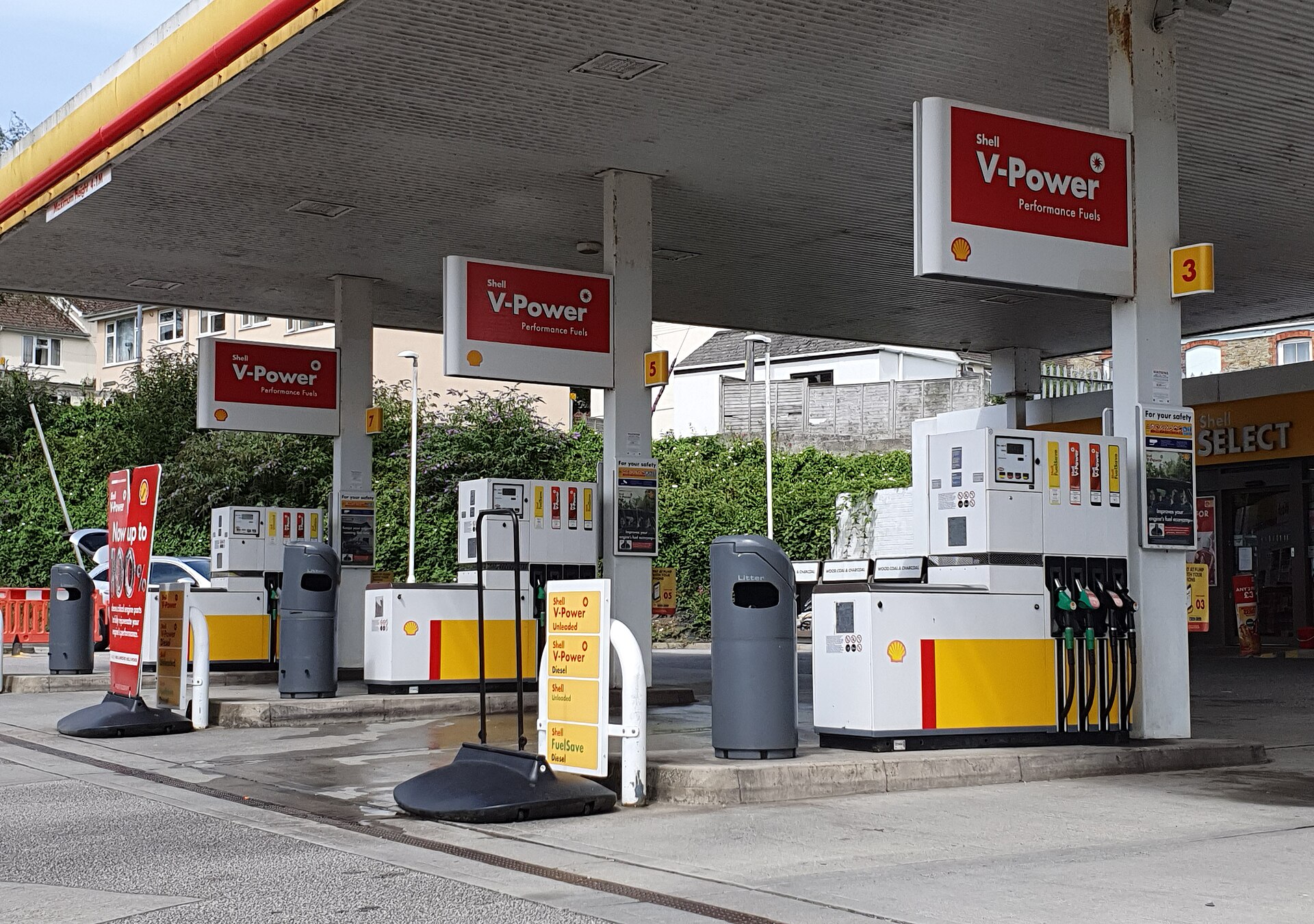
[Fuel pumps at a petrol station forecourt.] Photograph: the petrol station forecourt
Image Credits: Wikimedia Commons
A petrol smell after filling up is common enough that many drivers ignore it. Most of the time the cause is small and the smell fades fast. Sometimes it is an early sign of a leak, and petrol vapour near a hot engine is not something to shrug off.
This article explains why the smell appears after a fill-up, how to tell a harmless whiff from a fault, and what to check first. It covers spilled fuel, the fuel cap, the filler neck, the vapour control system and the warning signs that need a garage.
Why filling up stirs the smell loose
A modern car has a sealed fuel system. The tank, filler neck, lines and vapour controls are designed to keep liquid fuel and vapour inside, so a healthy car should not smell of petrol at all. Refuelling disturbs that sealed system for a few minutes, which is why the smell, when it appears, so often appears right after a fill-up.
The tank is fullest just after refuelling, so pressure and vapour levels are at their highest. Any weak seal that copes fine with a half-empty tank can start leaking vapour under a full tank. That timing is useful evidence: a smell that only shows up after filling up points first to the filler area and the vapour system, not to a random engine fault.
The ventilation system can then carry the smell inside. Engineer Fix notes that spilled fuel evaporates quickly and the resulting vapour can be drawn into the cabin through the ventilation intake, especially if you drive off straight after pumping. Fresh-air mode pulls outside air in, so a smell lingering around the car ends up inside it.
Spilled fuel and topping off
The simplest cause is fuel on the outside of the car. A splash from the nozzle, a dribble down the filler neck or a small overflow leaves liquid petrol on bodywork and around the filler flap. Petrol evaporates fast, and the vapour is strong even in small amounts.
Topping off after the pump clicks is the classic way to cause this. Engineer Fix describes overfilling as a common source of a strong but brief smell that fades within a few minutes as the spilled fuel evaporates. The pump's automatic shut-off exists for a reason: the tank needs headspace for vapour expansion.
Topping off can also flood parts that are meant to handle vapour only. The charcoal canister in the vapour control system is designed to trap fuel vapour, not liquid fuel. Repeated topping off can saturate it with liquid, and a saturated canister can release raw petrol odour through its vent, particularly when the ventilation is set to fresh air.
The fix here costs nothing. Stop when the nozzle clicks off, wipe any visible spill from the filler area, and give the car a few minutes before judging whether the smell has gone. If it fades and never returns, spilled fuel was probably the whole story.
The fuel cap seal
After spillage, the fuel cap is the most common culprit. The cap's rubber gasket ages, hardens and cracks, and a worn gasket cannot hold an airtight seal against the filler neck. Fuel vapour then escapes around the cap, and airflow around a moving car carries it forward into the cabin.
A cap that is simply not tightened properly does the same thing. Most caps click when fully closed, and a cap left half a turn short leaves a direct path for vapour. Engineer Fix lists both a degraded gasket and a cap not tightened until it clicks among the first causes to check after a fill-up.
The Monitor's motoring advice makes the same point for older cars, noting that a cap seal failure is a frequent culprit in cars more than 10 years old. Trying a new cap is cheap and quick, and it rules out one of the most common causes in a single step. Check the old gasket first: cracks, flattening or a permanent dent where it meets the neck all mean it is done.
Some cars have capless filler systems with a spring-loaded flap instead of a screw cap. Those flaps have their own seals and can stick open with dirt or ice, so the same logic applies even without a traditional cap to replace.
The filler neck and fuel lines
The filler neck is the pipe between the filler opening and the tank, usually a flexible hose held by clamps. Rubber and plastic hoses age, clamps loosen, and a hairline crack can weep vapour or liquid, especially under the slight pressure of a full tank. Engineer Fix advises looking around the filler door for moisture or discolouration, which can betray a breach in this often-overlooked connection.
Fuel lines and injector seals can also leak vapour without any visible drip. The Monitor notes that small cracks in rubber fuel hoses or seals around the injectors can let fumes escape, and those fumes often reach the cabin through the ventilation system or gaps around the firewall. You may notice the smell a few minutes into a drive rather than at the pump, as the engine warms and the fumes build.
A visible puddle under the car is a different matter. That means liquid fuel is escaping, and the car should not be driven until it is inspected. Liquid leaks near hot exhaust parts are a fire risk, and even a small drip can grow quickly.
The vapour control system
The evaporative emission control system, known as EVAP, exists to trap petrol vapour from the tank and route it to the engine to be burned. Its main parts are the charcoal canister, the purge valve and the vent valve, connected by hoses. When any part fails, vapour escapes instead of being captured.
The Monitor describes the EVAP system as the trap that stops petrol fumes from escaping into the air, and notes that a clogged or cracked charcoal canister, a faulty purge valve or damaged hoses all let vapour out, especially after a refill. Dusty driving conditions and skipped servicing make canister trouble more likely.
EVAP faults often trigger the check engine light, because the car's computer monitors the sealed system for leaks. Forged N Fast notes that an EVAP problem usually triggers a check engine light and needs diagnostic work to identify. A smell plus a warning light together is a strong signal to book a diagnostic check rather than guessing at parts.
Repair costs vary widely by model. CarXplorer gives very general estimates that put a gas cap replacement at £10 to £40, an EVAP purge valve at £80 to £250 and a charcoal canister at £150 to £500 or more, parts and labour included. Those are rough ranges, not quotes, but they show why checking the cap first makes financial sense.
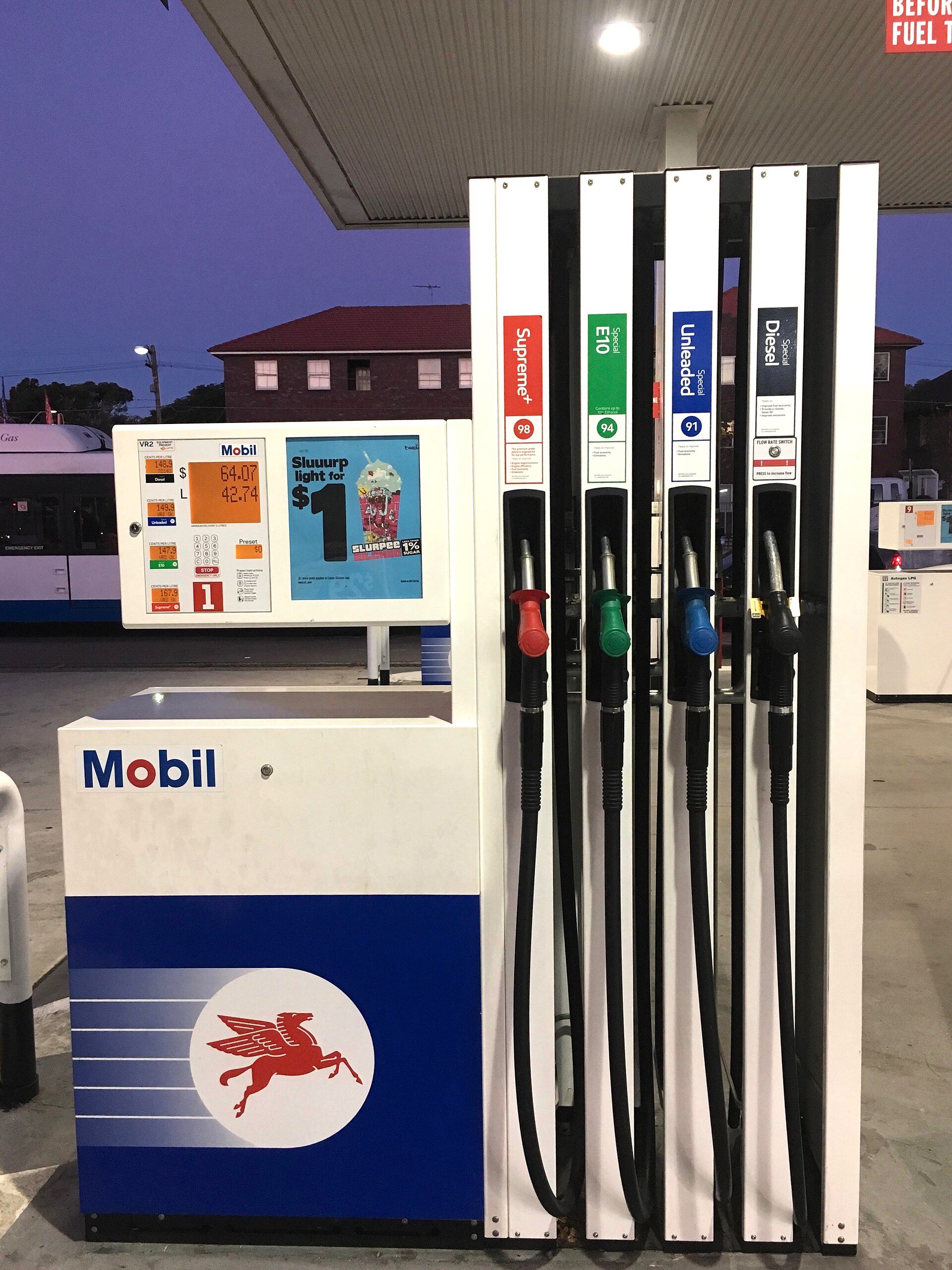
[A petrol station pump with an E10 fuel nozzle.] Photograph: the petrol station pump
Image Credits: Wikimedia Commons
When the smell is a warning
Some petrol smells need urgent attention rather than a watch-and-wait approach. A strong smell inside the car, a smell that gets stronger while driving, a visible leak or a smell combined with rough running all belong in that group. Petrol vapour is flammable, and a leak near the exhaust or engine can ignite.
Stop in a safe place, switch the engine off and avoid smoking or using a phone torch near the leak. Do not keep driving to see if it clears. A garage can pressure-test the fuel system and use a smoke machine to find vapour leaks that are invisible to the eye.
Also watch for smells that appear without refuelling. A smell that shows up on a cold start can point to leaking injectors, which drip fuel into the intake when the engine is off. That is a separate fault from the fill-up causes above, and it usually brings hard starting or black exhaust smoke with it.
A quick check sequence
Work through the cheap checks in order before booking parts. First, note the timing: does the smell fade within minutes, or does it last the whole drive?
A fading smell points to spillage. A lasting smell points to a seal or the vapour system.
Second, check the cap. Remove it, inspect the gasket, refit it until it clicks, and see if the next fill-up smells different.
Third, look around the filler flap and under the car for wetness or staining. Fourth, check whether the check engine light is on.
If the cap looks fine, the smell lingers and no leak is visible, the next step is a diagnostic scan. EVAP leaks are often found with a smoke test, where harmless smoke is pumped into the sealed system and watched for escape points. That test finds cracks and loose hoses that a visual check misses.
Frequently asked questions
Is a faint petrol smell normal after filling up?
A very faint whiff right at the pump can happen, but modern sealed fuel systems are designed to prevent vapour escape. A persistent smell, even a faint one, inside or around a parked car suggests a seal or vapour system fault worth checking.
Why does the smell get worse when I drive off?
Airflow around a moving car carries vapour from the filler area forward, and fresh-air ventilation pulls outside air into the cabin. A smell that is barely noticeable at the pump can become obvious once you are moving.
Can topping off damage my car?
Yes, repeated topping off can flood the charcoal canister with liquid fuel instead of vapour. That saturates the filter and can cause raw petrol odour to enter the cabin, plus a repair bill for the canister itself.
Should I keep driving if the smell is strong?
No. A strong smell, especially with a visible leak or a warning light, means the fuel system is not sealed. Stop safely, switch off and have the car inspected before driving further.
The bottom line
A petrol smell after filling up is usually spilled fuel, a tired fuel cap seal or a vapour system fault made worse by a full tank. Let the pump click off, check the cap seal and watch whether the smell fades or lingers. A brief whiff that clears is rarely a worry, but a lasting or strong smell deserves a prompt garage visit, because a sealed fuel system should not smell at all.
Tags: petrol smell, fuel system, EVAP, car maintenance
Rive News's research desk covers everyday motoring questions with sourced explainers and no invented claims.
Related
- Why your car smells like petrol after starting
- Why your car smells like burning after a long drive
- What the check engine light actually means
- Why your car uses more fuel than before
Subscribe for one practical motoring explainer each week.
Standards: every factual claim in this article traces to a named public source listed above.
Related stories

Why Does Tire Pressure Drop in Cold Weather?
Cold weather can cut tire pressure by 1 psi for every 10°F drop, thanks to the ideal gas law. Here is what happens inside the tire and what
Why Do Brake Rotors Warp, or Do They Actually?
Mechanics rarely see a truly warped rotor. The shudder usually comes from uneven pad deposits a few thousandths of an inch thick. Here

How to Buy a Used Car Without Getting Scammed: The Checklist
Over 450,000 cars a year have rolled-back odometers, NHTSA says. This checklist covers VIN checks, title washing, and the inspection that