
Engine braking: what it is and when to use it
By Rive News / Research desk | Rive News / Published October 26, 2026 at 9:00 AM PKT
Key takeaways
- Engine braking slows a car using the engine's internal resistance, not the brake pads.
- It works best on long descents and gradual approaches, where it keeps friction brakes cool.
- It never replaces the brake pedal, and a careless downshift can over-rev the engine.
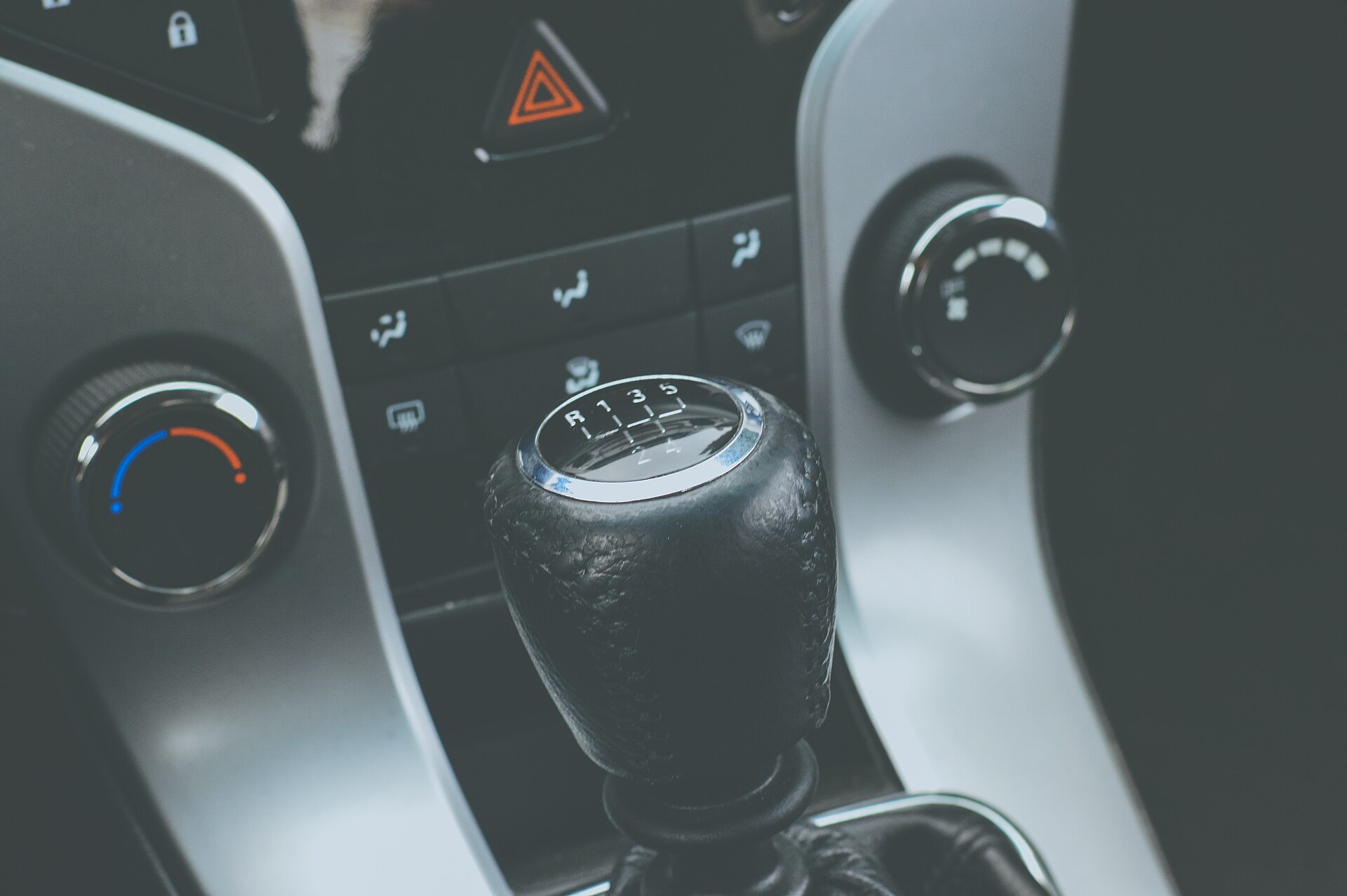
[A manual gear stick, used to drop to a lower gear and raise engine resistance. Photograph: Wikimedia Commons contributor]
Image Credits: Wikimedia Commons
Engine braking is what happens when you lift off the accelerator while the car stays in gear. The engine stops driving the wheels and starts resisting them instead, so the car slows without you touching the brake pedal.
It is not the same thing as braking with your brakes, and it cannot bring a car to a full stop on its own. This article explains how engine braking works, when it helps, when it can damage your car, and how it differs between manual, automatic, and hybrid cars.
What is engine braking?
Take your foot off the accelerator in a moving car and the car begins to slow even before you brake. That gentle slowdown is engine braking in its simplest form, as the Kwik Fit guide to engine braking describes it.
The effect gets much stronger when you shift down a gear. A lower gear forces the engine to spin faster at the same road speed, and that faster spinning creates more resistance.
Engine braking only works while the car is in gear. Press the clutch or shift to neutral and the link between wheels and engine breaks, so the resistance disappears and the car simply coasts.
How engine braking actually works
In a petrol engine, lifting off the accelerator closes the throttle valve almost completely. The pistons then have to pull against a strong vacuum in the intake manifold as they move, and that struggle is what drags the car's speed down.
Engineer Fix calls this drag a pumping loss, and identifies it as the largest source of the braking force in a petrol engine. Friction from pistons, bearings, and oil adds a smaller share of resistance on top.
Modern cars add a second trick on top of the vacuum effect. When you lift off, the engine control unit cuts the fuel supply in a process called deceleration fuel cut-off, so no combustion is pushing the pistons while the wheels are turning the engine.
Downshifting multiplies all of this. A lower gear raises the ratio between wheel speed and engine speed, so the engine turns faster and its pumping losses and friction grow with it.
Diesel engines behave a little differently because they have no throttle valve creating that vacuum. They still produce engine braking through compression and internal friction, but the effect is generally weaker than in a petrol engine of similar size.
That difference is one reason heavy trucks use a separate device called an exhaust brake or compression-release brake. A car engine's built-in resistance is enough for a car, but a loaded truck needs far more help on a descent.
When engine braking helps most
Long downhill stretches are the classic case. Riding the brake pedal down a mountain pass heats the pads and rotors until they fade, which means they grip less and less just when you need them most.
Engine braking holds your speed steady on the descent instead, so the friction brakes stay cool for the moments that actually need them. Engineer Fix notes that this reduces both heat and wear on pads and rotors, which is the main practical payoff of the technique.
Gradual approaches are the second good use. Kwik Fit uses the example of a traffic light ahead while travelling at 40 miles per hour, where lifting off and working down through the gears slows the car smoothly before the brakes finish the job.
It also keeps the car settled and in the right gear for what comes next. Coming down a hill in third gear means you are ready to accelerate again, while coasting down in neutral leaves you fumbling for a gear if traffic suddenly moves.
How to use it in a manual car
Start by lifting off the accelerator and letting the car slow a little on its own. Then press the clutch, select the next lower gear, and release the clutch smoothly rather than dropping it.
Rev-matching makes that shift far smoother. While the clutch is down, briefly blip the accelerator to raise engine speed toward what the lower gear will demand, as Engineer Fix recommends.
Without rev-matching, the clutch has to drag the engine up to speed in an instant. That causes a lurch, wears the clutch disc, and on a slippery road can briefly unsettle the driven wheels.
Work down one gear at a time rather than jumping from fifth to second. Each step keeps the engine speed change manageable and gives you a chance to judge whether you need more slowing force.
Watch the tachometer and keep the engine well below its redline. Engineer Fix warns that selecting a gear that pushes the engine past its safe speed limit can cause severe damage, and iCarTea notes that over-revving can break the connecting rods that link pistons to the crankshaft.
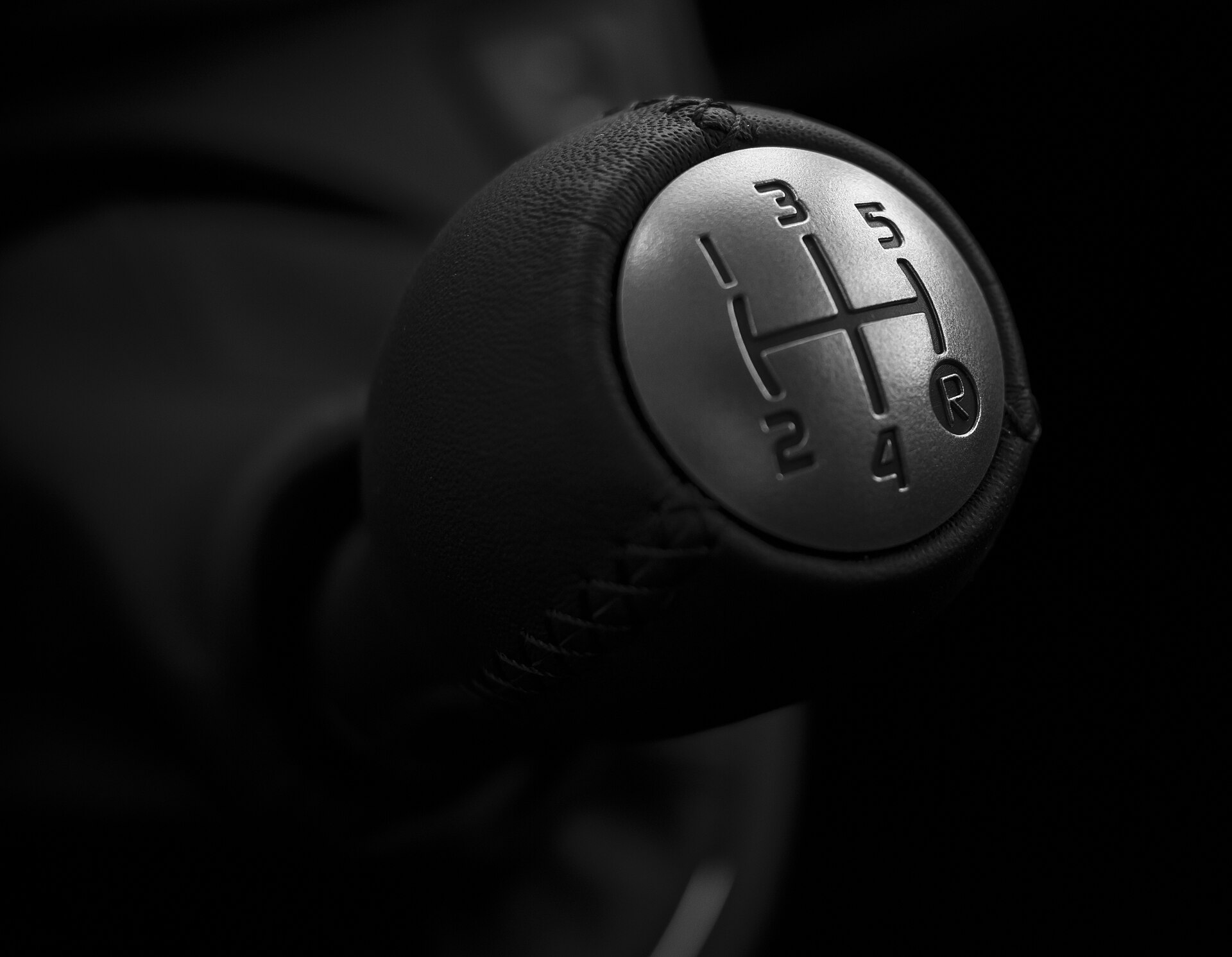
[A gear stick in a Fiat 500 Abarth, with the shift pattern the driver follows when working down through the gears. Photograph: Wikimedia Commons contributor]
Image Credits: Wikimedia Commons
How it works in an automatic car
Automatics give you fewer levers but the same physics. Many traditional automatics have shifter positions marked L, 2, or 3, which limit the gearbox to a low range and force a downshift.
Cars with paddle shifters work the same way through the minus paddle. Tap it once and the gearbox drops a gear, raising engine speed and braking force.
Modern automatics also protect themselves. Engineer Fix points out that a modern automatic will refuse a downshift if the resulting engine speed would exceed a safe limit, so the gearbox acts as a backstop against the worst mistakes.
Hybrid and electric cars add regenerative braking on top of engine braking. The electric motor acts as a generator when you lift off, turning motion back into battery charge, and that adds a strong, smooth slowing force of its own.
When not to rely on engine braking
Engine braking will not stop your car. It bleeds speed gradually, so a sudden hazard still needs the brake pedal, and the final stop always comes from the friction brakes.
It also gives drivers behind you no warning. Your brake lights stay dark while the engine slows you, so on a busy road it is worth touching the brake pedal lightly to signal that you are slowing.
Never downshift aggressively on a slippery surface. A sudden surge of engine drag on the driven wheels can break traction just as surely as a hard brake application, especially in a rear-wheel-drive car.
Do not use it as a substitute for brakes that are already in trouble. If your brakes feel soft or faded, engine braking can help you reach a safe stopping place, but the car needs a proper brake inspection before it goes back into normal use.
High engine speeds are the other hard limit. If a downshift would send the needle toward the redline, stay in the higher gear and use the brakes instead, since a damaged engine helps nobody.
Does engine braking damage your car?
Used within the engine's normal speed range, engine braking is a normal operating mode, not abuse. Carmakers design engines and gearboxes to handle the forces involved, and every car engine-brakes a little whenever you lift off.
Damage comes from the extremes, not the technique itself. Over-revving from a badly judged downshift is the real risk, along with the clutch wear caused by repeated clutch drops without rev-matching.
Fuel use is a common worry, and the answer is reassuring. During deceleration fuel cut-off, the engine uses no fuel at all while the wheels keep it turning, so gentle engine braking costs nothing at the pump.
Brake life is where the savings show up. Keeping the friction brakes cool and using them less on descents and approaches means pads and rotors last longer, which is why driving instructors have taught the technique for decades.
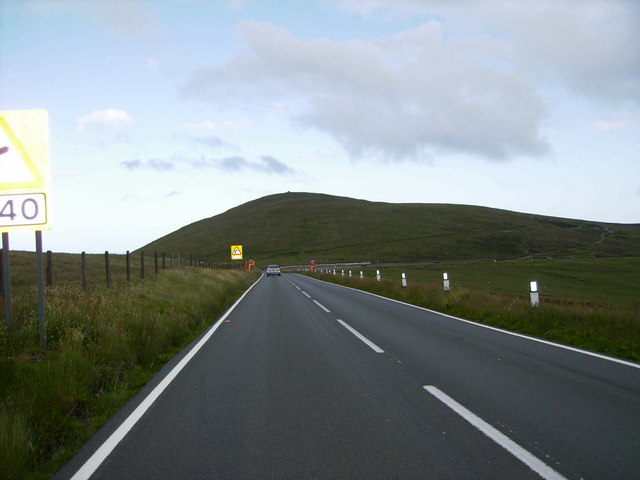
[A mountain road winding downhill, where holding a low gear prevents brake fade on the descent. Photograph: Wikimedia Commons contributor]
Image Credits: Wikimedia Commons
Engine braking and brake fade
Brake fade deserves a closer look because it is the strongest argument for the technique. Friction brakes turn motion into heat, and on a long descent that heat builds faster than it can escape.
As pads and rotors overheat, their grip falls away and the pedal feels longer and softer. That is fade, and it is the moment when a driver discovers the brakes cannot be trusted at full strength.
Engine braking breaks that cycle by taking on the steady work of holding speed. The friction brakes then stay cool and keep their full grip for the sharp stops that engine braking cannot handle.
This is also why mountain driving advice always pairs the two systems. The engine manages the descent, the brakes manage the surprises, and neither is asked to do the other's job.
Frequently asked questions
Does engine braking save fuel?
Yes, in most modern cars it uses no fuel at all while it is happening. When you lift off, the engine control unit cuts fuel supply in deceleration fuel cut-off, so the wheels keep the engine turning without combustion.
Can engine braking replace the brake pedal?
No, it can only slow the car gradually and cannot bring it to a full stop. It works best as a partner to the brakes, handling steady descents while the brakes stay ready for sharp stops.
Is engine braking bad for the clutch?
Not when done smoothly with rev-matching, since the clutch then engages with little slip. Repeated clutch drops without matching engine speed wear the clutch disc faster and cause the lurch drivers notice.
The bottom line
Engine braking turns your engine into a helper brake by using its own vacuum, friction, and fuel cut-off to resist the wheels. It shines on long descents and gradual approaches, where it saves your friction brakes from heat and wear.
Use it smoothly, one gear at a time, and keep the engine below its redline. Pair it with the brake pedal rather than treating it as a replacement, and remember that drivers behind you cannot see it happening.
Learned properly, it is one of the cheapest driving skills there is: no new parts, no extra fuel, and brakes that last longer. Related reading on braking includes why regenerative braking feels different, how to extend the life of your car brakes, and why manual cars stall at the biting point.
Tags: engine braking, downshifting, driving technique, car brakes
Rive News is a research desk that explains everyday topics from public sources, with no single author behind the byline.
Related
- What regenerative braking is in simple terms
- How cruise control maintains speed uphill
- How to extend the life of your car brakes
- Why manual cars stall and what the biting point does
Subscribe to the Rive News newsletter for one plain-English explainer each morning.
Rive News publishes explainers from verifiable public sources; claims are attributed in the text, and corrections are noted when a source changes.
Related stories

Why Does Tire Pressure Drop in Cold Weather?
Cold weather can cut tire pressure by 1 psi for every 10°F drop, thanks to the ideal gas law. Here is what happens inside the tire and what

Why Do Brake Rotors Warp, or Do They Actually?
Mechanics rarely see a truly warped rotor. The shudder usually comes from uneven pad deposits a few thousandths of an inch thick. Here

How to Buy a Used Car Without Getting Scammed: The Checklist
Over 450,000 cars a year have rolled-back odometers, NHTSA says. This checklist covers VIN checks, title washing, and the inspection that