
How to Extend the Life of Your Car Brakes: 8 Tips
Key takeaways
- Brake pads typically last 25,000 to 60,000 miles, and driving style decides where in that range you land.
- Coasting to stops, keeping distance, and using engine braking cut the heat and friction that wear pads out.
- Lighter loads, quality pads, and regular inspections handle the rest.
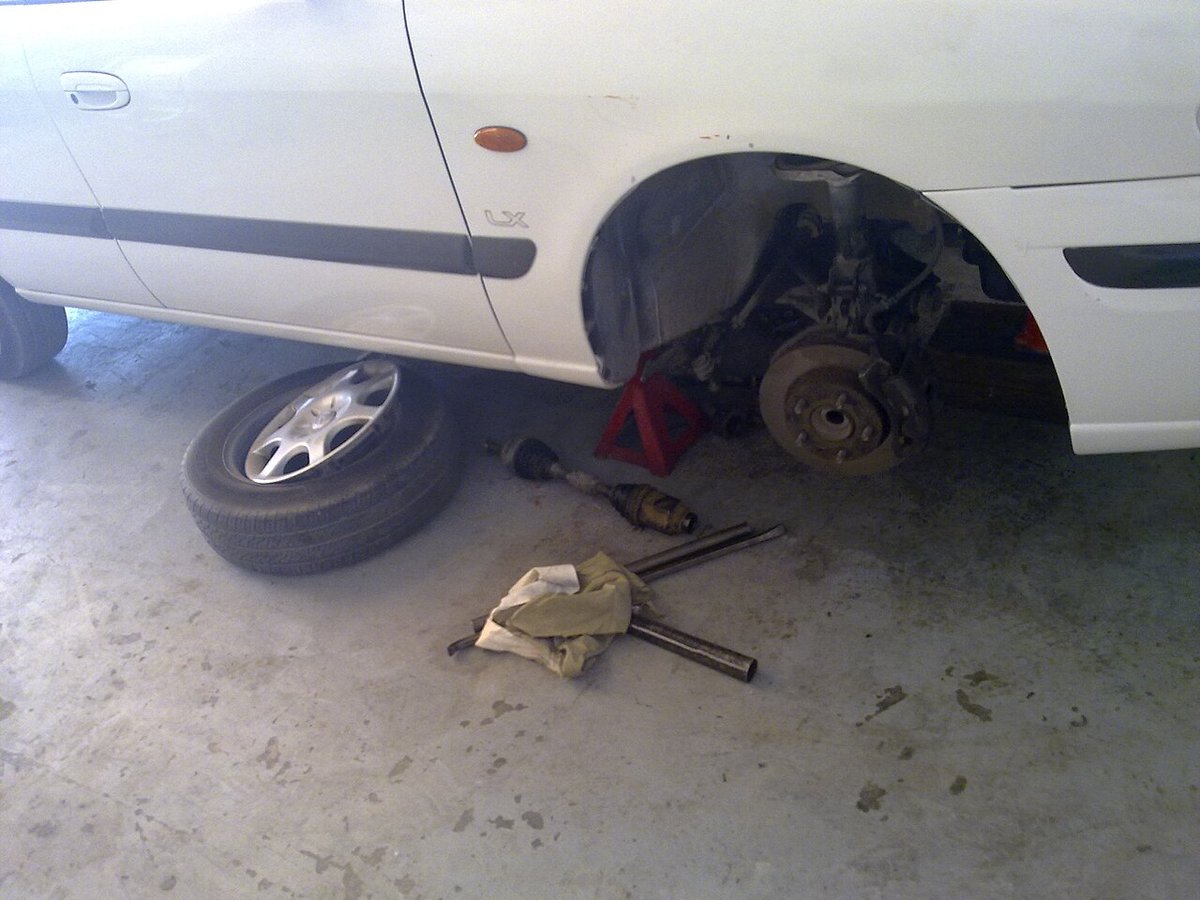
A car on a jack stand with the wheel removed, exposing the brake disc for inspection. Photograph: Wikimedia Commons contributor
Image Credits: Wikimedia Commons
Brakes wear out. Every stop converts your car's motion into heat through friction, and the pads are designed to sacrifice themselves in the process. The question is how fast that happens.
A set of brake pads can last anywhere from 25,000 to 60,000 miles, or roughly three to six years for many daily drivers, according to R1 Concepts. Other shops quote ranges from 20,000 to 70,000 miles. The spread is enormous, and most of it comes down to how the car is driven and maintained.
This article explains what wears brakes out, then walks through eight practical habits that extend brake life: coasting, smooth braking, following distance, engine braking, lightening the load, slowing down, maintaining brake fluid, and inspecting on schedule. It closes with the bottom line and answers common questions.
What actually wears brakes out
Brake pads are friction material pressed against a spinning rotor. Each stop shaves a tiny amount off the pad. Hard stops shave a lot. Heat makes it worse: sustained heavy braking overheats the pads and rotors, accelerating wear and sometimes leaving uneven pad deposits on the rotor that cause the shudder many drivers mistake for warping, as explained in our piece on whether brake rotors really warp.
Weight multiplies everything. The heavier the vehicle, the more kinetic energy the brakes must convert to heat at every stop. Speed matters even more, because kinetic energy rises with the square of velocity: stopping from 60 takes four times the energy of stopping from 30, not twice.
So the formula for long brake life is simple: brake less often, brake more gently, carry less weight, and keep the system healthy.
1. Coast toward stops instead of braking late
The single biggest habit change is coasting. When you see a red light, a stop sign, or slowing traffic ahead, lift off the accelerator early and let the car decelerate on its own. Apply the brakes only for the final portion of the stop.
Aloha Auto Repair makes the freeway off-ramp case vivid: coast from 70 down to 50 mph, then brake for the rest. The coasting portion costs your pads nothing. Drivers who accelerate toward a stopped car and brake hard at the last second are spending pad material for no reason, since they arrive at the same red light either way.
2. Brake smoothly, not in stabs
Repeated light taps on the pedal do not stop the car any better than one smooth application, and they keep the pads dragging against the rotor. Press the pedal once, progressively, and release fully when you do not need it.
Smooth braking also keeps the car stable and gives drivers behind you a clear, predictable signal. Jerky braking in traffic usually means you are following too closely, which leads to the next tip.
3. Keep a real following distance
Tailgating forces constant brake use. Every time the car ahead slows, you must brake, often harder than they did. The classic two-second rule (longer in rain or poor conditions) gives you reaction time to lift off the gas and coast instead of braking, according to Michelin's braking guide.
Watch several cars ahead, not just the bumper in front of you. Changes far up the road telegraph slowdowns early, and early information is what turns a hard stop into a gentle coast. R1 Concepts notes that watching traffic patterns ahead is one of the simplest ways to cut reactive braking.
4. Use engine braking on hills and exits
On long descents, downshift and let engine resistance slow the car instead of riding the brake pedal. Riding the brakes downhill builds heat continuously, which is the fastest way to glaze pads and overheat fluid. Michelin specifically recommends engine braking on declines to reduce strain and heat on the friction brakes.
Electric and hybrid drivers get this automatically: regenerative braking captures energy while slowing the car, which both extends range and preserves the mechanical brakes. But the principle helps everyone. Any speed you shed without the pads is pad life saved.
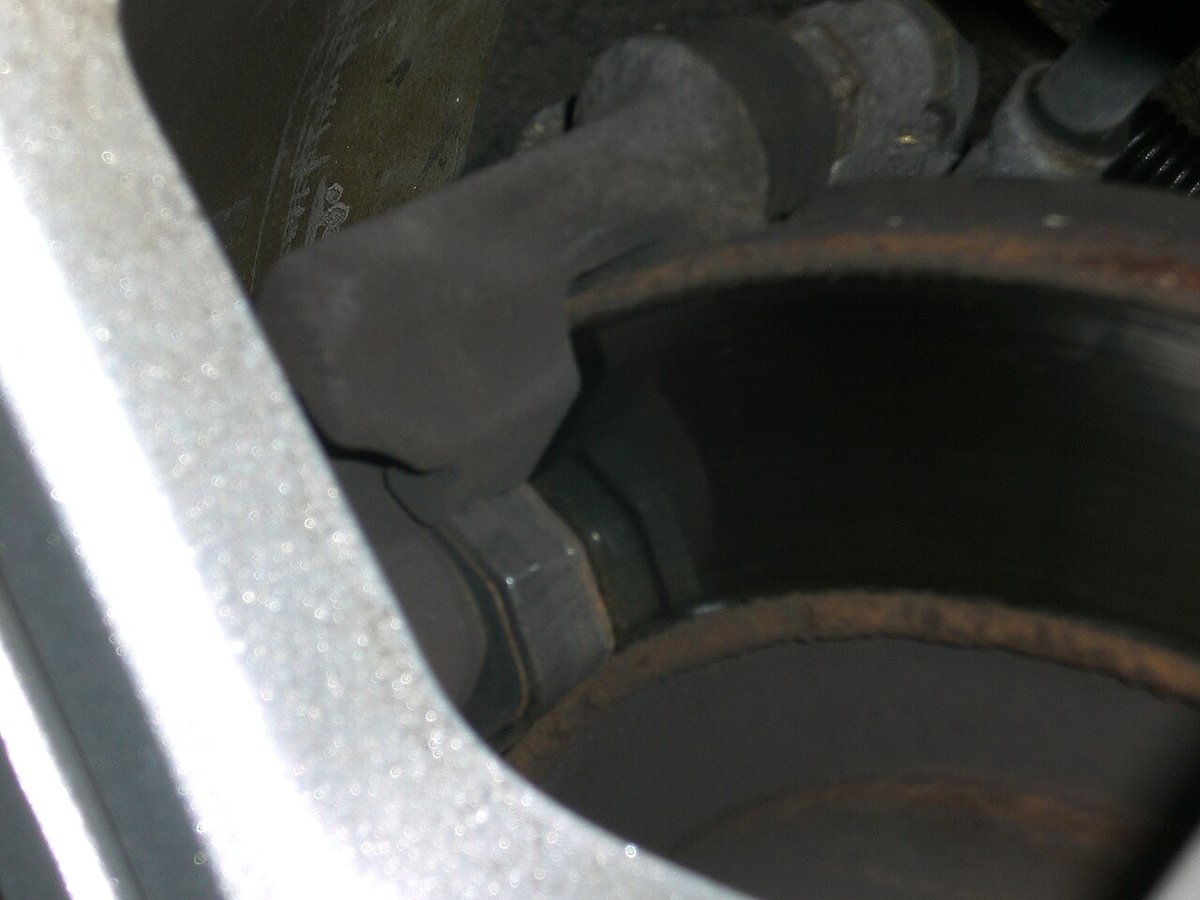
A brake caliper and pad seen through the wheel; pad thickness is what inspections measure. Photograph: Wikimedia Commons contributor
Image Credits: Wikimedia Commons
5. Lighten the load
Extra weight means extra work at every stop. Clean out the trunk and back seat periodically: sports gear you are not using, tools, bags of clutter. It adds up faster than most drivers expect.
This applies to modifications too. Aftermarket wheels, heavy audio systems, and roof cargo all increase the mass your brakes must stop. If you regularly tow or haul heavy loads, accept that your pads will wear faster and inspect them more often, as Dream Motors advises.
6. Slow down overall
Because stopping energy rises with the square of speed, even modest speed reductions pay off disproportionately. Cruising at 60 instead of 75 does not just save fuel; it dramatically reduces the energy each stop must absorb. NRS Brakes lists driving slowly among its core best practices for pad life, noting that sudden braking at speed is among the most damaging things you can do to brakes.
This is not about crawling. It is about recognizing that speed is the dominant variable in brake wear, so the fast driver who brakes hard pays twice: once in fuel, once in pads.
7. Maintain the brake fluid
Brake fluid is the hydraulic link between your foot and the pads, and it degrades invisibly. Over time it absorbs moisture from the air, which lowers its boiling point and corrodes internal components. Dark-colored fluid is a sign it is overdue for replacement.
Flush and replace brake fluid on the schedule in your owner's manual. Fresh fluid keeps pedal feel consistent and protects the calipers and lines that the pads depend on. It is cheap maintenance that protects expensive parts.
8. Inspect on a schedule, not on a noise
Do not wait for grinding to tell you the pads are gone. Grinding means the pad material is already worn through and metal is contacting the rotor, which turns a pad replacement into a pad-plus-rotor job.
Have the brakes inspected at least once a year, or with every other oil change. A technician measures pad thickness and checks rotors, calipers, and hoses. Catching pads at 3 millimeters instead of zero saves the rotors and keeps the job cheap. Warning signs that deserve immediate attention include squealing, a soft or spongy pedal, vibration while braking, or the car pulling to one side. Our guides on cars pulling when braking and shaking at high speed cover what those symptoms mean.
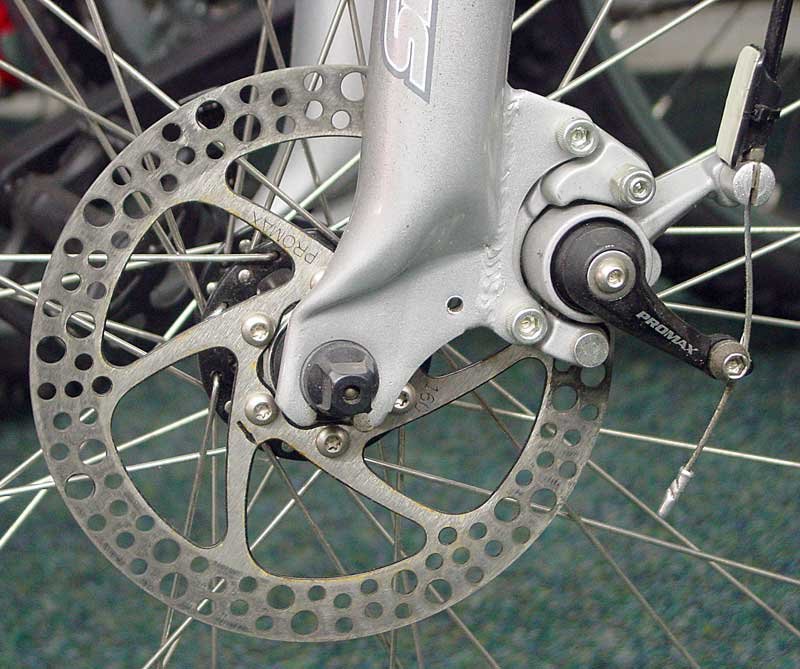
A close-up of a disc brake rotor; car brakes convert motion to heat through the same friction principle. Photograph: Wikimedia Commons contributor
Image Credits: Wikimedia Commons
Frequently asked questions
How long do brake pads last on average?
Most sources put the range at 25,000 to 60,000 miles, or about three to six years for typical daily driving. Aggressive city driving with frequent hard stops lands at the low end; gentle highway driving with coasting lands at the high end.
What wears out brakes the fastest?
Repeated hard braking, especially from high speed and on descents. Riding the brakes downhill, tailgating in traffic, and carrying heavy loads all accelerate wear. Heat is the underlying enemy: the hotter the pads run, the faster they wear.
Do cheap brake pads wear out faster?
Generally, yes. Quality pads use better friction compounds that last longer, run quieter, and treat rotors more gently. The price difference is small compared to the labor of replacing pads twice as often, so this is one place where buying the better part pays for itself.
Does coasting in neutral save brakes?
Coasting in gear (foot off the gas) is the recommended technique; it keeps engine braking working and full control of the car. Shifting to neutral removes engine braking and, in some places, creates legal and safety issues. Coast with the transmission engaged.
When should brake rotors be replaced?
Rotors are replaced when they are below minimum thickness, deeply scored, or causing vibration that resurfacing cannot fix. Many drivers get two sets of pads per set of rotors with gentle driving. A shop measures rotor thickness with a micrometer during inspection.
The bottom line
Long brake life comes from boring habits: coast early, brake smoothly, keep your distance, downshift on hills, travel light, and inspect on schedule. None of these require skill or money, just attention.
Start with the easiest win this week. On your next drive, try lifting off the gas the moment you see brake lights three cars ahead. Your pads, your fuel gauge, and your passengers will all notice the difference.
---
Rive News's research desk covers automotive how-tos. Articles cite named public sources; no claims are invented.
Latest in Auto
- Do Brake Rotors Really Warp?
- How to Jump Start a Car Safely: Step-by-Step Guide
- How to Check Transmission Fluid Without a Dipstick
- Why Tire Pressure Drops in Cold Weather
Subscribe for weekly car-care explainers.
Rive News follows a corrections policy: factual errors are corrected promptly with a visible update note.
Related stories

Why Does Tire Pressure Drop in Cold Weather?
Cold weather can cut tire pressure by 1 psi for every 10°F drop, thanks to the ideal gas law. Here is what happens inside the tire and what

Why Do Brake Rotors Warp, or Do They Actually?
Mechanics rarely see a truly warped rotor. The shudder usually comes from uneven pad deposits a few thousandths of an inch thick. Here

How to Buy a Used Car Without Getting Scammed: The Checklist
Over 450,000 cars a year have rolled-back odometers, NHTSA says. This checklist covers VIN checks, title washing, and the inspection that