
Why Your Fuel Gauge Drops Faster in the Second Half
Key takeaways
- Your fuel gauge measures the height of fuel with a float, not the actual volume of litres in the tank.
- Tank shape, the float arm's arc movement, and deliberate gauge calibration all bend the needle's path.
- The needle is often pinned at Full early and pushed to Empty with fuel still in reserve, so the second half can fall fast.
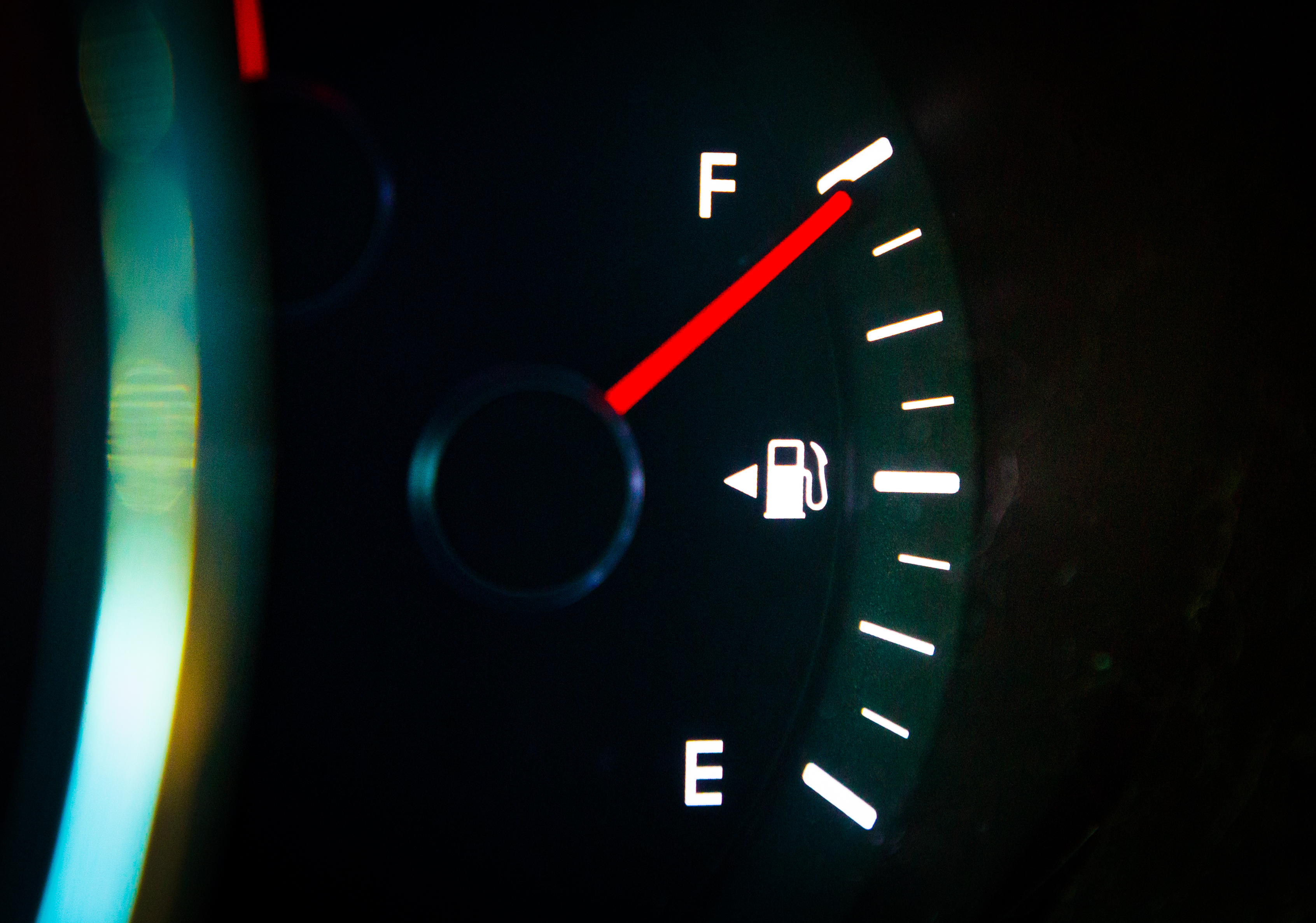
Image Credits: Wikimedia Commons / Tony Webster
A fuel gauge is one of the least honest instruments in your car. It looks like a simple meter, but the needle answers a different question than the one you are asking.
You want to know how many litres are left. The gauge only knows how high the fuel surface sits at one spot in the tank.
That gap between height and volume is the main reason the needle seems to race through the second half of the tank. This article explains how a fuel sender works, why tank shape makes the needle nonlinear, how calibration pins the needle at Full and rushes it toward Empty, and what to do so you never get caught short.
How a fuel sender actually measures fuel
Inside the tank sits the fuel level sending unit, usually mounted on the same assembly as the fuel pump. It is a simple device that has barely changed in 60 years.
A foam or plastic float rides on the fuel surface, attached to a metal arm. As fuel burns off, the float sinks and the arm pivots.
At the pivot end of the arm sits a variable resistor, also called a rheostat. A small metal wiper slides across a resistive strip as the arm moves, changing the electrical resistance sent to the dashboard gauge. More current flows when the tank is full, so the needle points to F.
As fuel drops, resistance rises, current falls, and the needle slides toward E. When the float bottoms out, resistance hits its maximum and the low-fuel warning lights up.
The resistance values depend on the maker. A classic Chevrolet sender reads 0 ohms at empty and 90 ohms at full, according to Tanks Inc.
general manager Justin Somerville, quoted in Chevy Hardcore. Many marine and aftermarket units run from near zero ohms at empty to about 200 ohms at full, as Canadian Boating explains in its gauge troubleshooting guide.
Here is the catch that matters for your question: the float travels in an arc, not a straight line. Its centre is fixed at the pivot, so while the fuel surface drops vertically, the float swings through a curve.
The wiper therefore moves unevenly across the resistor for equal drops in fuel height. A fuel gauge can never be perfectly linear, because its sensor is mechanical and curved.
That mechanical quirk is only half the story. The other half is the tank itself, which is rarely the neat rectangle you picture. Just as tyres lose pressure slowly even without a puncture, small design realities quietly skew the readings you see.
Why tank shape makes the gauge nonlinear
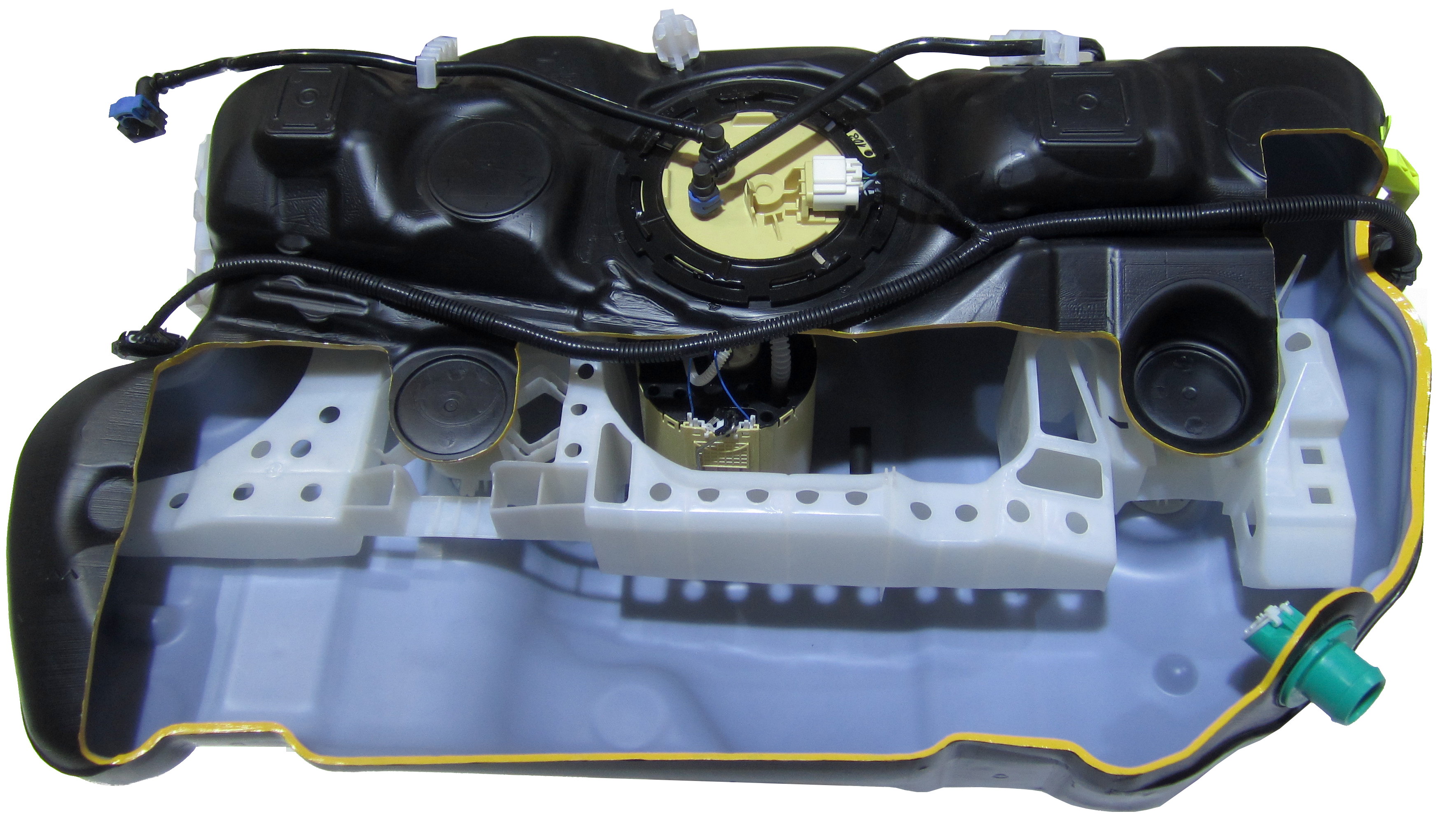
Modern fuel tanks are shaped to fit around the chassis, the suspension, and the exhaust system. They are sculpted, saddled, and stepped, and they are often wider at the top than at the bottom. The sender measures fuel height at a single point, so the same one-inch drop in height can mean very different amounts of fuel burned depending on which part of the tank you are in.
Picture a tank that is wide at the top and narrow at the bottom. Near the top, one inch of height holds a large volume of fuel.
Near the bottom, one inch of height holds much less. Since the gauge responds to height, the needle can move quickly through sections where height changes fast for little fuel burned, and crawl where height barely moves for a lot of fuel burned.
Engineer Fix puts it plainly: the sender measures the height of the fuel, not the volume. When the float is in the wide upper section, a small drop in volume requires a large movement of the float and a large drop on the gauge.
That is why many drivers swear the first half vanishes quickly. In cars shaped the other way, or where calibration dominates, the second half is the one that disappears.
There is a second, deliberate reason the needle behaves oddly, and it is programmed in on purpose.
Why the needle hangs at full, then falls fast
Carmakers do not want you to think your car drinks fuel the moment you leave the petrol station. So the gauge is calibrated to linger at the Full mark for a generous stretch of early driving.
The float physically cannot rise above its highest position, and the filler neck holds fuel above that point. Until the level sinks to the float's maximum reach, the needle cannot move, so it sits on F while you burn real fuel.
Engineer Fix notes this is a programmed feature, not a fault. The gauge is engineered to look generous early. That generosity is borrowed from the other end of the dial.
When the float reaches the bottom of its travel, the gauge reads Empty even though a reserve remains in the tank, typically around 10 percent of the tank's capacity. Running the tank truly dry can overheat and damage the fuel pump, which is cooled and lubricated by the fuel itself, so manufacturers keep that buffer and hide it from you.
Put the two tricks together and the second half of the dial represents less usable fuel than the first half appeared to. The top of the scale is stretched by the pinned-at-Full phase, and the bottom of the scale is compressed by the hidden reserve. The needle must therefore cover the middle of the dial in fewer litres, which is exactly why the second half can seem to fall faster.
Age makes it worse. The wiper wears a track into the resistive strip over the years, corrosion builds up on contacts, and the float arm can bend. A worn sender reports jumpy, sticky, or suddenly plunging readings.
If your gauge drops from a quarter tank to Empty in an instant, that is usually a failing sender or a broken wire, not physics. Steady, repeatable nonlinearity is design. Sudden jumps are damage.
How to know how much fuel you really have
Stop treating the needle as a fuel meter and start treating it as a rough indicator. The most reliable method is the trip odometer.
Fill the tank, reset the trip, and learn how many kilometres your car covers per tank in your normal driving. When the trip approaches that number, refuel regardless of what the needle claims.
Watch the first quarter after a fill-up to learn your car's personality. If the needle sits on Full for 80 kilometres and then starts moving, you now know the pinned phase.
If the low-fuel light comes on with the needle just below a quarter, you know the reserve is generous. Every car has its own curve, and one tank of attentive driving teaches you more than the dial ever will.
Refuel by the quarter-tank rule, not the Empty mark. Keeping the tank above a quarter protects the fuel pump from heat and keeps sediment in the tank from being drawn into the filter.
Mechanics repeat this advice because the pump is expensive and the habit is cheap. A similar habit pays off elsewhere in the car: checking why your windscreen fogs up inside before winter arrives saves you a miserable morning.
If the gauge misbehaves erratically, test before replacing. With the ignition on, disconnecting the sender wire at the gauge should swing the needle to its highest reading, and grounding it should drop it to Empty.
If the gauge passes those tests, the fault is in the sender or the wiring, and the sender usually lives on top of the tank, which means dropping the tank to reach it. That is a workshop job for most drivers.
Frequently asked questions
Is it normal for the fuel gauge to drop faster after half tank?
Yes, in many cars it is normal. The gauge measures float height, not volume, and calibration stretches the top of the scale while compressing the bottom with a hidden reserve.
Your car can also be the opposite if its tank is wider at the top. Either pattern is design, not a defect, as long as it repeats consistently.
Why does my gauge stay on Full for so long after filling up?
The float reaches its maximum height before the tank is truly full, and fuel in the filler neck sits above the float. The needle cannot move until the fuel level drops to the float's top position. Engineer Fix describes this as a programmed feature that makes the car feel economical early in the tank.
How much fuel is left when the gauge hits Empty?
Usually around 10 percent of the tank's capacity, according to Engineer Fix. That reserve exists to protect the fuel pump, which relies on fuel for cooling and lubrication. Treat the Empty mark as a final warning, not a measurement.
Can a bad fuel sender make the gauge drop fast?
A worn sender causes erratic behaviour: sticking, jumping, or sudden plunges to Empty. The wiper wears the resistive strip and corrosion breaks the signal path. If the fast drop is sudden and inconsistent, suspect the sender, the wiring, or a bad ground rather than normal nonlinearity.
Does the float measure litres or height?
Height, always. The float sits at one point in the tank and reports the fuel surface level there. Because tank cross-sections vary with height, equal height changes do not mean equal volumes, which is the root cause of the uneven needle.
The bottom line
Your fuel gauge drops faster in the second half because it was never measuring fuel in the first place. It measures float height through a curved mechanical arm, in an irregularly shaped tank, on a dial that is deliberately pinned at Full early and pushed to Empty while a reserve of roughly 10 percent still sits in the tank. Learn your car's curve with the trip odometer, refuel at a quarter tank, and save the dashboard drama for the indicators that click exactly as designed.
Latest in Automotive
- Why car doors lock automatically when you drive off
- Why indicators make that clicking sound
- Why tyres lose pressure slowly even without a puncture
- Why your windscreen fogs up on the inside
Subscribe for one plain-English car explainer every morning.
Related stories

Why Does Tire Pressure Drop in Cold Weather?
Cold weather can cut tire pressure by 1 psi for every 10°F drop, thanks to the ideal gas law. Here is what happens inside the tire and what

Why Do Brake Rotors Warp, or Do They Actually?
Mechanics rarely see a truly warped rotor. The shudder usually comes from uneven pad deposits a few thousandths of an inch thick. Here

How to Buy a Used Car Without Getting Scammed: The Checklist
Over 450,000 cars a year have rolled-back odometers, NHTSA says. This checklist covers VIN checks, title washing, and the inspection that